






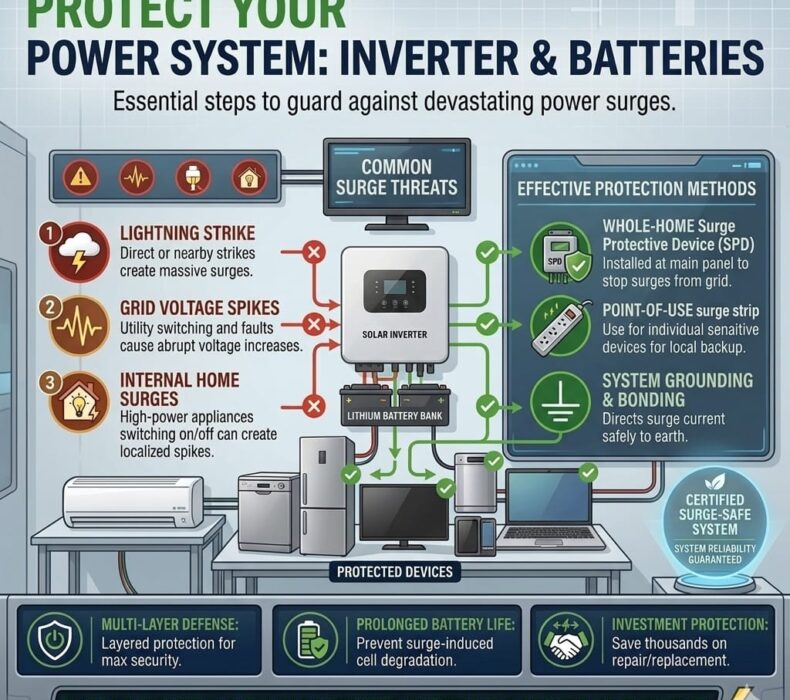
Understanding the ways to protect inverter and batteries from power surges is essential for anyone who relies on an inverter system for backup power. Power surges can occur unexpectedly due to lightning strikes, unstable grid electricity, faulty wiring, or sudden power restoration. As a result, these voltage spikes can damage inverters, reduce battery lifespan, and even affect connected appliances.
What Is a Power Surge?
A power surge is a sudden increase in electrical voltage that exceeds the normal level supplied to your inverter system.
Power surges can be caused by:
- Lightning strikes
- Power grid switching
- Faulty electrical wiring
- Generator transitions
- Utility power restoration after outages
Consequently, these sudden voltage spikes can overwhelm sensitive electrical components and lead to permanent damage.
Why Power Surges Are Dangerous for Inverters and Batteries
Modern inverters and batteries contain sensitive electronic components that are designed to operate within specific voltage ranges.
When a power surge occurs, it can cause:
- Damaged inverter circuits
- Reduced battery performance
- Overheating
- Charging system failures
- Appliance damage
Therefore, surge protection should be a priority for every inverter owner.
Install a Quality Surge Protector
One of the most effective ways to protect inverter and batteries from power surges is installing a high-quality surge protector.
A surge protector helps:
- Divert excess voltage safely
- Prevent electrical damage
- Protect connected equipment
- Improve overall system safety
Furthermore, investing in a reliable surge protection device is often far less expensive than replacing damaged equipment.
Use an Automatic Voltage Regulator (AVR)
An Automatic Voltage Regulator helps maintain stable voltage levels.
As a result, it protects inverter systems from:
- High voltage
- Low voltage
- Voltage fluctuations
Additionally, AVRs improve the quality of electricity entering the inverter system, reducing stress on internal components.
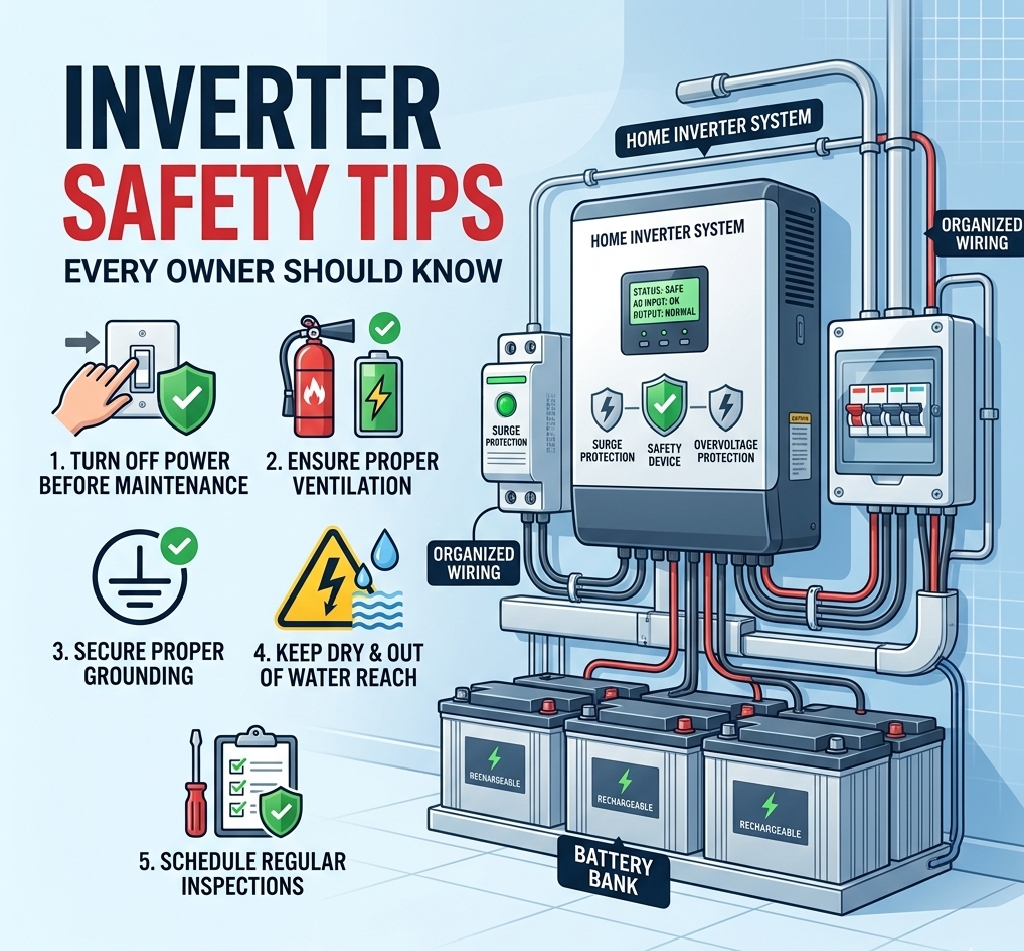
Ensure Proper Grounding
Proper grounding is essential for electrical safety.
Without adequate grounding:
- Excess electricity may not dissipate safely.
- Surge protection devices become less effective.
- Equipment damage risks increase.
Therefore, professional grounding installation is highly recommended.
Moreover, grounding plays a crucial role during lightning-related surges.
Install Lightning Protection Systems
In regions that experience frequent thunderstorms, lightning protection is especially important.
Lightning strikes can generate massive voltage spikes capable of damaging electrical systems instantly.
To improve protection:
- Install lightning arrestors.
- Ensure proper earthing.
- Use surge protection devices.
Consequently, your inverter and batteries remain better protected during severe weather.
Use High-Quality Electrical Wiring
Poor wiring can contribute to electrical instability and increase surge-related risks.
Therefore, always use:
- Correct cable sizes
- Quality insulation
- Certified electrical components
Furthermore, wiring should be inspected periodically to identify wear or damage.
As a result, system reliability improves significantly.
Disconnect Equipment During Severe Storms
Although surge protection devices offer valuable protection, extreme weather events can still pose risks.
During severe storms:
- Disconnect sensitive electronics if possible.
- Turn off unnecessary equipment.
- Monitor weather conditions.
Consequently, exposure to major surge events is minimized.
Regularly Inspect Electrical Connections
Loose electrical connections can create resistance and voltage irregularities.
Therefore, routine inspections should include:
- Battery terminals
- Inverter connections
- Circuit breakers
- Distribution panels
Additionally, tightening loose connections helps maintain stable electrical performance.
Avoid Overloading the Inverter
Overloading an inverter can increase stress on both the inverter and battery system.
As a result:
- Internal components may overheat.
- Electrical faults may occur.
- System reliability may decrease.
Therefore, always ensure connected appliances remain within the inverter’s rated capacity.
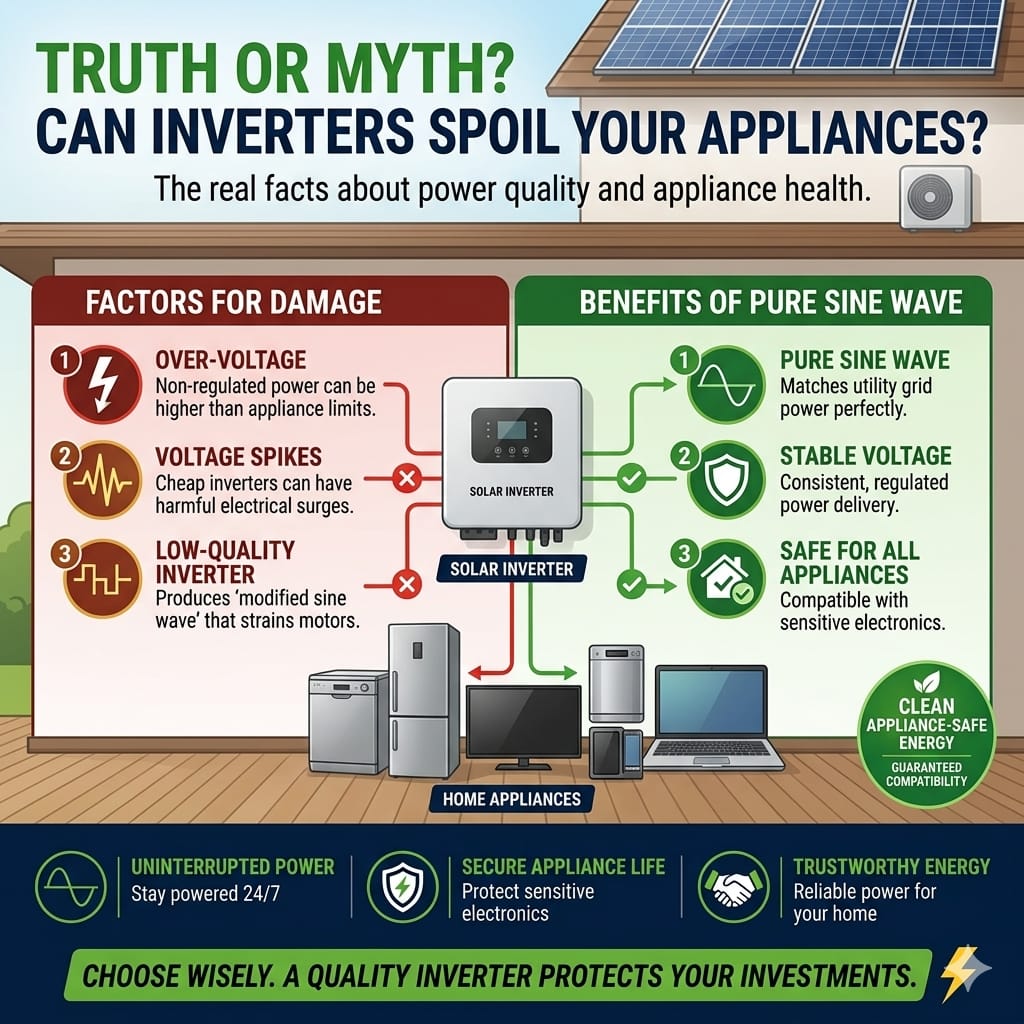
Use Pure Sine Wave Inverters
Pure sine wave inverters provide cleaner and more stable electricity than modified sine wave models.
Benefits include:
- Better voltage regulation
- Improved appliance compatibility
- Reduced electrical stress
Consequently, sensitive devices and batteries operate more efficiently.
Maintain Battery Health Regularly
Healthy batteries are better equipped to handle normal charging and discharging conditions.
Therefore:
- Monitor battery voltage.
- Check electrolyte levels where applicable.
- Clean terminals regularly.
- Ensure proper ventilation.
Furthermore, routine maintenance helps identify problems before they become serious.
Install Circuit Breakers and Fuses
Circuit breakers and fuses provide an additional layer of protection against electrical faults.
These devices help:
- Interrupt dangerous current flow
- Protect inverter components
- Reduce fire risks
- Improve overall safety
Consequently, they are essential components of a well-designed inverter system.
Keep Inverter Firmware Updated
Many modern inverters include smart monitoring and firmware updates.
Updated firmware may:
- Improve voltage management
- Enhance protection features
- Fix software issues
Therefore, checking for updates periodically can help improve system performance and safety.
Signs Your Inverter May Have Experienced a Power Surge
Recognizing surge-related damage early can prevent further problems.
Common warning signs include:
Unexpected Shutdowns
The inverter switches off without warning.
Error Messages
Frequent fault codes may indicate internal damage.
Reduced Charging Efficiency
Batteries may charge more slowly than usual.
Burnt Smell
A burning odor can indicate damaged electrical components.
Appliance Malfunctions
Connected devices may perform irregularly after a surge event.
Consequently, immediate inspection is recommended whenever these symptoms appear.
Common Mistakes to Avoid
While implementing ways to protect inverter and batteries from power surges, avoid these common errors:
Ignoring Grounding Requirements
Proper grounding is critical for effective surge protection.
Buying Cheap Surge Protectors
Low-quality devices may fail during major surge events.
Skipping Maintenance
Routine inspections help identify vulnerabilities before problems occur.
Overloading the System
Excessive loads increase electrical stress and reduce system reliability.
Therefore, responsible system management is essential.
Benefits of Proper Surge Protection
Protecting your inverter and batteries from power surges offers numerous advantages.
These include:
- Longer equipment lifespan
- Reduced repair costs
- Improved safety
- Better system performance
- Greater power reliability
Furthermore, surge protection helps safeguard connected appliances and electronic devices.
Conclusion
Learning the ways to protect inverter and batteries from power surges can save you significant money and prevent unexpected equipment failures. By installing surge protectors, ensuring proper grounding, using voltage regulators, maintaining quality wiring, and performing routine inspections, you can greatly reduce the risks associated with electrical surges.


 Get it on
  Download on the