Many homeowners and business owners often ask, inverter spoils appliances true or false? This question usually arises when an appliance becomes faulty after being connected to an inverter system. However, the truth is that a properly installed and high-quality inverter is designed to protect appliances rather than damage them. Nevertheless, certain factors such as poor-quality inverters, incorrect installation, and overloading can create problems that affect connected devices.
Inverter Spoils Appliances True or False?
The simple answer is false.
A quality inverter does not spoil appliances. In fact, modern inverters are specifically designed to provide stable and reliable electricity during power outages.
Moreover, many advanced inverters include protection features that help safeguard appliances from:
Voltage fluctuations
Power surges
Short circuits
Overloads
Low-voltage conditions
As a result, appliances often operate more safely when connected to a properly functioning inverter system.
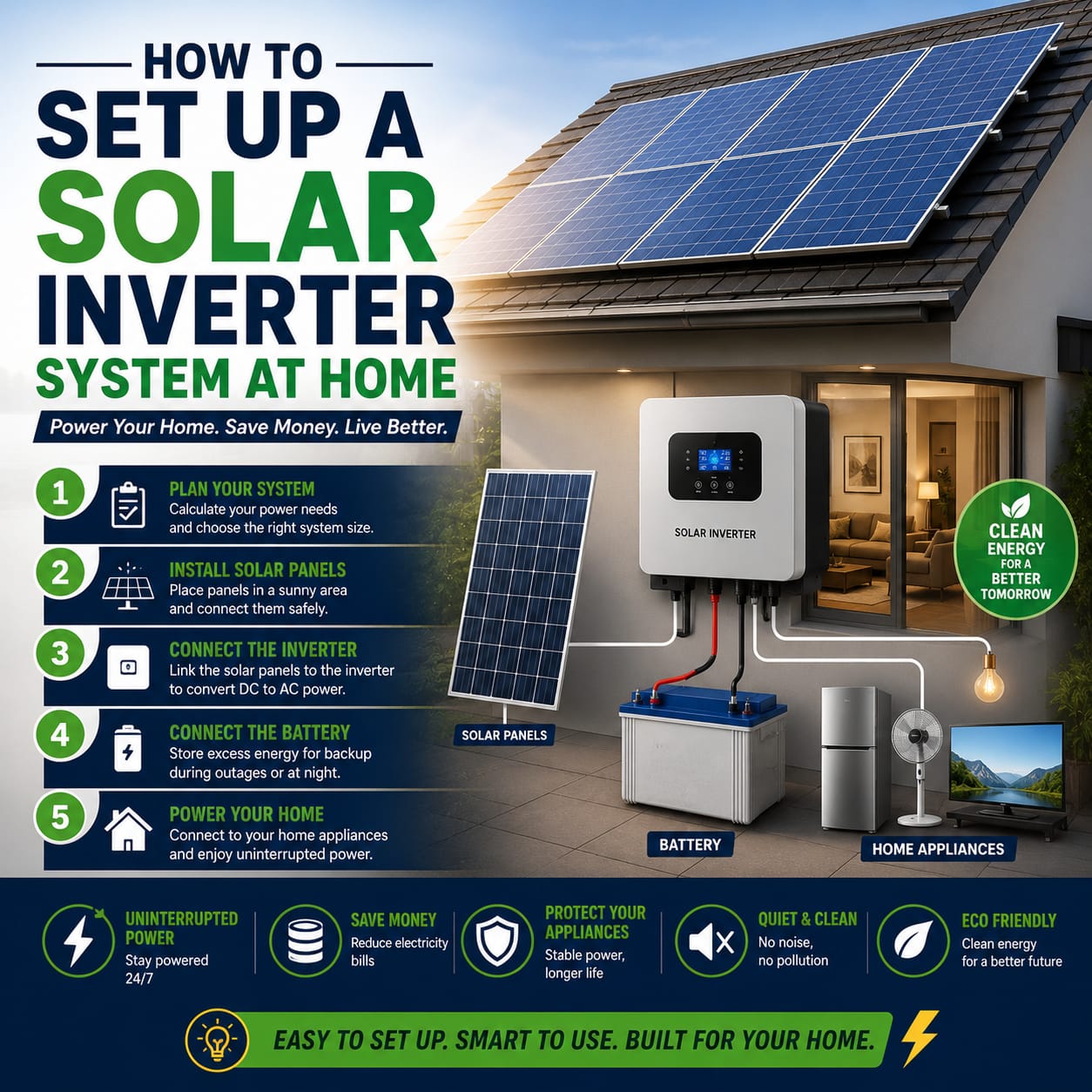
How an Inverter Works
To understand why an inverter generally does not damage appliances, it is important to know how it operates.
An inverter:
Receives power from batteries.
Converts direct current (DC) into alternating current (AC).
Supplies electricity to connected appliances.
Consequently, household devices continue functioning even when utility power is unavailable.
Furthermore, premium inverters produce electricity that closely resembles normal grid power.
Why People Believe Inverters Spoil Appliances
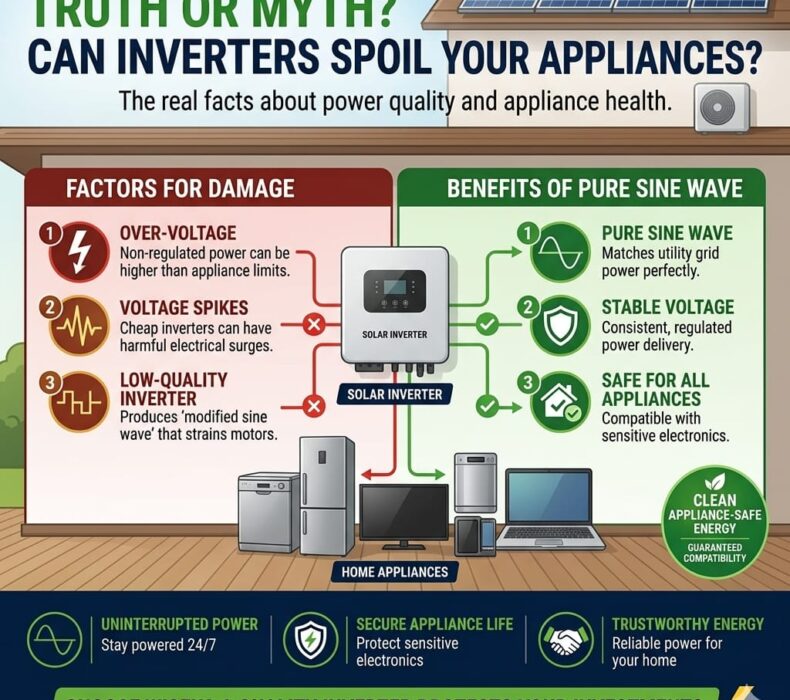
Although the statement inverter spoils appliances true or false is generally false, certain situations can create the impression that an inverter caused appliance damage.
Poor-Quality Inverters
Low-quality inverters often produce unstable power output.
As a result:
Electronics may malfunction.
Appliances may perform inefficiently.
Sensitive devices may experience stress.
Therefore, investing in a reputable inverter brand is essential.
Modified Sine Wave Inverters
Some older or low-cost inverters generate modified sine wave output instead of pure sine wave electricity.
Consequently, certain appliances may experience:
Excessive heat
Reduced efficiency
Operational noise
Shortened lifespan
For this reason, pure sine wave inverters are generally recommended for modern homes.
Incorrect Installation
Improper wiring and installation errors can lead to electrical problems.
For example:
Loose connections
Incorrect cable sizing
Poor grounding
These issues may affect appliances regardless of the inverter’s quality.
Therefore, professional installation is always advisable.
How Quality Inverters Protect Appliances
Modern inverters are equipped with various safety features.
Voltage Regulation
Voltage fluctuations can damage electronic equipment.
However, many inverters automatically regulate voltage levels.
As a result, appliances receive more stable power.
Surge Protection
Power surges can occur unexpectedly.
Fortunately, advanced inverters often include surge protection mechanisms that reduce risks to connected devices.
Overload Protection
When too many appliances are connected, the inverter may automatically shut down.
Consequently, both the inverter and appliances remain protected.
Short Circuit Protection
Short circuits can cause serious electrical damage.
Therefore, built-in protection systems help minimize potential hazards.
Which Appliances Can Safely Run on an Inverter?
Most household appliances can operate safely on a properly sized inverter.
These include:
LED lights
Televisions
Fans
Computers
Internet routers
Refrigerators
Washing machines
Security systems
Furthermore, pure sine wave inverters are particularly suitable for sensitive electronics.
Situations That Can Damage Appliances
Although inverters themselves usually do not spoil appliances, certain conditions can create problems.
Weak or Failing Batteries
A deteriorating battery can affect power quality.
As a result:
Voltage may fluctuate.
Appliances may switch off unexpectedly.
System efficiency may decline.
Regular battery maintenance helps prevent these issues.
Poor Maintenance
Neglecting inverter maintenance can eventually lead to system faults.
Therefore:
Inspect wiring regularly.
Clean battery terminals.
Check ventilation.
Monitor system performance.
Consequently, both the inverter and connected appliances remain protected.
Tips to Protect Appliances When Using an Inverter
To maximize appliance safety:
Choose a Quality Inverter
Purchase products from reputable manufacturers.
Use Proper Installation
Professional installation reduces electrical risks.
Avoid Overloading
Calculate appliance wattage before connecting devices.
Maintain Batteries Properly
Healthy batteries contribute to stable inverter performance.
Install Surge Protection
Additional surge protection further safeguards valuable electronics.
As a result, appliances remain protected during both normal operation and power outages.
Common Myths About Inverters and Appliances
Myth 1: Inverters Always Damage Electronics
This is false. Quality inverters are designed to power electronics safely.
Myth 2: All Inverters Produce Unsafe Power
Modern pure sine wave inverters provide stable electricity comparable to utility power.
Myth 3: Appliance Failure Means the Inverter Is Responsible
Appliance failures can result from age, manufacturing defects, power surges, or improper usage.
Therefore, the inverter is not always the cause.
Benefits of Using a Quality Inverter
A reliable inverter offers several advantages:
Continuous power during outages
Protection against voltage fluctuations
Improved convenience
Better energy management
Reduced dependence on generators
Furthermore, inverter systems can improve the lifespan of sensitive electronic devices by providing more stable electricity.
Conclusion
When considering the question inverter spoils appliances true or false, the correct answer is generally false. A high-quality inverter that is properly installed and maintained is designed to protect appliances, not damage them. In fact, modern inverters provide stable power, surge protection, and voltage regulation that help keep household electronics safe.








 Get it on
  Download on the