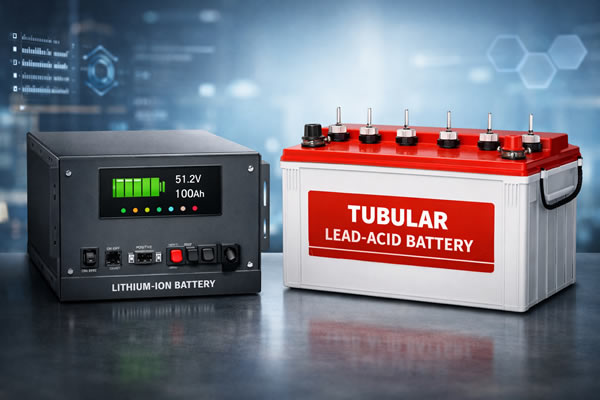
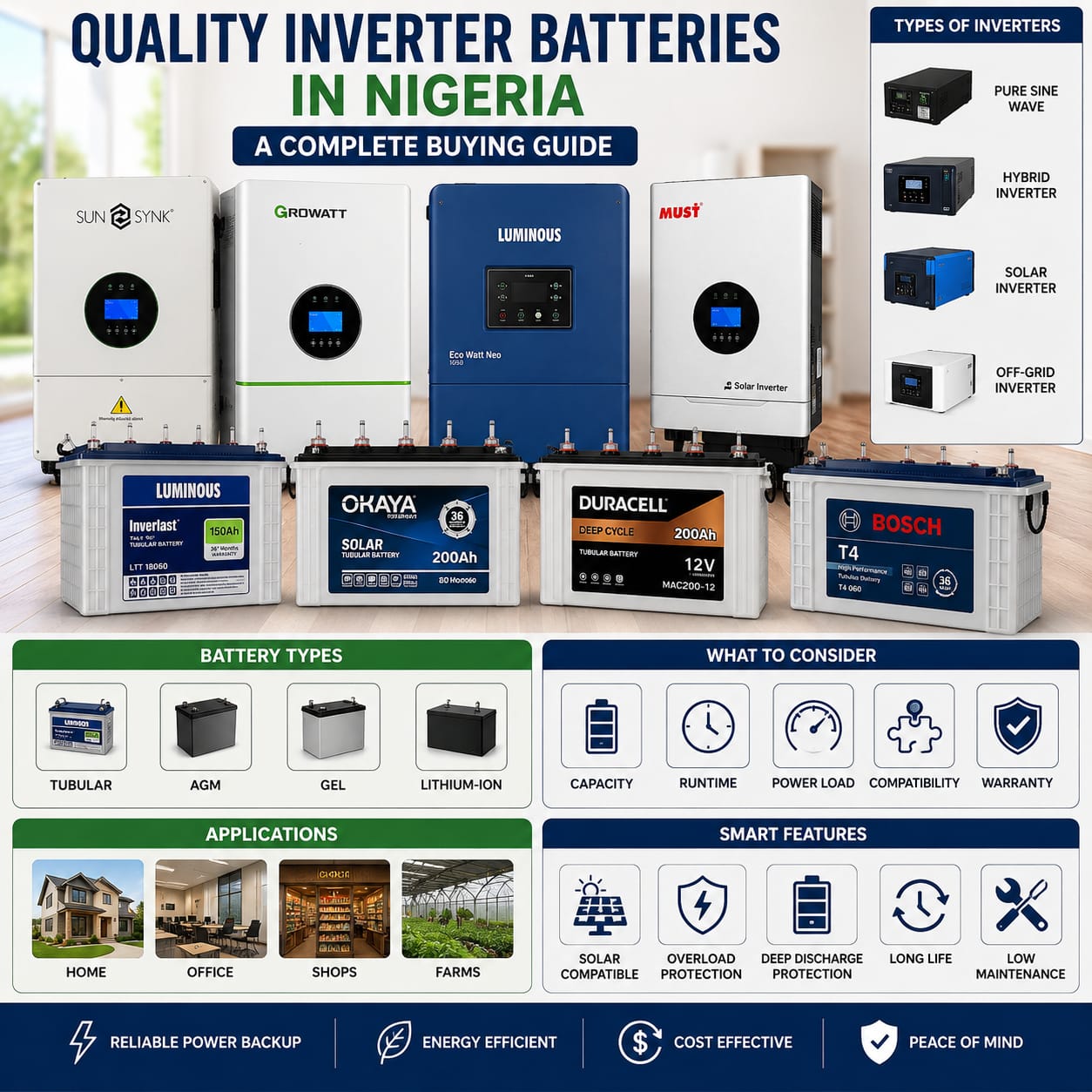
Choosing the right battery for your inverter or solar system can make or break your power setup. In Nigeria, two major options dominate the market — Lithium‑ion batteries and Tubular Lead‑Acid batteries. Each has unique advantages depending on your budget, energy needs, and usage pattern.
This guide explains their differences, pros and cons, and helps you decide which one suits your home best.
1. Understanding the Battery Types
Feature
Lithium‑Ion Battery
Tubular Lead‑Acid Battery
Technology
Uses lithium salts and advanced chemistry for energy storage.
Uses lead plates and electrolyte solution.
Cycle Life
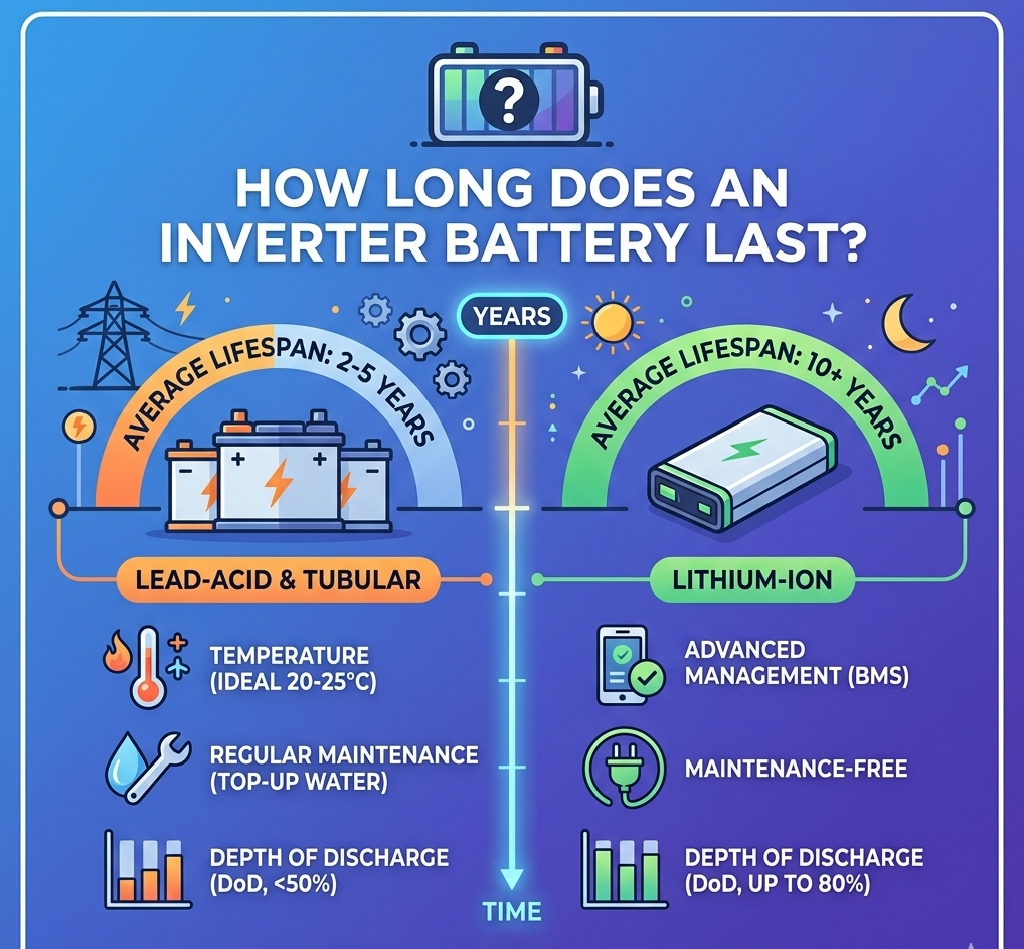
3,000–5,000 cycles (8–10 years).
1,000–1,500 cycles (3–5 years).
Maintenance
Maintenance‑free.
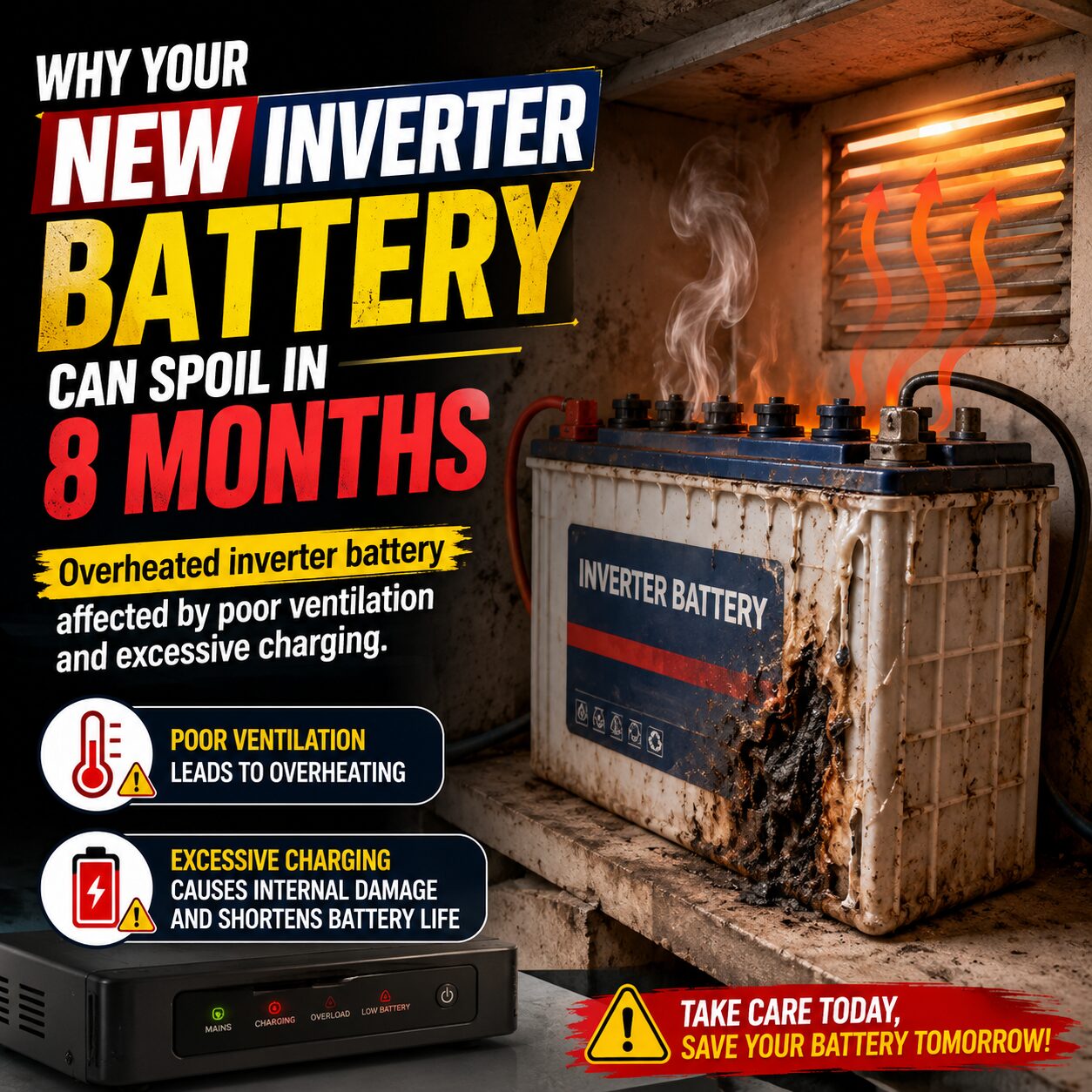
Requires periodic water topping.
Efficiency
90–95%.
75–85%.
Weight
Lightweight and compact.
Heavy and bulky.
Charging Speed
Fast (2–3 hours).
Slow (6–8 hours).
Cost
Higher upfront cost.
Lower initial cost.
2. When to Choose Lithium‑Ion Batteries
Choose Lithium‑ion if:
You want long‑term reliability and minimal maintenance.
You use your inverter or solar system daily (e.g., offices, homes with frequent outages).
You have limited space and prefer compact installations.
You can afford a higher initial investment for lower lifetime cost.
✅ Best for: Urban homes, offices, and solar setups needing consistent performance. 💰 Price range (Nigeria, 2026): ₦450,000 – ₦900,000 for 48V 100Ah modules.
3. When to Choose Tubular Lead‑Acid Batteries
Choose Tubular Lead‑Acid if:
You’re on a tight budget and need a reliable backup for short outages.
You don’t mind occasional maintenance (adding distilled water).
You use your inverter occasionally, not continuously.
You prefer easy availability and local service support.
✅ Best for: Small homes, shops, and areas with moderate power needs. 💰 Price range (Nigeria, 2026): ₦180,000 – ₦300,000 for 12V 200Ah units.
4. Cost vs Value Comparison
Factor
Lithium‑Ion
Tubular Lead‑Acid
Initial Cost
High
Low
Lifetime Cost
Lower (due to long lifespan)
Higher (frequent replacements)
Maintenance
None
Regular
Performance
Superior
Moderate
Environmental Impact
Eco‑friendly
Contains lead, needs recycling
5. Expert Recommendation
If you’re building a solar system or need daily inverter use, go for Lithium‑ion — it’s efficient, durable, and future‑proof. If you only need occasional backup and want to save upfront, Tubular Lead‑Acid is still a solid choice.
Final Thoughts
Both battery types can power your home effectively — the key is matching your energy demand, budget, and maintenance preference. For long‑term savings and performance, Lithium‑ion wins. For affordability and simplicity, Tubular Lead‑Acid remains a trusted option.









 Get it on
  Download on the