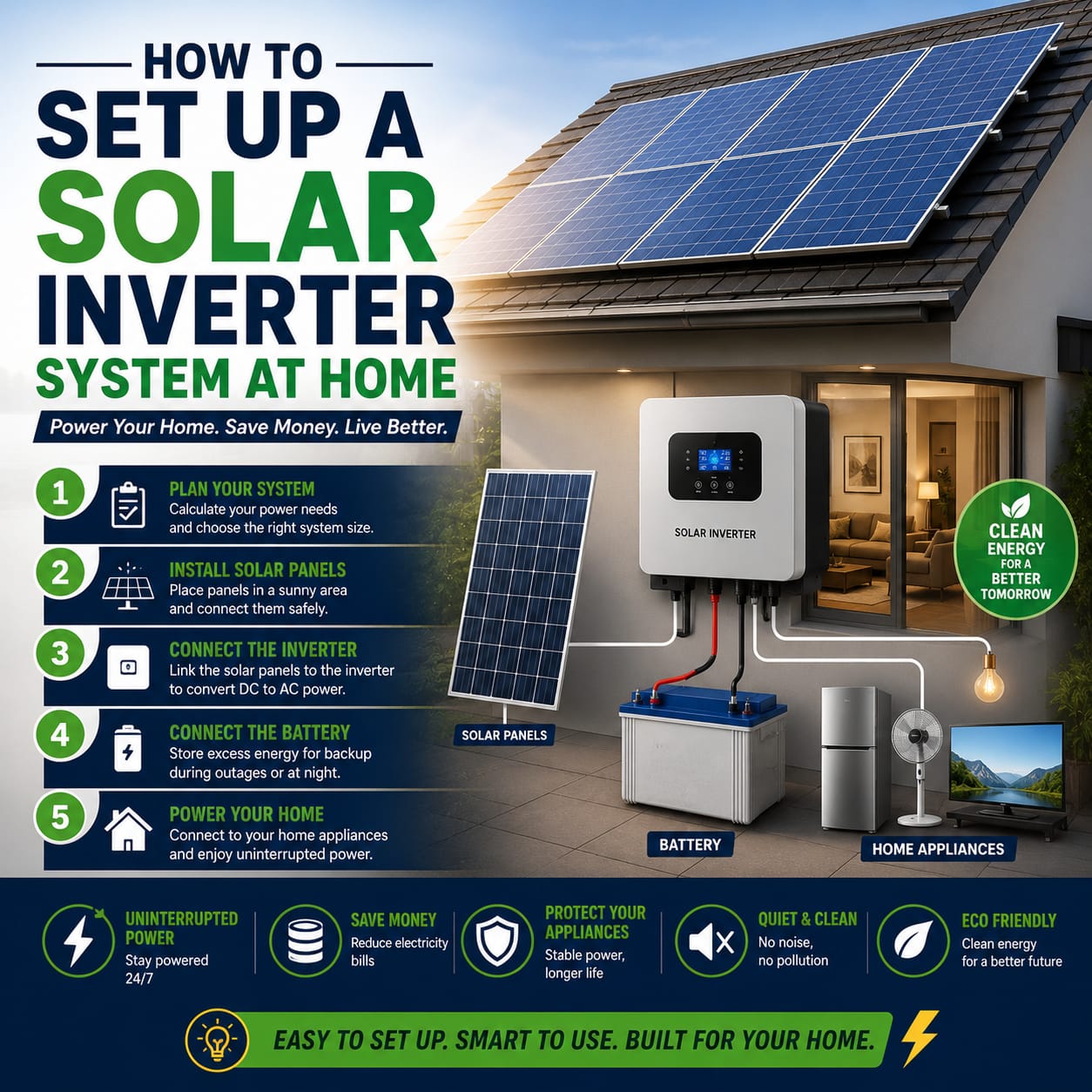
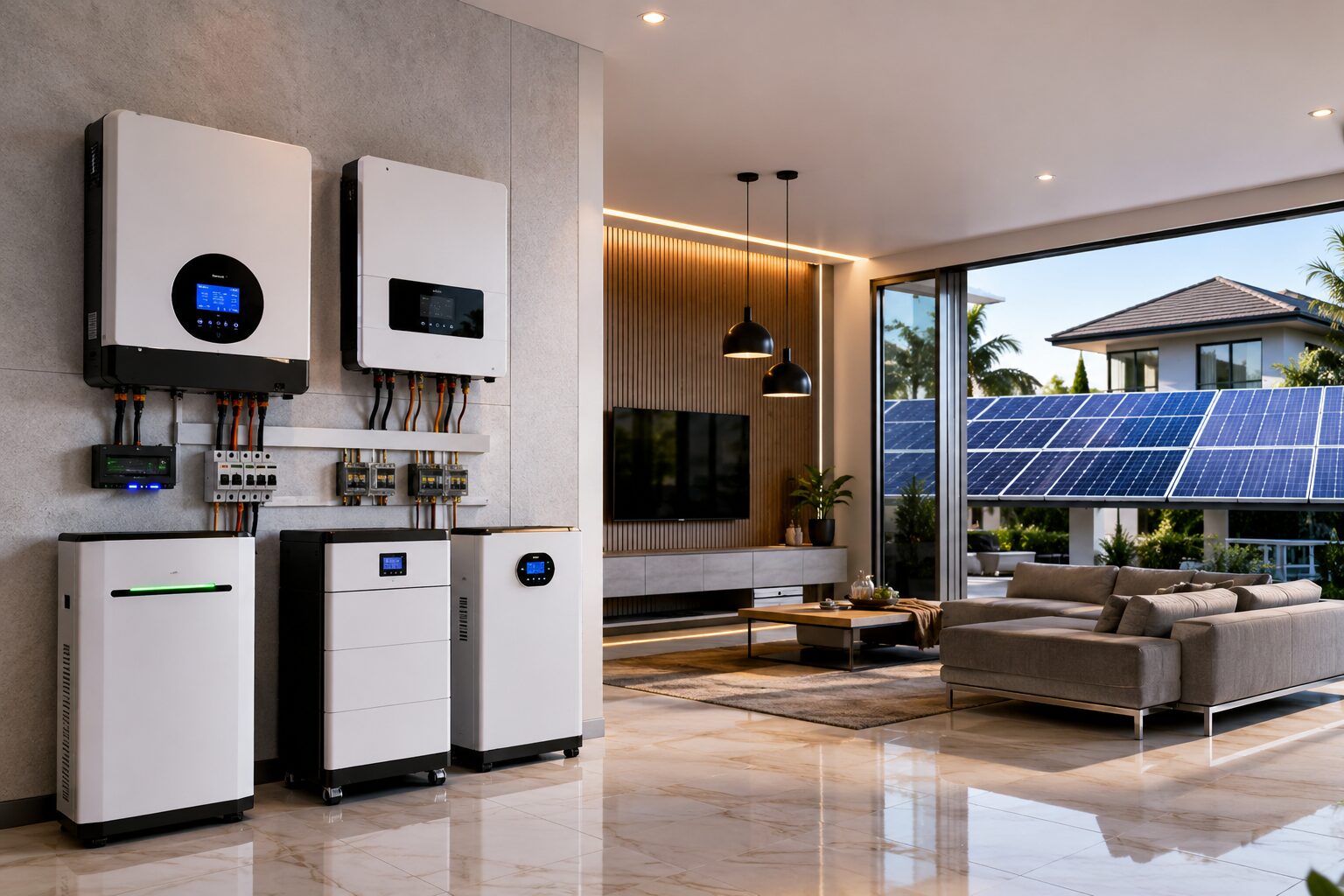
With rising electricity costs and frequent power outages, many Nigerians are turning to solar and inverter systems for reliable energy. But one common challenge remains — how to calculate the right capacity for your inverter, battery, and solar panels based on your home’s power needs.
This guide breaks it down step by step, helping you make smart, cost‑effective decisions for your energy setup.
Step 1: Calculate Your Home Power Load
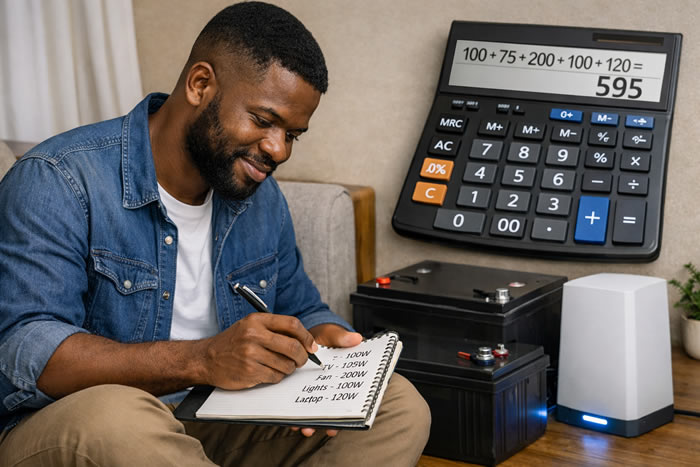
Start by listing all the appliances you want to power. Each device has a watt rating (usually printed on the label). Add them up to get your total load.
Appliance
Quantity
Power (Watts)
Total (Watts)
LED bulbs
10
10
100
Ceiling fan
3
75
225
TV
1
100
100
Laptop
2
60
120
Refrigerator
1
200
200
Router
1
20
20
Total Load
—
—
765W
👉 Total Load = 765 Watts
Step 2: Determine the Inverter Capacity
To find the inverter size, divide your total load by the power factor (0.8) and convert to kilovolt‑ampere (kVA):
Inverter Size (kVA)=Total Load (W)0.8×1000
For a 765W load:
Inverter Size=7650.8×1000=0.96 kVA
✅ Recommended inverter: 1.5kVA or 2kVA (to allow for future expansion).
Step 3: Choose the Right Battery Capacity
Battery capacity depends on how long you want backup power. Use this formula:
Battery Capacity (Ah)=Load (W)×Backup HoursBattery Voltage (V)×Efficiency (0.8)
For a 765W load, 12V battery, and 5 hours backup:
Battery Capacity=765×512×0.8=398Ah
✅ Recommended setup: Two 12V 200Ah batteries (connected in parallel).
Step 4: Calculate Solar Panel Capacity
To charge your batteries efficiently, use this formula:
Solar Panel (W)=Battery Capacity (Ah)×Battery Voltage (V)Sunlight Hours (5–6)
For two 12V 200Ah batteries:
Solar Panel=400×125=960W
✅ Recommended setup: 4 panels of 250W each (total 1000W).
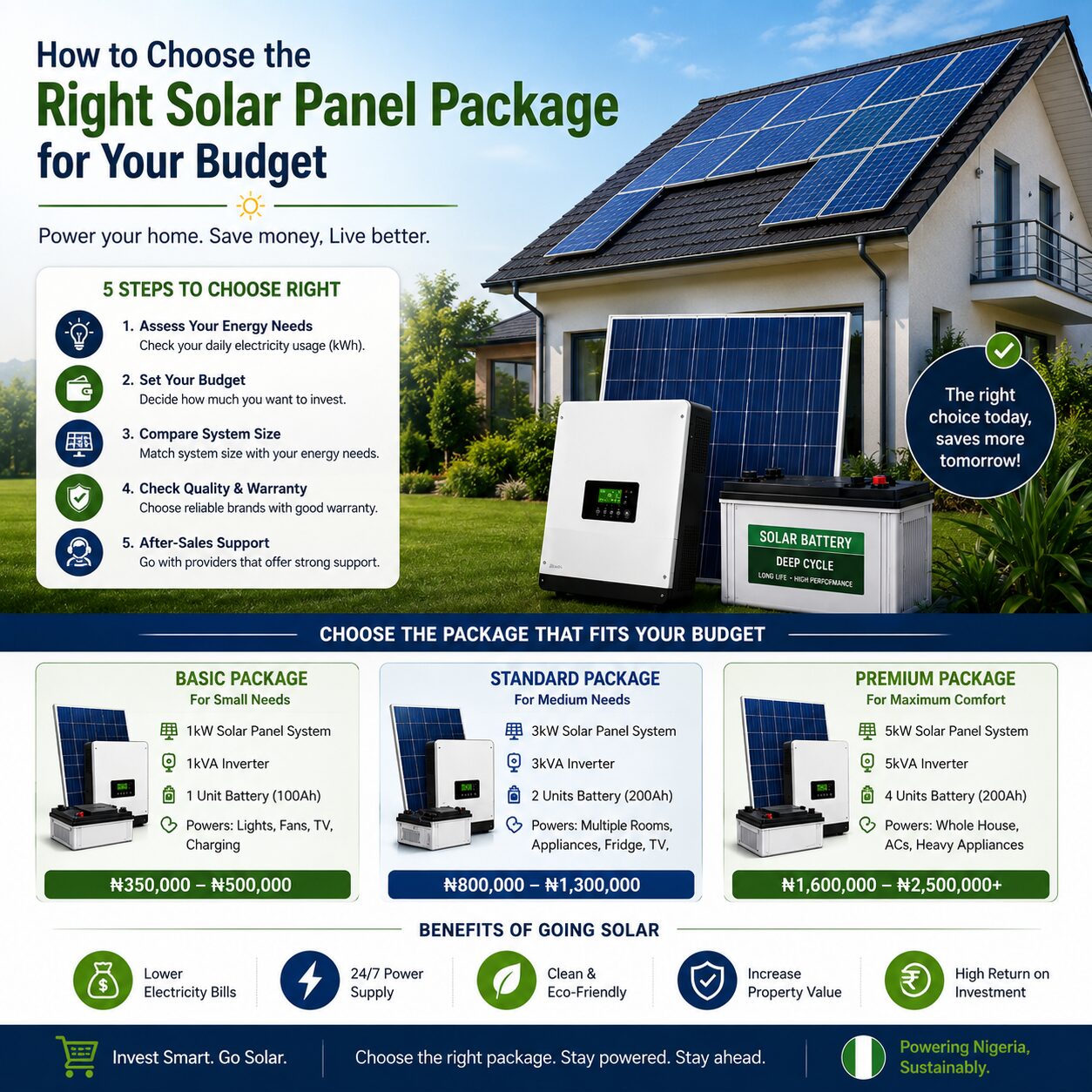
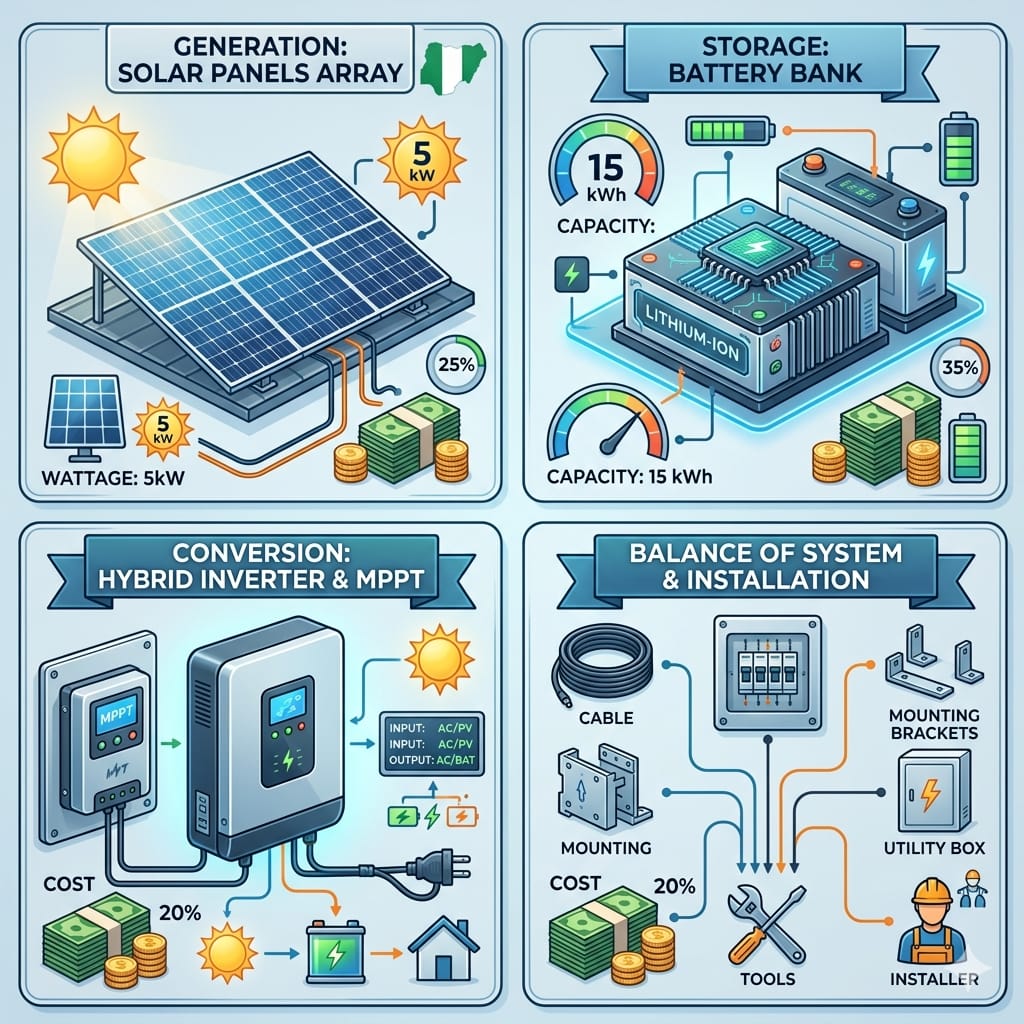
Step 5: Estimate the Cost (2026 Prices in Nigeria)
Component
Recommended Capacity
Estimated Cost (₦)
Inverter
2kVA
₦250,000 – ₦350,000
Battery
2 × 200Ah
₦400,000 – ₦500,000
Solar Panels
4 × 250W
₦300,000 – ₦400,000
Charge Controller
40A MPPT
₦80,000 – ₦120,000
Installation
—
₦50,000 – ₦100,000
Total Estimate
—
₦1.1M – ₦1.4M
Pro Tips
Always buy deep‑cycle batteries for longer lifespan.
Use MPPT charge controllers for better efficiency.
Choose pure sine wave inverters for sensitive electronics.
Consult a certified solar technician before installation.
Final Thoughts
Knowing your home’s power load helps you choose the right inverter, battery, and solar panel setup — saving money and ensuring uninterrupted power. With this guide, you can confidently design a system that fits your lifestyle and budget.









 Get it on
  Download on the