Understanding how solar panels and inverters work together to provide 24/7 power is essential for homeowners and businesses seeking reliable electricity. While solar panels generate energy during daylight hours, inverters play a crucial role in converting and managing that energy for everyday use. Furthermore, when combined with battery storage, these systems can deliver uninterrupted power day and night.
What Are Solar Panels?
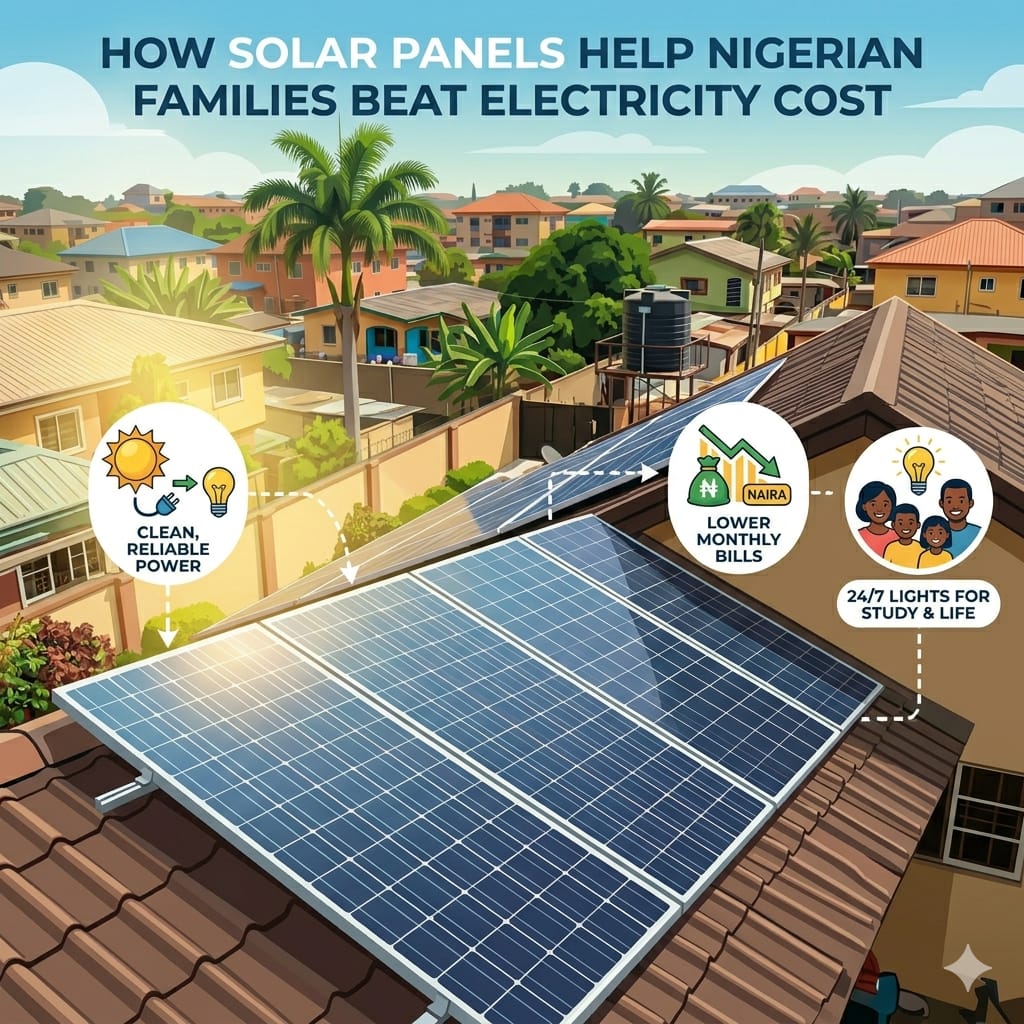
Solar panels are devices that convert sunlight into electricity.
They consist of photovoltaic (PV) cells that absorb sunlight and generate direct current (DC) electricity.
The main functions of solar panels include:
Capturing sunlight
Generating renewable energy
Reducing dependence on grid electricity
Lowering energy costs
Consequently, solar panels serve as the primary energy source in a solar power system.
What Is an Inverter?
An inverter is a critical component of any solar energy system.
Its primary function is to convert direct current (DC) electricity generated by solar panels into alternating current (AC) electricity used by household appliances.
Without an inverter:
Solar energy cannot power most home appliances.
Battery charging may become inefficient.
Energy management becomes difficult.
Therefore, the inverter acts as the bridge between solar energy production and practical electricity usage.
How Solar Panels and Inverters Work Together to Provide 24/7 Power
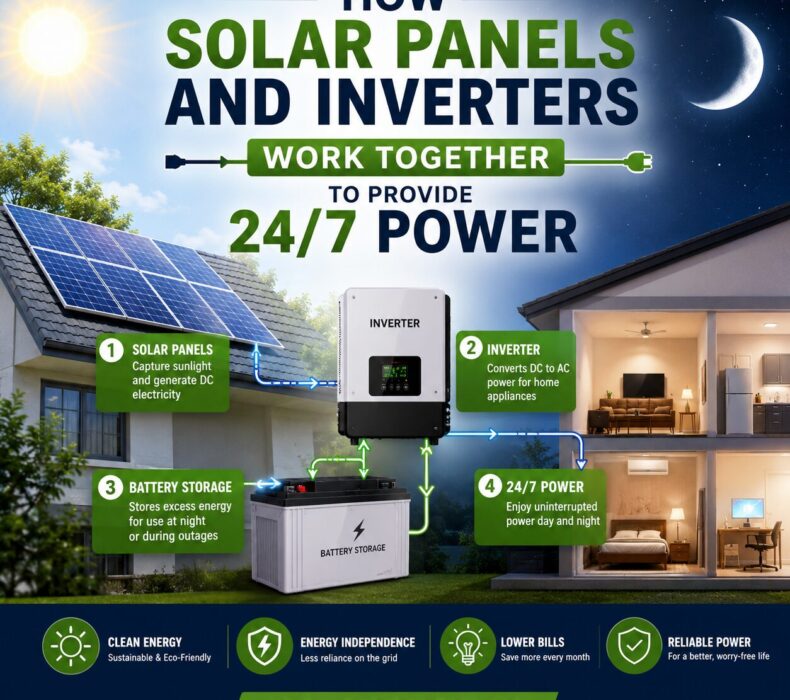
To understand how solar panels and inverters work together to provide 24/7 power, it is important to examine each stage of the energy process.
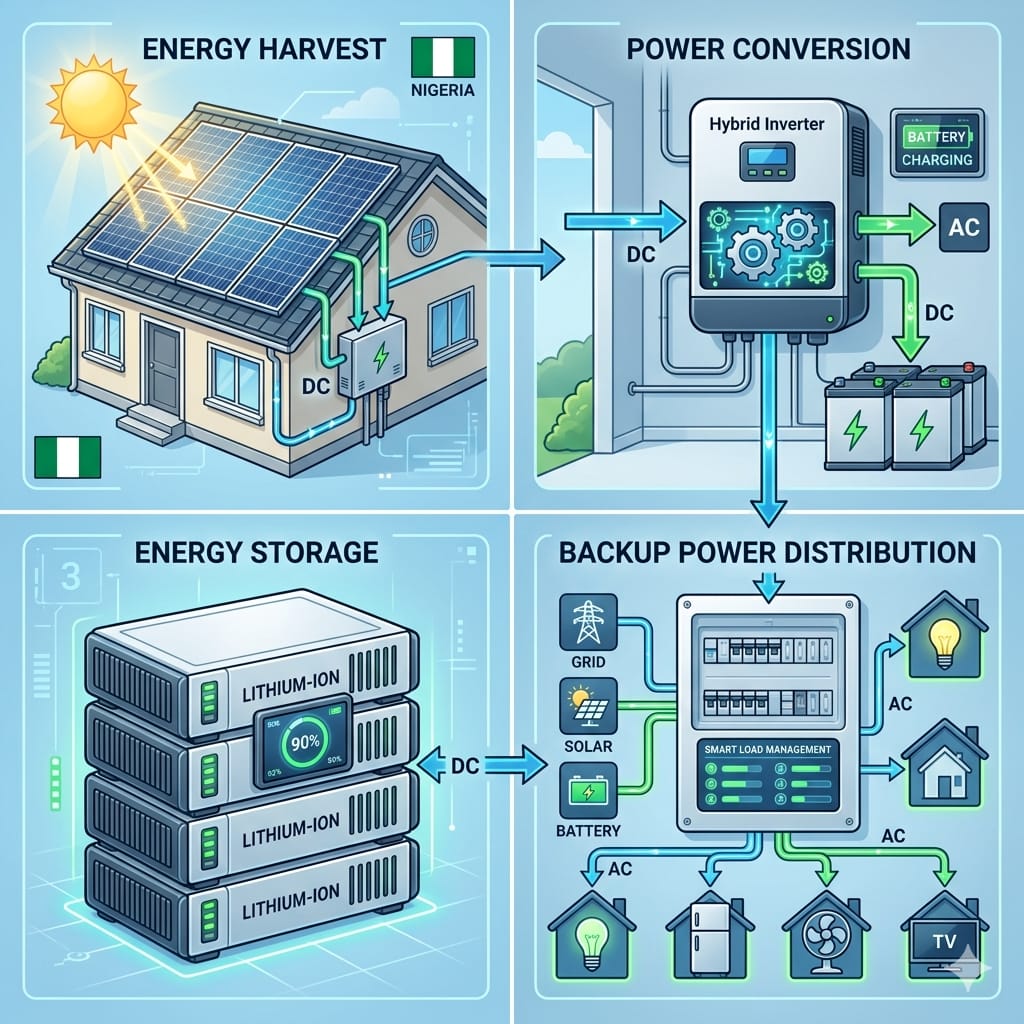
Step 1: Solar Panels Generate Electricity
During daylight hours, solar panels absorb sunlight and convert it into DC electricity.
The amount of electricity generated depends on:
Sunlight intensity
Panel efficiency
Weather conditions
Installation angle
As a result, energy production is highest during sunny periods.
Step 2: The Inverter Converts DC Power to AC Power
Most household appliances require AC electricity.
Therefore, the inverter converts the DC electricity from the solar panels into AC power.
Consequently, appliances such as:
Televisions
Refrigerators
Fans
Computers
Lighting systems
can operate normally using solar energy.
Step 3: Excess Energy Charges Batteries
Often, solar panels generate more electricity than a home consumes during the day.
Instead of wasting this excess energy, it is stored in batteries.
As a result:
Energy remains available after sunset.
Backup power is available during outages.
Energy independence increases.
Furthermore, battery storage maximizes the value of solar energy production.
Step 4: Batteries Supply Power at Night
When the sun sets, solar panels stop producing electricity.
However, the stored energy in batteries becomes available.
The inverter then draws power from the batteries and supplies AC electricity to the home.
Consequently, household appliances continue operating throughout the night.
Step 5: Automatic Energy Management
Modern solar inverter systems intelligently manage energy flow.
They automatically determine whether power should come from:
Solar panels
Batteries
The utility grid
Therefore, users enjoy seamless and uninterrupted electricity without manual intervention.
The Role of Batteries in 24/7 Solar Power
Batteries are essential for round-the-clock power availability.
Without batteries, solar energy would only be available during daylight hours.
Common battery options include:
Lithium Batteries
Lithium batteries offer:
Longer lifespan
Faster charging
Higher efficiency
Minimal maintenance
Therefore, they are increasingly popular in residential solar systems.
Tubular Batteries
Tubular batteries remain widely used because they provide:
Reliable performance
Affordable pricing
Good backup duration
Consequently, they remain a practical choice for many homeowners.
Benefits of Solar Panels and Inverters Working Together
There are several reasons homeowners are adopting solar energy systems.
Reduced Electricity Bills
Solar-generated power reduces reliance on utility electricity.
As a result, monthly energy expenses decrease significantly.
Reliable Backup Power
When combined with batteries, solar systems provide electricity even during grid failures.
Consequently, homes remain powered during blackouts.
Energy Independence
Generating your own electricity reduces dependence on utility providers.
Furthermore, homeowners gain greater control over energy costs.
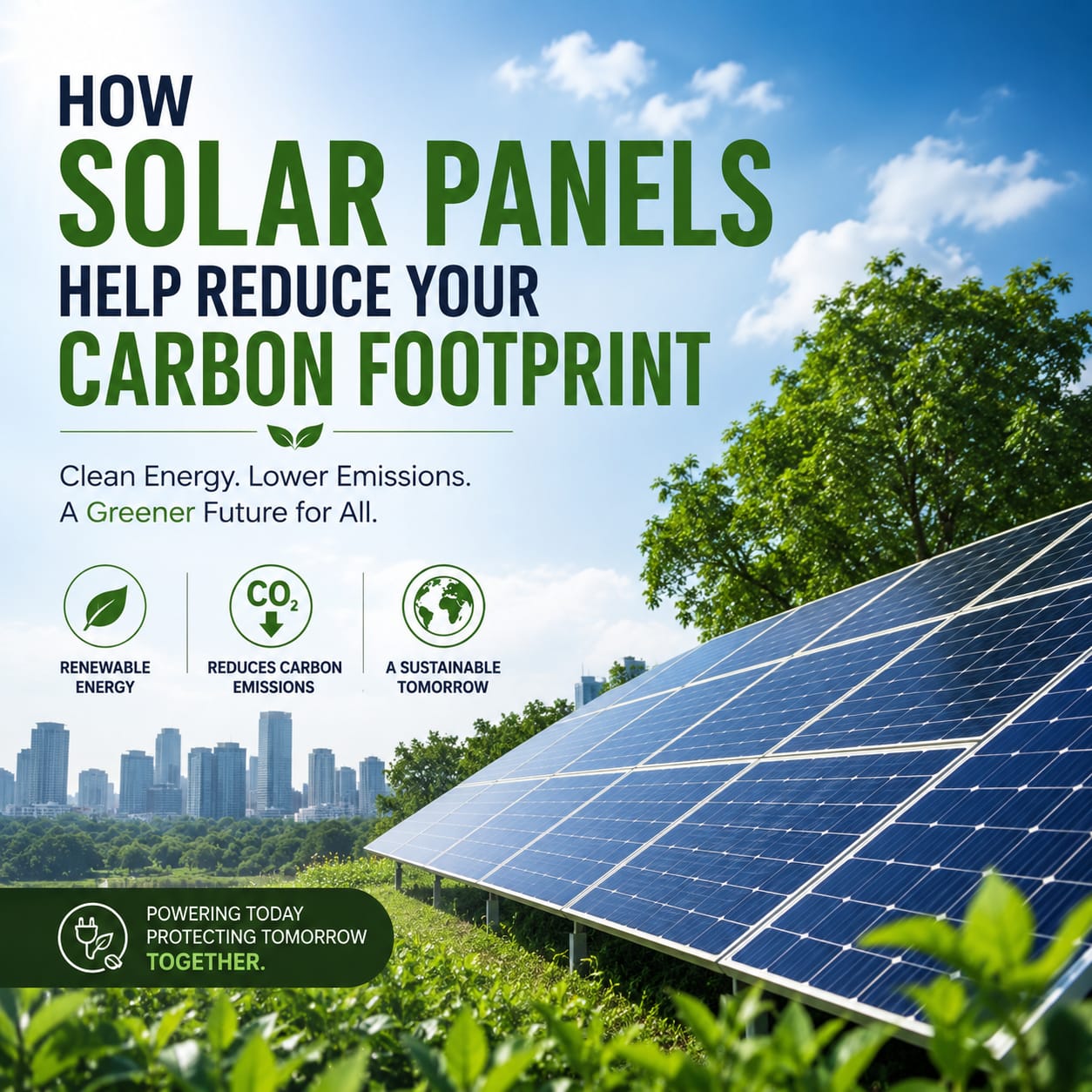
Environmentally Friendly Energy
Solar energy is clean and renewable.
Therefore, it helps reduce carbon emissions and environmental impact.
Why Hybrid Inverters Are Important
Hybrid inverters combine multiple functions into one system.
They can:
Manage solar energy production
Charge batteries
Supply household power
Interact with the utility grid
As a result, hybrid inverters simplify energy management and improve system efficiency.
Moreover, they are often the preferred choice for homeowners seeking 24/7 power availability.
Tips for Maximizing 24/7 Solar Power
To get the best results from your system:
Install high-efficiency solar panels.
Choose a quality hybrid inverter.
Use appropriately sized batteries.
Clean solar panels regularly.
Monitor energy production and consumption.
Schedule periodic maintenance.
As a result, your system will provide reliable power throughout the year.
Future of Solar Energy and Inverter Technology
Solar technology continues to evolve rapidly.
Modern systems now offer:
Smart monitoring apps
Improved battery technologies
Higher conversion efficiencies
Better energy management
Consequently, how solar panels and inverters work together to provide 24/7 power is becoming easier and more affordable than ever before.
Conclusion
Understanding how solar panels and inverters work together to provide 24/7 power highlights the importance of each component in a modern solar energy system. Solar panels generate clean electricity during the day, while inverters convert and manage that energy for household use. Additionally, batteries store excess energy so power remains available at night and during outages.









 Get it on
  Download on the