






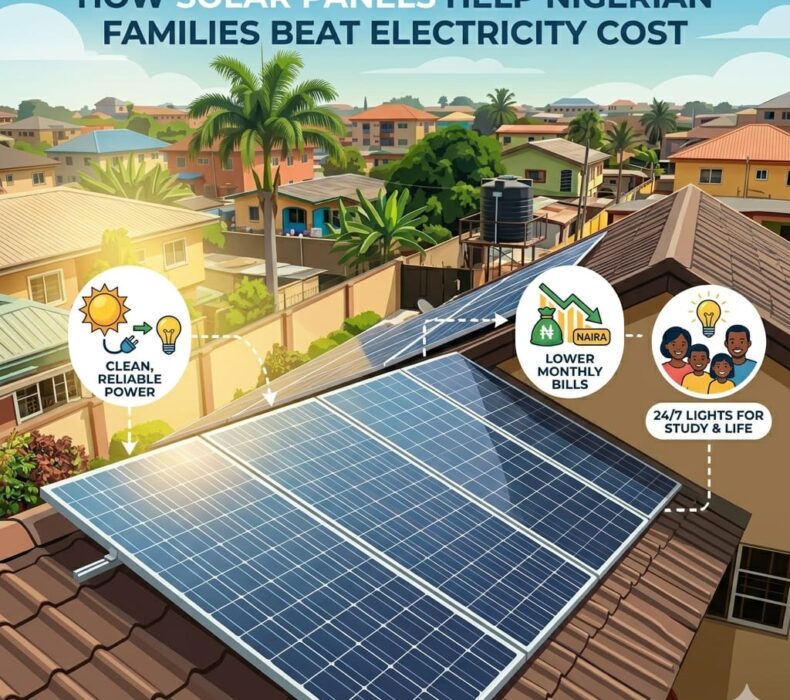
Electricity costs continue to rise across Nigeria, placing additional pressure on household budgets. As a result, many families are searching for practical ways to reduce energy expenses. How Solar Panels Help Nigerian Families Beat Rising Electricity Costs has become an important topic because solar energy offers a reliable and cost-effective alternative to traditional electricity sources. Furthermore, solar systems can help families enjoy consistent power while reducing their dependence on expensive grid electricity and fuel-powered generators.
Why Electricity Costs Are Rising in Nigeria
Many Nigerian households have experienced How Solar Panels Help Nigerian Families Beat Rising Electricity Costs in recent years.
Several factors contribute to higher energy costs, including:
- Rising electricity tariffs
- Fuel price increases
- Grid maintenance expenses
- Inflation and economic pressures
- Growing energy demand
Consequently, families often spend a significant portion of their monthly income on electricity and generator fuel.
Because of these challenges, alternative energy sources are becoming increasingly attractive.
Lower Monthly Electricity Bills
One of the biggest benefits of solar energy is reduced electricity costs.
During daylight hours, solar panels generate free electricity from sunlight. Therefore, households purchase less power from utility providers.
Over time, these savings can become substantial. In many cases, families recover their investment through reduced energy bills.
Additionally, solar energy helps protect households from future tariff increases.
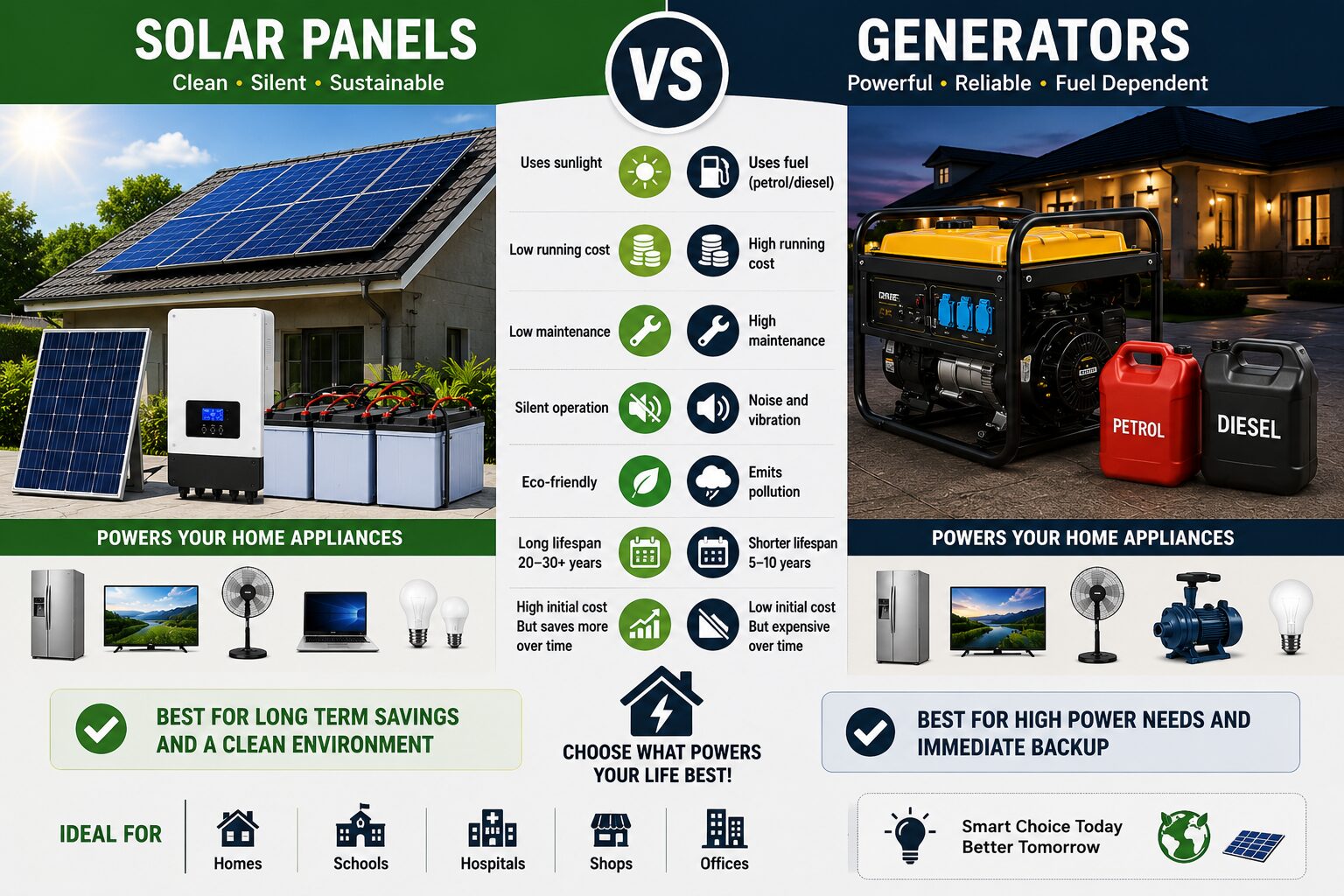
Reduced Dependence on Generators
Generators remain common in many Nigerian communities. However, fuel prices continue to rise.
Operating a generator daily can become expensive. Moreover, maintenance costs add to the financial burden.
Solar panels provide a cleaner and more affordable alternative. When combined with battery storage, solar systems can supply electricity during blackouts without consuming fuel.
Consequently, families spend less on generator operation and maintenance.
Protection Against Electricity Price Increases
Electricity tariffs can change unexpectedly.
Many households struggle to manage rising utility expenses when prices increase. Solar panels help reduce this risk because sunlight remains free.
Once installed, a solar system continues producing electricity regardless of utility price adjustments.
Therefore, homeowners gain greater control over their energy costs.
Reliable Power for Everyday Activities
Reliable electricity is essential for modern living.
Families depend on power for:
- Refrigerators
- Televisions
- Internet devices
- Lighting
- Fans and air conditioners
- Home offices
Frequent outages can disrupt daily routines. Solar systems help minimize these interruptions by providing an independent energy source.
As a result, households enjoy greater comfort and convenience.
Long-Term Financial Savings
Although solar panel installation requires an initial investment, the long-term savings are often significant.
Unlike monthly electricity bills, solar energy costs decrease after installation. Consequently, families benefit from years of reduced energy expenses.
Many solar panels continue operating efficiently for more than 25 years. This means homeowners can enjoy decades of savings from a single investment.
Increased Energy Independence
Energy independence allows households to rely less on external power providers.
Solar panels make this possible by generating electricity directly from sunlight.
In addition, battery storage systems allow excess energy to be used at night or during cloudy weather.
Greater independence helps families avoid many of the challenges associated with unreliable electricity supply.
Environmental Benefits
Solar energy does more than reduce costs.
Unlike generators and fossil fuel power plants, solar panels generate electricity without harmful emissions.
Therefore, households that adopt solar energy contribute to cleaner air and a healthier environment.
At the same time, reducing generator usage helps lower noise pollution in residential areas.
Why Solar Energy Makes Sense for Nigerian Families
Nigeria receives abundant sunlight throughout the year.
This natural advantage makes solar energy one of the most practical renewable energy solutions available.
Furthermore, many regions experience frequent power outages and unstable electricity supply. Solar panels help address these challenges while reducing energy expenses.
As awareness continues to grow, more families are investing in solar systems to improve their quality of life.
Choosing the Right Solar System
Selecting you have to know How Solar Panels Help Nigerian Families Beat Rising Electricity Costs the appropriate system is important for maximizing savings.
Before purchasing, consider:
Energy Consumption
Understand your household’s daily electricity needs.
Battery Capacity
Choose sufficient storage to support nighttime usage.
Product Quality
Invest in reliable solar panels, batteries, and inverters.
Professional Installation
Work with experienced installers to ensure optimal performance.
A properly designed system delivers better efficiency and long-term value.
Conclusion
How Solar Panels Help Nigerian Families Beat Rising Electricity Costs is evident through lower utility bills, reduced generator expenses, greater energy independence, and long-term savings. Solar systems provide a practical solution for households seeking reliable electricity while protecting themselves from rising energy costs.
Moreover, solar energy supports environmental sustainability and improves overall quality of life. As more Nigerians embrace renewable energy, solar panels will continue to provide a smart and cost-effective path toward energy security.





 Get it on
  Download on the