






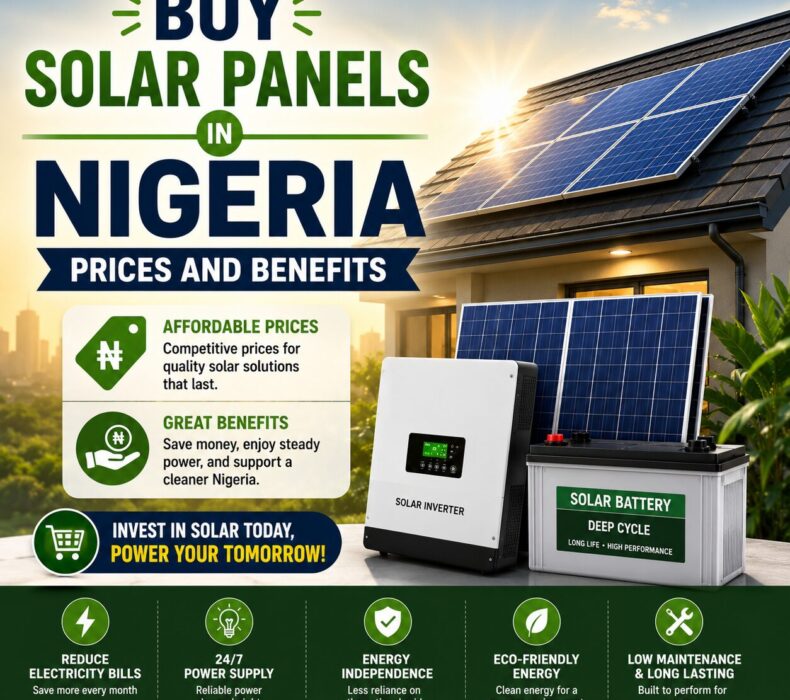
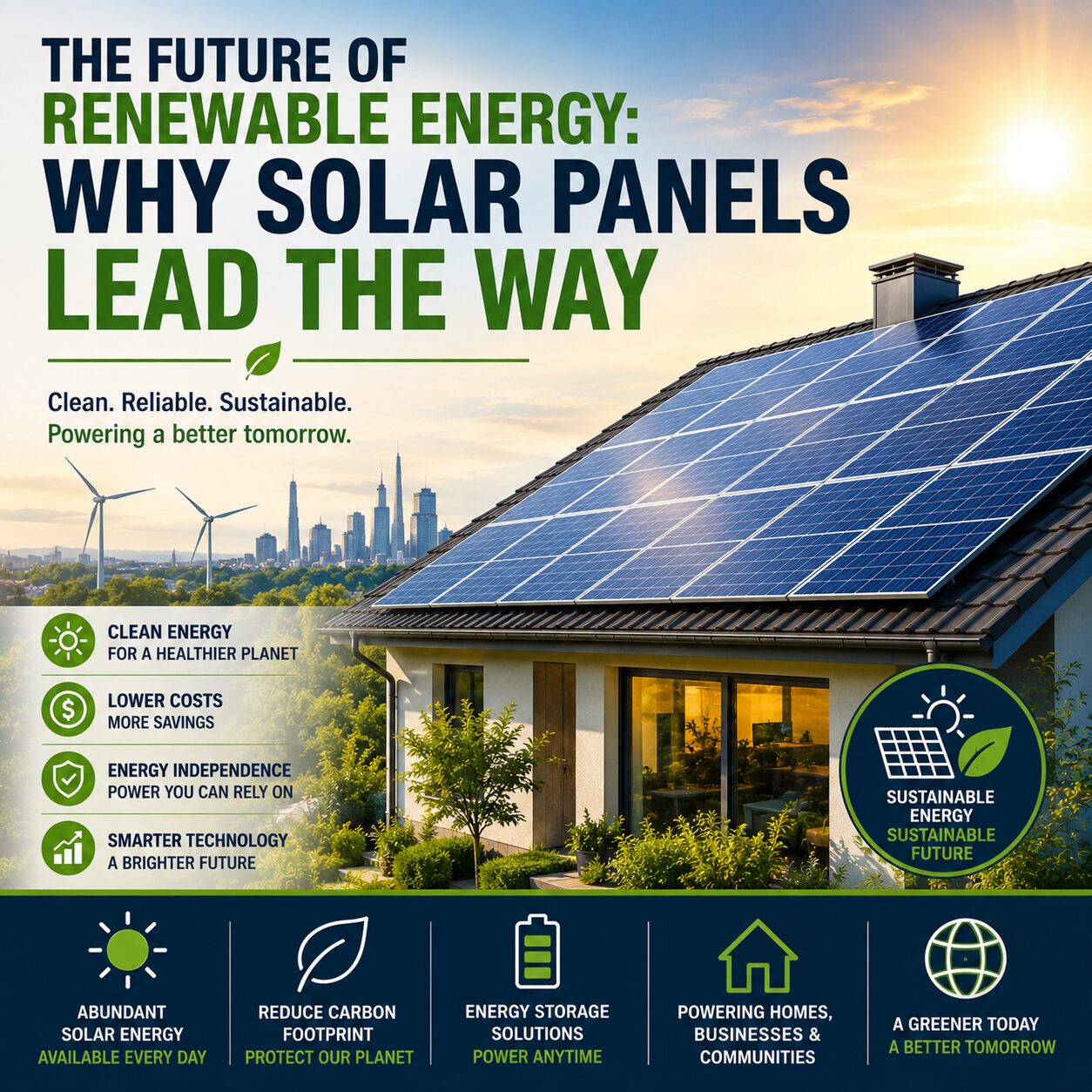
If you are considering renewable energy solutions, understanding buy solar panels in Nigeria: prices and benefits is essential before making a purchase. With increasing electricity costs and frequent power outages across the country, more homeowners and businesses are turning to solar energy as a reliable alternative. Moreover, solar panels provide long-term savings, reduce dependence on generators, and contribute to a cleaner environment.
Why Solar Energy Is Growing in Nigeria
Nigeria experiences abundant sunshine throughout the year, making solar energy one of the most practical power solutions available.
Furthermore, many households and businesses face challenges such as:
- Unreliable grid electricity
- Rising fuel costs
- Generator maintenance expenses
- Frequent power interruptions
Consequently, solar power has become an attractive option for those seeking dependable electricity.
What Are Solar Panels?
Solar panels are devices that convert sunlight into electricity using photovoltaic (PV) cells.
Their primary functions include:
- Capturing solar energy
- Generating electricity
- Charging batteries
- Reducing electricity bills
As a result, homeowners can enjoy a consistent power supply while lowering energy costs.
Buy Solar Panels in Nigeria: Prices and Benefits Explained
One of the most common questions buyers ask is how much solar panels cost in Nigeria.
While prices vary depending on brand, capacity, and technology, the following ranges provide a general guide.
Estimated Solar Panel Prices in Nigeria
| Solar Panel Capacity | Estimated Price Range |
|---|---|
| 100W Solar Panel | ₦50,000 – ₦90,000 |
| 200W Solar Panel | ₦80,000 – ₦150,000 |
| 300W Solar Panel | ₦120,000 – ₦220,000 |
| 400W Solar Panel | ₦150,000 – ₦300,000 |
| 550W Solar Panel | ₦220,000 – ₦450,000 |
Prices may vary depending on supplier, location, exchange rates, and market conditions.
Therefore, comparing multiple suppliers before purchasing is always advisable.
Factors That Affect Solar Panel Prices
Several factors influence solar panel costs in Nigeria.
Panel Capacity
Higher-capacity panels generate more electricity.
Consequently, they usually cost more than smaller models.
Brand Reputation
Well-known manufacturers often offer:
- Better efficiency
- Stronger warranties
- Improved durability
As a result, premium brands may command higher prices.
Technology Type
Solar panels are generally available as:
- Monocrystalline panels
- Polycrystalline panels
Monocrystalline panels are typically more efficient but also more expensive.
Import Costs
Since many solar products are imported, exchange rate fluctuations can significantly affect pricing.
Therefore, market conditions often influence final costs.
Benefits of Buying Solar Panels in Nigeria
Understanding buy solar panels in Nigeria: prices and benefits helps buyers appreciate the long-term value of solar energy.
Reduced Electricity Bills
Solar energy allows households to generate their own electricity.
As a result, dependence on utility power decreases.
Consequently, monthly electricity expenses can be significantly reduced.
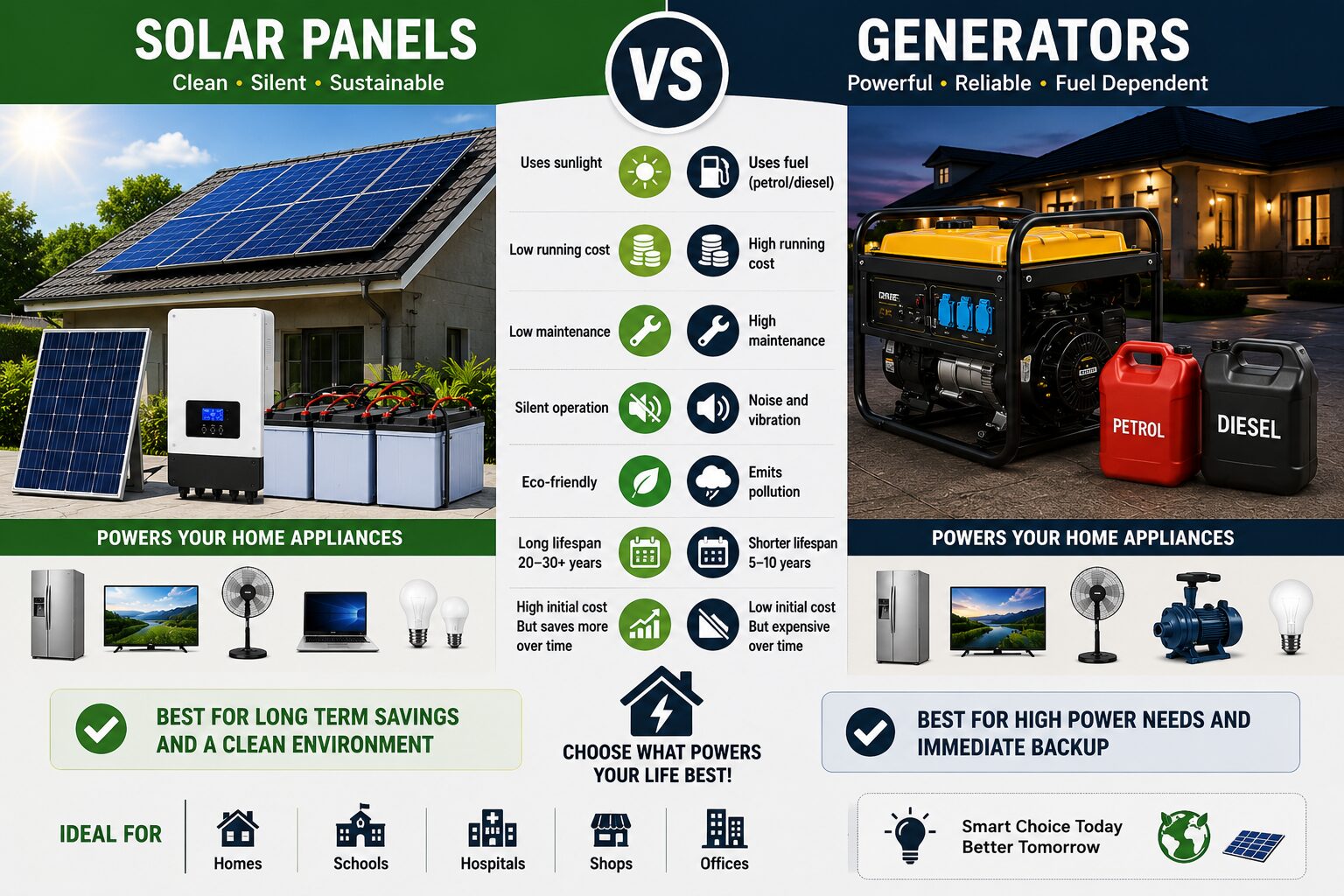
Lower Generator Expenses
Many Nigerians rely on generators during power outages.
However, fuel costs and maintenance expenses can be substantial.
Solar energy, on the other hand, utilizes free sunlight.
Therefore, operating costs are much lower over time.
Reliable Power Supply
Solar systems provide dependable electricity when properly designed.
Furthermore, when paired with batteries and inverters, they can supply power during blackouts.
As a result, homes and businesses experience fewer disruptions.
Environmentally Friendly Energy
Solar energy produces no harmful emissions during operation.
Consequently, it helps reduce environmental pollution and supports sustainable living.
Increased Property Value
Homes equipped with solar systems often attract buyers looking for energy-efficient properties.
Therefore, solar installations may increase property appeal and market value.
Components Needed for a Complete Solar System
Solar panels alone are not enough to create a full solar power solution.
Additional components include:
Solar Inverter
The inverter converts solar-generated DC electricity into AC electricity used by appliances.
Solar Batteries
Batteries store excess energy for use at night and during power outages.
Charge Controller
A charge controller regulates battery charging and helps prevent overcharging.
Mounting Structures
Mounting systems securely position solar panels for maximum sunlight exposure.
Consequently, all these components work together to create a reliable solar energy system.
How to Choose the Right Solar Panels
Before purchasing solar panels, consider several important factors.
Assess Your Energy Needs
Calculate the total electricity consumption of your home or business.
This helps determine the number of panels required.
Consider Available Roof Space
The amount of available installation space affects system size.
Therefore, proper planning is essential.
Evaluate Panel Efficiency
Higher-efficiency panels generate more electricity from the same surface area.
Consequently, they may provide better long-term value.
Check Warranty Coverage
Reliable manufacturers often offer warranties ranging from 10 to 25 years.
As a result, buyers gain additional peace of mind.
How Solar Panels Help Businesses in Nigeria
Businesses benefit significantly from solar energy solutions.
Advantages include:
- Lower operating costs
- Reduced generator usage
- Improved productivity
- Stable electricity supply
- Better customer service
Therefore, solar energy can provide both financial and operational benefits.
Why Solar Energy Is a Long-Term Investment
Although the initial installation cost may seem significant, solar systems often generate savings for many years.
Benefits include:
- Reduced fuel expenses
- Lower electricity bills
- Minimal operating costs
- Long equipment lifespan
Consequently, many users recover their investment through accumulated savings over time.
Maintenance Tips for Solar Panels
To maximize performance:
- Clean panels regularly.
- Remove dust and debris.
- Inspect wiring periodically.
- Monitor system output.
- Schedule professional maintenance when necessary.
As a result, the system continues operating efficiently.
Conclusion
Understanding buy solar panels in Nigeria: prices and benefits can help homeowners and businesses make informed energy decisions. While prices vary depending on capacity, technology, and brand, the long-term benefits often outweigh the initial investment. Moreover, solar panels reduce electricity costs, provide reliable power, lower generator dependence, and support environmental sustainability.



 Get it on
  Download on the