If you have oily, acne-prone or congested skin, finding the right face mask can be an important part of building a simple and effective skincare routine. This is especially true in Nigeria, where heat, humidity, sweat and excess facial oil can leave the skin feeling greasy and contribute to clogged pores.
One skincare product that has become increasingly popular for managing excess oil is the clay mask. Clay masks are known for their ability to absorb excess oil and help remove impurities from the skin’s surface. Depending on the formula, they may also contain ingredients such as salicylic acid, niacinamide, charcoal or soothing botanical ingredients.
But with so many products available, what is the best clay mask for acne-prone skin in Nigeria?
The answer depends on your skin type and specific concerns. Someone with very oily skin may prefer a stronger oil-absorbing formula, while someone with sensitive or combination skin may benefit from a gentler kaolin-based mask.
A clay mask is a skincare treatment formulated with mineral-rich clays designed to absorb excess oil and help remove surface impurities.
Common clays found in facial masks include:
Kaolin clay
Bentonite clay
French green clay
Rassoul clay
Volcanic clay
Some products also combine clay with ingredients such as charcoal, salicylic acid, niacinamide, aloe vera or glycerin.
Clay masks are particularly popular among people with oily and combination skin because they can temporarily reduce the appearance of excess shine and leave the skin feeling cleaner and smoother.
However, a clay mask is not a cure for acne. It can complement an acne-friendly skincare routine but should not replace appropriate acne treatment.
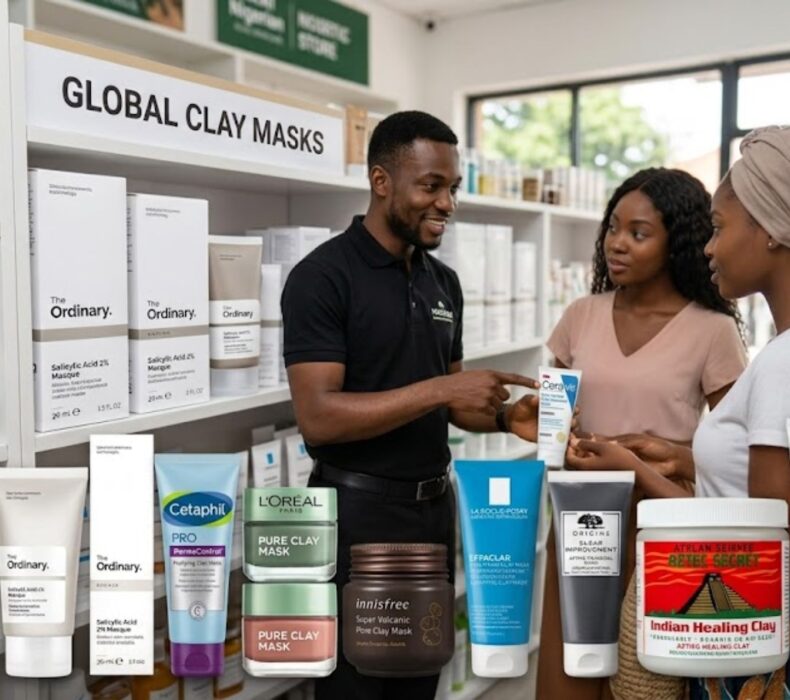
Below are popular clay-mask options and formulations worth considering when shopping for acne-prone skin.
1. The Ordinary Salicylic Acid 2% Masque
The Ordinary Salicylic Acid 2% Masque is designed for skin that looks congested and uneven. It combines salicylic acid with clays and other ingredients intended to help improve the appearance of pores and excess oil.
Best for: Oily and congested skin.
Why consider it: The combination of clay and salicylic acid makes it particularly relevant for people concerned about clogged pores and blemishes.
Because salicylic acid is an active exfoliating ingredient, beginners should introduce this type of product gradually and avoid combining it with several other strong exfoliating treatments.
2. Cetaphil DermaControl Purifying Clay Mask
Cetaphil’s purifying clay mask is designed for oily skin and contains kaolin and bentonite clays.
Best for: Oily and combination skin.
Why consider it: It provides oil-absorbing benefits while coming from a brand known for products aimed at sensitive and acne-prone skin.
If your skin tends to become dry easily, start by using the mask occasionally rather than several times per week.
3. L’Oréal Paris Pure Clay Mask
L’Oréal Paris offers several Pure Clay Mask formulations, with different versions designed around concerns such as impurities, dullness and excess oil.
Best for: People looking for different clay-mask formulations.
Why consider it: The range makes it possible to choose a formula based on your particular skincare concern.
Always check the exact product variant and ingredient list because formulations can differ.
4. Innisfree Super Volcanic Pore Clay Mask
Volcanic-clay masks are popular among people looking to manage excess oil and the appearance of enlarged or congested pores.
Best for: Oily skin and visible pores.
Why consider it: It is particularly popular among people interested in pore-focused skincare.
If you have sensitive skin, patch-test first because pore-cleansing masks can sometimes feel drying.
5. La Roche-Posay Effaclar Clay Mask
The Effaclar range is designed with oily and blemish-prone skin in mind, making its purifying products worth considering for people dealing with excess sebum.
Best for: Oily and blemish-prone skin.
Why consider it: It fits well into routines focused on controlling excess oil and maintaining a cleaner-feeling complexion.
6. Origins Clear Improvement Active Charcoal Mask
Charcoal masks are often marketed for deep cleansing and removing impurities.
Best for: Oily and congested skin.
Why consider it: Charcoal is frequently combined with clay in purifying masks for people concerned about excess oil and clogged-looking pores.
However, charcoal is not automatically better than clay. The complete formulation matters more than one headline ingredient.
7. Aztec Secret Indian Healing Clay
Bentonite-based clay products such as Aztec Secret Indian Healing Clay have become popular among people who prefer simple clay formulations.
Best for: Very oily skin.
Why consider it: Bentonite is highly absorbent and can provide a strong oil-control sensation.
It may be too drying for sensitive or dehydrated skin, so beginners should be cautious and follow the manufacturer’s instructions.
8. CeraVe Acne Control or Clay-Based Mask Options
CeraVe is another brand frequently considered by people building skincare routines for acne-prone skin. Depending on the product available in your market, clay-based or acne-focused formulas may contain ingredients such as salicylic acid and barrier-supporting ingredients.
Best for: People who want acne-focused skincare alongside barrier-conscious ingredients.
Always confirm the exact formulation before purchasing because product availability differs between markets.
9. Simple Purifying Clay Masks
Simple clay masks can be a good option for shoppers who prefer straightforward skincare without unnecessary complexity.
Best for: Beginners and budget-conscious skincare shoppers.
Look for formulas based on kaolin or bentonite and avoid products containing ingredients that have previously irritated your skin.
10. Kaolin Clay Masks
A basic kaolin clay mask deserves a place on this list because it is often one of the gentler options for people who want to manage facial oil.
Best for: Combination, oily and some sensitive skin types.
Why consider it: Kaolin generally provides oil absorption without necessarily feeling as aggressive as stronger clay formulations.
For someone new to clay masks, a simple kaolin formula can be an excellent starting point.
Which Clay Is Best for Acne-Prone Skin?
Different clays can behave differently on the skin.
Kaolin Clay
Kaolin is a relatively gentle clay commonly used in facial masks.
It may be suitable for:
Combination skin
Oily skin
Beginners
Mild congestion
People who dislike very drying masks
If your skin is acne-prone but easily irritated, kaolin may be a better starting point than a very strong bentonite formula.
Bentonite Clay
Bentonite is known for its strong absorbent properties.
It may be suitable for:
Very oily skin
Excess facial sebum
Congested areas
Oily T-zones
However, stronger oil absorption can also mean more dryness. Use it carefully if your skin is sensitive or dehydrated.
French Green Clay
French green clay is another option commonly used in purifying and oil-control masks.
It is particularly popular in skincare products designed for oily and combination skin.
Volcanic Clay
Volcanic clay is used in some pore-focused skincare products and can help create a deep-cleansing feel.
It is worth considering if your primary concern is excess oil and the appearance of congested pores.
Best Clay Mask Ingredients for Acne-Prone Skin
When searching for the best clay mask for acne-prone skin in Nigeria, don’t choose a product based on the word “clay” alone.
Look at the complete formula.
Salicylic Acid
Salicylic acid is one of the most commonly used acne-focused ingredients. It helps exfoliate the skin and can penetrate into pores, making it particularly useful for blackheads and clogged pores.
Niacinamide
Niacinamide is frequently used in skincare products designed for oily and blemish-prone skin. It can complement a routine focused on maintaining a healthy skin barrier and improving the appearance of uneven skin.
Aloe Vera
Aloe vera is commonly included in skincare formulas for its soothing properties and can make a clay mask feel more comfortable.
Glycerin
Glycerin is a humectant that helps attract water to the skin. Its presence can be useful in a clay mask because clay-based products may otherwise leave some skin types feeling dry.
Charcoal
Activated charcoal is commonly used in purifying masks. However, don’t assume a charcoal mask is automatically more effective than a regular clay mask. The entire formula matters.
Benefits of Using a Clay Mask for Acne-Prone Skin
When used appropriately, a clay mask may offer several cosmetic benefits.
1. Helps Absorb Excess Oil
Clay can absorb oil from the surface of the skin, making the complexion appear less shiny.
2. Helps Cleanse the Skin
Clay masks can help remove surface impurities and leave the skin feeling fresh.
3. Helps Improve the Appearance of Pores
Removing excess oil and buildup can temporarily make pores appear less noticeable.
4. Can Help With Congested-Looking Skin
A suitable clay mask can be useful for people dealing with oily, congested areas.
5. Leaves Skin Feeling Smoother
After rinsing away a clay mask, many people notice that their skin feels smoother and cleaner.
Remember that these are mainly supportive skincare benefits. A clay mask should not be presented as a standalone cure for acne.
How to Use a Clay Mask Correctly
Using a clay mask correctly is just as important as choosing the right product.
Step 1: Cleanse Your Face
Begin with a gentle facial cleanser to remove sweat, sunscreen, dirt and excess oil.
Don’t aggressively scrub your skin before applying the mask.
Step 2: Apply a Thin, Even Layer
Apply the clay mask evenly to your face while avoiding your eyes and lips.
You don’t need an extremely thick layer.
Step 3: Follow the Instructions
Leave the product on for the amount of time recommended by the manufacturer.
Do not deliberately leave it on until your skin becomes extremely tight and uncomfortable.
Step 4: Rinse Gently
Use lukewarm water and gently remove the mask.
Avoid scrubbing your face while rinsing.
Step 5: Apply Moisturiser
Finish with a suitable moisturiser.
Even oily skin needs hydration. Over-drying your face is not a good skincare strategy.
Step 6: Use Sunscreen During the Day
If your skincare routine contains exfoliating ingredients such as salicylic acid, daily sunscreen becomes particularly important.
How Often Should You Use a Clay Mask?
For most people, starting with once a week is sensible.
Some people with very oily skin may tolerate clay masks twice weekly, depending on the product.
You should reduce usage if you experience:
Excessive dryness
Flaking
Burning
Persistent redness
Itching
Increased irritation
Skin that feels extremely tight
Using a clay mask every day is generally unnecessary.
Clay Mask for Acne-Prone Skin in Nigeria: What Should You Consider?
Nigeria’s climate is an important consideration when choosing skincare.
Heat and humidity can make your skin feel oilier and increase sweating. However, this doesn’t mean you should constantly strip your skin of oil.
Instead, focus on maintaining balance.
When shopping for a clay mask for acne-prone skin in Nigeria, consider:
Your Skin Type
Oily skin may tolerate stronger clay formulations, while sensitive or dry skin may need gentler options.
Your Main Concern
If you are mainly concerned about excess oil, kaolin or bentonite may be appropriate.
For clogged pores, consider formulas containing salicylic acid.
The Rest of Your Routine
If you already use exfoliating acids, retinoids or acne treatments, be careful about adding another potentially irritating product.
Authenticity
Buy skincare products from reputable sellers. Counterfeit or improperly stored skincare products can be unsuitable for use.
Budget
There are premium and affordable clay-mask options. A higher price does not automatically mean better results.
Common Clay Mask Mistakes to Avoid
Leaving It on Too Long
A mask does not need to become completely dry and cracked to work.
Using It Every Day
Daily use can lead to unnecessary dryness and irritation.
Scrubbing Acne
Do not aggressively scrub active breakouts when removing a clay mask.
Skipping Moisturiser
Oil control and hydration are not opposites. Acne-prone skin can still become dehydrated.
Mixing Too Many Active Ingredients
Using clay, salicylic acid, glycolic acid, retinol and other strong treatments simultaneously can overwhelm sensitive skin.
Introduce products gradually.
Clay Mask vs Face Wash: Which Is Better for Acne?
A clay mask and facial cleanser serve different purposes.
A face wash is designed for regular cleansing and is generally used daily.
A clay mask is an occasional treatment designed to absorb excess oil and provide a deeper cleansing experience.
You don’t need to choose one over the other. A simple routine can include:
Morning: Cleanser → Moisturiser → Sunscreen
Evening: Cleanser → Acne treatment if appropriate → Moisturiser
Once or twice weekly: Cleanser → Clay mask → Moisturiser
The exact routine should depend on your skin’s needs and tolerance.
Frequently Asked Questions About Clay Masks for Acne-Prone Skin
Is clay mask good for acne-prone skin?
A suitable clay mask can be useful for acne-prone skin, particularly when excess oil and congestion are concerns. However, it does not cure acne and should complement rather than replace appropriate acne treatment.
Can I use a clay mask every day?
It is generally unnecessary to use a clay mask every day. Once weekly is a reasonable starting point for many people.
Which is better for acne, kaolin or bentonite clay?
Kaolin is generally a gentler starting option, while bentonite may provide stronger oil absorption. The better choice depends on your skin type and sensitivity.
Can clay masks remove pimples?
Clay masks may temporarily improve the appearance of oily or congested skin, but they do not reliably remove or cure acne. Persistent acne may require targeted treatment.
Is clay mask good for oily skin in Nigeria?
Yes. Clay masks can be particularly useful for oily skin because they absorb excess surface oil. However, they should not be overused.
Can I use a clay mask if I have sensitive skin?
You may be able to, but choose a gentle formula, patch-test first and avoid leaving the product on longer than instructed.
Final Verdict: What Is the Best Clay Mask for Acne-Prone Skin in Nigeria?
The best clay mask for acne-prone skin in Nigeria is the one that effectively addresses your skin concern without causing excessive dryness or irritation.
For beginners and combination skin, kaolin clay can be a good starting point. For very oily skin, bentonite clay may provide stronger oil absorption. If clogged pores and blackheads are your main concerns, a clay mask containing salicylic acid may be worth considering.
Popular options such as The Ordinary Salicylic Acid 2% Masque, Cetaphil DermaControl Purifying Clay Mask, L’Oréal Paris Pure Clay Mask, Innisfree Super Volcanic Pore Clay Mask and La Roche-Posay Effaclar products can be considered depending on your skin type, availability and budget.
Most importantly, don’t expect a clay mask to solve every acne problem. Combine it with gentle cleansing, appropriate moisturizing and daily sunscreen. If you have persistent, painful or severe acne, professional dermatological advice is a better option than relying solely on masks.
For Nigerian skincare shoppers, choosing authentic products from a reputable store such as Neatstore can also help you make more confident skincare purchases.














 Get it on
  Download on the