






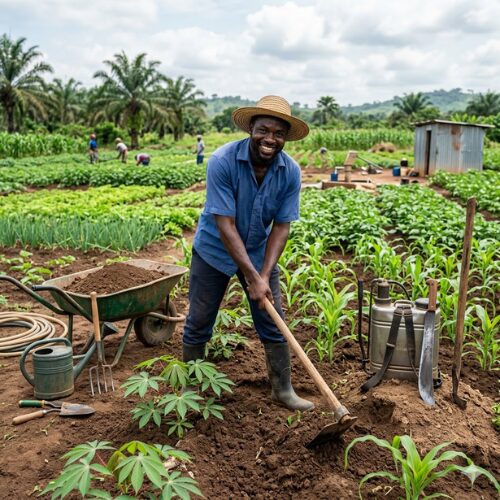
Farming is one of the most important economic activities in Nigeria. Millions of people depend on agriculture for food, income, and employment. However, successful farming requires more than fertile land and quality seeds. Farmers need reliable equipment that makes daily tasks easier and more efficient.
The right farming tools help reduce labor, save time, and improve crop production. Whether you operate a small vegetable garden or a large commercial farm, investing in quality tools can make a significant difference in your results. Modern farming is becoming increasingly competitive, and farmers who use the right equipment often achieve higher yields and better profits.
When selecting the Best Farming Tools in Nigeria, farmers should focus on durability, efficiency, and suitability for their specific farming operations. Choosing the right equipment can reduce production costs and improve overall farm performance.
This guide explores the essential tools every Nigerian farmer should have and explains how they contribute to increased productivity.
Why the Best Farming Tools in Nigeria Matter
Farm tools are designed to make agricultural work faster and more effective. Without proper equipment, farmers spend more time on routine activities such as land preparation, planting, weeding, irrigation, and harvesting.
Quality tools offer several advantages, including increased efficiency, reduced physical labor, better crop management, improved harvest quality, lower operating costs, and higher profitability. These benefits help farmers achieve better results while reducing the stress associated with manual farming practices.
When farmers invest in durable tools, they spend less money on replacements and repairs. This creates long-term savings while improving farm performance. Reliable tools also reduce downtime, allowing farmers to focus on productivity and crop management.
Essential Hand Tools for Every Farm
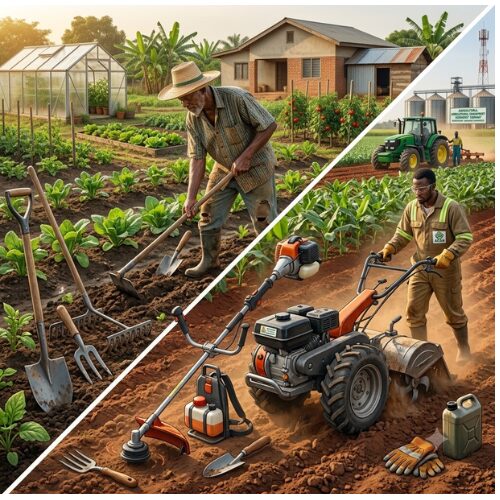
Hand tools remain important even as agriculture becomes more mechanized. Many small and medium-scale farmers rely on manual equipment for daily operations. These tools are affordable, easy to maintain, and suitable for various farming activities.
Hoe
The hoe is one of the most common farming tools in Nigeria. It is used for soil cultivation, weed removal, ridge making, and land preparation.
A strong hoe helps farmers prepare farmland quickly and efficiently. It is particularly useful for small-scale farmers who do not have access to mechanized equipment. A quality hoe can last for many years when properly maintained.
Cutlass
The cutlass is a versatile agricultural tool. Farmers use it for clearing vegetation, harvesting crops, pruning plants, and maintaining farmland.
Some of the benefits of a cutlass include multipurpose functionality, easy maintenance, affordability, and durability. Because of its versatility, the cutlass is considered an essential tool on nearly every Nigerian farm.
Garden Fork
A garden fork loosens compacted soil and improves aeration. This creates healthier growing conditions for crops and allows roots to penetrate the soil more effectively.
Benefits of using a garden fork include better root development, improved soil structure, and easier compost mixing. It is particularly useful for vegetable farming and horticultural activities.
Shovel and Spade
Shovels and spades help with digging, transplanting, and moving soil. These tools are commonly used for planting trees, creating planting beds, moving compost and manure, and digging irrigation channels.
Every farm should have at least one quality shovel and spade because they support a wide range of farming activities throughout the year.
Best Farming Tools in Nigeria for Crop Protection
Protecting crops from pests, diseases, and weeds is essential for maximizing yields. Crop protection tools help farmers maintain healthy plants and reduce losses caused by infestations and infections.
Knapsack Sprayer
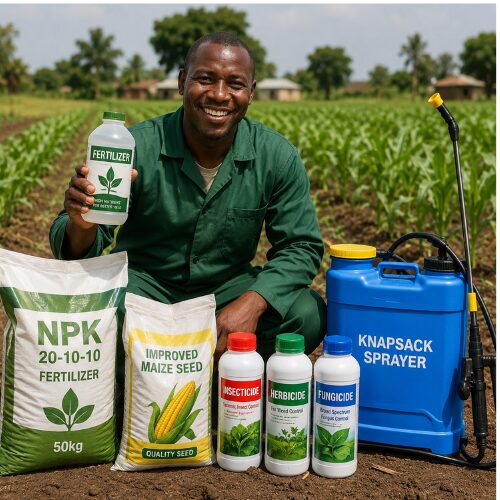
A knapsack sprayer is one of the most valuable farm tools available today. It helps farmers apply herbicides, fungicides, insecticides, and liquid fertilizers efficiently.
Advantages of using a knapsack sprayer include uniform application, reduced chemical waste, faster spraying operations, and better crop protection. Proper application of agricultural chemicals helps crops remain healthy and productive.
Many farmers consider the knapsack sprayer an essential investment because it directly affects crop health and productivity. It is one of the most practical tools for modern farming operations.
Protective Equipment
Farm safety should never be ignored. Farmers regularly handle chemicals, machinery, and sharp tools that can pose health and safety risks.
Important protective gear includes gloves, safety goggles, face masks, rubber boots, and protective clothing. Using appropriate safety equipment reduces the risk of injury and protects farmers from exposure to harmful substances.
Investing in safety equipment is just as important as investing in farm tools because it helps ensure a safe working environment.
Transportation Tools That Improve Farm Efficiency
Moving materials around a farm can be physically demanding. Transportation tools help reduce effort and improve workflow.
Wheelbarrow
A wheelbarrow makes it easier to transport harvested crops, fertilizers, manure, farm equipment, and animal feed.
The benefits of using a wheelbarrow include reduced manual lifting, faster transportation, and improved efficiency. It allows farmers to move heavy loads with less effort and complete tasks more quickly.
A durable wheelbarrow is a worthwhile investment for farms of all sizes because it increases productivity and reduces physical strain.
Irrigation Equipment for Better Crop Growth
Water availability remains one of the biggest challenges facing Nigerian agriculture. Irrigation tools help farmers maintain consistent crop growth throughout the year, especially during dry seasons.
Watering Can
Watering cans are useful for seedlings, vegetable gardens, and nurseries. They provide controlled watering and help reduce water waste.
This simple tool remains valuable for small-scale farming and gardening operations because it allows farmers to deliver water precisely where it is needed.
Irrigation Systems
Modern irrigation solutions include drip irrigation systems, sprinkler systems, water pumps, and irrigation hoses.
The benefits of irrigation systems include consistent moisture supply, increased yields, better drought resistance, and improved crop quality. Reliable irrigation systems help farmers maintain production even during periods of low rainfall.
As climate conditions become more unpredictable, irrigation equipment is becoming increasingly important for successful farming.
Best Farming Tools in Nigeria for Commercial Farmers
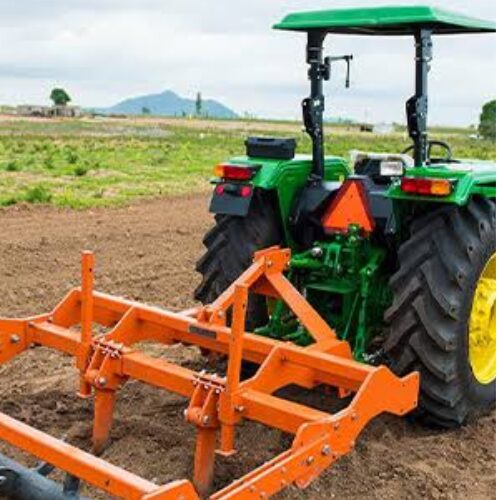
Commercial farmers often require more advanced equipment to manage larger operations. These tools help improve efficiency, reduce labor costs, and increase productivity.
Power Tillers
Power tillers help prepare land quickly and efficiently. They are designed to cultivate soil and prepare planting areas with less manual effort.
Advantages include reduced labor requirements, faster land preparation, and improved productivity. Commercial farmers often use power tillers to save time and improve operational efficiency.
Water Pumps
Water pumps support irrigation systems by moving water from rivers, wells, and reservoirs to farming areas.
Benefits include reliable water supply, expanded irrigation capacity, and increased farm output. Water pumps play an essential role in modern agriculture, particularly in regions with limited rainfall.
Harvesting Equipment
Specialized harvesting tools help farmers reduce crop losses and improve efficiency during harvest season. These tools make harvesting faster and more accurate while reducing labor requirements.
Commercial farmers who invest in quality harvesting equipment often experience improved productivity and reduced post-harvest losses.
How to Choose Quality Farming Tools
Not all farming tools offer the same performance. Before making a purchase, farmers should consider several important factors.
Durability
Choose tools made from strong materials that can withstand regular use. Durable tools provide better value because they last longer and require fewer repairs.
Ease of Maintenance
Select equipment that can be easily repaired and maintained. Tools that are difficult to maintain may become expensive over time.
Farm Size
Small farms may only require manual tools, while larger farms often benefit from mechanized equipment. Matching tools to farm size helps maximize efficiency.
Cost and Value
Focus on long-term value rather than the lowest purchase price. High-quality tools often provide greater savings over time.
Availability of Spare Parts
For mechanized equipment, ensure replacement parts are readily available. Easy access to spare parts reduces downtime and maintenance costs.
Maintaining Farm Tools for Long-Term Use
Proper maintenance extends the lifespan of farming equipment and ensures reliable performance.
Useful maintenance practices include cleaning tools after use, storing equipment in dry locations, sharpening blades regularly, lubricating moving parts, and repairing damage immediately.
Routine maintenance helps farmers avoid costly replacements and downtime. Well-maintained equipment performs better and contributes to greater productivity on the farm.
The Future of Farming Equipment in Nigeria
Agriculture in Nigeria continues to evolve. More farmers are adopting modern technologies that improve efficiency and reduce production costs.
Innovations such as smart irrigation systems, improved sprayers, precision agriculture technologies, and mechanized equipment are transforming farming practices across the country. These developments help farmers increase yields while managing resources more effectively.
As the agricultural sector grows, access to the Best Farming Tools in Nigeria will remain essential for achieving sustainable production and long-term profitability. Farmers who embrace modern equipment will be better positioned to meet increasing food demand and improve their incomes.
Conclusion
The Best Farming Tools in Nigeria help farmers improve efficiency, reduce labor, and increase crop yields. Essential tools such as hoes, cutlasses, knapsack sprayers, wheelbarrows, irrigation equipment, and protective gear make farm operations smoother and more productive.
Whether you are a beginner or an experienced farmer, investing in quality equipment is one of the smartest decisions you can make. The right tools not only simplify daily tasks but also contribute to higher productivity, better harvests, and greater profitability over time.
By choosing durable equipment, maintaining it properly, and adopting modern farming practices, Nigerian farmers can build more productive and sustainable agricultural businesses for the future.




 Get it on
  Download on the