






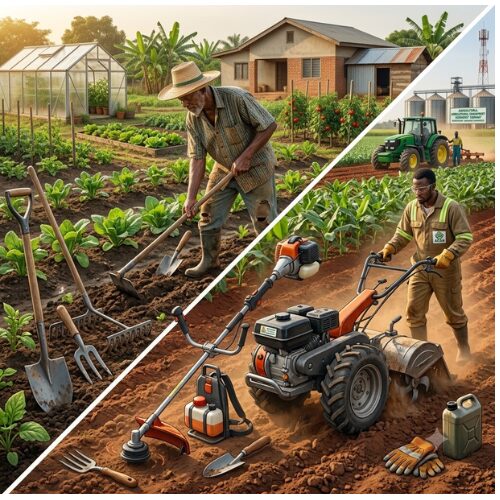
When it comes to farm productivity and efficiency, choosing between manual and motorized equipment is an important decision. Understanding Hand Tools vs Power Tools for Farming can help farmers determine which option delivers the best value based on farm size, budget, labor availability, and operational needs. While traditional hand tools remain essential for many farming activities, power tools offer speed and efficiency that can significantly reduce labor demands.
This guide explores the advantages, disadvantages, costs, and practical applications of both options to help farmers make informed decisions.
What Are Hand Tools?
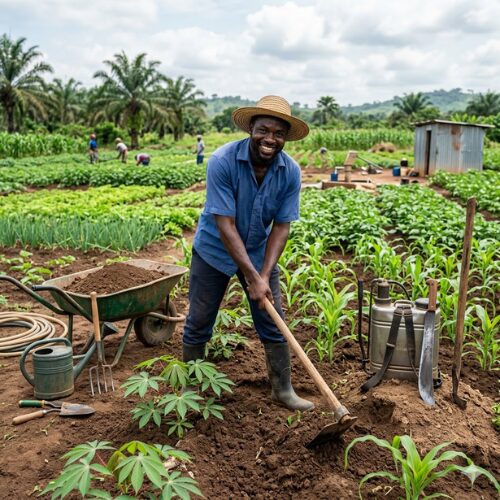
Hand tools are manually operated farming implements that do not require electricity, fuel, or batteries. They have been used in agriculture for centuries and remain common among small-scale farmers.
Common Hand Tools Used in Farming
- Hoe
- Cutlass (Machete)
- Rake
- Shovel
- Hand Trowel
- Garden Fork
- Pruning Shears
- Hand Weeder
Advantages of Hand Tools
Lower Initial Cost
Hand tools are generally affordable and accessible for most farmers.
Easy Maintenance
Most hand tools require minimal maintenance beyond cleaning and sharpening.
No Fuel or Electricity Required
Hand tools operate without fuel, batteries, or electricity, making them practical in remote areas.
Better Precision
Many farming tasks such as planting, pruning, and weeding require the precision that hand tools provide.
Environmentally Friendly
Because they do not consume fuel, hand tools have a lower environmental impact.
Disadvantages of Hand Tools
Labor Intensive
Manual tools require significant physical effort, especially on large farms.
Slower Work Rate
Tasks take longer to complete compared to mechanized alternatives.
Limited Productivity
Large-scale farming operations may struggle to meet production goals using only hand tools.
What Are Power Tools?
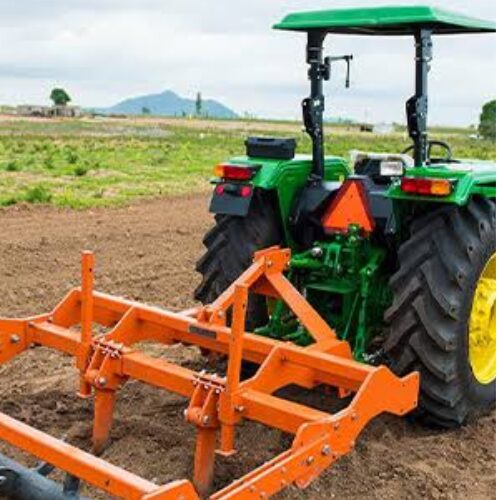
Power tools are farming equipment powered by electricity, batteries, fuel, or engines. They are designed to reduce manual effort and increase productivity.
Common Power Tools Used in Farming
- Brush cutters
- Power tillers
- Chainsaws
- Motorized sprayers
- Hedge trimmers
- Earth augers
- Water pumps
- Electric pruning tools
Advantages of Power Tools
Increased Efficiency
Power tools complete tasks much faster than manual tools.
Reduced Labor Requirements
Farmers can accomplish more work with fewer workers.
Improved Productivity
Mechanized tools help increase output, especially on medium and large farms.
Time Savings
Tasks such as land preparation, spraying, and clearing can be completed in a fraction of the time.
Better Performance on Large Farms
Power tools are ideal for extensive agricultural operations where efficiency is critical.
Disadvantages of Power Tools
Higher Purchase Cost
Power tools typically require a larger initial investment.
Maintenance Expenses
Repairs, servicing, and replacement parts increase operating costs.
Fuel and Energy Costs
Many power tools depend on fuel, batteries, or electricity.
Technical Knowledge Required
Operators may need training to use equipment safely and effectively.
Hand Tools vs Power Tools for Farming: Cost Comparison
Initial Investment
Hand tools generally cost significantly less than power tools. A basic set of manual farming tools can be purchased at a fraction of the price of motorized equipment.
Operating Costs
Hand tools have almost no operating costs beyond occasional maintenance. Power tools require fuel, electricity, batteries, lubrication, and repairs.
Long-Term Value
Although power tools have higher initial costs, they often deliver greater value over time by increasing efficiency and reducing labor expenses.
When evaluating Hand Tools vs Power Tools for Farming, farmers should consider both short-term affordability and long-term returns on investment.
Best Uses for Hand Tools
Hand tools are ideal for:
- Small farms
- Home gardens
- Greenhouses
- Precision planting
- Light weeding
- Pruning and maintenance tasks
Small-scale farmers often find hand tools sufficient for daily operations.
Best Uses for Power Tools
Power tools are best suited for:
- Large-scale farming
- Commercial agriculture
- Land clearing
- Intensive cultivation
- Large spraying operations
- Irrigation management
For farmers seeking rapid expansion, power tools can dramatically improve efficiency.
Factors to Consider When Choosing
Farm Size
Small farms may benefit more from hand tools, while larger farms often require mechanized equipment.
Budget
Available financial resources play a major role in equipment selection.
Labor Availability
Limited labor may justify investing in power tools.
Frequency of Use
Frequently performed tasks often benefit from mechanization.
Maintenance Capacity
Farmers should consider their ability to maintain and repair equipment.
Which Offers Better Value?
The answer depends largely on the needs of the farmer.
Hand Tools Offer Better Value When:
- Operating a small farm
- Working with a limited budget
- Performing precision tasks
- Minimizing maintenance expenses
Power Tools Offer Better Value When:
- Managing large farming operations
- Reducing labor costs
- Increasing productivity
- Saving time during peak farming seasons
For many farmers, the best solution is a combination of both manual and powered equipment.
Benefits of Combining Hand and Power Tools
Many successful farms use a balanced approach by combining traditional and mechanized tools.
Benefits include:
- Improved efficiency
- Better cost management
- Greater flexibility
- Enhanced productivity
- Reduced labor strain
This strategy allows farmers to maximize the strengths of each option.
Conclusion
The debate over Hand Tools vs Power Tools for Farming does not have a one-size-fits-all answer. Hand tools remain valuable for small-scale operations, precision work, and budget-conscious farmers, while power tools provide significant advantages in efficiency, productivity, and labor savings.
By carefully evaluating farm size, budget, labor availability, and operational goals, farmers can determine which option offers the best value. In many cases, combining both approaches provides the ideal balance between affordability and efficiency. Understanding the differences between Hand Tools vs Power Tools for Farming enables farmers to make informed investments that support long-term agricultural success.





 Get it on
  Download on the