






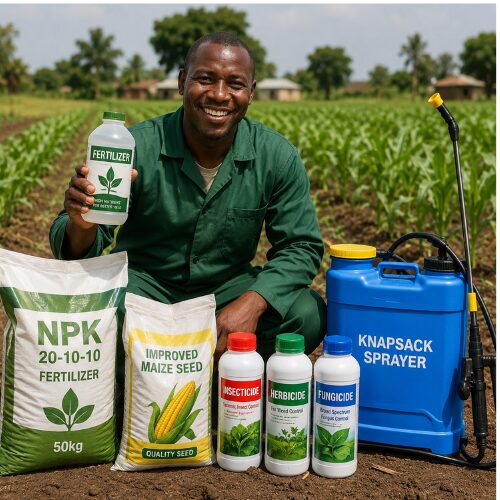
Agricultural Inputs in Nigeria play a crucial role in improving farm productivity, increasing crop yields, and ensuring food security across the country. Modern farming requires more than fertile land and favorable weather conditions. Farmers need access to quality inputs such as improved seeds, fertilizers, crop protection products, and irrigation systems to achieve maximum productivity. By investing in the right agricultural products, farmers can reduce production risks, improve crop quality, and increase profitability.
The growing demand for food production has made Agricultural Inputs in Nigeria more important than ever for farmers seeking higher yields and better crop quality.
Nigeria’s agricultural sector remains one of the largest contributors to employment and economic development. Millions of farmers depend on successful harvests for their livelihoods. However, challenges such as declining soil fertility, pest infestations, diseases, and unpredictable weather can reduce yields significantly. The solution often lies in selecting the right agricultural inputs and applying them correctly.
This guide explores the top ten agricultural products that can help farmers improve crop performance, increase productivity, and achieve sustainable agricultural success.
Why Agricultural Inputs in Nigeria Are Important
Agricultural inputs are products and materials used to support crop production and improve farm efficiency. They provide crops with essential nutrients, protect plants from pests and diseases, and help create favorable growing conditions.
The benefits of using quality agricultural inputs include:
- Increased crop yields
- Better soil fertility
- Improved crop quality
- Enhanced resistance to pests and diseases
- Higher farm profitability
- Reduced production losses
When farmers use reliable agricultural inputs, they are better positioned to achieve consistent harvests and long-term agricultural success.
Proper use of Agricultural Inputs in Nigeria helps farmers overcome common farming challenges such as poor soil fertility, pest infestations, and low productivity.
Top Agricultural Inputs in Nigeria for Better Crop Growth
Understanding the various types of Agricultural Inputs in Nigeria allows farmers to make informed decisions that improve crop performance and profitability.
1. Improved Seeds
Improved seeds are among the most important agricultural inputs available to farmers. These seeds are developed through research and breeding programs to provide better performance than traditional varieties.
Benefits of improved seeds include:
- Faster germination
- Higher yields
- Better disease resistance
- Improved drought tolerance
- Uniform crop growth
Popular improved seed varieties in Nigeria include maize, rice, tomato, pepper, cucumber, and various vegetable crops.
Farmers who use improved seeds often experience greater productivity and higher returns on investment.
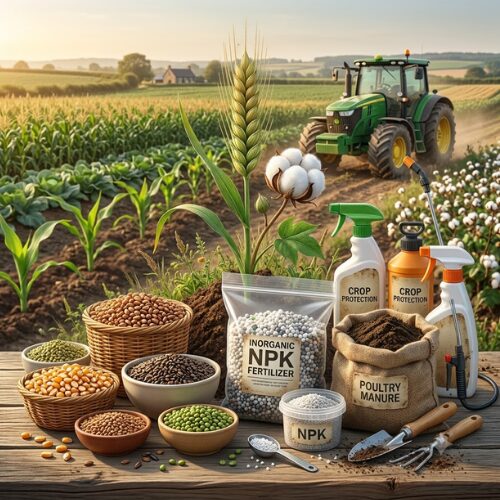
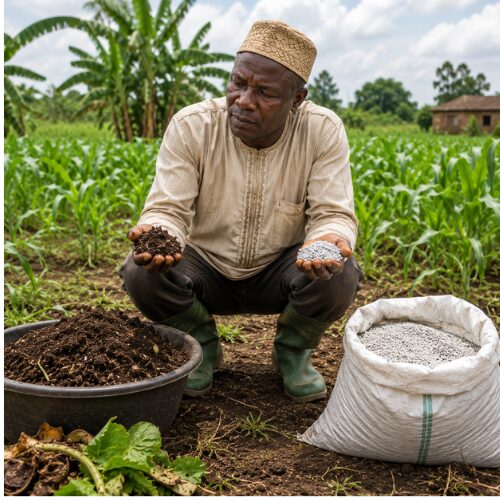
2. Organic Fertilizers
Organic fertilizers improve soil health naturally by adding nutrients and organic matter to the soil.
Common organic fertilizers include:
- Poultry manure
- Cow dung
- Compost
- Vermicompost
Benefits include:
- Improved soil structure
- Better moisture retention
- Increased microbial activity
- Enhanced nutrient availability
Organic fertilizers support sustainable farming practices and contribute to long-term soil fertility.
3. NPK Fertilizers
NPK fertilizers contain three essential nutrients: nitrogen, phosphorus, and potassium.
Each nutrient plays a specific role in plant growth:
- Nitrogen supports leaf development
- Phosphorus encourages root growth
- Potassium improves flowering and fruit production
Proper fertilizer application can significantly increase crop yields and improve overall plant health.
4. Herbicides
Weeds compete with crops for nutrients, sunlight, water, and growing space. Herbicides help farmers control unwanted plants efficiently.
Advantages include:
- Reduced weed competition
- Lower labor requirements
- Improved crop development
- Increased productivity
Effective weed management allows crops to utilize available resources more efficiently.
5. Insecticides
Insect pests can destroy crops and reduce yields if not properly controlled. Insecticides help protect crops from harmful insects that attack leaves, stems, roots, and fruits.
Benefits include:
- Reduced crop damage
- Improved harvest quality
- Better crop health
- Increased profitability
Proper application helps farmers minimize losses and improve farm performance.
6. Fungicides
Fungal diseases are a major threat to agricultural productivity. Fungicides help prevent and control fungal infections before they spread throughout the farm.
Common fungal diseases include:
- Blight
- Rust
- Mildew
- Leaf spot
Benefits include:
- Healthier plants
- Reduced disease outbreaks
- Improved crop quality
- Higher yields
Using fungicides at the appropriate time can protect crops and improve harvest outcomes.
7. Knapsack Sprayers
A knapsack sprayer is an essential tool used to apply agricultural chemicals accurately and efficiently.
Farmers use knapsack sprayers for:
- Herbicides
- Insecticides
- Fungicides
- Liquid fertilizers
Benefits include:
- Uniform application
- Reduced chemical wastage
- Better crop protection
- Increased efficiency
A quality sprayer helps farmers maximize the effectiveness of agricultural chemicals.
8. Irrigation Equipment
Water availability is critical for crop growth. Irrigation equipment helps farmers maintain crop production during dry periods and inconsistent rainfall.
Examples include:
- Water pumps
- Sprinklers
- Drip irrigation systems
- Irrigation hoses
Benefits include:
- Consistent water supply
- Improved crop growth
- Increased yields
- Reduced drought stress
Modern irrigation systems allow farmers to produce crops throughout the year.
9. Mulching Materials
Mulching materials help conserve soil moisture and improve growing conditions.
Common mulching materials include:
- Straw
- Dry grass
- Plastic mulch
- Wood chips
Benefits include:
- Reduced water loss
- Better moisture retention
- Weed suppression
- Improved soil temperature regulation
Mulching helps create a healthier environment for crop development.
10. Soil Conditioners
Soil conditioners improve the physical and chemical properties of soil.
Examples include:
- Lime
- Gypsum
- Biochar
Benefits include:
- Improved soil structure
- Better nutrient absorption
- Enhanced root development
- Increased productivity
Healthy soil provides the foundation for successful crop production.
Benefits of Agricultural Inputs in Nigeria for Farmers
The proper use of agricultural inputs offers several advantages:
- Increased food production
- Improved crop quality
- Reduced production losses
- Better pest and disease management
- Enhanced soil fertility
- Greater profitability
By investing in quality Agricultural Inputs in Nigeria, farmers can increase productivity, reduce losses, and achieve more sustainable farming operations.
The Future of Agricultural Inputs in Nigeria
The future success of agriculture will depend heavily on farmers having access to reliable Agricultural Inputs in Nigeria that support efficient and environmentally responsible food production.
The agricultural industry continues to evolve through innovation and research. New technologies are helping farmers improve efficiency while reducing environmental impact.
Developments such as climate-smart agriculture, precision farming, biofertilizers, and advanced irrigation systems are transforming agricultural production. These innovations are making farming more productive and sustainable.
As technology advances, access to quality Agricultural Inputs in Nigeria will become increasingly important for farmers seeking to improve yields and remain competitive.
Conclusion
The use of quality Agricultural Inputs in Nigeria is essential for improving crop yields, enhancing soil fertility, and increasing farm profitability. Products such as improved seeds, fertilizers, herbicides, insecticides, fungicides, irrigation systems, mulching materials, and soil conditioners help farmers overcome production challenges and achieve better results.
Whether you are a small-scale farmer or a commercial producer, investing in the right Agricultural Inputs in Nigeria can significantly improve productivity and long-term success. By selecting quality products and applying them correctly, farmers can enjoy healthier crops, larger harvests, and greater profits year after year.



 Get it on
  Download on the