






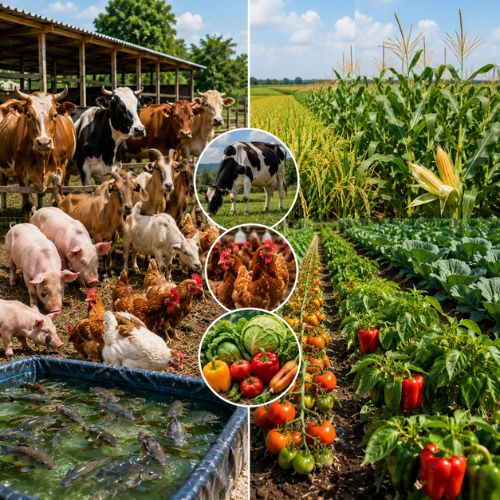
Agriculture remains one of the most important sectors of the global economy, providing food, employment, and income for millions of people. Among the various agricultural activities available today, the debate over Animal Farming vs Crop Farming continues to attract the attention of aspiring farmers and investors. Both farming systems offer unique opportunities and challenges, but profitability often depends on factors such as market demand, startup costs, management practices, and environmental conditions.
Anyone considering a career in agriculture should understand the differences between these two farming models before making an investment decision.
Understanding Animal Farming
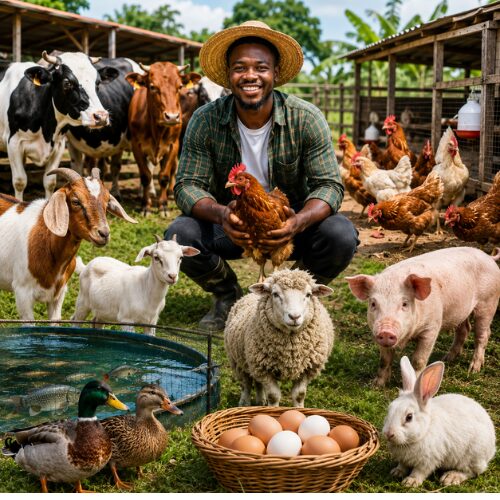
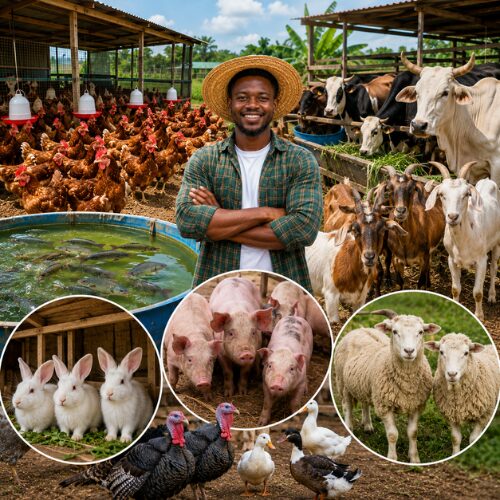
Animal farming involves raising livestock such as cattle, poultry, goats, sheep, pigs, rabbits, and fish for commercial purposes. Farmers earn income from products including meat, eggs, milk, leather, wool, and breeding stock.
Common types of animal farming include:
- Poultry farming
- Fish farming
- Goat farming
- Pig farming
- Cattle farming
- Sheep farming
Livestock production is a major contributor to food security and economic development worldwide.
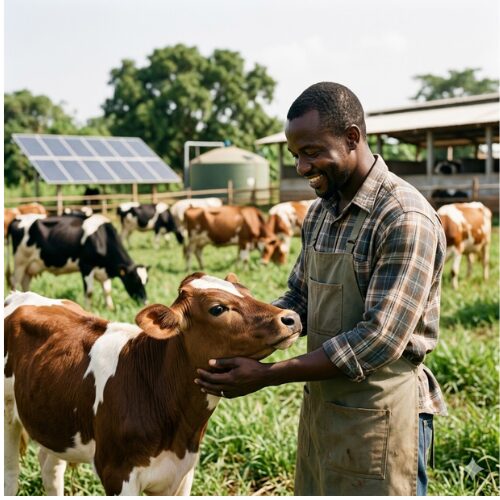
Image Suggestion 1
Alt Text: Animal Farming vs Crop Farming comparison showing livestock and crop production systems
Understanding Crop Farming
Crop farming focuses on cultivating plants for food, feed, industrial use, or export. Farmers grow crops such as maize, rice, cassava, tomatoes, vegetables, cocoa, and fruits.
Popular crop farming ventures include:
- Grain production
- Vegetable farming
- Fruit farming
- Cash crop cultivation
- Greenhouse farming
Crop farming forms the foundation of food production and supports both local and international markets.
Animal Farming vs Crop Farming: Startup Costs
One of the first considerations for any agricultural entrepreneur is startup capital.
Animal Farming Costs
Livestock farming often requires investment in:
- Animal housing
- Feed
- Veterinary care
- Breeding stock
- Water systems
- Farm equipment
Poultry and fish farming may require moderate startup capital, while cattle farming often demands larger investments.
Crop Farming Costs
Crop farming expenses typically include:
- Land preparation
- Seeds or seedlings
- Fertilizers
- Irrigation systems
- Farm machinery
- Pest control products
The required capital depends on the scale of production and the type of crops being cultivated.
In many cases, small-scale crop farming can be started with less capital than large-scale livestock production.
Profitability Comparison
When discussing Animal Farming vs Crop Farming, profitability is usually the most important factor.
Profit Potential in Animal Farming
Animal farming can generate income throughout the year.
Examples include:
- Daily egg production
- Regular milk sales
- Livestock breeding
- Meat production
Several livestock enterprises also offer faster returns. Broiler chickens, for example, can be sold within a few weeks, while catfish can reach market size within months.
Profit Potential in Crop Farming
Crop farming profitability often depends on harvest cycles.
Profitable crops may include:
- Tomatoes
- Pepper
- Rice
- Cocoa
- Vegetables
- Fruits
Market prices can fluctuate significantly, affecting overall returns. Nevertheless, high-demand crops can generate substantial profits when managed effectively.
Risk Factors in Animal Farming vs Crop Farming
Every agricultural business faces risks.
Risks in Animal Farming
Challenges may include:
- Disease outbreaks
- Rising feed costs
- Animal theft
- Veterinary expenses
- Market fluctuations
Proper animal health management is essential for maintaining profitability.
Risks in Crop Farming
Crop farmers often face:
- Drought
- Flooding
- Pest infestations
- Plant diseases
- Poor soil fertility
Weather-related challenges can significantly impact crop yields and farm income.
Labor Requirements
Labor is another important factor when evaluating Animal Farming vs Crop Farming.
Animal Farming Labor Needs
Livestock require daily attention, including:
- Feeding
- Cleaning
- Health monitoring
- Water management
Animals must be cared for consistently throughout the year.
Crop Farming Labor Needs
Crop farming involves intensive labor during specific periods such as:
- Land preparation
- Planting
- Weeding
- Harvesting
Outside these periods, labor requirements may be lower depending on the farming system.
Market Demand Comparison
Strong market demand often leads to higher profitability.
Demand for Animal Products
Consumers purchase livestock products daily, including:
- Eggs
- Chicken
- Beef
- Fish
- Milk
The consistent demand for protein-rich foods supports the growth of animal farming businesses.
Demand for Crops
Crop demand remains high because crops serve as staple foods and industrial raw materials.
Popular crops such as rice, maize, cassava, and vegetables enjoy steady market demand across Nigeria and many other countries.
Sustainability and Environmental Impact
Environmental considerations are becoming increasingly important in modern agriculture.
Sustainability in Animal Farming
Sustainable livestock production involves:
- Proper waste management
- Efficient feeding systems
- Responsible grazing practices
- Water conservation
Modern technologies are helping reduce the environmental footprint of livestock farming.
Sustainability in Crop Farming
Crop farmers can improve sustainability through:
- Crop rotation
- Organic farming
- Conservation agriculture
- Efficient irrigation
These practices help maintain soil health and reduce environmental degradation.
Which Is Better for Beginners?
The answer depends on individual goals, resources, and expertise.
Animal farming may be ideal for individuals who:
- Prefer continuous income streams
- Have access to livestock markets
- Can manage daily animal care
Crop farming may be suitable for those who:
- Have access to fertile land
- Prefer seasonal production cycles
- Want lower initial investment requirements
Careful planning is necessary regardless of the farming model selected.
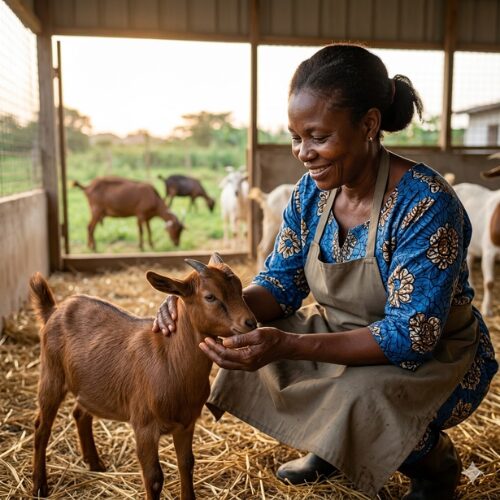
Image Suggestion 2
Alt Text: Animal Farming vs Crop Farming profitability comparison for Nigerian farmers
Animal Farming vs Crop Farming: Which Is More Profitable?
The profitability of Animal Farming vs Crop Farming depends largely on management practices, market conditions, scale of operation, and available resources. Livestock farming often provides more frequent cash flow through products such as eggs, milk, and meat. Crop farming, on the other hand, can deliver substantial profits during harvest seasons, particularly when high-value crops are cultivated.
Many successful agricultural entrepreneurs combine both systems to diversify income and reduce risks. Integrating livestock and crop production can improve resource efficiency and create a more sustainable farming business.
Conclusion
The debate over Animal Farming vs Crop Farming does not have a one-size-fits-all answer. Animal farming offers regular income opportunities and strong demand for livestock products, while crop farming provides flexibility and the potential for high seasonal returns. Farmers who carefully assess their budget, market opportunities, land availability, and long-term goals can determine which option best suits their needs. In many cases, combining both livestock and crop production may provide the most profitable and resilient agricultural business model.



 Get it on
  Download on the