






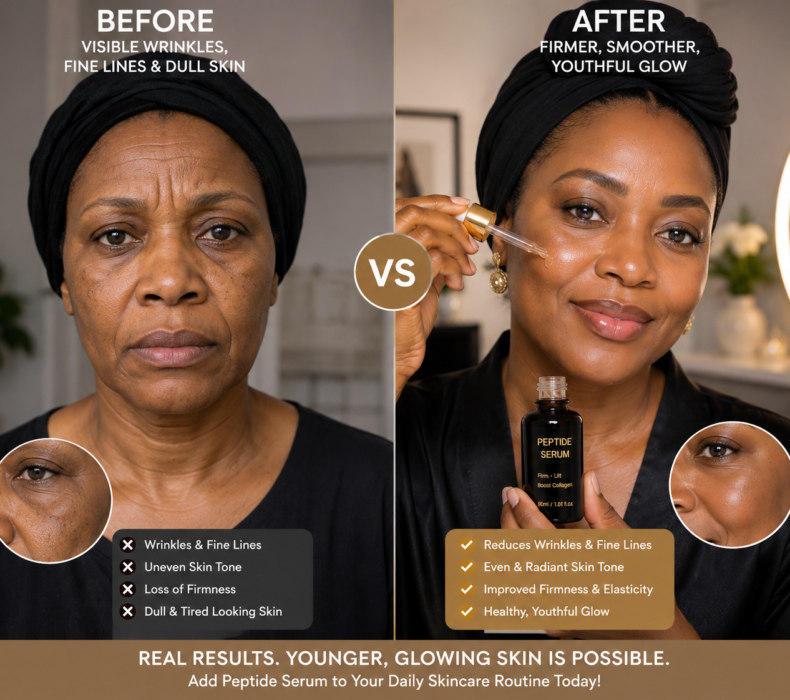
As we age, wrinkles, fine lines, and sagging skin become increasingly noticeable. While aging is a natural process, modern skincare has introduced innovative ingredients designed to slow visible signs of aging. Among these, peptide serum for wrinkles has become one of the most talked-about skincare solutions worldwide.
Beauty experts, dermatologists, and skincare enthusiasts frequently recommend peptide serums because they claim to stimulate collagen production, improve skin elasticity, and reduce the appearance of wrinkles. But the big question remains:
Does peptide serum really work for wrinkles, or is it simply another skincare trend?
In this comprehensive guide, we’ll explore the science behind peptide serums, how they work, their proven benefits, possible limitations, and how to choose the best peptide serum for your skin.
What Is a Peptide Serum?
A peptide serum is a lightweight skincare product formulated with peptides, which are short chains of amino acids. Amino acids are the building blocks of proteins like:
- Collagen
- Elastin
- Keratin
These proteins are responsible for keeping your skin:
- Firm
- Smooth
- Elastic
- Youthful-looking
As people age, collagen production naturally decreases. Starting around your mid-20s, your body produces less collagen every year, leading to:
- Fine lines
- Wrinkles
- Loose skin
- Dull complexion
Peptide serums help signal your skin to produce more collagen and repair itself more efficiently.
Why Are Peptides Important for Aging Skin?
Healthy young skin naturally contains abundant collagen.
However, several factors speed up collagen breakdown:
- Aging
- UV exposure
- Smoking
- Poor diet
- Pollution
- Stress
- Lack of sleep
When collagen decreases, the skin becomes thinner and less elastic.
Peptides act like messengers, telling your skin:
“Produce more collagen.”
This communication process is why peptide serums have become a cornerstone of anti-aging skincare routines.
How Does Peptide Serum Work for Wrinkles?
Unlike moisturizers that mainly hydrate the skin, peptide serums work at a deeper biological level.
They help the skin:
1. Boost Collagen Production
Collagen provides structure and firmness.
Certain peptides encourage skin cells to manufacture more collagen, making wrinkles appear less noticeable over time.
2. Improve Skin Elasticity
Elastin keeps skin flexible.
Peptides stimulate proteins that improve elasticity, making skin appear firmer and tighter.
3. Strengthen the Skin Barrier
A damaged skin barrier allows moisture to escape.
Peptide serums reinforce this protective barrier by helping skin repair itself.
This leads to:
- Better hydration
- Less irritation
- Softer skin
- Reduced redness
4. Reduce Fine Lines
Regular use can soften:
- Crow’s feet
- Smile lines
- Forehead wrinkles
- Neck lines
Although they won’t erase deep wrinkles overnight, they gradually improve skin texture.
5. Support Skin Repair
Peptides promote healing by encouraging skin renewal.
This makes peptide serums useful after:
- Sun damage
- Dryness
- Mild irritation
- Environmental stress
Does Peptide Serum Really Work?
The short answer is:
Yes—but with realistic expectations.
Scientific research suggests peptide serums can significantly improve:
- Skin firmness
- Wrinkle depth
- Elasticity
- Hydration
- Overall skin texture
However, they are not instant wrinkle removers.
Visible improvements usually appear after consistent use for 8–12 weeks, depending on:
- Skin type
- Product formulation
- Lifestyle
- Sun protection habits
Patience and consistency are key.
Benefits of Using Peptide Serum for Wrinkles
Reduced Fine Lines
One of the earliest improvements users notice is smoother skin with less visible fine lines.
Firmer Skin
Collagen stimulation gradually improves skin firmness.
This helps reduce sagging around:
- Jawline
- Neck
- Cheeks
Better Hydration
Many peptide serums include hydrating ingredients such as:
- Hyaluronic Acid
- Glycerin
- Panthenol
Hydrated skin naturally appears plumper and healthier.
Improved Skin Texture
Peptides encourage skin renewal, leading to:
- Softer skin
- Smoother texture
- More even complexion
Healthier Skin Barrier
Strong skin barriers help protect against:
- Pollution
- UV damage
- Moisture loss
Suitable for Sensitive Skin
Unlike strong acids or retinol, peptide serums are generally gentle.
Most skin types tolerate peptides well.
Types of Peptides Used in Skincare
Not all peptides perform the same function.
Signal Peptides
These stimulate collagen and elastin production.
Best for:
- Wrinkles
- Firmness
- Anti-aging
Carrier Peptides
These deliver minerals like copper to support healing and collagen production.
Neurotransmitter Peptides
Sometimes called “Botox-like peptides.”
They help reduce muscle contractions responsible for expression lines.
Enzyme Inhibitor Peptides
These slow down collagen breakdown, helping preserve youthful skin.
Who Should Use Peptide Serum?
Peptide serums are ideal for:
- Adults over 25
- People with fine lines
- Mature skin
- Dry skin
- Sensitive skin
- Normal skin
- Combination skin
Even younger adults use peptide serums as a preventative anti-aging treatment.
How to Use Peptide Serum Correctly
Using peptide serum properly increases its effectiveness.
Step 1
Cleanse your face thoroughly.
Step 2
Apply toner if part of your routine.
Step 3
Apply 2–4 drops of peptide serum.
Gently pat into:
- Face
- Neck
- Chest
Step 4
Allow it to absorb completely.
Step 5
Apply moisturizer.
Step 6
During daytime, finish with sunscreen (SPF 30 or higher).
Daily sunscreen prevents UV damage that destroys collagen.
Ingredients That Work Well with Peptides
Peptides combine effectively with many skincare ingredients.
Excellent combinations include:
Hyaluronic Acid
Provides intense hydration.
Niacinamide
Brightens skin and strengthens the barrier.
Ceramides
Help lock in moisture.
Vitamin C
Boosts collagen while brightening the skin.
Many people use Vitamin C in the morning and peptides at night.
Antioxidants
Ingredients like Vitamin E help protect collagen from free radicals.
Ingredients to Be Careful Combining
Most peptide serums are compatible with other ingredients.
However, some experts recommend avoiding simultaneous application with:
- Strong exfoliating acids (high concentrations of AHA/BHA)
- Pure Vitamin C (low pH formulations)
If using these ingredients, separate them into morning and evening routines.
Common Myths About Peptide Serums
Myth 1: Peptides Remove Wrinkles Overnight
False.
Peptides gradually improve skin over several weeks.
Myth 2: Only Older People Need Peptides
False.
Preventative skincare often starts in the mid-20s.
Myth 3: Peptides Replace Botox
False.
Peptides improve skin quality but cannot replicate injectable treatments.
Myth 4: Peptides Are Only for Women
False.
Men benefit equally from peptide serums.
Possible Side Effects
Peptide serums are generally well tolerated.
Occasionally, users may experience:
- Mild irritation
- Temporary redness
- Allergic reaction to other ingredients
Always perform a patch test before full application.
Tips for Getting Better Results
To maximize benefits:
- Apply daily
- Stay hydrated
- Wear sunscreen every day
- Eat protein-rich foods
- Avoid smoking
- Sleep 7–8 hours nightly
- Follow a consistent skincare routine
Healthy habits support collagen production naturally.
How Long Does It Take to See Results?
Most users notice:
2–4 weeks
- Better hydration
- Softer skin
6–8 weeks
- Improved texture
- Firmer appearance
8–12 weeks
- Reduced fine lines
- Smoother complexion
- More youthful skin
Consistency matters more than frequency.
Choosing the Best Peptide Serum
When shopping for a peptide serum, look for products containing:
- Multiple peptides
- Hyaluronic Acid
- Niacinamide
- Ceramides
- Antioxidants
Avoid products with excessive fragrance if you have sensitive skin.
Good packaging, such as opaque or airless bottles, also helps preserve ingredient stability.
Is Peptide Serum Worth Buying?
For most people concerned about premature aging, the answer is yes.
Peptide serums offer a gentle, science-backed approach to improving skin quality over time. While they won’t erase deep wrinkles overnight, they can noticeably enhance skin firmness, hydration, and elasticity with regular use.
When combined with sunscreen, a balanced skincare routine, and healthy lifestyle habits, peptide serums become a valuable long-term investment in maintaining youthful-looking skin.
Frequently Asked Questions
Can peptide serum remove deep wrinkles?
No. Peptide serums can reduce the appearance of wrinkles but cannot completely eliminate deep lines. Professional treatments may be needed for more dramatic results.
Is peptide serum safe for daily use?
Yes. Most peptide serums are formulated for daily use, either once or twice a day.
Can I use peptide serum with retinol?
Yes. Peptides and retinol complement each other well. Many people use retinol at night and peptide serum afterward or on alternating nights, depending on skin sensitivity.
At what age should I start using peptide serum?
Many skincare professionals recommend introducing peptide serums in your mid-20s or early 30s as a preventative anti-aging measure.
Can men use peptide serum?
Absolutely. Peptide serums are suitable for all genders and all skin types.
Final Thoughts
If you’re looking for a skincare product that helps fight visible signs of aging without being overly harsh, peptide serum for wrinkles is an excellent option. By encouraging collagen production, improving skin elasticity, and strengthening the skin barrier, peptide serums provide long-term benefits that can lead to smoother, firmer, and healthier-looking skin.
The key is to choose a high-quality formula, use it consistently, and pair it with sunscreen and a healthy skincare routine. While no serum can stop the aging process entirely, peptide serums can significantly reduce the appearance of wrinkles and help your skin maintain a youthful, radiant glow for years to come.



 Get it on
  Download on the