Retinol serum has become one of the most recommended skincare products for people looking to reduce wrinkles, fade acne scars, improve uneven skin tone, and achieve smoother, healthier-looking skin. Whether you are just beginning your skincare journey or searching for an effective anti-aging solution, retinol serum is a product worth understanding.
In Nigeria, retinol serums have gained significant popularity because more people are investing in skincare routines that produce visible and long-lasting results. However, many people still wonder what retinol serum is, how it works, whether it is safe, and how to use it without irritating the skin.
This comprehensive guide explains everything you need to know about retinol serum, including its benefits, uses, side effects, and the best practices for incorporating it into your skincare routine.
What Is Retinol Serum?
Retinol serum is a skincare product that contains retinol, a derivative of Vitamin A. It belongs to a family of ingredients known as retinoids, which are widely recognized for improving skin texture, accelerating skin cell turnover, and stimulating collagen production.
Unlike moisturizers or facial oils that mainly hydrate the skin, retinol works deep beneath the skin’s surface to encourage the growth of new skin cells while reducing the appearance of damaged or aging skin.
Retinol serums are typically lightweight, fast-absorbing formulations designed to deliver active ingredients directly into the skin. They are available in different strengths, ranging from beginner-friendly concentrations such as 0.1% or 0.3% to stronger formulations containing 1% retinol.
Retinol works by speeding up the natural skin renewal process.
Normally, skin cells take approximately 28 days to regenerate in younger individuals. As people age, this process slows considerably, leading to dullness, fine lines, wrinkles, and clogged pores.
Retinol helps by:
Increasing skin cell turnover
Encouraging fresh skin growth
Stimulating collagen production
Reducing excess oil buildup
Preventing clogged pores
Improving skin elasticity
Over time, the skin becomes smoother, brighter, firmer, and healthier.
Key Ingredients Often Found with Retinol Serum
Many manufacturers combine retinol with soothing or hydrating ingredients to reduce irritation.
Common ingredients include:
Hyaluronic Acid
Niacinamide
Ceramides
Vitamin E
Peptides
Squalane
Aloe Vera
Glycerin
Panthenol (Vitamin B5)
These ingredients help keep the skin hydrated while minimizing dryness caused by retinol.
Benefits of Retinol Serum
Retinol serum offers numerous skincare benefits, making it one of the most effective multi-purpose skincare products available.
1. Reduces Fine Lines and Wrinkles
One of the biggest reasons people use retinol serum is its anti-aging properties.
Retinol stimulates collagen and elastin production, helping to:
Smooth wrinkles
Reduce crow’s feet
Improve forehead lines
Minimize smile lines
Firm sagging skin
With consistent use over several months, skin often appears noticeably younger.
2. Fades Acne Marks and Dark Spots
Post-acne marks are common among people with oily or acne-prone skin.
Retinol speeds up skin renewal, allowing damaged skin cells to shed faster while new cells replace them.
It helps fade:
Hyperpigmentation
Acne scars
Sun spots
Age spots
Uneven skin tone
3. Treats Acne
Retinol is highly effective for acne because it keeps pores from becoming clogged.
It helps reduce:
Blackheads
Whiteheads
Pimples
Cystic acne (mild cases)
Breakouts
Regular use helps prevent future acne by improving skin cell turnover.
4. Improves Skin Texture
Rough skin often results from dead skin buildup.
Retinol removes these old cells, revealing softer and smoother skin.
Many users notice:
Reduced rough patches
Smaller pores
Improved softness
Better skin refinement
5. Brightens Dull Skin
Retinol encourages fresh skin cells to surface, giving the complexion a brighter and healthier appearance.
Over time, skin looks:
More radiant
Even-toned
Fresh
Youthful
6. Boosts Collagen Production
Collagen naturally decreases with age.
Retinol encourages collagen synthesis, improving:
Skin firmness
Elasticity
Facial volume
Overall skin strength
This helps delay visible signs of aging.
7. Minimizes Large Pores
Although retinol cannot permanently shrink pores, it keeps them cleaner and less noticeable.
Clean pores reflect light more evenly, making them appear smaller.
8. Improves Skin Elasticity
As collagen production increases, skin becomes firmer and more resilient.
This helps reduce sagging around the:
Jawline
Neck
Cheeks
Common Uses of Retinol Serum
People use retinol serum to treat various skin concerns.
Anti-aging skincare
Retinol helps maintain youthful-looking skin while reducing existing wrinkles.
Acne treatment
Dermatologists frequently recommend retinol for acne-prone skin.
Hyperpigmentation
Retinol helps lighten dark spots caused by acne, hormones, or sun damage.
Uneven skin tone
Regular use creates a more balanced complexion.
Sun damage
Retinol improves skin affected by years of UV exposure.
Rough skin
Retinol smooths coarse skin texture over time.
Who Should Use Retinol Serum?
Retinol is suitable for many skin types, including:
Normal skin
Oily skin
Combination skin
Mature skin
Acne-prone skin
People beginning anti-aging skincare in their mid-20s or early 30s often incorporate retinol as a preventive treatment.
Who Should Avoid Retinol Serum?
Although retinol is highly effective, it is not suitable for everyone.
Avoid retinol if you:
Are pregnant or planning pregnancy (unless advised by a healthcare professional)
Are breastfeeding (seek medical advice first)
Have severely irritated skin
Have eczema flare-ups
Have rosacea that is not well controlled
Have an active skin infection
Always consult a dermatologist if you have underlying skin conditions.
How to Use Retinol Serum Correctly
Using retinol properly minimizes irritation while maximizing results.
Step 1: Cleanse
Wash your face with a gentle cleanser.
Allow your skin to dry completely.
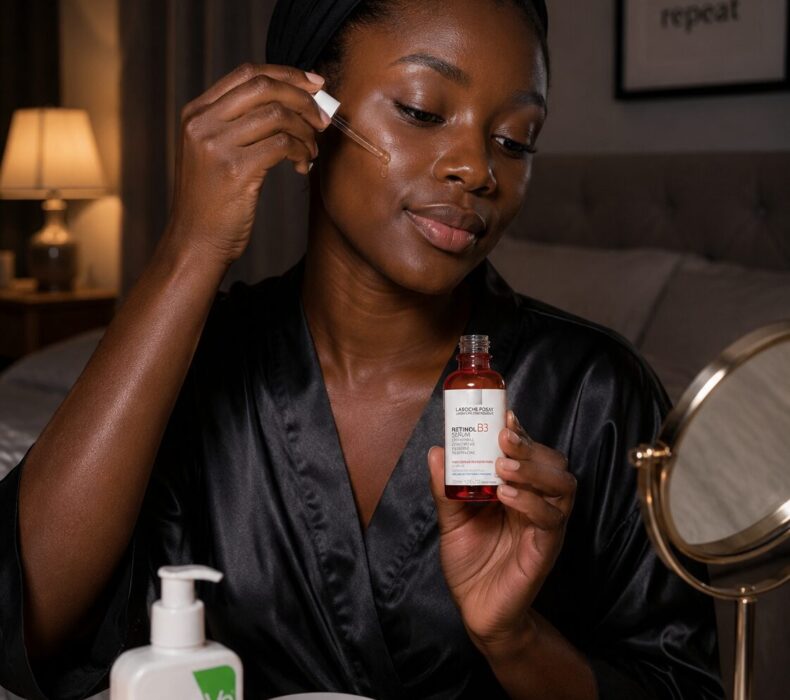
Step 2: Apply Retinol
Use only a pea-sized amount for the entire face.
Avoid:
Eyes
Lips
Corners of the nose
Step 3: Moisturize
Apply a hydrating moisturizer after retinol to reduce dryness and irritation.
Step 4: Wear Sunscreen
Retinol increases sun sensitivity.
Always apply SPF 30 or higher every morning.
Sunscreen is essential to protect your skin and maintain the results of your skincare routine.
How Often Should You Use Retinol Serum?
Beginners should introduce retinol gradually.
A simple schedule is:
Week 1–2
Twice weekly
Week 3–4
Three nights weekly
After One Month
Every other night
Experienced Users
Nightly, if well tolerated
Increasing usage slowly allows the skin to adapt.
Possible Side Effects of Retinol Serum
Some side effects are common during the first few weeks of use.
These may include:
Dryness
Mild redness
Peeling
Flaking
Tightness
Temporary irritation
These effects usually improve as the skin adjusts.
How to Reduce Retinol Irritation
You can minimize discomfort by following these tips:
Start with a low-strength retinol.
Use retinol only at night.
Apply moisturizer before and after retinol (the “sandwich method”) if your skin is sensitive.
Avoid harsh scrubs or exfoliants on the same night.
Do not overuse the product.
Wear sunscreen every day.
Ingredients You Should Not Mix with Retinol
Some active ingredients may increase irritation when used in the same routine.
Avoid combining retinol at the same time with:
Strong exfoliating acids (AHAs)
BHAs like salicylic acid (unless your skin tolerates the combination)
Benzoyl peroxide
High-strength Vitamin C (use at different times of the day)
Other retinoids
Instead, alternate these products on different nights if needed.
When Will You See Results?
Patience is important when using retinol.
Typical timeline:
2–4 Weeks
Skin adjustment period
Possible dryness and mild peeling
6–8 Weeks
Smoother skin
Reduced breakouts
Improved texture
3–6 Months
Noticeable fading of dark spots
Fewer wrinkles
Brighter complexion
Firmer skin
Consistent use delivers the best long-term results.
Choosing the Right Retinol Serum
When shopping for a retinol serum, consider:
Your skin type
Retinol concentration
Additional hydrating ingredients
Fragrance-free formulations if you have sensitive skin
Reputable brands with quality packaging that protects the formula from light and air
Beginners should start with lower concentrations before progressing to stronger formulations.
Tips for Using Retinol Serum in Nigeria
Nigeria’s hot climate can affect how your skin responds to active ingredients.
For the best experience:
Keep your skin well hydrated.
Use a lightweight, non-comedogenic moisturizer.
Apply sunscreen every morning, even on cloudy days.
Store your retinol serum in a cool, dry place away from direct sunlight.
Avoid excessive sun exposure during peak afternoon hours.
These habits help protect your skin while allowing retinol to work effectively.
Common Myths About Retinol Serum
Myth 1: Retinol Thins the Skin
False. Retinol actually promotes collagen production, which can strengthen the skin over time.
Myth 2: You Should Use a Large Amount
False. A pea-sized amount is sufficient for the entire face.
Myth 3: Retinol Works Overnight
False. Visible improvements take weeks or months of consistent use.
Myth 4: Retinol Is Only for Older People
False. Many adults begin using retinol in their mid-20s or early 30s to help prevent early signs of aging.
Myth 5: You Cannot Use Moisturizer with Retinol
False. Moisturizer is encouraged because it helps reduce dryness and irritation.
Conclusion
Retinol serum is one of the most effective skincare ingredients for improving overall skin health. By increasing skin cell turnover and boosting collagen production, it helps reduce fine lines, wrinkles, acne, dark spots, and uneven skin texture. While it can cause temporary dryness or irritation during the adjustment period, these side effects are usually manageable when the product is introduced gradually and paired with a good moisturizer and daily sunscreen.
Whether your goal is clearer skin, a brighter complexion, or healthier aging, adding a quality retinol serum to your nighttime skincare routine can deliver significant long-term benefits. Consistency, patience, and proper sun protection are the keys to achieving the best results. If you have sensitive skin or an existing skin condition, consider consulting a dermatologist before starting retinol to ensure it suits your individual needs.











 Get it on
  Download on the