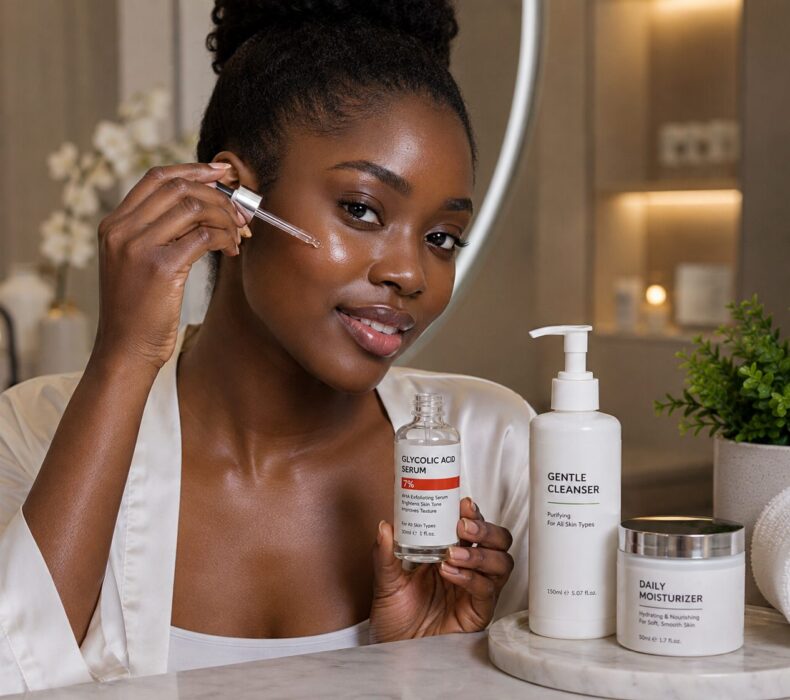
Glycolic acid serum has become one of the most popular skincare products for people looking to achieve brighter, smoother, and healthier-looking skin. Whether you’re dealing with acne scars, dullness, uneven skin tone, fine lines, or rough skin texture, a glycolic acid serum can be an effective addition to your skincare routine.
As more Nigerians become interested in professional skincare treatments and dermatologist-recommended products, glycolic acid serum continues to gain popularity because of its proven ability to exfoliate the skin gently while encouraging healthy skin renewal.
But what exactly is glycolic acid serum? How does it work? Is it suitable for every skin type? And are there any side effects you should know before using it?
This comprehensive guide explains everything you need to know about glycolic acid serum, including its benefits, uses, possible side effects, and tips for using it safely.
Glycolic acid serum is a skincare treatment formulated with glycolic acid, an Alpha Hydroxy Acid (AHA) naturally derived from sugar cane. It is known for having the smallest molecular size among AHAs, allowing it to penetrate the skin more effectively than many other exfoliating acids.
Unlike physical scrubs that remove dead skin cells by rubbing the skin, glycolic acid works through chemical exfoliation. It loosens the bonds between old skin cells, allowing them to shed naturally and reveal newer, healthier skin underneath.
A glycolic acid serum is usually lightweight and designed to deliver concentrated amounts of glycolic acid deep into the skin, making it highly effective for improving skin texture and overall complexion.
How Does Glycolic Acid Serum Work?
The skin naturally sheds dead cells approximately every 28 days. However, factors such as aging, sun exposure, pollution, and acne can slow this process.
Glycolic acid speeds up natural cell turnover by:
Dissolving the glue holding dead skin cells together
Stimulating fresh skin cell production
Encouraging collagen production
Improving skin hydration
Reducing clogged pores
Smoothing rough skin
As fresh skin cells replace older ones, the skin becomes brighter, softer, and more even-toned.
Benefits of Glycolic Acid Serum
Brightens Dull Skin
One of the biggest benefits of glycolic acid serum is its ability to restore skin radiance.
Dead skin buildup often causes the face to appear tired and lifeless. Regular exfoliation removes this dull layer, revealing brighter skin underneath.
Many users notice a healthy glow within a few weeks of consistent use.
Improves Skin Texture
Rough skin can make makeup application uneven and leave the face feeling dry.
Glycolic acid smooths the skin surface by removing dead cells, resulting in:
Softer skin
Smoother texture
Better-looking pores
Improved makeup application
Fades Acne Scars
Post-acne marks are common, especially on darker skin tones.
By accelerating skin renewal, glycolic acid gradually fades:
Acne scars
Dark spots
Hyperpigmentation
Post-inflammatory pigmentation
Although results take time, consistent use can significantly improve skin clarity.
While it cannot completely eliminate wrinkles, it helps maintain youthful-looking skin.
Helps Control Acne
People with oily and acne-prone skin often benefit from glycolic acid because it:
Clears blocked pores
Reduces blackheads
Minimizes whiteheads
Prevents future breakouts
It also improves skin turnover, reducing the likelihood of pores becoming clogged.
Evens Skin Tone
Uneven pigmentation can result from:
Sun exposure
Acne
Hormonal changes
Aging
Regular use of glycolic acid serum helps produce a more balanced and even complexion over time.
Improves Product Absorption
When dead skin cells are removed, moisturizers, vitamin C serums, niacinamide, and hydrating products penetrate the skin more effectively.
This makes your entire skincare routine more efficient.
Supports Collagen Production
Collagen is responsible for skin firmness and elasticity.
Research suggests glycolic acid encourages collagen production, helping maintain firmer, healthier skin with long-term use.
Common Uses of Glycolic Acid Serum
Glycolic acid serum is commonly used to treat:
Acne-prone skin
Blackheads
Whiteheads
Uneven skin tone
Hyperpigmentation
Melasma
Sun damage
Rough skin
Enlarged pores
Fine lines
Wrinkles
Dull complexion
It is also widely used after professional facial treatments as part of a skincare maintenance routine.
Who Should Use Glycolic Acid Serum?
Glycolic acid serum is suitable for many skin types, particularly those with:
Oily skin
Combination skin
Normal skin
Mature skin
Sun-damaged skin
Acne-prone skin
However, people with very sensitive skin, eczema, rosacea, or a damaged skin barrier should consult a dermatologist before use, as glycolic acid may cause irritation.
How to Use Glycolic Acid Serum Correctly
To achieve the best results:
Step 1: Cleanse Your Face
Wash your face with a gentle cleanser and pat dry.
Step 2: Apply the Serum
Use only a few drops.
Spread evenly over the face while avoiding the eyes and lips.
Step 3: Allow It to Absorb
Wait one to two minutes before applying additional skincare products.
Step 4: Moisturize
Follow with a hydrating moisturizer to reduce dryness and strengthen the skin barrier.
Step 5: Wear Sunscreen
Always apply a broad-spectrum sunscreen with SPF 30 or higher during the day.
Glycolic acid increases your skin’s sensitivity to sunlight, making sunscreen essential.
How Often Should You Use Glycolic Acid Serum?
Usage depends on the concentration and your skin’s tolerance.
As a general guide:
Beginners: 2–3 nights per week
Intermediate users: Every other night
Experienced users: Nightly if well tolerated
Avoid overusing glycolic acid, as excessive exfoliation can damage the skin barrier.
Possible Side Effects of Glycolic Acid Serum
Like many active skincare ingredients, glycolic acid can cause temporary side effects.
Common side effects include:
Mild stinging
Redness
Dryness
Peeling
Tightness
Increased sun sensitivity
These effects usually improve as the skin adjusts.
Stop using the product and seek medical advice if you experience:
Severe burning
Blistering
Swelling
Persistent irritation
Allergic reactions
Tips to Reduce Side Effects
You can minimize irritation by following these simple tips:
Perform a patch test before first use.
Start with a lower concentration (5–8%).
Use it only at night.
Avoid using too many active ingredients together.
Apply moisturizer after the serum.
Wear sunscreen every morning.
Increase frequency gradually as your skin adapts.
Ingredients You Should Not Mix with Glycolic Acid Serum
Some active ingredients may increase irritation when combined with glycolic acid.
Avoid using glycolic acid in the same routine as:
Retinol
Tretinoin
Other exfoliating acids (AHAs/BHAs)
High-strength Vitamin C (L-ascorbic acid)
Benzoyl peroxide (unless advised by a dermatologist)
Instead, alternate these ingredients on different nights.
When shopping for a glycolic acid serum, consider:
Glycolic acid concentration (5–10% for beginners)
Fragrance-free formulas if you have sensitive skin
Added hydrating ingredients like hyaluronic acid or glycerin
Reputable skincare brands
Products suited to your skin type
Always buy from trusted retailers to avoid counterfeit skincare products.
Frequently Asked Questions
Can I use glycolic acid serum every day?
Yes, but only after your skin has built tolerance. Beginners should start with two or three applications per week.
Can glycolic acid remove dark spots?
Yes. Regular use helps fade acne marks, sunspots, and hyperpigmentation by promoting faster skin renewal.
Is glycolic acid safe for oily skin?
Yes. It helps unclog pores, reduce excess oil, and improve acne-prone skin.
Does glycolic acid lighten the skin?
No. Glycolic acid does not bleach the skin. Instead, it removes dead skin cells and improves uneven pigmentation, making the complexion appear brighter and more even.
Can pregnant women use glycolic acid?
Low-strength glycolic acid is generally considered acceptable in many cases, but pregnant or breastfeeding women should consult their healthcare provider before adding any active skincare ingredient to their routine.
Final Thoughts
Glycolic acid serum is one of the most effective chemical exfoliants available for improving skin texture, brightness, and overall appearance. By gently removing dead skin cells and encouraging healthy skin renewal, it can help reduce acne scars, fade dark spots, smooth fine lines, unclog pores, and restore a radiant complexion.
Like any active skincare ingredient, success comes from using it correctly. Start with a lower concentration, apply it gradually, moisturize well, and never skip sunscreen during the day. With patience and consistent use, glycolic acid serum can become a valuable part of a healthy skincare routine, delivering visible improvements without the need for harsh physical scrubs or invasive treatments.
If you’re new to exfoliating acids or have sensitive skin, consider seeking advice from a dermatologist before introducing glycolic acid into your regimen. Choosing a quality product and using it responsibly will help you enjoy the benefits while minimizing the risk of irritation.













 Get it on
  Download on the