







In today’s business environment, sustainability is no longer just a corporate responsibility—it has become a strategic necessity. Companies worldwide are recognizing that adopting Eco-Sustainability Strategies for Long-Term Growth can help reduce operational costs, improve brand reputation, attract environmentally conscious customers, and create lasting business value. As environmental concerns continue to shape consumer behavior and government regulations, organizations that prioritize sustainability are better positioned for future success.
Implementing eco-sustainable practices not only benefits the environment but also strengthens a company’s competitive advantage and resilience in an evolving marketplace.
What Are Eco-Sustainability Strategies for Long-Term Growth?
Eco-Sustainability Strategies for Long-Term Growth refer to business practices and policies that minimize environmental impact while supporting long-term profitability and development. These strategies focus on conserving resources, reducing waste, improving efficiency, and creating sustainable value for stakeholders.
Examples include:
- Energy efficiency initiatives
- Renewable energy adoption
- Sustainable sourcing
- Waste reduction programs
- Water conservation
- Green product development
- Sustainable supply chain management
These initiatives help companies align environmental responsibility with business objectives.
Why Eco-Sustainability Matters for Businesses
Businesses face increasing pressure from customers, investors, governments, and communities to operate responsibly. Sustainability is no longer optional for companies seeking long-term success.
Key benefits include:
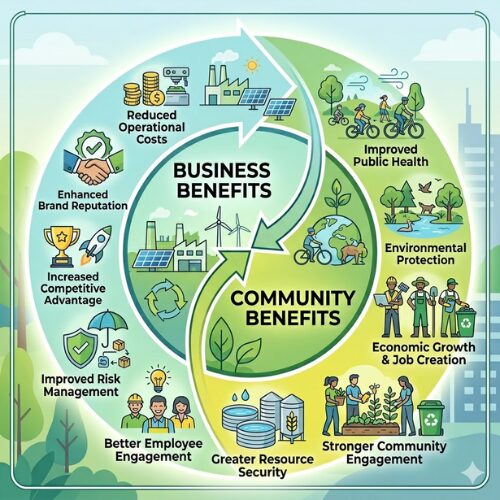
- Reduced operational costs
- Improved corporate reputation
- Enhanced customer loyalty
- Regulatory compliance
- Increased investor confidence
- Stronger risk management
Companies that embrace sustainability often outperform competitors in both environmental and financial performance.
Key Eco-Sustainability Strategies for Long-Term Growth
1. Improve Energy Efficiency
Reducing energy consumption is one of the most effective sustainability initiatives for businesses.
Practical measures include:
- Installing LED lighting
- Upgrading energy-efficient equipment
- Optimizing heating and cooling systems
- Implementing smart energy management technologies
These improvements lower utility costs while reducing greenhouse gas emissions.
2. Adopt Renewable Energy Sources
Renewable energy plays a crucial role in reducing a company’s carbon footprint.
Popular options include:
- Solar power systems
- Wind energy
- Biomass energy
- Green energy purchasing programs
Renewable energy investments can provide long-term cost savings and environmental benefits.
3. Implement Sustainable Supply Chain Practices
A company’s environmental impact extends beyond its own operations.
Businesses can improve sustainability by:
- Partnering with responsible suppliers
- Reducing transportation emissions
- Sourcing sustainable raw materials
- Encouraging ethical production practices
Sustainable supply chains help strengthen environmental performance across the entire value chain.
4. Reduce Waste and Increase Recycling
Waste reduction is a critical component of environmental responsibility.
Strategies include:
- Recycling programs
- Paperless operations
- Reusable packaging
- Composting organic waste
Reducing waste lowers disposal costs and supports a circular economy.
5. Conserve Water Resources
Water conservation is becoming increasingly important as global water challenges grow.
Businesses can reduce water consumption through:
- Efficient plumbing systems
- Water recycling technologies
- Leak detection programs
- Sustainable landscaping
These efforts reduce costs while protecting valuable natural resources.
6. Develop Sustainable Products and Services
Consumers increasingly prefer products that align with environmental values.
Companies can create sustainable offerings by:
- Using recycled materials
- Designing energy-efficient products
- Reducing packaging waste
- Improving product durability
Sustainable innovation can open new markets and increase customer satisfaction.
7. Encourage Employee Participation
Employees play an important role in successful sustainability initiatives.
Businesses can engage employees through:
- Sustainability training programs
- Green workplace policies
- Incentives for eco-friendly practices
- Environmental awareness campaigns
Employee involvement helps build a culture of sustainability throughout the organization.
Environmental Benefits of Eco-Sustainability Strategies
Implementing Eco-Sustainability Strategies for Long-Term Growth provides significant environmental advantages.
Reduced Carbon Emissions
Energy efficiency and renewable energy help lower greenhouse gas emissions.
Conservation of Natural Resources
Sustainable sourcing and waste reduction preserve valuable resources.
Reduced Pollution
Responsible waste management minimizes environmental contamination.
Ecosystem Protection
Sustainable business practices help protect biodiversity and natural habitats.
These benefits contribute to broader environmental conservation goals.
Economic Benefits of Eco-Sustainability Strategies
Sustainability is not only good for the environment—it also makes sound business sense.
Lower Operating Costs
Energy and resource efficiency reduce expenses over time.
Increased Revenue Opportunities
Consumers increasingly support environmentally responsible brands.
Improved Brand Reputation
Sustainability initiatives strengthen public trust and brand loyalty.
Greater Investor Appeal
Investors are increasingly evaluating environmental performance when making decisions.
Companies with strong sustainability programs often enjoy better long-term financial performance.
Challenges Businesses May Face
While sustainability offers many benefits, implementation can present challenges.
Initial Investment Costs
Some sustainability initiatives require upfront capital investment.
Organizational Resistance
Employees and management may resist operational changes.
Supply Chain Complexity
Identifying sustainable suppliers can require additional effort and resources.
Measurement and Reporting
Tracking sustainability performance requires effective monitoring systems.
Despite these challenges, the long-term benefits often outweigh the initial obstacles.
Measuring Sustainability Success
To ensure effectiveness, businesses should establish clear sustainability goals and performance metrics.
Common indicators include:
- Energy consumption reduction
- Carbon footprint reduction
- Waste diversion rates
- Water usage efficiency
- Sustainable sourcing percentages
- Employee engagement levels
Regular monitoring helps organizations improve performance and demonstrate accountability.
The Future of Eco-Sustainability Strategies for Long-Term Growth
The future of Eco-Sustainability Strategies for Long-Term Growth is closely tied to innovation, technology, and evolving consumer expectations. Advances in renewable energy, sustainable manufacturing, circular economy models, and environmental reporting tools are making sustainability more accessible and impactful than ever before.
Companies that proactively embrace sustainability today will be better equipped to navigate future environmental, economic, and regulatory challenges while maintaining long-term profitability.






 Get it on
  Download on the