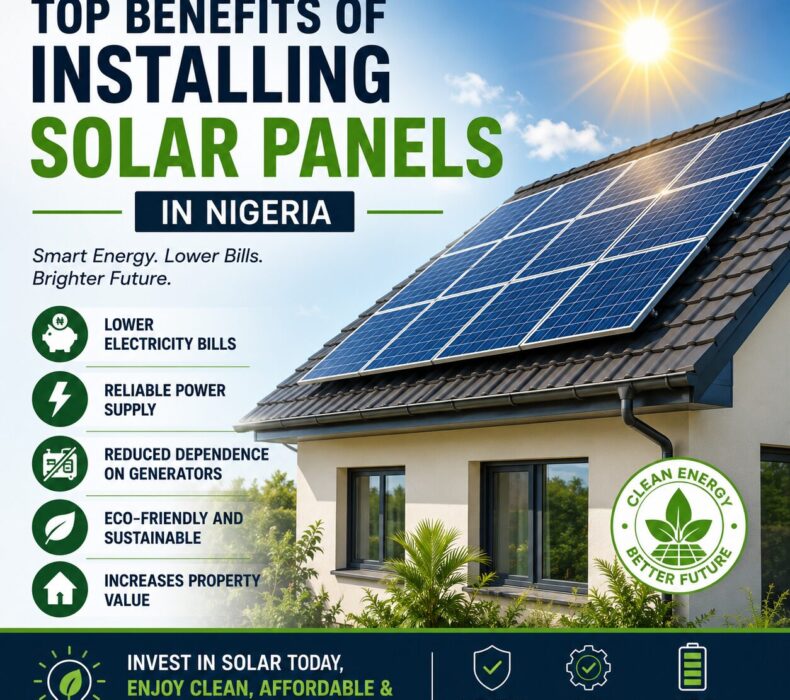
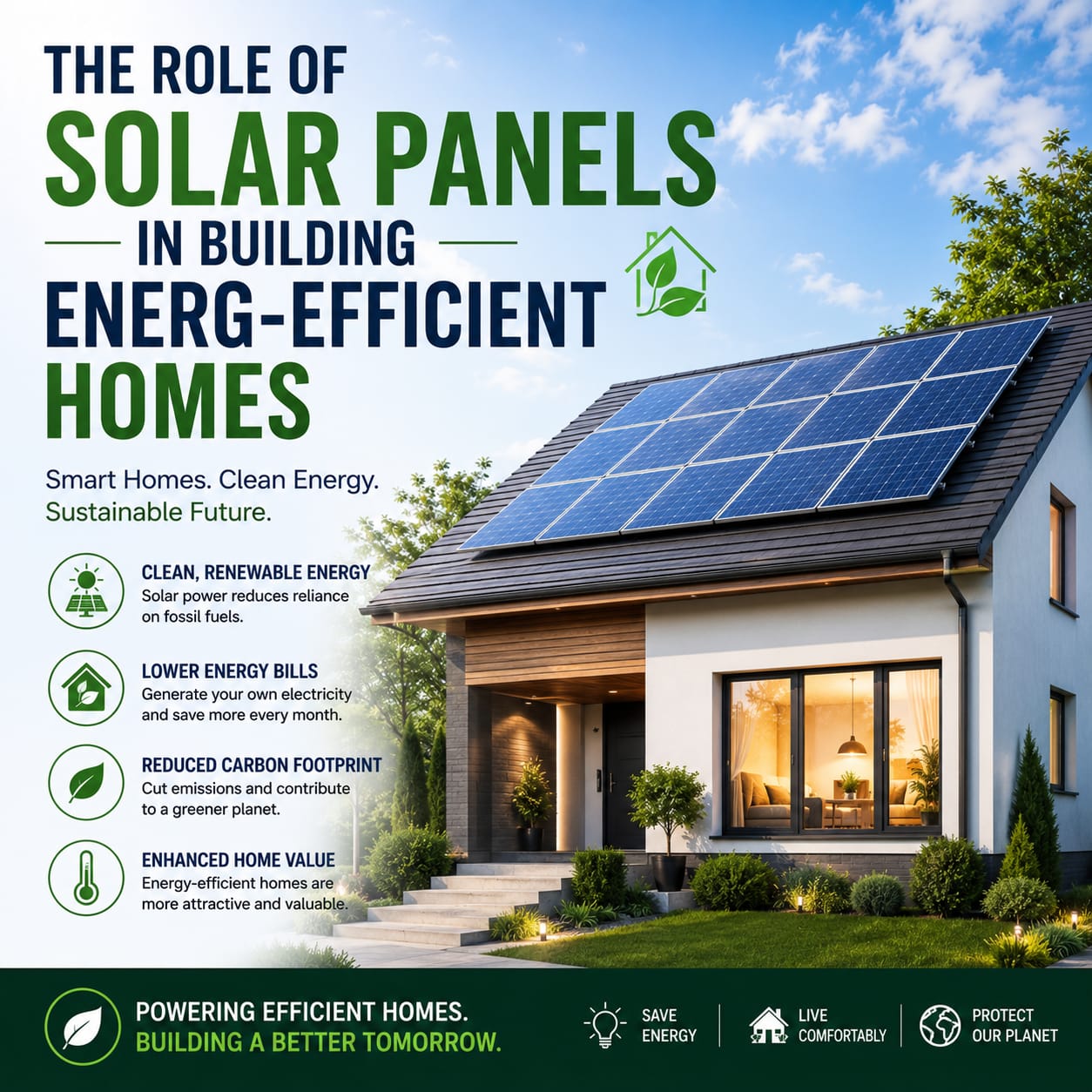
Nigeria continues to experience electricity challenges that affect homes and businesses daily. Consequently, many homeowners are now turning to renewable energy solutions. Among these options, the Top Benefits of Installing Solar Panels in Nigeria make solar energy one of the most practical investments for achieving reliable and affordable electricity.
As energy costs continue to rise, solar panels provide an effective way to reduce dependence on the national grid while enjoying uninterrupted power. Moreover, advances in solar technology have made installation more accessible than ever before.
Why Solar Energy Is Growing in Nigeria
Nigeria receives abundant sunlight throughout the year. Therefore, solar energy is a natural solution for powering homes and businesses.
In addition, increasing fuel prices and frequent power outages have encouraged many households to seek alternatives to generators. As a result, solar panel installations are becoming increasingly common across the country.
1. Significant Reduction in Electricity Bills
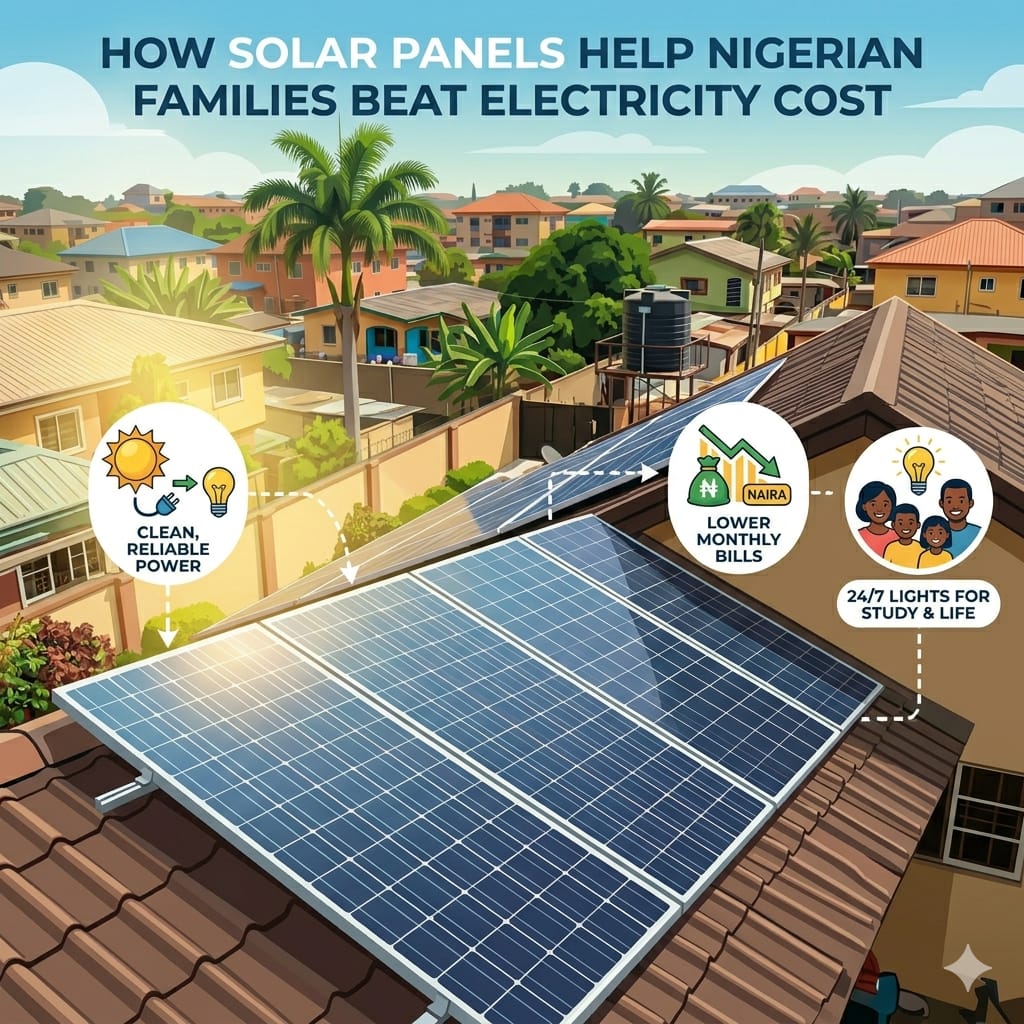
One of the biggest advantages of solar panels is the ability to lower monthly electricity expenses.
Once installed, solar panels generate electricity directly from sunlight. Consequently, homeowners purchase less power from the grid. Over time, these savings can become substantial.
Furthermore, households that rely heavily on solar energy often experience predictable energy costs, making budgeting much easier.
2. Reliable Power Supply During Outages
Power interruptions remain a major concern in many Nigerian communities. However, solar systems can provide electricity even when the grid fails.
When paired with quality batteries, solar panels store excess energy for use at night or during blackouts. Therefore, families can continue using essential appliances without disruption.
As a result, homeowners enjoy greater comfort and convenience throughout the year.
3. Reduced Dependence on Generators
Generators have long served as backup power sources in Nigeria. Nevertheless, fuel costs and maintenance expenses continue to increase.
Solar panels offer a cleaner and more cost-effective alternative. Consequently, homeowners can significantly reduce generator usage and fuel consumption.
Additionally, less generator use means fewer repairs and lower operating costs over time.
4. Environmentally Friendly Energy Solution
Unlike fossil fuel generators, solar panels generate electricity without producing harmful emissions.
Therefore, switching to solar energy helps reduce environmental pollution. Moreover, using renewable energy contributes to a cleaner and healthier future for communities.
As environmental awareness continues to grow, more Nigerians are embracing sustainable energy solutions.
5. Long-Term Financial Savings
Although solar panel installation requires an initial investment, the long-term savings are often impressive.
For example, many systems continue operating efficiently for more than twenty years. During that period, homeowners benefit from reduced electricity bills and lower fuel expenses.
Consequently, solar energy can deliver excellent value over its lifespan.
6. Low Maintenance Requirements
Many people assume solar systems require constant maintenance. However, this is not the case.
Most solar panels require only occasional cleaning and routine inspections. Furthermore, quality systems are designed to withstand harsh weather conditions.
As a result, maintenance costs remain relatively low compared to generators.
7. Increased Property Value
Properties equipped with solar energy systems often attract greater interest from potential buyers.
Buyers appreciate the availability of reliable electricity and lower energy expenses. Therefore, installing solar panels can increase the market value of a home.
Moreover, energy-efficient properties are becoming increasingly desirable in today’s real estate market.
8. Energy Independence
One of the most important benefits of solar energy is greater control over electricity generation.
Instead of depending entirely on the national grid, homeowners can produce their own power. Consequently, they are less affected by outages and tariff increases.
Furthermore, energy independence provides peace of mind during periods of grid instability.
9. Quiet Operation
Generators often create significant noise pollution. In contrast, solar panels operate silently.
Therefore, homeowners can enjoy a peaceful environment while still accessing reliable electricity.
Additionally, silent operation improves comfort, especially in residential neighborhoods.
10. Supports Modern Home Appliances
Today’s households depend on numerous electrical devices, including refrigerators, televisions, computers, and internet equipment.
Fortunately, properly designed solar systems can power many of these appliances efficiently. As a result, families can maintain productivity and comfort even during extended power outages.
The Future of Solar Energy in Nigeria
The adoption of solar energy continues to grow across Nigeria. Furthermore, technological improvements and declining equipment costs are making solar systems more affordable.
As awareness increases, more households are expected to invest in renewable energy solutions. Therefore, solar power is likely to play a major role in addressing Nigeria’s electricity challenges.
Conclusion
The Top Benefits of Installing Solar Panels in Nigeria extend far beyond reducing electricity bills. Solar energy provides reliable power, lowers generator dependence, promotes environmental sustainability, and offers long-term financial savings.











 Get it on
  Download on the