





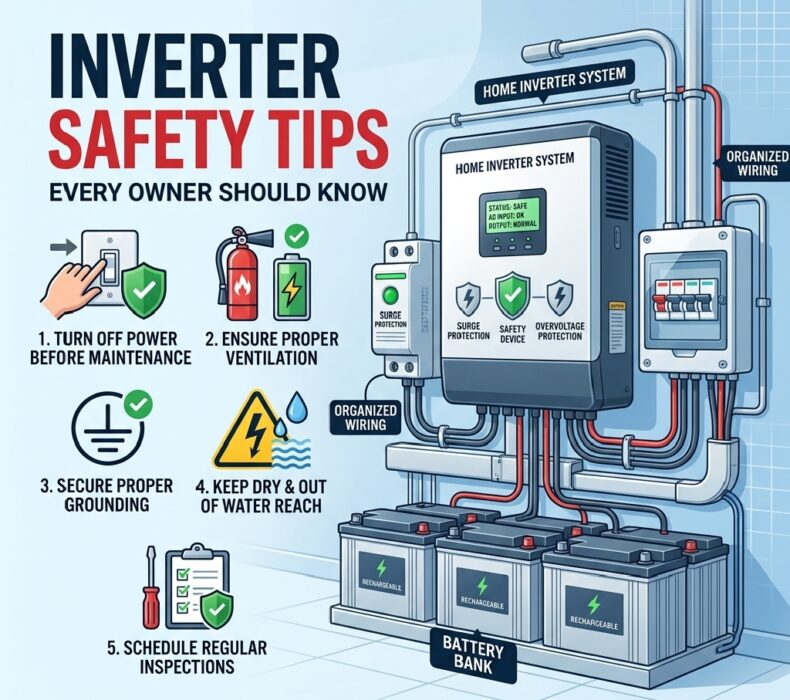
Understanding inverter safety tips every owner should know is essential for maintaining a reliable and secure backup power system. While inverters provide convenient electricity during power outages, improper installation, maintenance, or usage can lead to equipment damage, electrical hazards, and reduced system performance.
Why Inverter Safety Matters
Many homeowners and business owners depend on inverter systems daily. However, failing to observe proper safety precautions can create serious risks.
For example:
- Electrical shocks
- Battery damage
- Fire hazards
- Equipment failure
- Reduced system efficiency
Consequently, understanding inverter safety is just as important as choosing the right inverter system.
Install the Inverter in a Safe Location
The location of your inverter significantly affects both safety and performance.
Therefore, install your inverter:
- In a dry environment
- Away from direct sunlight
- In a well-ventilated area
- On a stable surface
Additionally, avoid locations exposed to rain, excessive moisture, or flooding.
As a result, the inverter remains protected from environmental damage and overheating.
Ensure Proper Ventilation
One of the most important inverter safety tips every owner should know is maintaining adequate ventilation.
Inverters and batteries generate heat during operation. Consequently, poor airflow can cause overheating and reduce system lifespan.
To improve ventilation:
- Leave sufficient space around equipment.
- Avoid enclosing the inverter in tight cabinets.
- Keep ventilation openings unobstructed.
- Install cooling fans where necessary.
Furthermore, proper airflow helps maintain stable operating temperatures.
Avoid Overloading the Inverter
Every inverter has a maximum power capacity.
However, connecting too many appliances can overload the system.
Common consequences include:
- Automatic shutdowns
- Reduced efficiency
- Overheating
- Permanent component damage
Therefore, always calculate your total appliance load before connecting equipment.
As a result, the inverter can operate safely and efficiently.
Use High-Quality Electrical Cables
Electrical cables play a critical role in inverter safety.
Low-quality or undersized cables can:
- Overheat
- Cause voltage drops
- Increase fire risks
- Reduce system efficiency
Therefore, always use cables recommended by qualified technicians or manufacturers.
Additionally, inspect cables regularly for signs of wear or damage.
Install Proper Circuit Protection
Circuit protection devices help safeguard inverter systems against electrical faults.
Recommended protection equipment includes:
- Circuit breakers
- Fuses
- Surge protectors
- Disconnect switches
Consequently, these devices reduce the risk of damage caused by power surges or short circuits.
Moreover, they improve overall system safety.
Keep Batteries Away from Heat Sources
Batteries are highly sensitive to excessive heat.
Therefore, avoid placing batteries near:
- Generators
- Cooking appliances
- Direct sunlight
- Heating equipment
Excessive temperatures can shorten battery lifespan and increase safety risks.
As a result, cooler operating conditions help maintain battery health and performance.
Prevent Water Exposure
Water and electricity are a dangerous combination.
One of the most important inverter safety tips every owner should know is keeping all inverter components dry.
To reduce risks:
- Fix leaking roofs immediately.
- Elevate batteries above floor level.
- Protect equipment during rainy seasons.
- Avoid installing systems in damp locations.
Furthermore, preventing water exposure reduces the likelihood of electrical faults and corrosion.
Follow Proper Battery Maintenance Procedures
Battery maintenance is essential for both performance and safety.
For lead-acid batteries:
- Check electrolyte levels regularly.
- Use distilled water only.
- Avoid overfilling battery cells.
Additionally, follow the manufacturer’s maintenance recommendations at all times.
As a result, batteries operate more safely and efficiently.
Protect Children and Pets
Inverter systems contain electrical components and batteries that should not be handled carelessly.
Therefore:
- Restrict access to installation areas.
- Use protective covers where necessary.
- Secure battery compartments properly.
Consequently, children and pets remain protected from accidental contact.
Monitor Charging Performance
Charging issues can indicate underlying safety concerns.
Watch for:
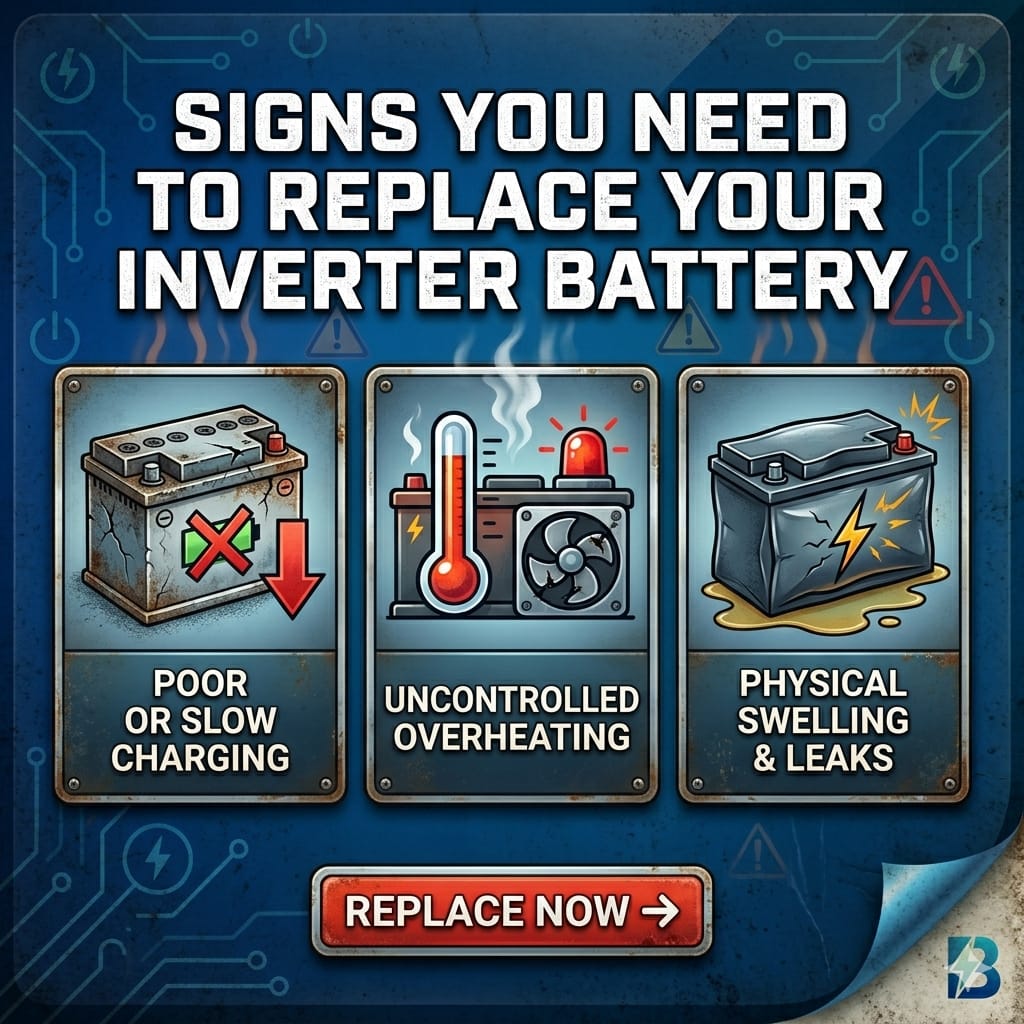
- Excessive heat
- Unusual odors
- Slow charging
- Swollen batteries
If any of these warning signs appear, stop using the system until the problem has been investigated.
Furthermore, early intervention can prevent more serious failures.
Never Attempt Unsafe Repairs
Some inverter owners attempt repairs without proper knowledge or tools.
However, working on electrical systems can be dangerous.
Instead:
- Consult qualified technicians.
- Follow manufacturer instructions.
- Replace damaged components with approved parts.
As a result, repairs are completed safely and correctly.
Protect Against Lightning and Power Surges
In many regions, thunderstorms can create dangerous voltage spikes.
Therefore, surge protection is highly recommended.
Surge protection devices help:
- Protect the inverter
- Safeguard batteries
- Prevent appliance damage
- Improve system reliability
Consequently, your investment remains better protected during severe weather conditions.
Warning Signs That Require Immediate Attention
Pay attention to these safety warning signs:
Burning Smells
Electrical burning odors should never be ignored.
Swollen Batteries
Bulging battery cases often indicate internal damage.
Frequent Shutdowns
Repeated inverter shutdowns may suggest overloads or equipment faults.
Sparks or Smoke
Disconnect power immediately and seek professional assistance.
Therefore, prompt action can prevent accidents and equipment loss.
Benefits of Following Inverter Safety Guidelines
Implementing proper safety measures offers numerous advantages.
These include:
- Longer equipment lifespan
- Improved system efficiency
- Lower maintenance costs
- Reduced accident risks
- Reliable backup power
Furthermore, safe operation helps maximize the value of your inverter investment.
Conclusion
Following these inverter safety tips every owner should know can significantly improve the safety, reliability, and longevity of your backup power system. From proper installation and ventilation to battery maintenance and surge protection, every precaution contributes to better performance and reduced risks.


 Get it on
  Download on the