common questions inverter owners ask is, how long does an inverter battery last Understanding battery lifespan is important because it helps homeowners and business owners plan maintenance, avoid unexpected failures, and maximize their investment. While inverter batteries are designed to provide years of dependable backup power, their actual lifespan depends on several factors. Therefore, knowing what affects battery longevity can help you get the best performance from your system.
What Is an Inverter Battery?
An inverter battery stores electrical energy that can be used during power outages. When grid electricity is available, the battery charges automatically. However, when a blackout occurs, the inverter converts the stored energy into usable electricity for your appliances.
As a result, homes and businesses can continue operating without interruption.
How Long Does an Inverter Battery Last on Average?
The answer to how long does an inverter battery last depends largely on the battery type, usage habits, maintenance practices, and environmental conditions.
Generally:
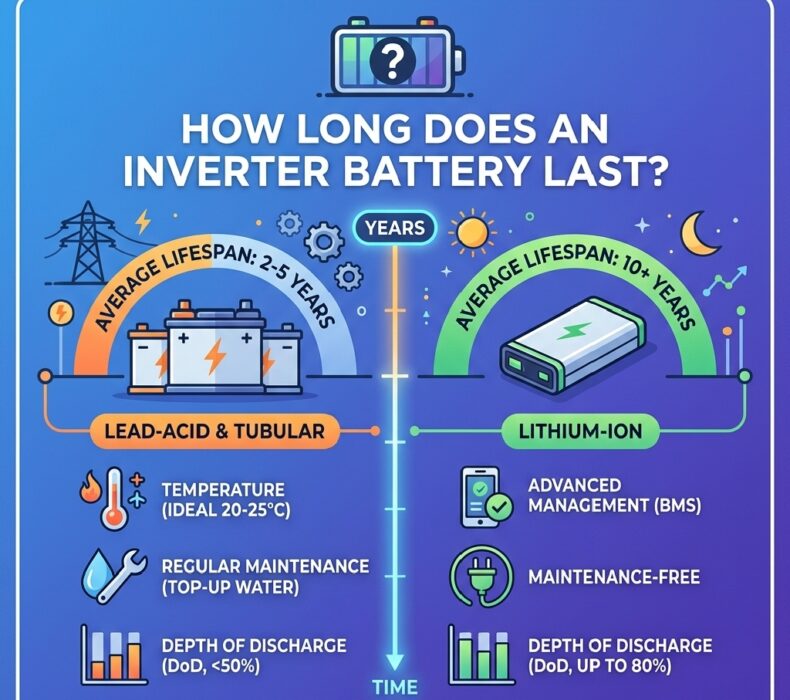
Lead-acid batteries last between 3 and 5 years.
Tubular batteries typically last 5 to 8 years.
Lithium-ion batteries often last 8 to 15 years or more.
Furthermore, high-quality batteries that receive proper maintenance usually exceed their expected service life.
Factors That Affect Inverter Battery Lifespan
Several factors influence how long an inverter battery will continue performing efficiently.
Frequency of Power Outages
Areas with frequent electricity outages place greater demands on inverter batteries.
Consequently, batteries experience more charging and discharging cycles, which can shorten their lifespan over time.
Depth of Discharge
The amount of energy removed from a battery during each cycle significantly affects longevity.
For example, repeatedly draining a battery completely can accelerate wear.
Therefore, avoiding deep discharges helps preserve battery health.
Charging Practices
Proper charging habits play a major role in battery performance.
In contrast, overcharging and undercharging can reduce battery efficiency and lifespan.
As a result, using a quality inverter with smart charging features is highly recommended.
Operating Temperature
Batteries perform best within recommended temperature ranges.
However, excessive heat can:
Increase internal wear
Reduce charging efficiency
Shorten battery life
Therefore, proper ventilation is essential for long-term performance.
Maintenance Routine
Regular maintenance helps identify and correct issues before they become serious.
Consequently, batteries that receive consistent care often last significantly longer than neglected ones.
Lifespan of Different Inverter Battery Types
Lead-Acid Batteries
Lead-acid batteries are among the most affordable options available.
Benefits include:
Lower purchase cost
Wide availability
Simple installation
However, they typically require more maintenance and have a shorter lifespan compared to newer technologies.
Average lifespan: 3–5 years
Tubular Batteries
Tubular batteries are widely used for residential inverter systems because of their durability.
Advantages include:
Better performance during long outages
Improved cycle life
Higher reliability
Furthermore, they handle frequent charging and discharging more effectively.
Average lifespan: 5–8 years
Lithium-Ion Batteries
Lithium batteries are becoming increasingly popular due to their advanced technology.
Benefits include:
Faster charging
Higher efficiency
Minimal maintenance
Longer lifespan
Although they cost more initially, they often provide better long-term value.
Average lifespan: 8–15 years or more
Signs Your Inverter Battery Is Near the End of Its Life
Even the best batteries eventually wear out.
Therefore, watch for these warning signs:
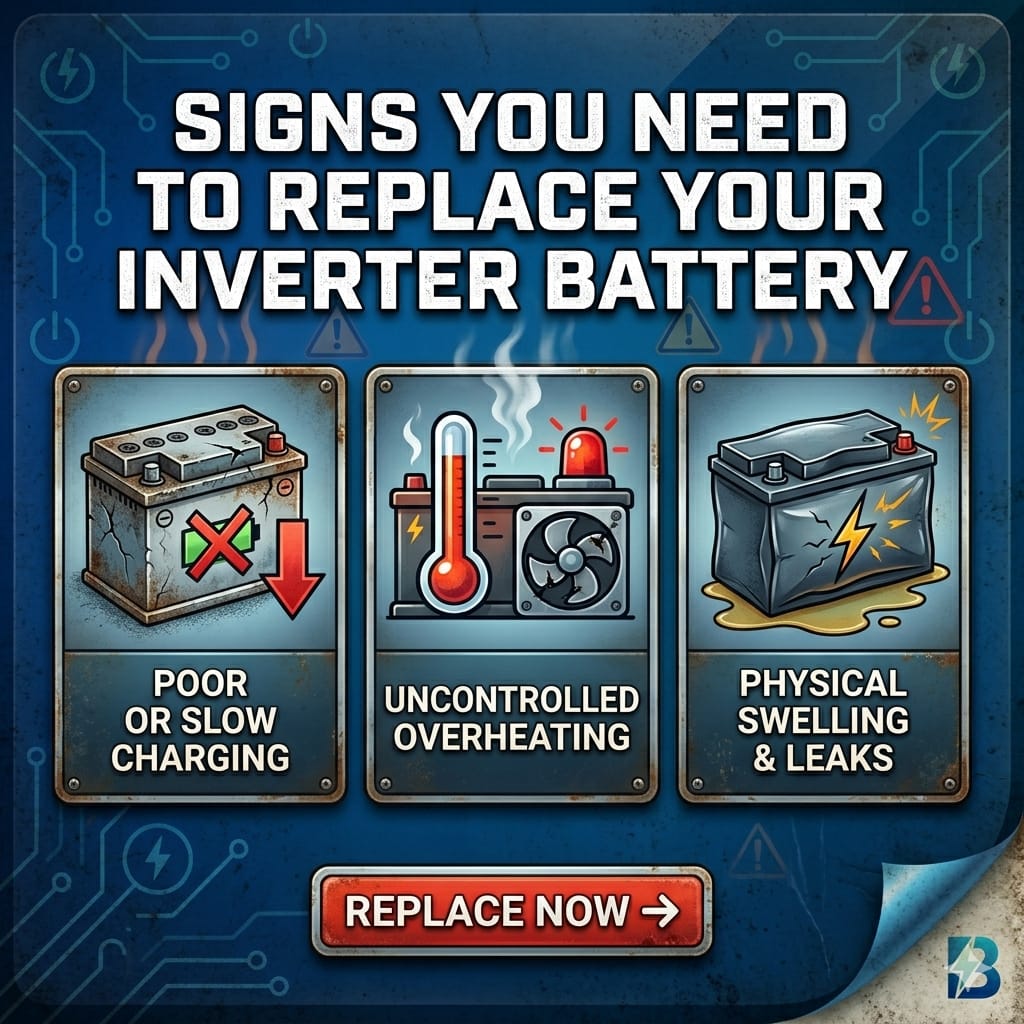
Reduced Backup Time
If your battery no longer provides the same backup duration it once did, capacity loss may be occurring.
Slow Charging
A battery that takes unusually long to charge may be deteriorating internally.
Frequent Low-Battery Alerts
Recurring warnings often indicate declining storage capacity.
Swollen Battery Casing
Physical swelling can suggest internal damage and requires immediate attention.
Excessive Heating
Unusual heat during charging or operation may indicate aging components.
Consequently, these symptoms should not be ignored.
How Long Does an Inverter Battery Last During a Power Outage?
Many people asking how long does an inverter battery last are actually referring to backup duration rather than service life.
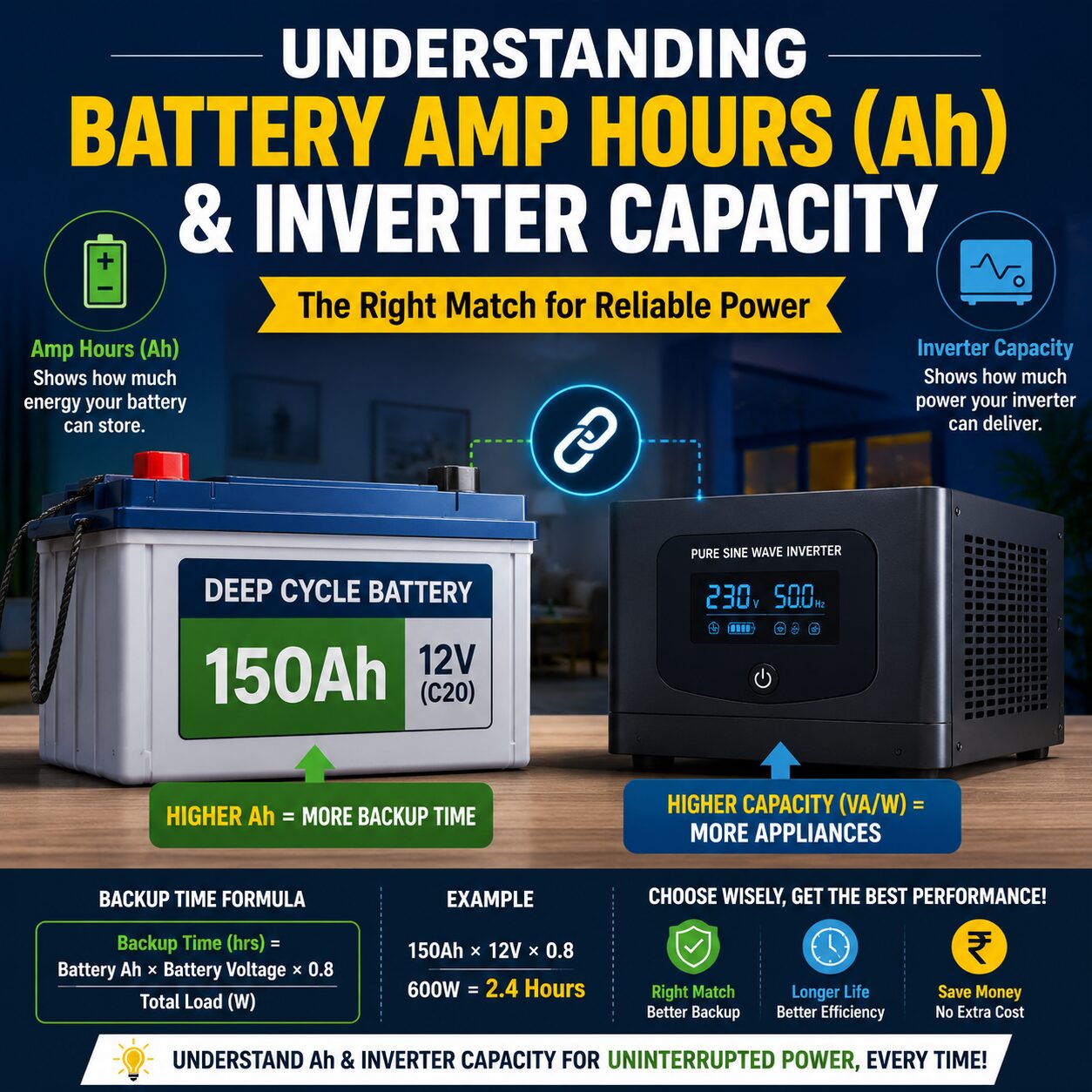
Backup time depends on:
Battery capacity
Inverter size
Number of connected appliances
Power consumption levels
For example:
A small battery may provide 2–4 hours of backup.
A larger battery bank may provide 8–12 hours or more.
Therefore, actual runtime varies significantly based on usage patterns.
When Should You Replace Your Inverter Battery?
Replacement becomes necessary when:
Backup time drops significantly.
Charging performance declines.
Physical damage is visible.
The battery exceeds its expected lifespan.
Frequent faults occur despite maintenance.
Therefore, replacing an aging battery before complete failure helps maintain reliable backup power.
Conclusion
If you have ever wondered how long does an inverter battery last, the answer depends on battery type, maintenance habits, charging practices, and operating conditions. While lead-acid batteries may last 3–5 years, tubular batteries often provide 5–8 years of service, and lithium batteries can last well beyond a decade.










 Get it on
  Download on the