





- Adaobi
- May 31, 2026
- No Comments
Best Inverters for Air Conditioners and Refrigerators are becoming essential for Nigerian homeowners who want uninterrupted comfort during power outages. Air conditioners and refrigerators are among the most important household appliances, yet they require reliable and stable electricity to operate efficiently. Fortunately, modern inverter systems can power these appliances while reducing dependence on generators and lowering long-term energy costs.
Why Air Conditioners and Refrigerators Need Special Inverter Systems
Not all inverter systems can handle the power requirements of air conditioners and refrigerators.
These appliances require:
- High startup power
- Stable voltage output
- Strong battery support
- Reliable charging systems
- Efficient energy management
Consequently, choosing an undersized inverter may lead to poor performance, overload issues, and shorter appliance lifespan.
Benefits of Using Inverters for Air Conditioners and Refrigerators
Continuous Cooling
Air conditioners and refrigerators maintain comfortable indoor temperatures and preserve food during outages.
Therefore, inverter systems help households avoid discomfort and food spoilage.
Reduced Generator Dependence
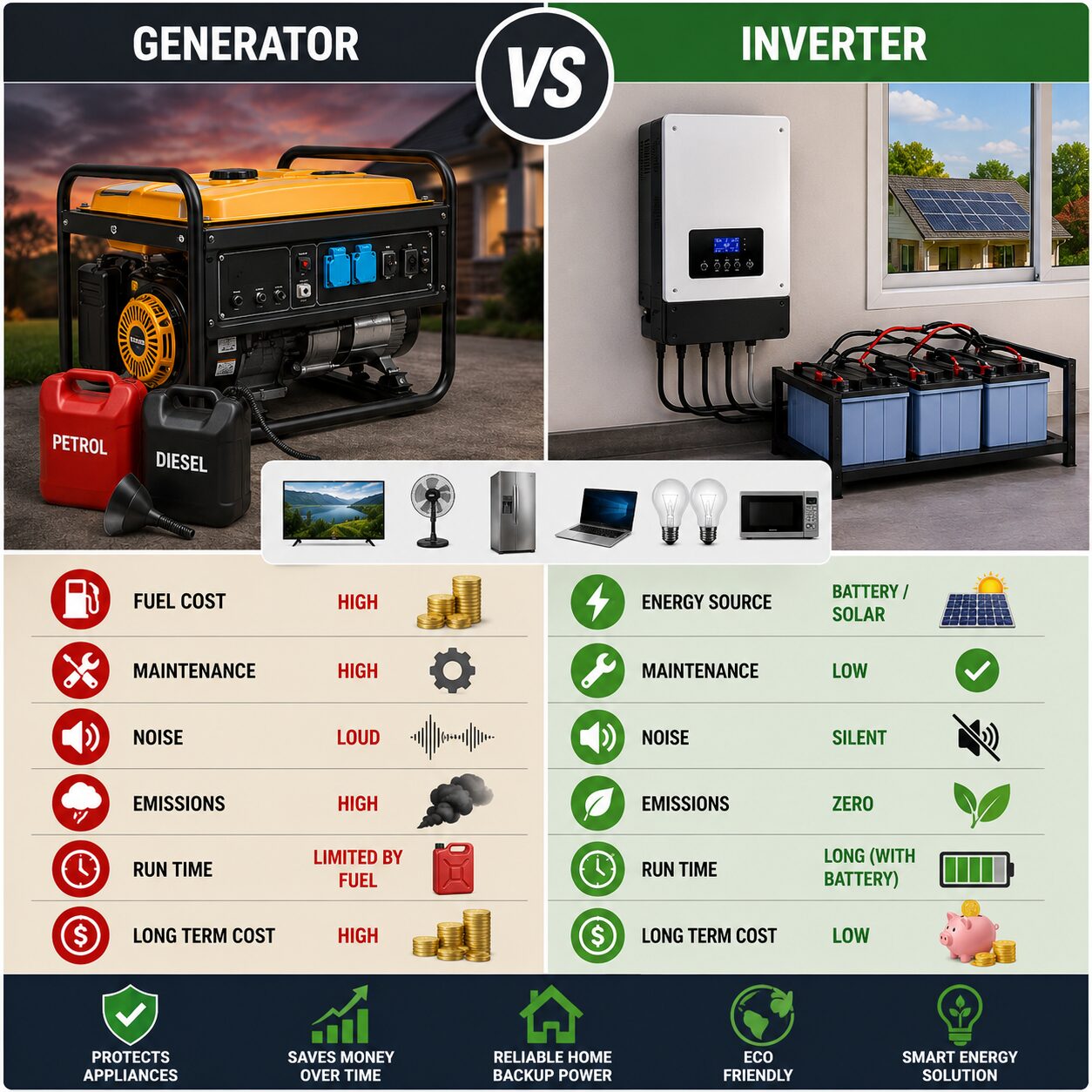
Generators consume fuel and require regular maintenance.
However, inverter systems provide quieter and cleaner backup electricity.
As a result, homeowners enjoy reduced operating expenses.
Improved Appliance Protection
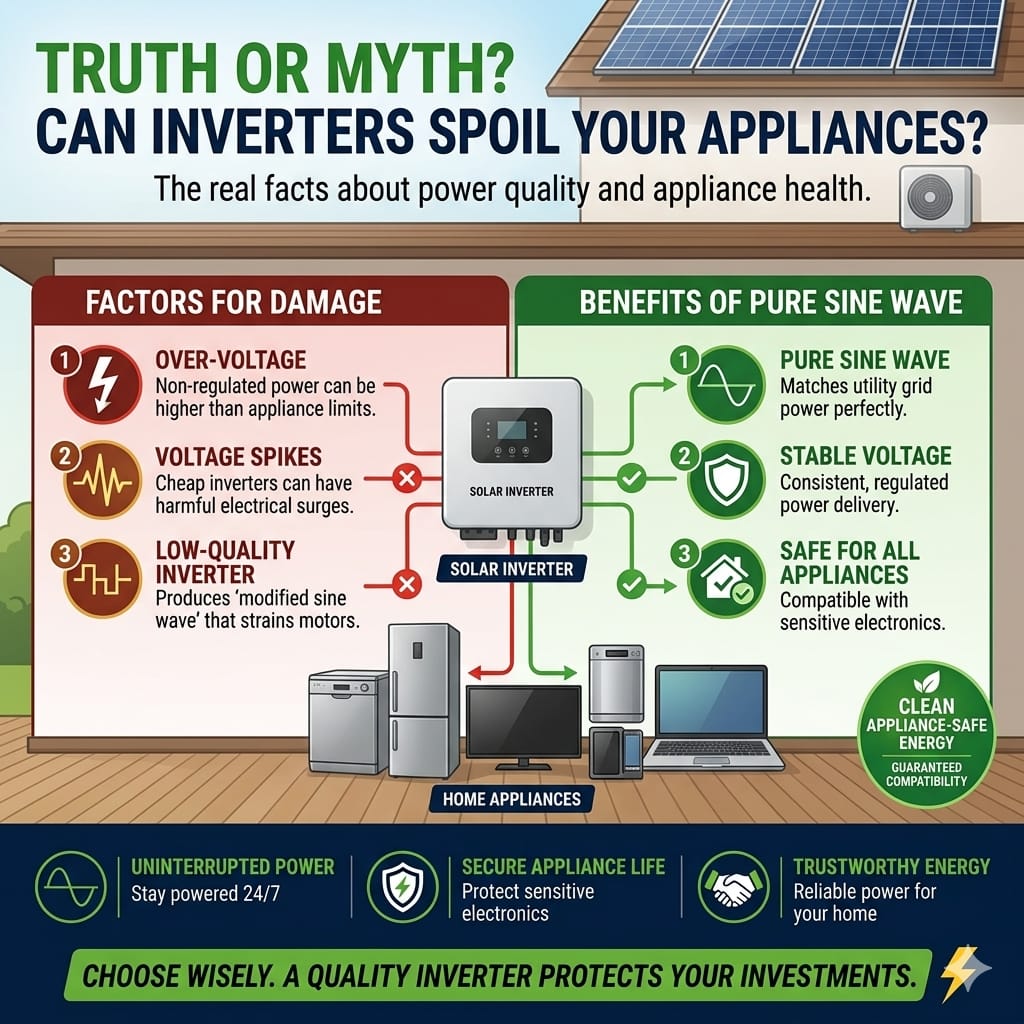
Power fluctuations can damage sensitive appliances.
Fortunately, pure sine wave inverters deliver stable electricity that protects air conditioners and refrigerators from voltage irregularities.
Better Energy Efficiency
Modern inverter systems optimize battery usage and improve overall energy management.
Consequently, backup duration can be extended significantly.
Understanding Power Requirements
Before choosing an inverter, it is important to calculate appliance power consumption.
Typical Refrigerator Consumption
Most household refrigerators consume between:
- 100W to 300W during operation
However, startup power may be considerably higher.
Typical Air Conditioner Consumption
Air conditioners usually consume:
- 800W to 2500W depending on size and model
Additionally, startup surges may require extra inverter capacity.
Therefore, inverter sizing should always account for both running and startup power requirements.
Best Inverter Capacities for Refrigerators
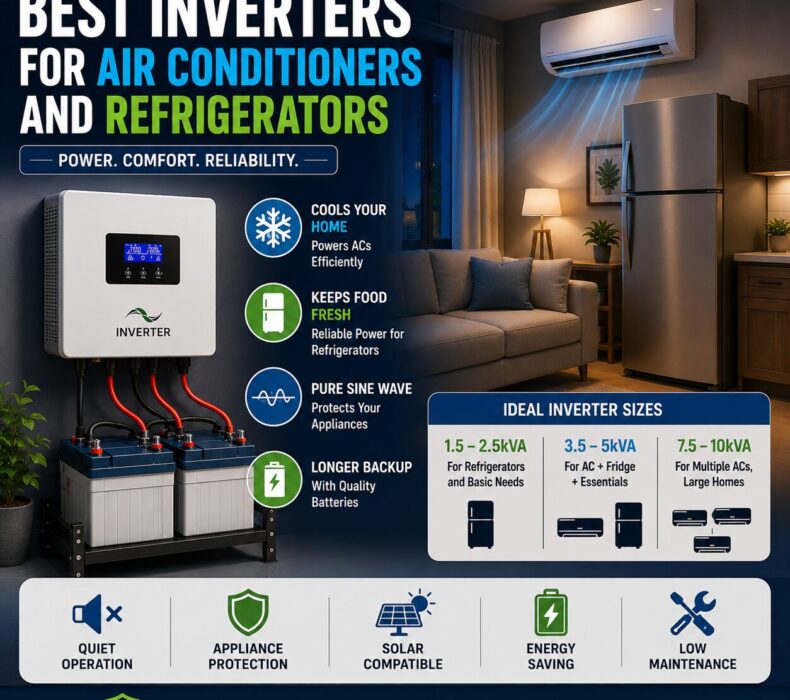
1.5kVA Inverter Systems
Suitable for:
- Small refrigerators
- Lighting
- Fans
- Internet routers
Additionally, these systems work well for small apartments.
2.5kVA Inverter Systems
Suitable for:
- Medium refrigerators
- Multiple household appliances
- Small family homes
Furthermore, they provide greater flexibility and longer backup support.
Best Inverter Capacities for Air Conditioners
3.5kVA Inverter Systems
Suitable for:
- Small inverter air conditioners
- Essential household appliances
However, battery capacity must be adequate to support cooling demands.
5kVA Inverter Systems
Suitable for:
- Larger air conditioners
- Refrigerators
- Entertainment systems
- Lighting
Consequently, these systems are among the most popular choices for family homes.
7.5kVA to 10kVA Systems
Suitable for:
- Multiple air conditioners
- Large refrigerators
- Whole-home backup solutions
Additionally, these systems support larger energy demands comfortably.
Features to Look for When Choosing the Best Inverters for Air Conditioners and Refrigerators
Pure Sine Wave Technology
Pure sine wave output ensures smooth and stable operation.
Therefore, sensitive appliances function more efficiently and safely.
High Surge Capacity
Air conditioners and refrigerators require additional startup power.
Consequently, the inverter should have sufficient surge handling capability.
Smart Battery Charging
Modern charging systems improve battery lifespan and charging efficiency.
Furthermore, they help maximize backup performance.
Solar Compatibility
Solar-ready inverters provide additional charging flexibility.
As a result, homeowners can reduce electricity bills and generator usage.
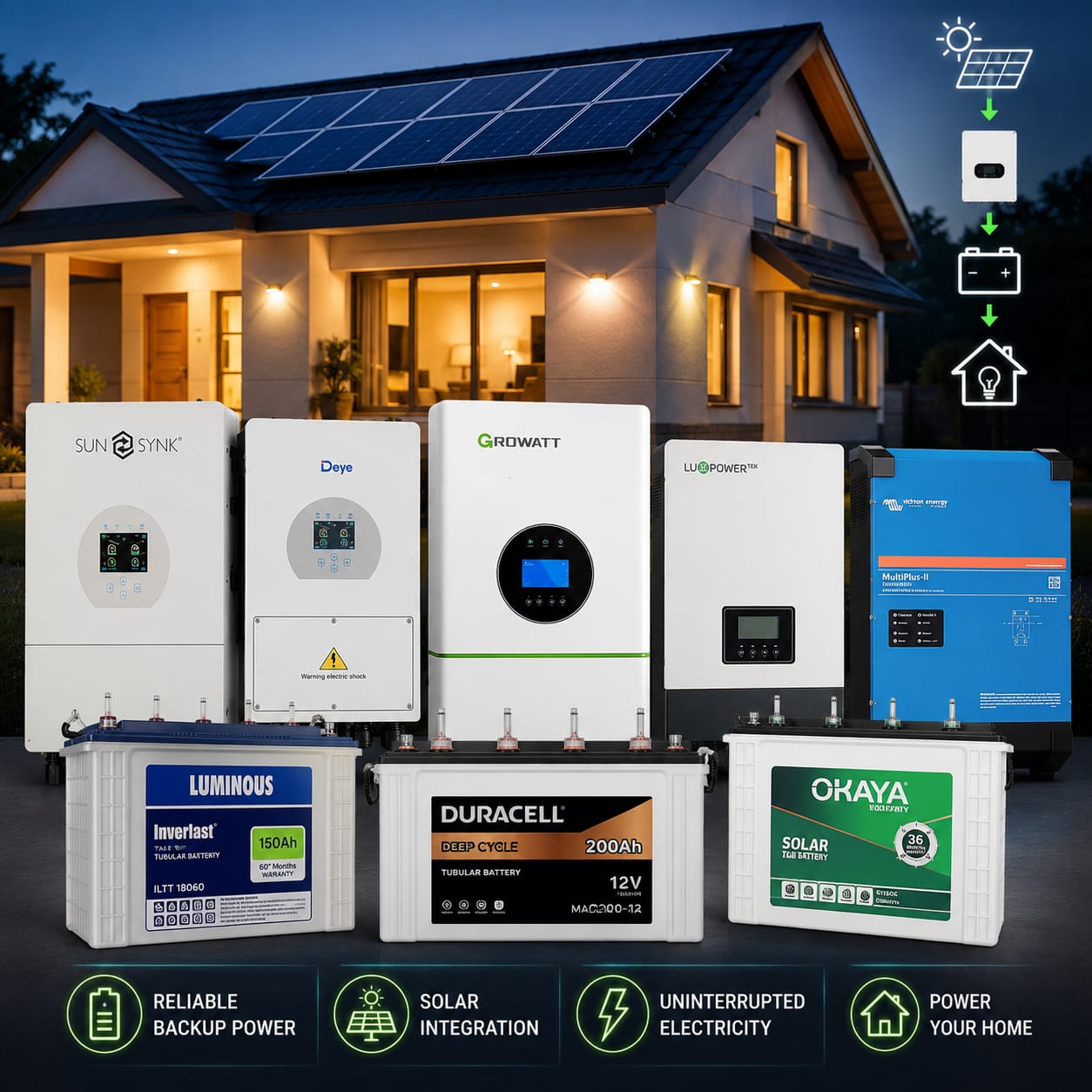
Best Battery Options
Battery quality directly affects inverter performance.
Tubular Batteries
Advantages include:
- Long lifespan
- Reliable backup
- Deep-cycle capability
Therefore, they remain popular in Nigeria.
Lithium Batteries
Benefits include:
- Faster charging
- Longer lifespan
- Compact design
- Lower maintenance
Although they cost more initially, they often provide better long-term value.
Gel Batteries
Gel batteries are ideal for:
- Apartments
- Enclosed spaces
- Low-maintenance installations
Additionally, they perform well in residential environments.
Recommended Appliance Management Tips
Even with powerful inverter systems, energy management remains important.
Prioritize Essential Appliances
Focus on:
- Refrigerators
- Air conditioners
- Lighting
- Internet devices
Consequently, batteries last longer during outages.
Use Energy-Efficient Appliances
Modern inverter air conditioners consume less electricity.
Similarly, energy-efficient refrigerators reduce battery load significantly.
Avoid Simultaneous Heavy Loads
Running multiple high-power appliances together may reduce backup duration.
Therefore, stagger appliance usage whenever possible.
Common Mistakes to Avoid
Choosing an Undersized Inverter
Small systems may struggle with startup power demands.
As a result, performance problems may occur.
Ignoring Battery Capacity
Even a powerful inverter requires adequate battery storage.
Therefore, battery sizing is equally important.
Poor Installation
Incorrect wiring may reduce efficiency and create safety risks.
Consequently, professional installation is highly recommended.
Using Low-Quality Batteries
Cheap batteries often fail prematurely and reduce system reliability.
Solar-Powered Solutions for Air Conditioners and Refrigerators
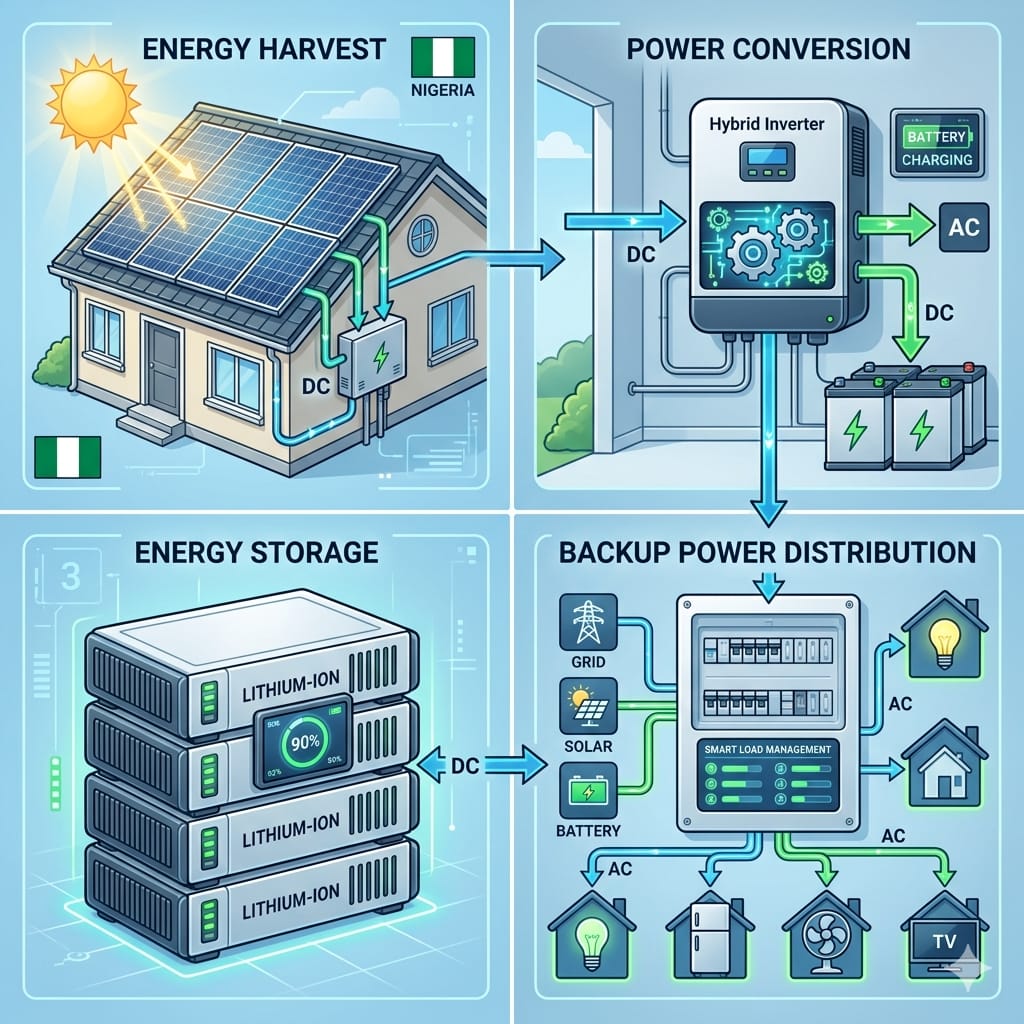
Many homeowners now combine inverter systems with solar panels.
Benefits Include:
- Lower electricity bills
- Longer backup duration
- Reduced generator use
- Improved energy independence
Additionally, Nigeria’s abundant sunlight makes solar integration highly practical.
Conclusion
Choosing the Best Inverters for Air Conditioners and Refrigerators helps homeowners enjoy reliable cooling, food preservation, and uninterrupted comfort during power outages. Because these appliances require significant power, selecting the correct inverter capacity, battery system, and installation method is essential.


 Get it on
  Download on the