






- Adaobi
- May 25, 2026
- No Comments
Common inverter problems and how to fix them is one of the most searched topics among Nigerian homeowners using backup electricity systems. Although inverters provide reliable power during outages, they can sometimes develop faults that affect performance. Fortunately, many inverter issues can be identified early and fixed properly before they become serious.
Why Inverter Problems Happen
Inverter systems work continuously during power interruptions. Therefore, regular usage, poor maintenance, environmental conditions, and incorrect installation may eventually affect performance.
Additionally, battery quality, overloading, and unstable electricity supply can also contribute to inverter faults. However, with proper care and timely maintenance, many of these issues can be prevented easily.
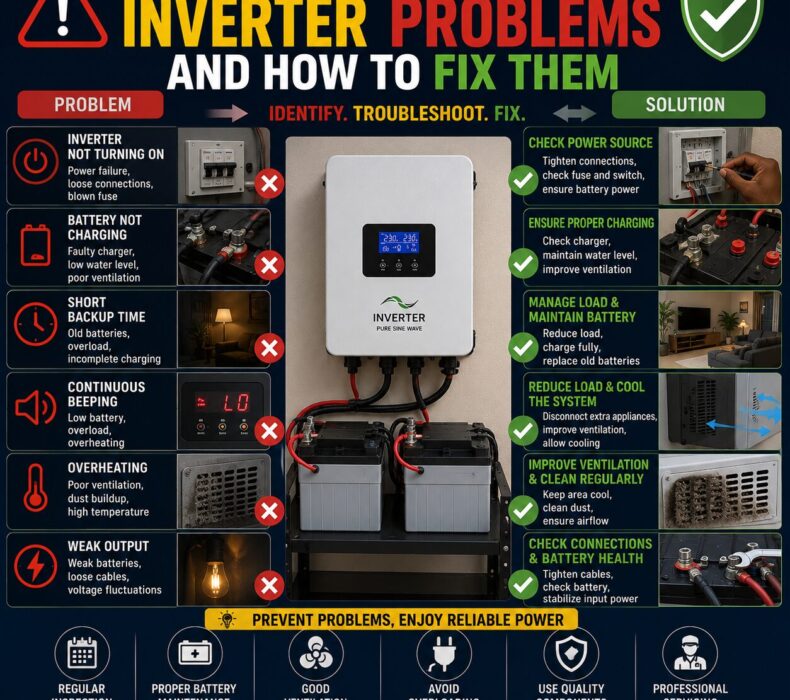
1. Inverter Not Turning On
One of the most common inverter problems is complete failure to power on.
Possible Causes
- Loose battery connections
- Dead batteries
- Blown fuse
- Faulty power switch
- Internal circuit damage
How to Fix It
First, inspect the battery terminals carefully. Tighten any loose connections and clean dirty terminals.
Next, check whether the batteries still hold charge properly. If the batteries are weak or damaged, replacement may be necessary.
Additionally, inspect the inverter fuse. Replacing a damaged fuse may restore normal operation immediately.
However, if the inverter still refuses to start, contact a qualified technician for professional diagnosis.
2. Battery Not Charging Properly
Battery charging problems can reduce backup duration significantly.
Possible Causes
- Faulty charger
- Damaged batteries
- Poor ventilation
- Incorrect charging settings
- Unstable electricity supply
How to Fix It
First, confirm that public electricity supply reaches the inverter correctly.
Afterward, check battery water levels if you use tubular batteries. Low water levels may affect charging performance.
Furthermore, ensure the installation area has proper ventilation because excessive heat affects charging efficiency.
If charging problems continue, battery replacement or charger repairs may be required.
3. Short Backup Time
Many users complain that their inverter no longer lasts as long as before.
Possible Causes
- Old batteries
- Excessive appliance load
- Poor battery maintenance
- Incomplete charging cycles
How to Fix It
Reduce the number of appliances connected during outages. For example, avoid operating heavy equipment unnecessarily.
Additionally, recharge batteries fully whenever electricity becomes available.
If the batteries are several years old, replacing them may improve backup duration significantly.
Meanwhile, regular maintenance helps preserve battery performance over time.
4. Continuous Beeping Sound
Inverters often produce warning sounds when a fault occurs.
Possible Causes
- Low battery voltage
- Overload condition
- Overheating
- Loose wiring connections
How to Fix It
First, disconnect unnecessary appliances to reduce system load.
Next, inspect the cooling system and ensure proper airflow around the inverter.
Moreover, confirm that all cables remain connected properly.
If the warning sound continues after troubleshooting, professional servicing may be necessary.
5. Inverter Overheating
Overheating can damage inverter components and reduce system lifespan.
Possible Causes
- Poor ventilation
- Continuous overloading
- Dust accumulation
- High room temperature
How to Fix It
Install the inverter in a cool, well-ventilated location.
Additionally, clean dust from vents regularly because blocked airflow increases internal heat.
Avoid operating appliances above the inverter’s rated capacity.
Furthermore, keep the inverter away from direct sunlight and enclosed spaces.
6. Overload Problems
Overloading happens when connected appliances consume more power than the inverter can support.
Signs of Overload
- Automatic shutdown
- Warning alarms
- Reduced performance
- System overheating
How to Fix It
Calculate the total wattage of connected appliances carefully.
Then, disconnect high-power equipment such as electric irons, heaters, or large air conditioners if the inverter capacity is insufficient.
Upgrading to a larger inverter may also solve recurring overload problems.
7. Inverter Producing Weak Output
Sometimes lights may flicker or appliances may not operate correctly.
Possible Causes
- Weak batteries
- Faulty inverter board
- Loose cables
- Voltage fluctuations
How to Fix It
Check battery condition first because weak batteries often affect output quality.
Additionally, inspect all cable connections thoroughly.
If voltage instability continues, consult a professional technician immediately.
8. Battery Terminals Corroding
Battery corrosion affects charging efficiency and electrical flow.
Causes
- Moisture exposure
- Poor maintenance
- Chemical reactions around terminals
How to Fix It
Clean battery terminals carefully using warm water and a soft brush.
After cleaning, dry the terminals completely before reconnecting cables.
Additionally, applying petroleum jelly around the terminals may reduce future corrosion.
9. Inverter Automatically Shutting Down
Unexpected shutdowns can interrupt household activities.
Possible Causes
- Low battery voltage
- Internal overheating
- Faulty components
- Excessive load demand
How to Fix It
Allow the inverter to cool down before restarting.
Furthermore, reduce appliance usage and check battery voltage levels.
If shutdowns happen frequently, professional inspection may be necessary.
10. Inverter Display Showing Error Codes
Modern inverter systems often display error messages during faults.
Common Reasons
- Battery failure
- Internal hardware issues
- Charging problems
- System overload
How to Fix It
First, consult the inverter manual to understand the specific error code.
Afterward, follow the recommended troubleshooting steps carefully.
However, if the error remains unresolved, contact the manufacturer or a certified technician.
How to Prevent Common Inverter Problems
Preventive maintenance helps reduce repair costs and improve system durability.
Perform Regular Inspections
Inspect cables, terminals, and battery conditions frequently.
Avoid Deep Battery Discharge
Recharge batteries before they become completely empty.
Use Quality Batteries
Reliable batteries improve overall system performance and longevity.
Keep the Area Clean
Dust and dirt can affect cooling efficiency and electrical connections.
Install Proper Ventilation
Adequate airflow prevents overheating and protects internal components.
Avoid Overloading
Operate only appliances supported by the inverter capacity.
When to Call a Professional Technician
Although some inverter problems are easy to fix, certain faults require expert attention.
Contact a technician if you notice:
- Burning smell
- Repeated shutdowns
- Electrical sparks
- Severe overheating
- Persistent error codes
- Damaged wiring
Professional servicing improves safety and prevents further damage.
Conclusion
Understanding common inverter problems and how to fix them helps homeowners maintain reliable backup electricity while reducing repair expenses. Although inverter systems are highly dependable, poor maintenance and incorrect usage can eventually cause performance issues.
Fortunately, most inverter problems can be prevented through regular inspections, proper ventilation, battery care, and responsible appliance usage. Additionally, seeking professional assistance when necessary helps improve safety and long-term performance.


 Get it on
  Download on the