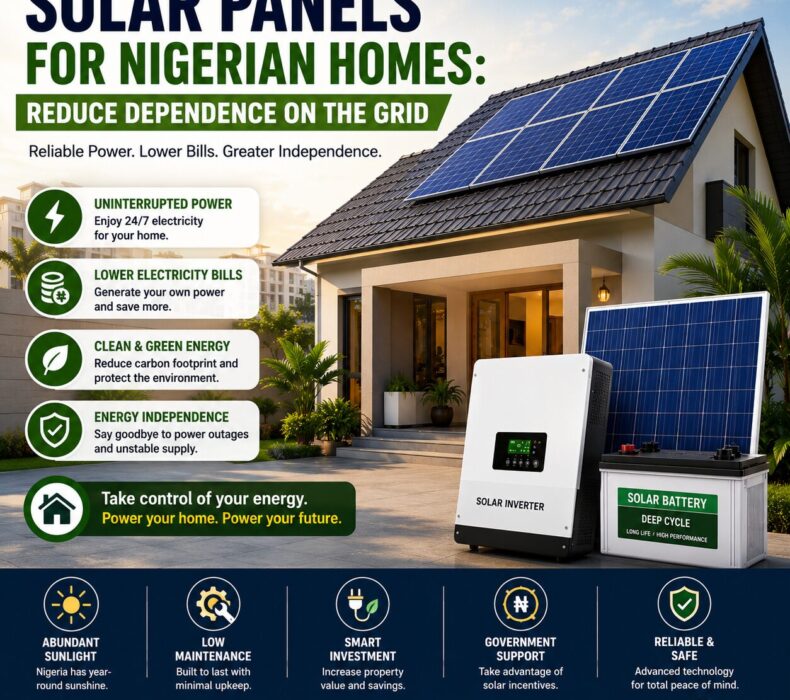
Electricity supply remains one of the biggest challenges facing many households across Nigeria. Frequent power outages, rising fuel costs, and unreliable grid electricity have forced many families to seek alternative energy solutions. Fortunately, Solar Panels for Nigerian Homes: Reduce Dependence on the Grid is becoming a practical and cost-effective option for homeowners who want uninterrupted power while lowering their energy expenses.
As solar technology becomes more affordable and efficient, more Nigerians are investing in solar systems to power their homes. Moreover, solar energy provides a clean, renewable, and reliable source of electricity that can significantly improve daily living.
Why Many Nigerian Homes Need Solar Panels
Nigeria experiences abundant sunshine throughout the year. Therefore, solar energy is one of the most suitable renewable energy sources for households across the country.
Many homeowners face challenges such as:
Frequent blackouts
High generator fuel costs
Noise pollution from generators
Rising electricity tariffs
Unstable power supply
As a result, solar panels offer a dependable solution that helps families enjoy consistent electricity without relying entirely on the national grid.
How Solar Panels Work
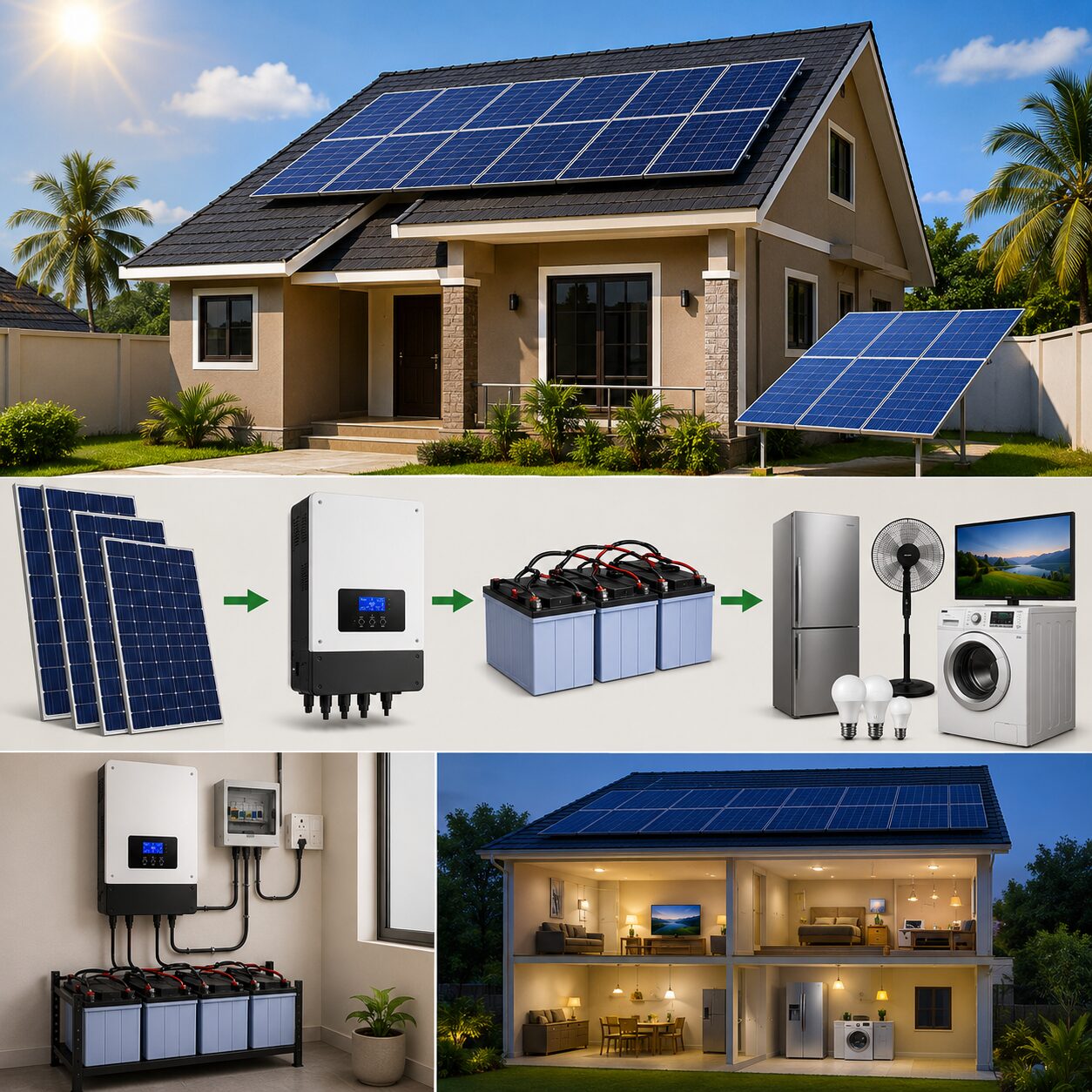
Solar panels convert sunlight into electricity using photovoltaic (PV) cells. The electricity generated can be used immediately or stored in batteries for later use.
A typical solar power system includes:
Solar Panels
These capture sunlight and generate electricity.
Inverter
The inverter converts DC power from the panels into AC power used by household appliances.
Battery Bank
Batteries store excess energy for use during the night or on cloudy days.
Charge Controller
This device regulates power flow between the panels and batteries, preventing overcharging.
Consequently, these components work together to provide a reliable source of electricity for your home.
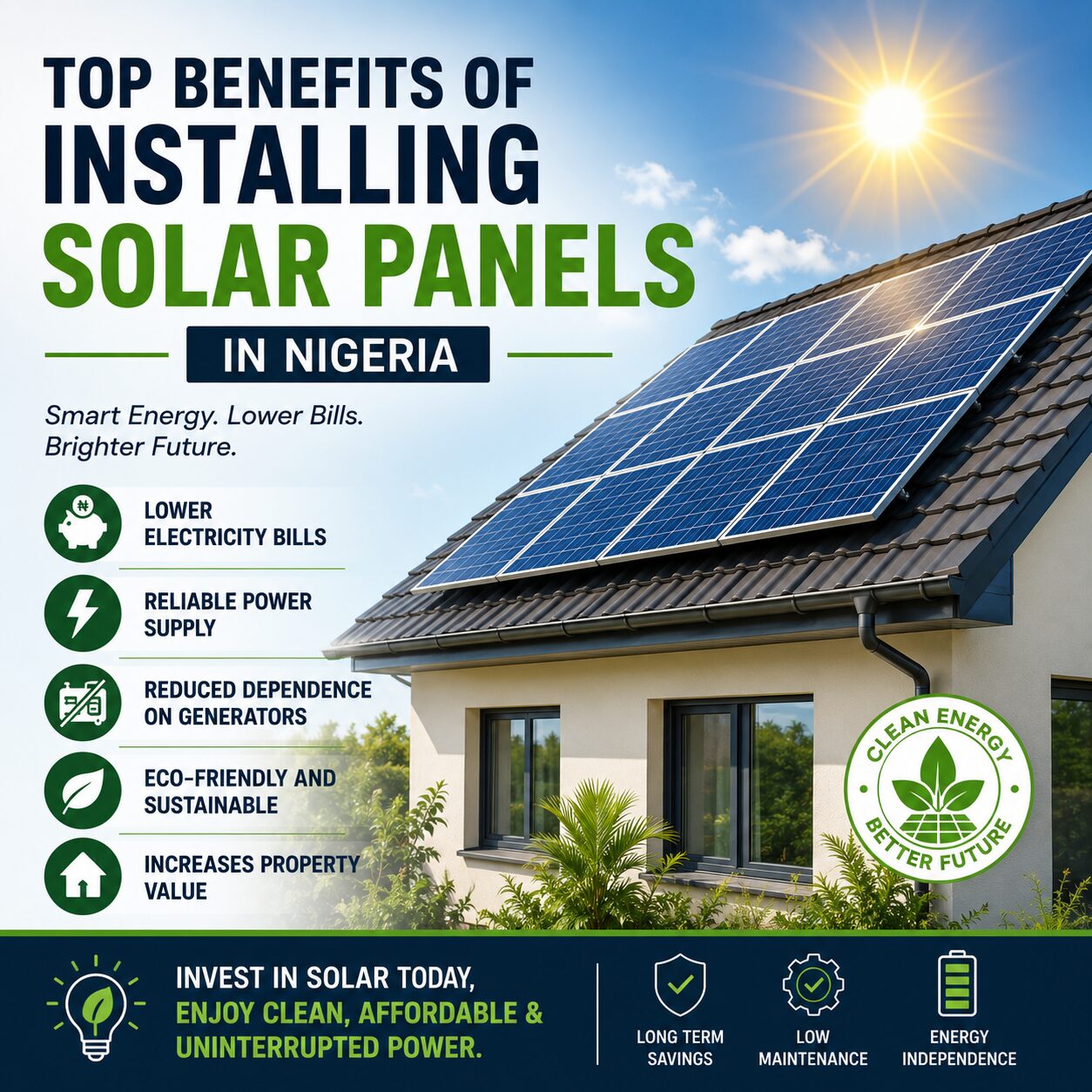
Benefits of Solar Panels for Nigerian Homes
1. Reduced Dependence on the National Grid
One of the biggest advantages is energy independence. Since solar panels generate electricity directly from sunlight, homeowners become less affected by power outages.
Furthermore, households can continue operating essential appliances even when the grid fails.
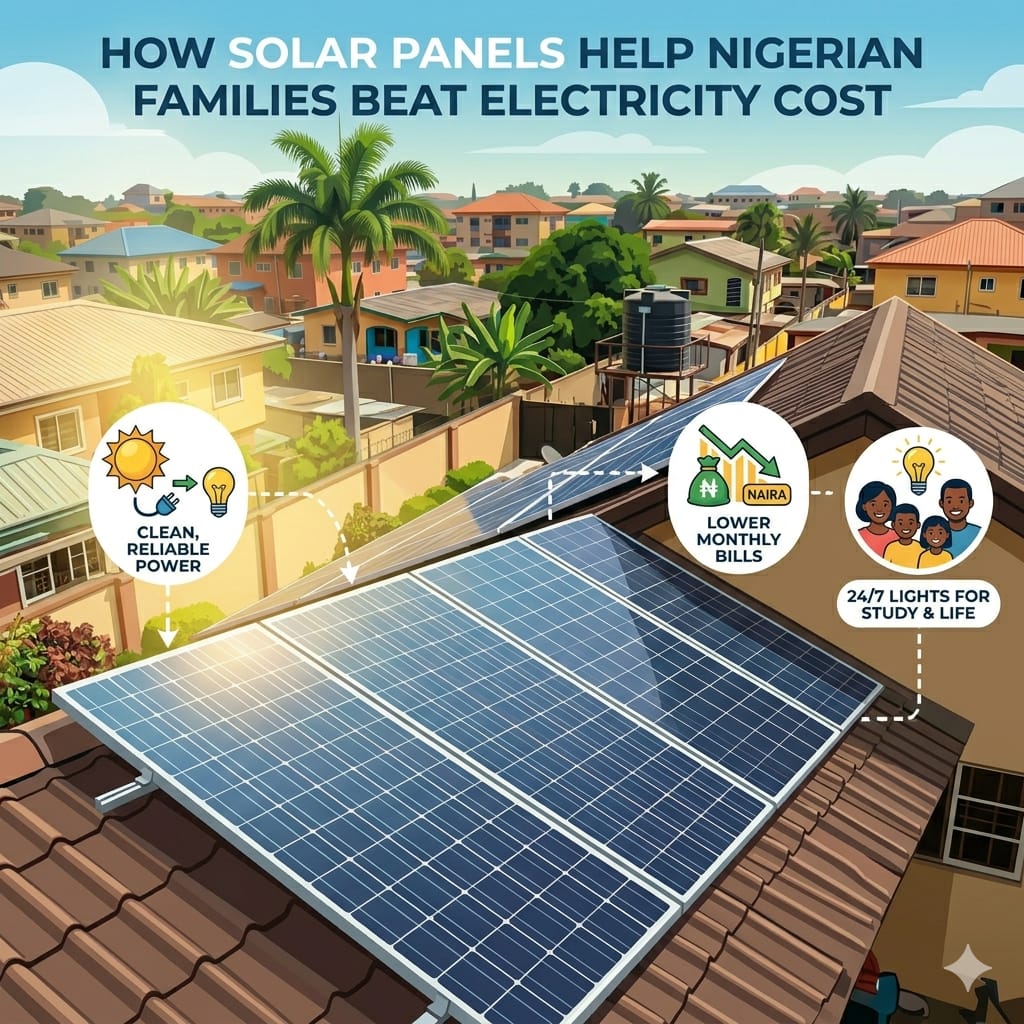
2. Lower Electricity Bills
Although the initial investment may seem significant, solar panels help reduce monthly electricity expenses over time.
For example, homeowners who generate most of their electricity from solar energy often experience substantial savings on utility bills.
Therefore, solar systems can pay for themselves after several years of use.
3. Reduced Generator Usage
Generators remain common in Nigeria. However, fuel costs continue to increase.
By switching to solar energy, families can significantly reduce generator operating hours. As a result, they spend less on fuel and maintenance while enjoying a quieter environment.
4. Environmentally Friendly Energy
Unlike generators, solar panels produce electricity without harmful emissions.
Additionally, using solar energy helps reduce carbon footprints and contributes to environmental sustainability.
5. Increased Property Value
Homes equipped with solar energy systems often become more attractive to potential buyers.
Moreover, a reliable power solution can increase the overall value of residential properties.
Solar Panels Suitable for Nigerian Homes
Different types of solar panels are available on the market.
Monocrystalline Solar Panels
These panels offer:
High efficiency
Longer lifespan
Better performance in limited spaces
Although they cost more initially, they often provide greater long-term value.
Polycrystalline Solar Panels
These are generally:
More affordable
Reliable for residential use
Suitable for larger roof spaces
However, they may have slightly lower efficiency than monocrystalline panels.
Thin-Film Solar Panels
These panels are lightweight and flexible. Nevertheless, they usually require more installation space and are less common for residential applications.
Factors to Consider Before Installing Solar Panels
Energy Consumption
First, determine how much electricity your household consumes daily.
For instance, homes using refrigerators, televisions, fans, air conditioners, and water pumps may require larger solar systems.
Roof Space
Your roof should have sufficient space for panel installation.
Additionally, the roof should receive direct sunlight with minimal shading from trees or nearby buildings.
Battery Capacity
Battery storage plays a critical role in ensuring uninterrupted power.
Therefore, choose batteries that can support your household’s energy needs during nighttime and cloudy periods.
Quality of Components
Always invest in high-quality solar panels, inverters, and batteries.
While cheaper products may appear attractive, premium components often provide better performance and durability.
Professional Installation
Proper installation maximizes system efficiency.
Consequently, working with experienced solar professionals can help prevent costly mistakes and ensure optimal performance.
How Solar Panels Help During Rising Energy Costs
Electricity tariffs and fuel prices continue to increase across Nigeria.
As a result, many households are struggling to manage energy expenses. Solar energy provides a long-term solution because sunlight is free and readily available.
Furthermore, once installed, solar panels require relatively low maintenance compared to generators.
Therefore, homeowners can enjoy predictable energy costs while reducing financial pressure.
Future of Solar Energy in Nigeria
The future of solar energy in Nigeria looks promising. As technology advances and costs continue to decrease, more households are expected to adopt solar solutions.
Additionally, increased awareness of renewable energy benefits is encouraging homeowners to explore sustainable power alternatives.
Consequently, solar panels are becoming a key part of Nigeria’s energy future.
Conclusion
Solar Panels for Nigerian Homes: Reduce Dependence on the Grid offers a practical solution for households seeking reliable, affordable, and sustainable electricity. With benefits such as lower energy bills, reduced generator dependence, environmental sustainability, and improved energy security, solar systems are transforming how Nigerian families access power.









 Get it on
  Download on the