






- Adaobi
- July 13, 2026
- No Comments
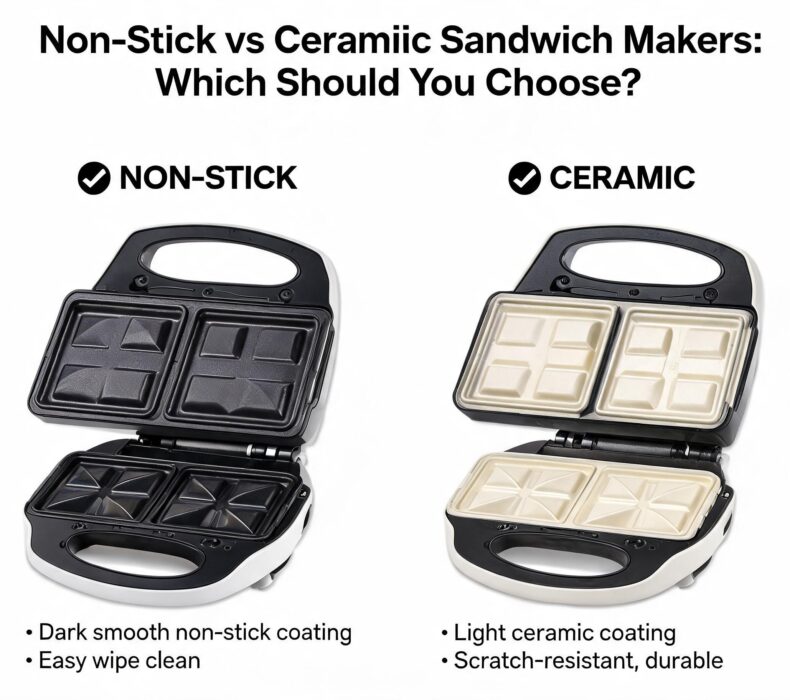
Buying a sandwich maker may seem simple, but the type of cooking plate can greatly influence your cooking experience. Understanding Non-Stick vs Ceramic Sandwich Makers: Which Should You Choose? helps you select an appliance that matches your cooking style, maintenance preferences, and budget. While both types are designed to prepare crispy, delicious sandwiches, they differ in durability, cooking performance, cleaning requirements, and overall value. Moreover, choosing the right surface can improve food quality, reduce oil usage, and extend the life of your appliance.
What Is a Non-Stick Sandwich Maker?
A non-stick sandwich maker features cooking plates coated with a special non-stick layer that prevents bread and fillings from sticking during cooking.
This coating allows food to release easily, making both cooking and cleaning much simpler. Consequently, non-stick sandwich makers have become one of the most popular choices for home kitchens.
Advantages of Non-Stick Sandwich Makers
Non-stick sandwich makers offer several practical benefits.
These include:
- Food releases easily after cooking.
- Less butter or oil is required.
- Quick and simple cleaning.
- Faster meal preparation.
- Affordable purchase price.
- Wide availability in Nigeria.
As a result, they are ideal for everyday household use.
Limitations of Non-Stick Sandwich Makers
Although highly convenient, non-stick coatings require proper care.
Potential drawbacks include:
- The coating may wear out over time.
- Metal utensils can scratch the surface.
- Rough cleaning pads may damage the coating.
- Lower-quality coatings may deteriorate faster.
However, proper maintenance significantly extends the lifespan of non-stick plates.
What Is a Ceramic Sandwich Maker?
Ceramic sandwich makers use ceramic-coated cooking plates instead of traditional non-stick coatings.
Ceramic coatings are designed to provide naturally smooth cooking surfaces while distributing heat evenly.
Furthermore, ceramic finishes are often chosen by users who prefer cooking with minimal oil.
Advantages of Ceramic Sandwich Makers
Ceramic sandwich makers provide several important benefits.
These include:
- Excellent heat distribution.
- Smooth cooking surface.
- Reduced need for cooking oil.
- Attractive appearance.
- Resistant to stains and discoloration.
- Easy food release when properly maintained.
Consequently, ceramic models are becoming increasingly popular among health-conscious households.
Limitations of Ceramic Sandwich Makers
Despite their advantages, ceramic-coated appliances also have a few considerations.
For example:
- They are often more expensive.
- Ceramic coatings may chip if handled roughly.
- Sudden temperature changes may reduce coating lifespan.
- Fewer models are available compared to traditional non-stick options.
Therefore, careful handling is essential.
Non-Stick vs Ceramic Sandwich Makers: Heat Distribution
One of the biggest differences between the two is how they distribute heat.
Non-stick plates generally heat up quickly and cook sandwiches efficiently.
Meanwhile, ceramic plates often distribute heat more evenly across the cooking surface, reducing hot spots and promoting uniform browning.
As a result, ceramic models may produce more consistent cooking results, especially for thicker sandwiches.
Cooking Performance
Both types prepare delicious toasted sandwiches.
However, their cooking characteristics differ slightly.
Non-Stick Sandwich Makers
Best for:
- Everyday sandwiches
- Fast breakfasts
- Cheese toasties
- Quick snacks
Ceramic Sandwich Makers
Best for:
- Gourmet sandwiches
- Even browning
- Healthier cooking
- Premium recipes
Therefore, your preferred cooking style should influence your decision.
Cleaning and Maintenance
Cleaning is an important consideration for any kitchen appliance.
Non-Stick Plates
Cleaning is usually very easy.
Simply wipe the plates with a soft damp cloth after cooling.
However, avoid abrasive sponges and metal utensils.
Ceramic Plates
Ceramic surfaces are also easy to clean.
Nevertheless, they require gentle cleaning products to preserve the coating.
Additionally, allowing food residue to harden may make cleaning more difficult.
Durability Comparison
Durability depends more on build quality than coating type alone.
A premium non-stick sandwich maker may outlast a poorly made ceramic model.
Similarly, a high-quality ceramic appliance can provide years of reliable performance when properly maintained.
Therefore, choosing a reputable manufacturer is just as important as selecting the coating material.
Health Considerations
Many buyers choose ceramic cooking plates because they can cook with very little oil.
Similarly, quality non-stick coatings also reduce the need for added fats.
The healthiest option is to prepare balanced fillings using fresh ingredients while following the manufacturer’s recommended cooking and care instructions.
Which One Is Best for Nigerian Homes?
Both options perform well in Nigerian households.
If you need an affordable appliance for daily use, a non-stick sandwich maker offers excellent value.
On the other hand, if you enjoy premium kitchen appliances, frequently prepare gourmet sandwiches, and prioritize even heat distribution, a ceramic model may be the better investment.
Additionally, both types work efficiently with electricity supplied by the national grid, generators, inverters, or solar power systems.
Tips for Extending the Life of Your Sandwich Maker
Regardless of the coating you choose, proper maintenance is essential.
Follow these simple tips:
- Always allow the appliance to cool before cleaning.
- Use wooden, silicone, or plastic utensils.
- Never use metal objects on the cooking plates.
- Wipe the plates after every use.
- Store the appliance in a dry place.
- Avoid slamming the lid shut.
- Follow the manufacturer’s maintenance instructions.
These habits help preserve the cooking surface and improve long-term performance.
Conclusion
Understanding Non-Stick vs Ceramic Sandwich Makers: Which Should You Choose? allows you to select an appliance that fits your lifestyle, cooking habits, and budget. Non-stick sandwich makers are affordable, easy to clean, and perfect for everyday use, while ceramic models offer excellent heat distribution, premium performance, and a smooth cooking surface for healthier meal preparation. Ultimately, both options can produce delicious toasted sandwiches when used and maintained properly. By choosing a trusted brand and caring for your appliance correctly, you can enjoy reliable performance and perfectly toasted meals for many years.


 Get it on
  Download on the