






- Adaobi
- July 13, 2026
- No Comments
Choosing the right kitchen appliance can make meal preparation faster and more enjoyable. Understanding the difference between a bread toaster and sandwich maker helps you select the appliance that best suits your cooking habits, kitchen space, and budget. Although both appliances are popular for preparing quick breakfasts and snacks, they serve different purposes and offer unique features. Moreover, knowing their differences can help you avoid unnecessary purchases and get the best value for your money.
What Is a Bread Toaster?
A bread toaster is an electric kitchen appliance that uses heating elements to toast slices of bread evenly. The bread is placed vertically inside slots, where it is heated until it reaches the desired level of browning.
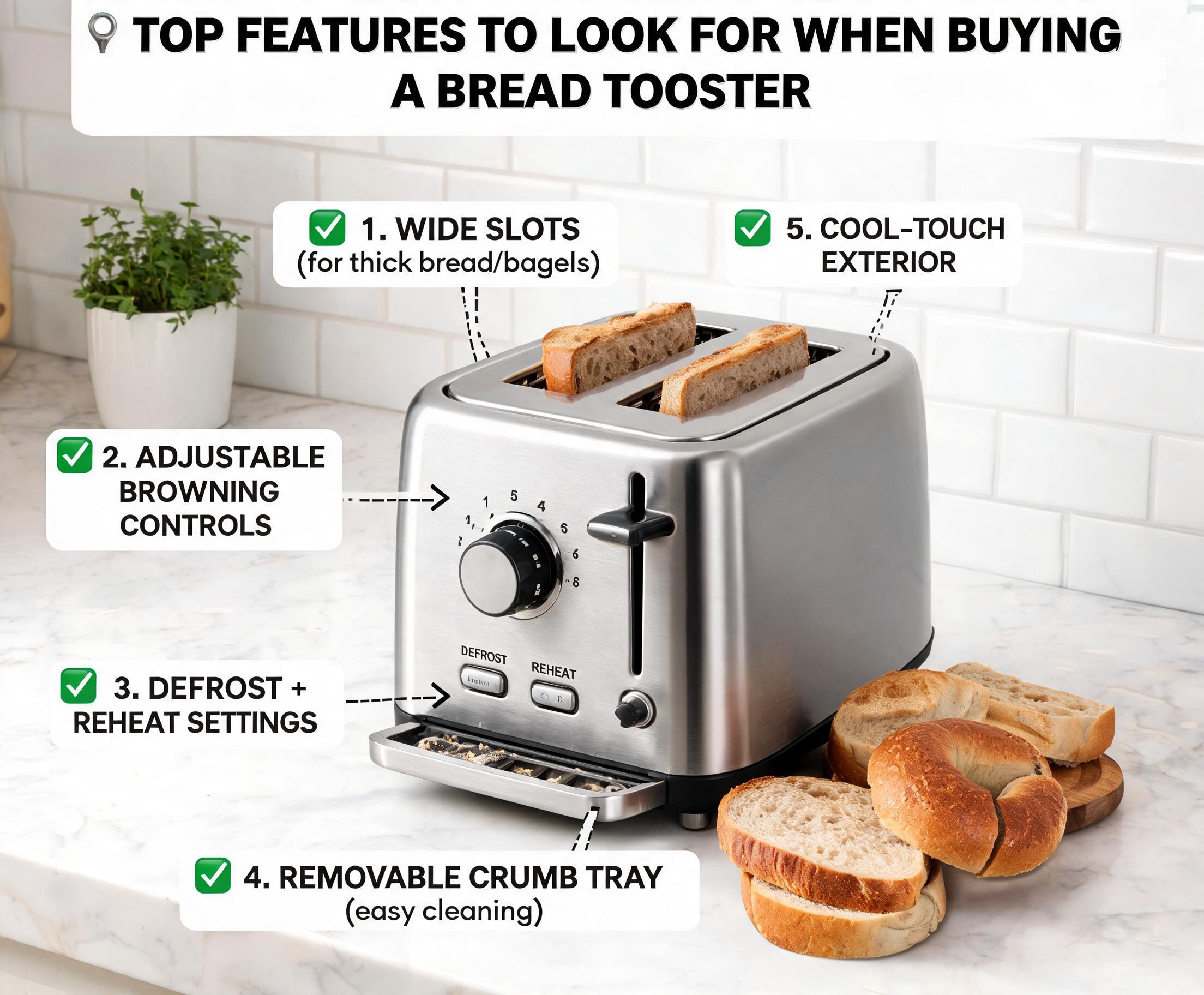
Most modern bread toasters include features such as:
- Adjustable browning settings
- Automatic pop-up function
- Defrost mode
- Reheat option
- Removable crumb tray
- Automatic shut-off
As a result, bread toasters are ideal for preparing crispy toast quickly and conveniently.
What Is a Sandwich Maker?
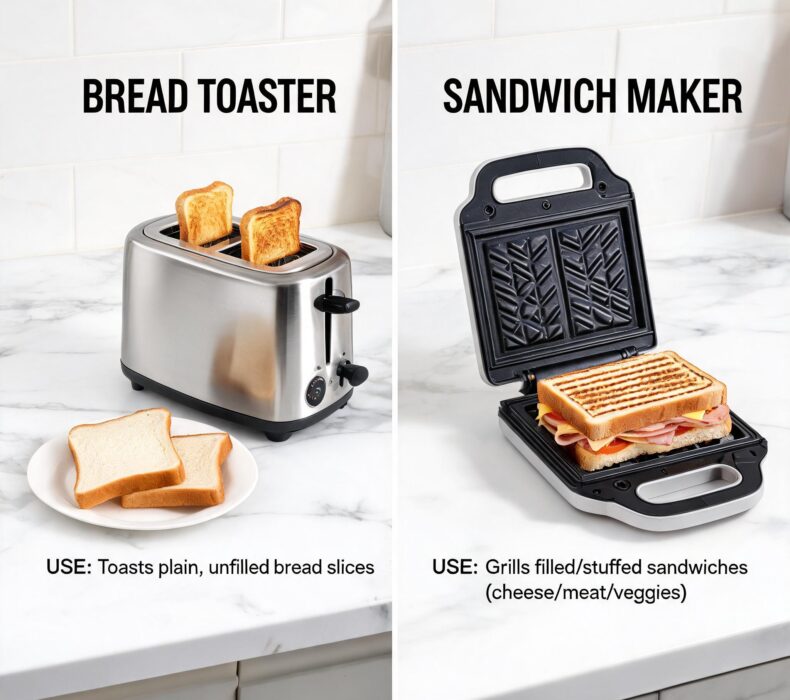
A sandwich maker is designed to prepare toasted sandwiches by pressing two slices of bread together with fillings inside. It uses heated cooking plates that seal the edges while cooking both sides evenly.
Many sandwich makers also include non-stick plates, indicator lights, cool-touch handles, and automatic temperature control.
Consequently, they are excellent for making hot sandwiches with cheese, vegetables, eggs, chicken, or other fillings.
Difference Between a Bread Toaster and Sandwich Maker: Purpose
The primary difference lies in their intended use.
A bread toaster is designed to toast plain bread slices until they become crispy.
A sandwich maker, however, is built to cook complete sandwiches containing various fillings.
Therefore, if you frequently prepare stuffed sandwiches, a sandwich maker is the better choice.
Cooking Style
Bread toasters cook bread using exposed heating elements inside vertical slots.
On the other hand, sandwich makers cook by pressing bread between two heated plates.
This difference affects both texture and cooking results.
Types of Food You Can Prepare
A bread toaster is best suited for:
- Toasted bread
- Bagels
- Muffins (with suitable accessories)
- Frozen bread
- Breakfast toast
Meanwhile, a sandwich maker can prepare:
- Cheese sandwiches
- Chicken sandwiches
- Vegetable sandwiches
- Egg sandwiches
- Ham sandwiches
- Grilled snacks
- Some models can also cook waffles or grill paninis with interchangeable plates.
Consequently, sandwich makers offer greater versatility for preparing complete meals.
Cooking Time
Both appliances are relatively fast.
A bread toaster typically finishes toasting within two to four minutes.
Similarly, most sandwich makers cook sandwiches within three to six minutes depending on the ingredients.
However, preparing filled sandwiches naturally takes slightly longer than toasting plain bread.
Ease of Cleaning
Modern bread toasters usually include removable crumb trays, making cleanup simple.
Sandwich makers often feature non-stick cooking plates that can be wiped clean after cooling.
Although both appliances are easy to maintain, sandwich makers generally require more cleaning because melted cheese and fillings may stick to the plates.
Size and Storage
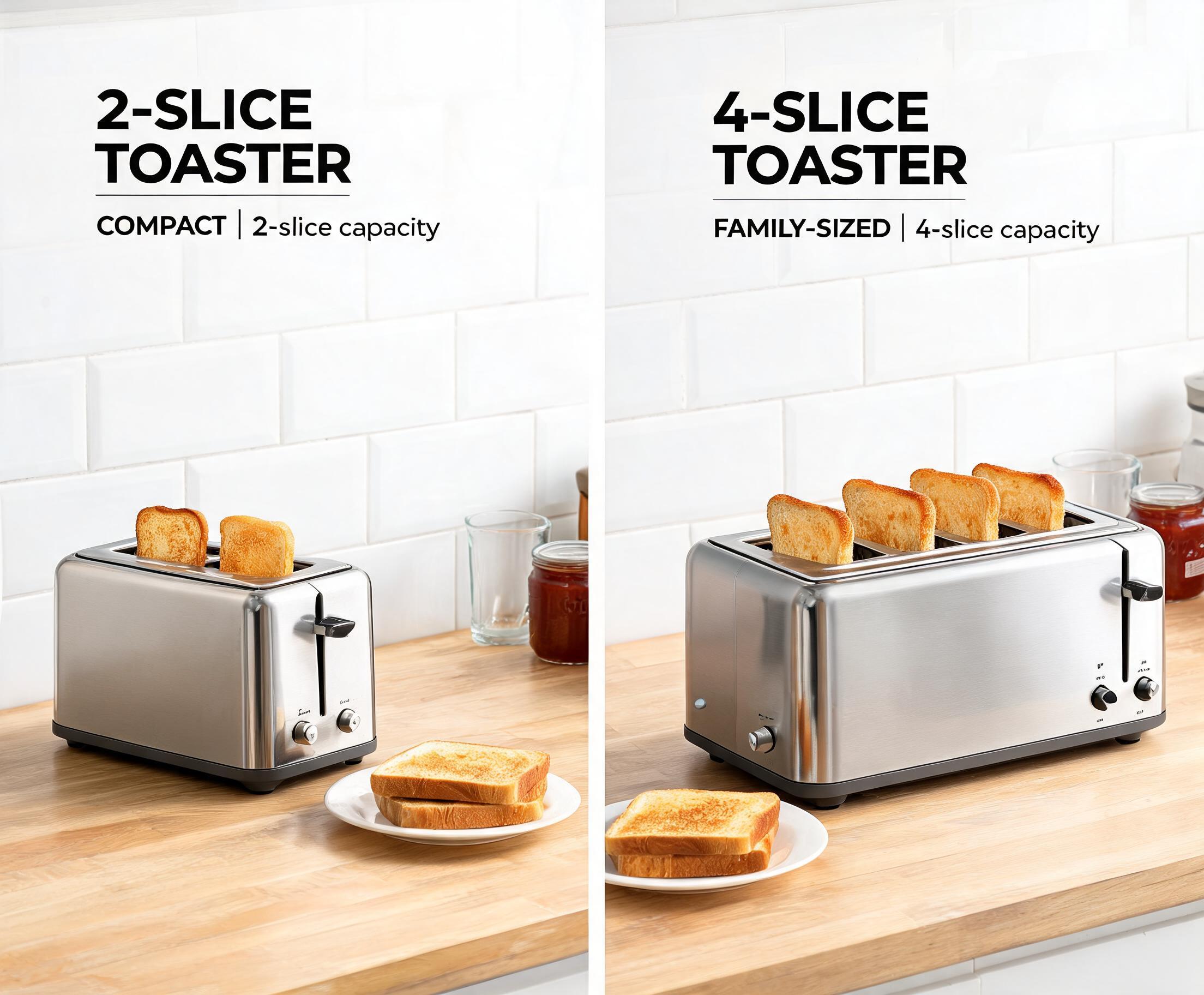
Bread toasters usually have a compact, upright design that occupies minimal countertop space.
Conversely, sandwich makers are wider because they contain hinged cooking plates.
Therefore, if kitchen space is limited, a bread toaster may be easier to store.
Energy Consumption
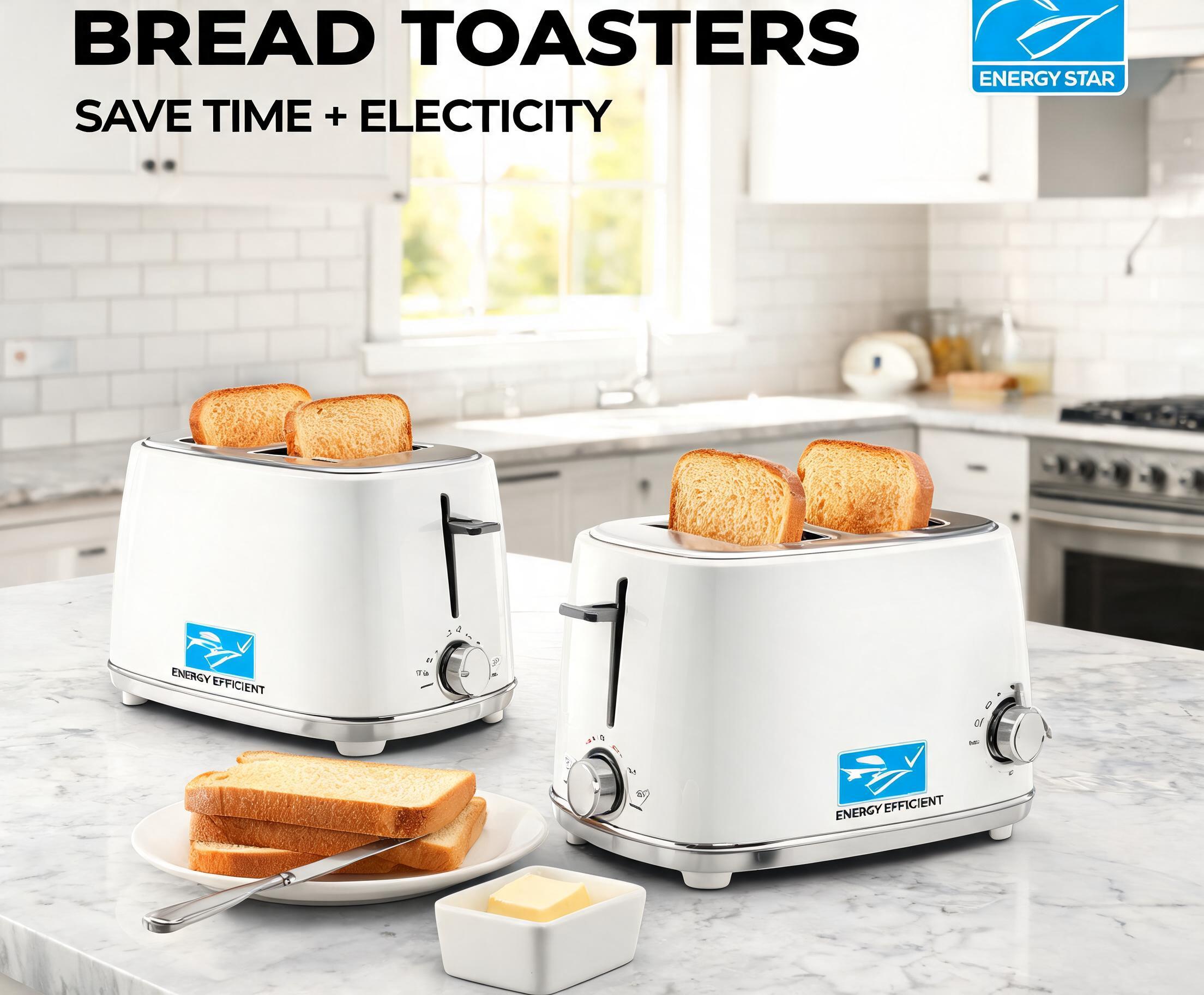
Both appliances are designed to be energy-efficient.
Bread toasters generally consume less electricity because they cook plain bread in a shorter time.
Meanwhile, sandwich makers may use slightly more power since they heat larger cooking plates and prepare more substantial meals.
Nevertheless, both appliances remain economical choices for everyday use.
Safety Features
Modern bread toasters often include:
- Automatic shut-off
- Cool-touch exterior
- Anti-jam protection
- Adjustable browning controls
Sandwich makers commonly feature:
- Locking handles
- Heat-resistant exterior
- Non-slip feet
- Automatic temperature control
- Power indicator lights
These features improve safety while making the appliances easier to use.
Which Appliance Is Better for Breakfast?
If your breakfast usually consists of toast with butter, jam, or peanut butter, a bread toaster is the ideal choice.
However, if you prefer hot sandwiches with fillings, a sandwich maker offers greater flexibility.
Therefore, the best appliance depends entirely on your eating habits.
Can You Replace One with the Other?
Although both appliances prepare bread, they are not complete substitutes.
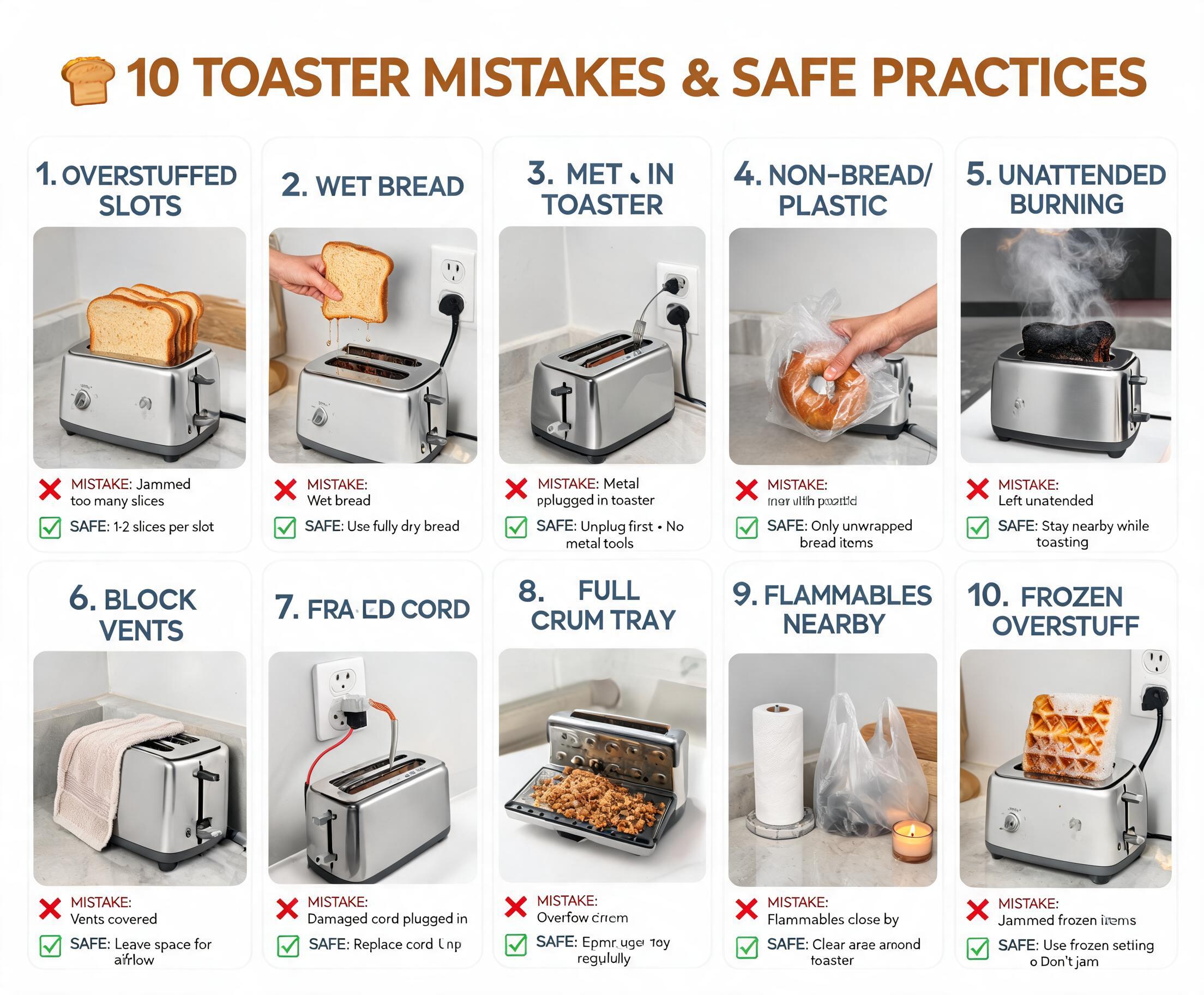
A bread toaster cannot safely toast sandwiches with fillings because cheese, butter, or sauces can drip onto the heating elements.
Likewise, a sandwich maker can toast plain bread, but it will produce a different texture compared to a traditional toaster.
For the best results, each appliance should be used for its intended purpose.
Tips for Choosing Between a Bread Toaster and Sandwich Maker
Before buying, consider the following questions:
- What type of breakfast do you prepare most often?
- How much kitchen space is available?
- How many people are in your household?
- Do you mainly toast bread or make filled sandwiches?
- What is your budget?
Answering these questions will help you make the right decision.
Conclusion
Understanding the difference between a bread toaster and sandwich maker makes it easier to choose the right appliance for your kitchen. While a bread toaster is ideal for quickly browning slices of bread, a sandwich maker is designed to prepare delicious filled sandwiches with melted ingredients. Both appliances are convenient, energy-efficient, and easy to use, but they serve different purposes. By considering your cooking habits, available kitchen space, and household needs, you can confidently select the appliance that delivers the best value and convenience for your daily meals.


 Get it on
  Download on the