






- Adaobi
- May 25, 2026
- No Comments
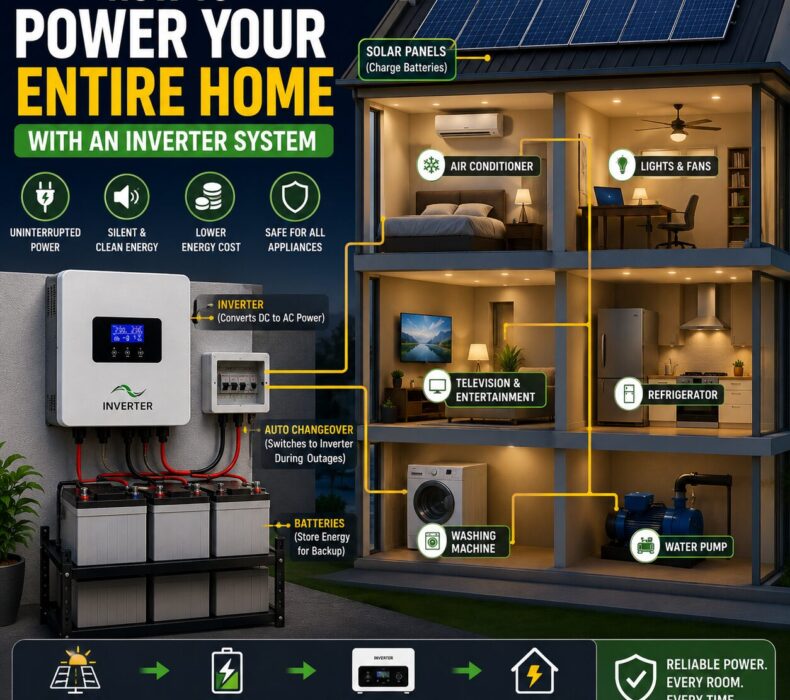
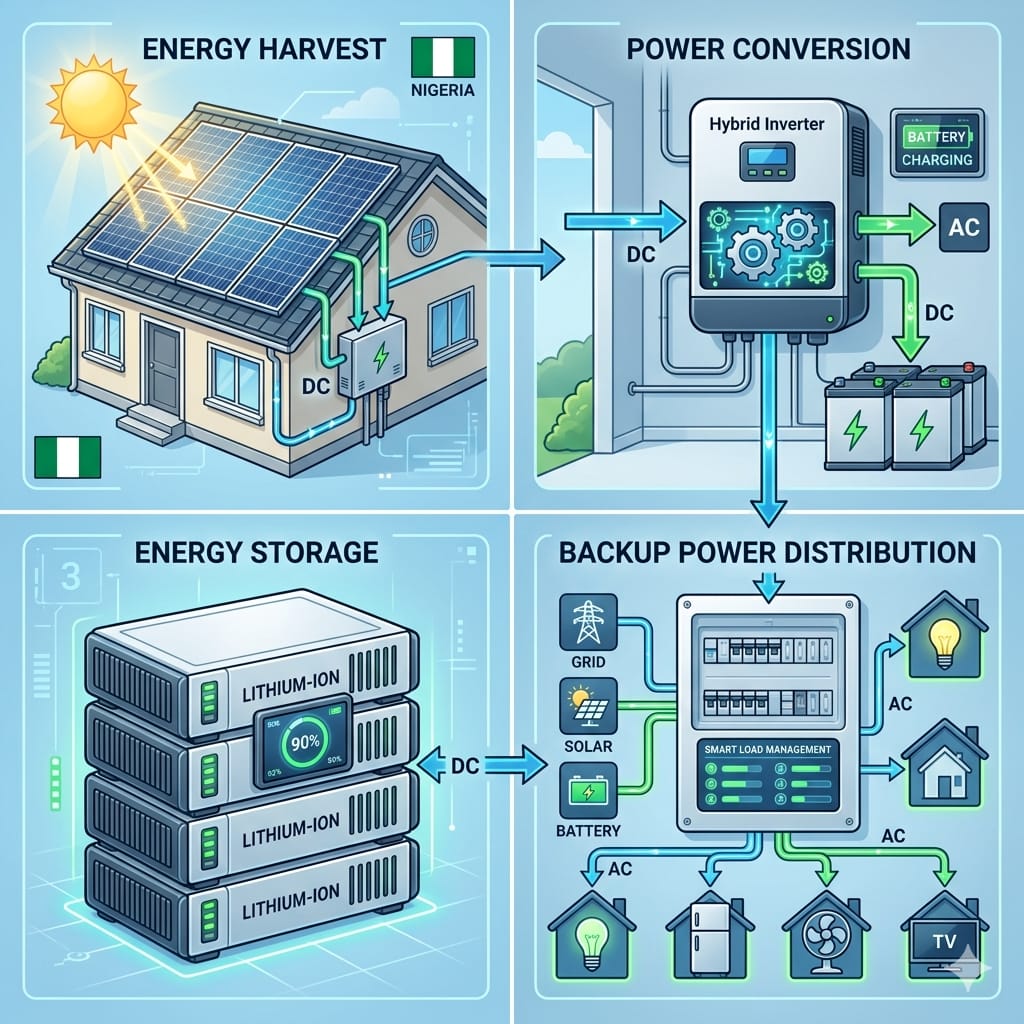
How to power your entire home with an inverter system is becoming an important topic for many Nigerian homeowners seeking uninterrupted electricity. Because public power supply remains unreliable, families now want dependable alternatives that can support daily activities comfortably. Fortunately, a properly designed inverter system can power an entire home efficiently while reducing generator usage, fuel expenses, and noise pollution.
Why Many Nigerians Prefer Whole-Home Inverter Systems
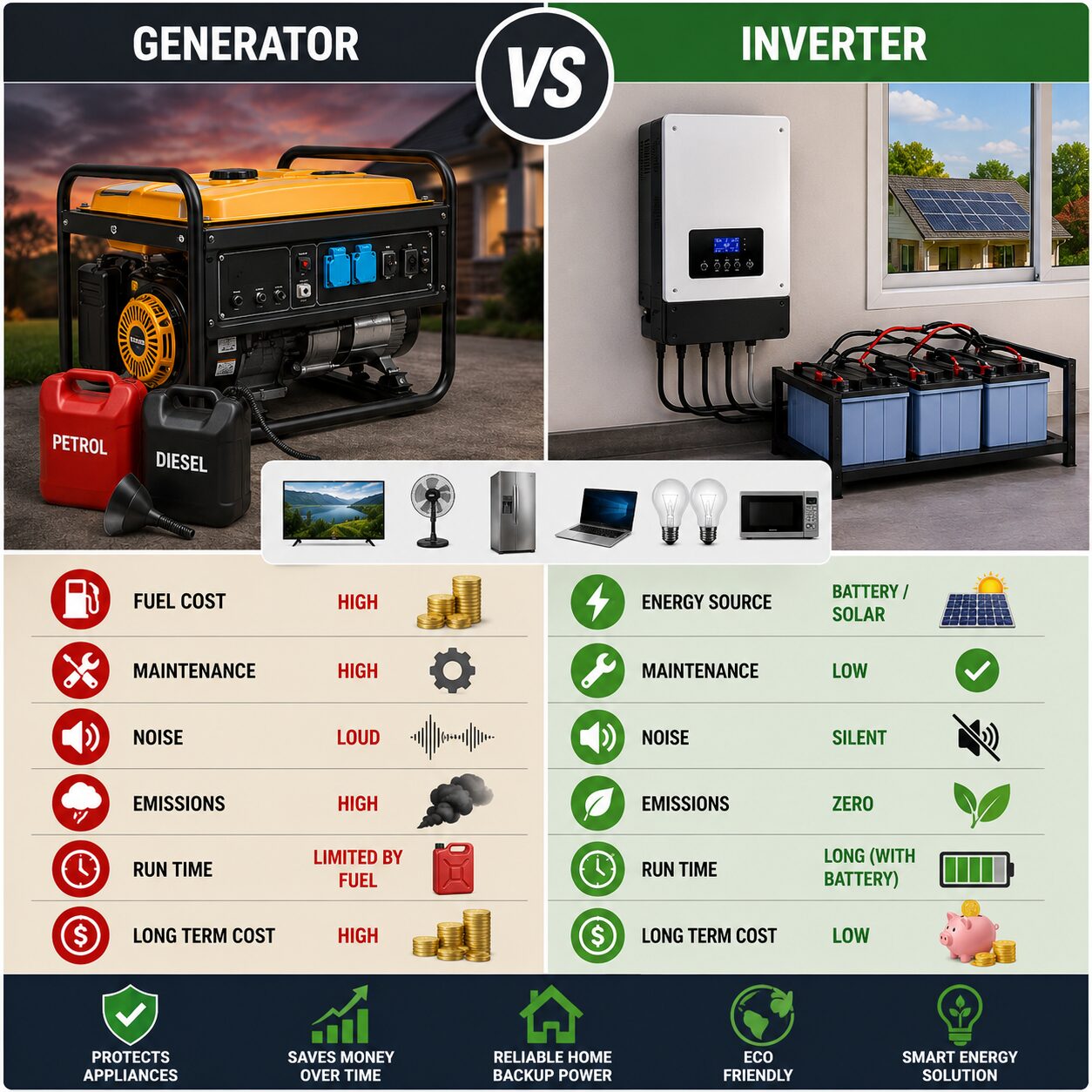
Many families now prefer inverter systems because they provide cleaner and quieter electricity compared to generators.
Major Benefits Include:
- Silent operation
- Reduced fuel costs
- Stable electricity output
- Lower maintenance requirements
- Improved appliance protection
- Automatic switching during outages
- Solar compatibility
Furthermore, inverter systems create a more comfortable living environment because they eliminate generator smoke and excessive noise.
Can an Inverter Power an Entire House?
Yes, a properly sized inverter system can power an entire home. However, the system capacity must match the household energy demand.
For example, smaller systems may support:
- Lighting
- Fans
- Televisions
- Internet routers
- Laptops
Meanwhile, larger inverter systems can also power:
- Refrigerators
- Freezers
- Washing machines
- Air conditioners
- Water pumps
Therefore, understanding your power requirements is extremely important before installation.
Step 1: Calculate Your Household Energy Needs
The first step in learning how to power your entire home with an inverter system is calculating your total electricity usage.
Create a list of appliances you want to operate during outages.
| Appliance | Average Power Consumption |
|---|---|
| LED TV | 80W |
| Ceiling Fan | 75W |
| Refrigerator | 150W |
| Laptop | 65W |
| Air Conditioner | 1500W |
| Microwave | 1200W |
Afterward, calculate the combined wattage.
This helps determine:
- Inverter capacity
- Battery size
- Backup duration
- Solar requirements
Additionally, accurate calculations help prevent overload problems.
Step 2: Choose the Right Inverter Capacity
Selecting the correct inverter size is essential for whole-home backup.
Common Inverter Sizes
1kVA – 2.5kVA
Suitable for:
- Small apartments
- Basic appliances
- Light usage
3.5kVA – 5kVA
Suitable for:
- Medium homes
- Refrigerators
- Entertainment systems
7.5kVA – 10kVA
Suitable for:
- Large homes
- Multiple air conditioners
- Heavy appliances
Therefore, homeowners should always choose an inverter slightly above their estimated power demand.
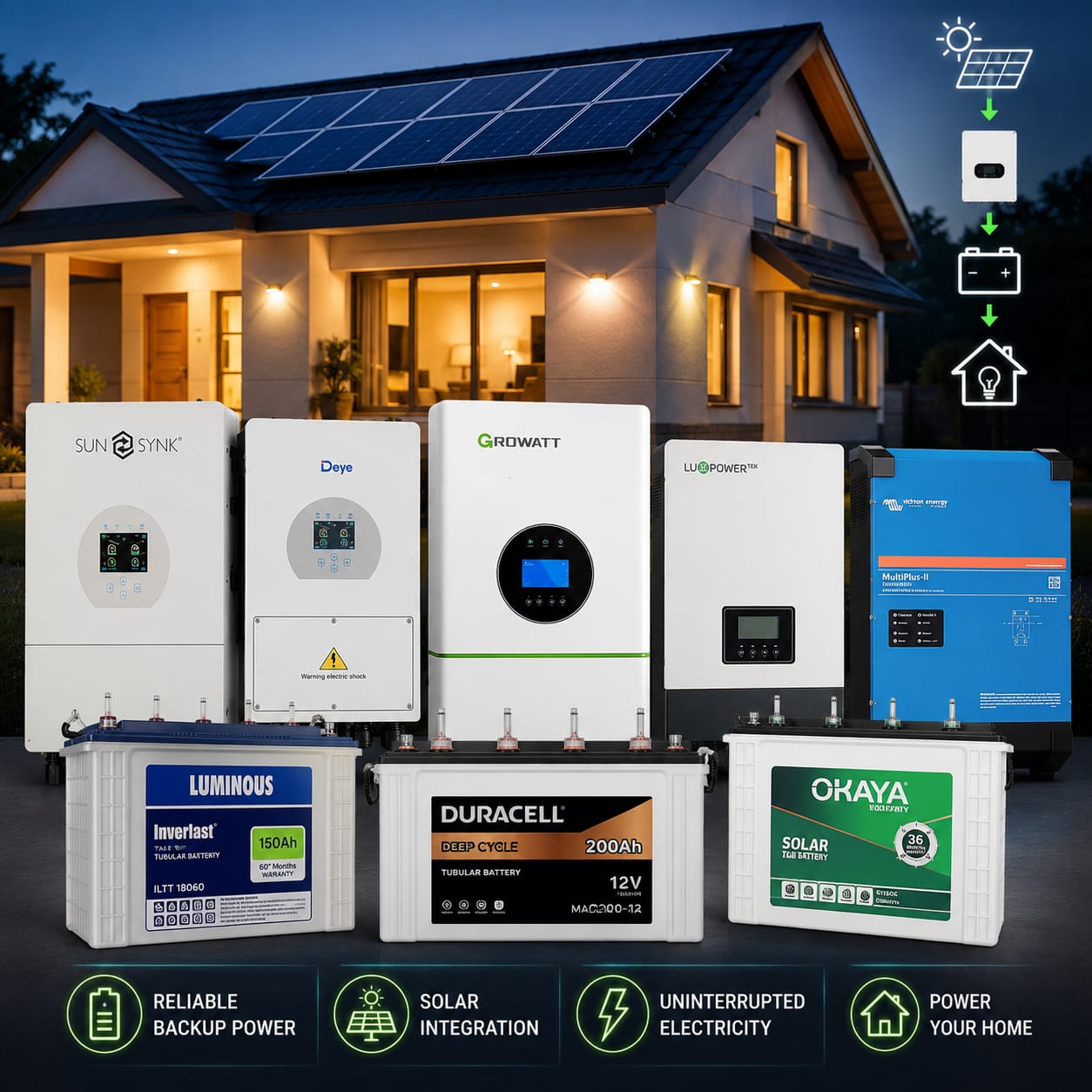
Step 3: Select High-Quality Batteries
Batteries determine how long the inverter can power your home.
Popular Battery Types
Tubular Batteries
Tubular batteries are highly durable and commonly used in Nigerian homes.
Lithium Batteries
Lithium batteries charge faster and last longer. Additionally, they require less maintenance.
Gel Batteries
Gel batteries perform well in enclosed spaces because they produce fewer fumes.
Choosing quality batteries improves:
- Backup duration
- Charging performance
- Overall system lifespan
Step 4: Decide Whether to Add Solar Panels
Solar integration significantly improves inverter performance.
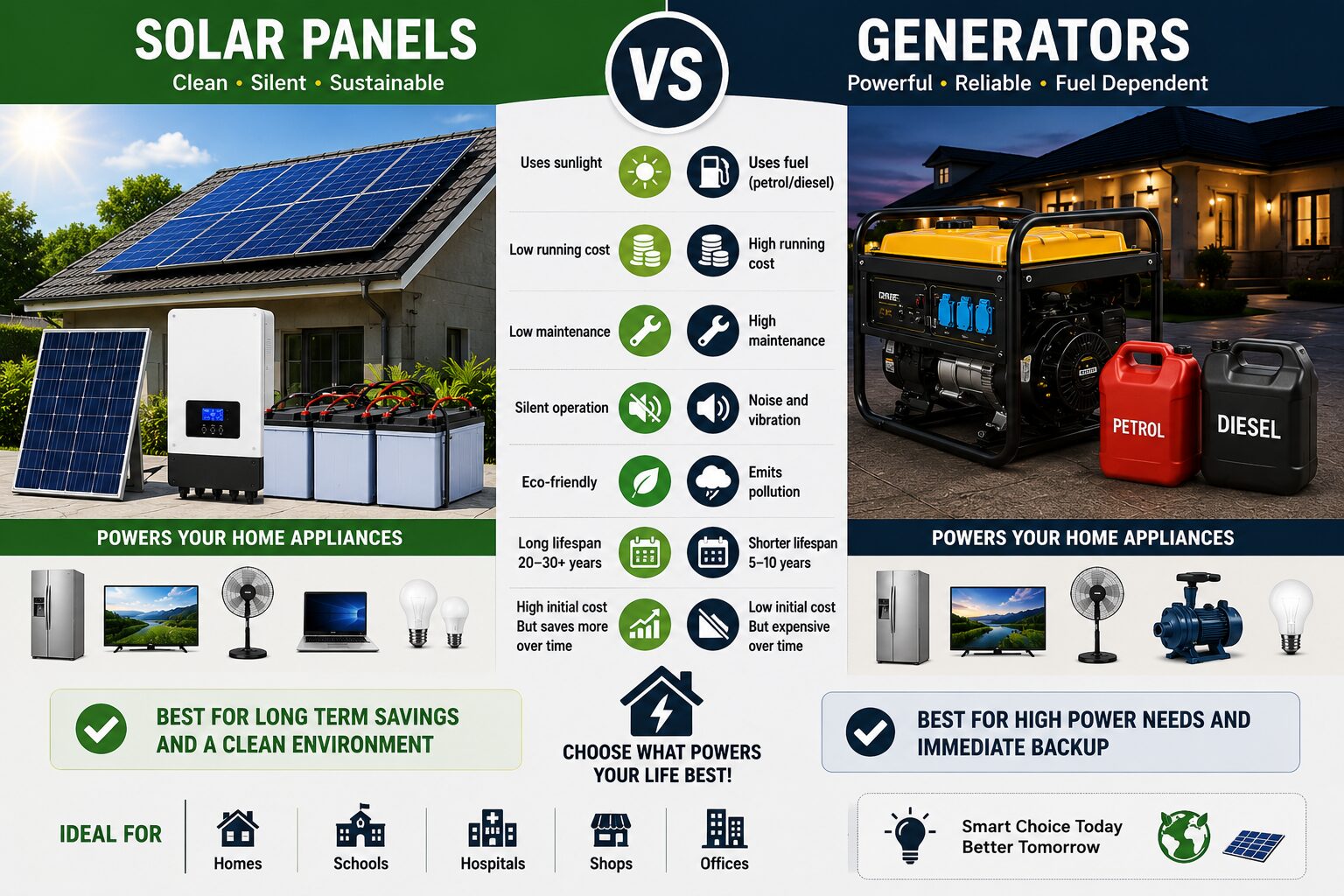
Instead of depending entirely on public electricity, solar panels charge the batteries using sunlight.
Benefits of Solar Integration
- Reduced electricity bills
- Longer battery lifespan
- Lower generator dependence
- Better charging consistency
- Improved long-term savings
Because Nigeria receives abundant sunlight throughout the year, solar-powered inverter systems have become increasingly popular.
Step 5: Install Proper Wiring and Protection
Safe installation is extremely important when powering an entire home.
Professional installers usually include:
- Circuit breakers
- Surge protectors
- Battery isolators
- Proper grounding systems
These safety features protect:
- Appliances
- Batteries
- The inverter unit
- Household electrical wiring
Additionally, professional installation improves system efficiency and reliability.
Step 6: Create an Appliance Priority Plan
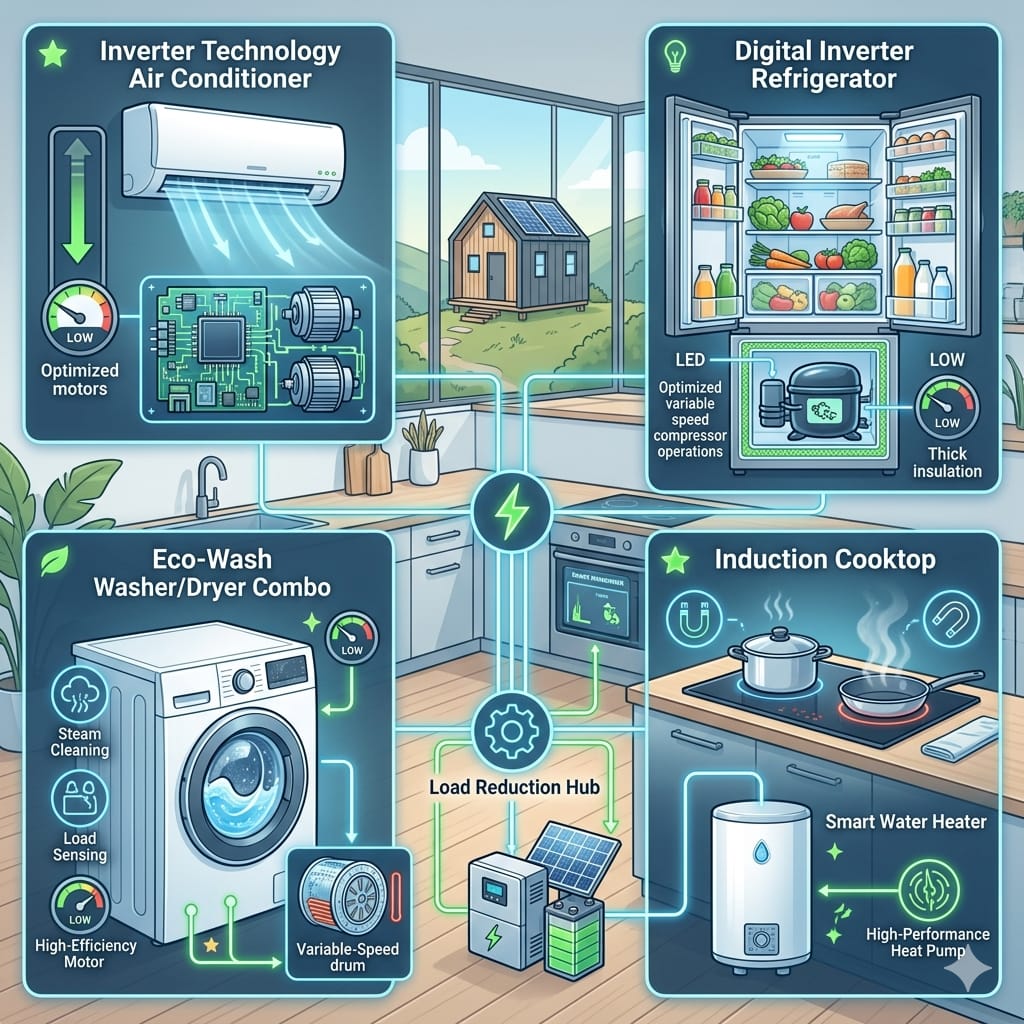
Although large inverter systems can power many appliances, energy management remains important.
Essential Appliances
Prioritize:
- Lighting
- Refrigeration
- Internet routers
- Fans
- Security systems
Heavy Appliances
Use carefully:
- Air conditioners
- Electric kettles
- Water heaters
- Microwaves
This strategy helps extend battery backup duration significantly.
Step 7: Ensure Proper Ventilation
Inverter batteries generate heat during charging and discharge cycles.
Therefore, proper ventilation is necessary to:
- Prevent overheating
- Improve battery performance
- Increase system lifespan
- Reduce maintenance issues
Install the system in a cool, dry, and well-ventilated area.
Additionally, avoid direct sunlight and moisture exposure.
How Long Can an Inverter Power a Home?
Backup duration depends on:
- Battery capacity
- Appliance load
- Inverter efficiency
- Charging condition
For example:
- Small systems may last 4–6 hours
- Medium systems may last 8–12 hours
- Large solar-powered systems may operate much longer
Additionally, reducing unnecessary appliance usage extends backup duration considerably.
Maintenance Tips for Whole-Home Inverter Systems
Proper maintenance improves performance and durability.
Clean Batteries Regularly
Dust and dirt affect charging efficiency.
Check Cable Connections
Loose terminals may cause overheating or power loss.
Monitor Battery Water Levels
Tubular batteries require regular distilled water maintenance.
Avoid Deep Battery Discharge
Recharge batteries before they become completely empty.
Schedule Professional Servicing
Regular inspections help detect problems early.
Cost of Powering an Entire Home With an Inverter
The total cost depends on:
- Inverter capacity
- Battery quantity
- Solar panels
- Installation complexity
Smaller systems may cost less initially, while whole-home solutions require larger investments.
However, inverter systems often reduce:
- Fuel expenses
- Generator maintenance costs
- Appliance damage risks
Conclusion
Understanding how to power your entire home with an inverter system can help homeowners achieve reliable and comfortable electricity supply despite ongoing power challenges. With proper sizing, quality batteries, professional installation, and good maintenance practices, inverter systems can successfully support modern household energy needs.


 Get it on
  Download on the