






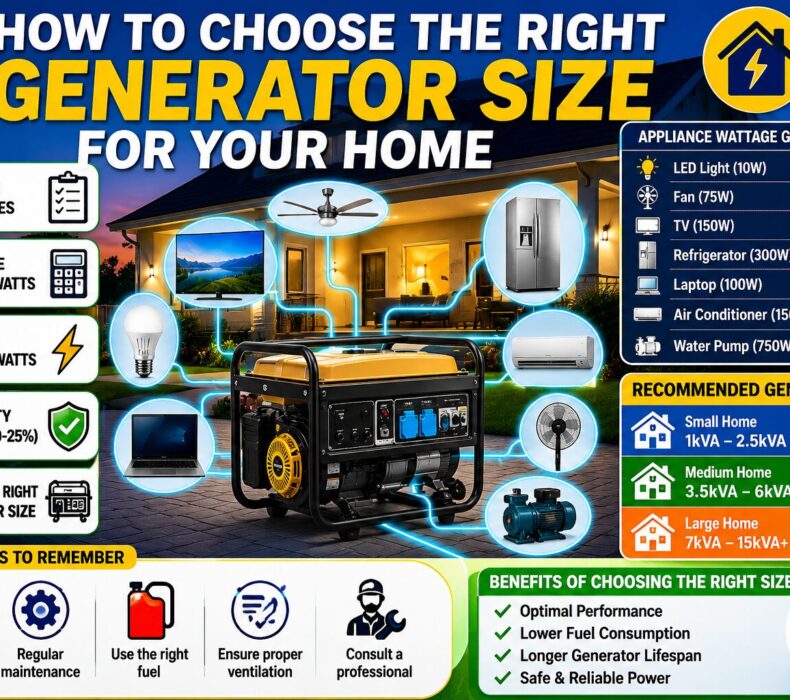
Power outages can disrupt daily activities, damage productivity, and affect household comfort. Therefore, investing in a backup generator is a smart decision for many homeowners. However, selecting the correct generator size is crucial for efficiency, safety, and long-term performance. Understanding How to Choose the Right Generator Size for Your Home helps ensure that your generator can handle your power needs without unnecessary fuel consumption or excessive costs.
Why Generator Size Matters
Many homeowners make the mistake of purchasing a generator based solely on price. However, generator size directly affects performance.
If the generator is too small:
- Appliances may not run properly.
- The generator may overload.
- Equipment lifespan may decrease.
On the other hand, if the generator is too large:
- Fuel consumption increases.
- Initial purchase costs rise.
- Maintenance expenses may be higher.
Therefore, selecting the correct size provides the best balance between performance and cost.
Understanding Generator Capacity
Generator capacity is usually measured in watts (W) or kilovolt-amperes (kVA).
Generally:
- 1 kVA equals approximately 800 watts of usable power.
- Household generators typically range from 1kVA to 20kVA and above.
Consequently, understanding your home’s power requirements is essential before making a purchase.
Step 1: List Essential Appliances
The first step in How to Choose the Right Generator Size for Your Home is identifying the appliances you want to power.
Common household appliances include:
- LED lights
- Fans
- Refrigerators
- Televisions
- Decoders
- Laptops
- Air conditioners
- Water pumps
- Freezers
Furthermore, make a distinction between essential appliances and luxury devices.
Step 2: Calculate Running Watts
Every appliance has a running wattage requirement.
For example:
| Appliance | Average Running Watts |
|---|---|
| LED Bulb | 10W |
| Fan | 75W |
| Television | 150W |
| Refrigerator | 300W |
| Laptop | 100W |
| Freezer | 400W |
| Air Conditioner | 1,500W |
Next, add the wattages of all appliances you intend to run simultaneously.
As a result, you will obtain your estimated running load.
Step 3: Consider Starting Watts
Some appliances require additional power during startup.
Examples include:
- Refrigerators
- Freezers
- Air conditioners
- Water pumps
In many cases, starting wattage can be two to three times higher than running wattage.
Therefore, your generator must be capable of handling these temporary power surges.
Step 4: Add a Safety Margin
After calculating your total power requirements, add an extra 20% to 25% capacity.
For example:
- Total load = 3,000 watts
- Safety margin = 750 watts
- Recommended generator = 3,750 watts or higher
Consequently, the generator operates more efficiently and experiences less strain.
Recommended Generator Sizes by Household Type
Small Apartment
Ideal generator size:
- 1kVA – 2.5kVA
Suitable for:
- Lights
- Fans
- Television
- Router
- Phone charging
Therefore, it is sufficient for basic power needs.
Medium-Sized Family Home
Ideal generator size:
- 3.5kVA – 6kVA
Suitable for:
- Refrigerators
- Multiple TVs
- Lighting
- Fans
- Small appliances
Additionally, it offers flexibility during longer outages.
Large Home
Ideal generator size:
- 7kVA – 15kVA
Suitable for:
- Air conditioners
- Freezers
- Washing machines
- Water pumps
- Home entertainment systems
As a result, larger homes enjoy comprehensive backup power coverage.
Portable vs Standby Generators
Portable Generators
Advantages:
- Lower purchase cost
- Easy mobility
- Suitable for occasional use
However, they generally provide lower power output.
Standby Generators
Advantages:
- Automatic operation
- Higher capacity
- Whole-home coverage
Although more expensive, they provide greater convenience and reliability.
Fuel Type Considerations
When deciding How to Choose the Right Generator Size for Your Home, fuel type also matters.
Petrol Generators
Benefits:
- Affordable upfront cost
- Widely available
Drawbacks:
- Higher fuel consumption
- Frequent refueling
Diesel Generators
Benefits:
- Better fuel efficiency
- Longer lifespan
Drawbacks:
- Higher initial investment
Therefore, long-term operating costs should be considered alongside generator size.
Common Mistakes to Avoid
Buying Based Only on Price
A cheaper generator may not meet your energy requirements.
Ignoring Future Needs
Your power demands may increase as you add appliances.
Consequently, choosing a slightly larger generator can be beneficial.
Overloading the Generator
Running more appliances than recommended can damage both the generator and connected devices.
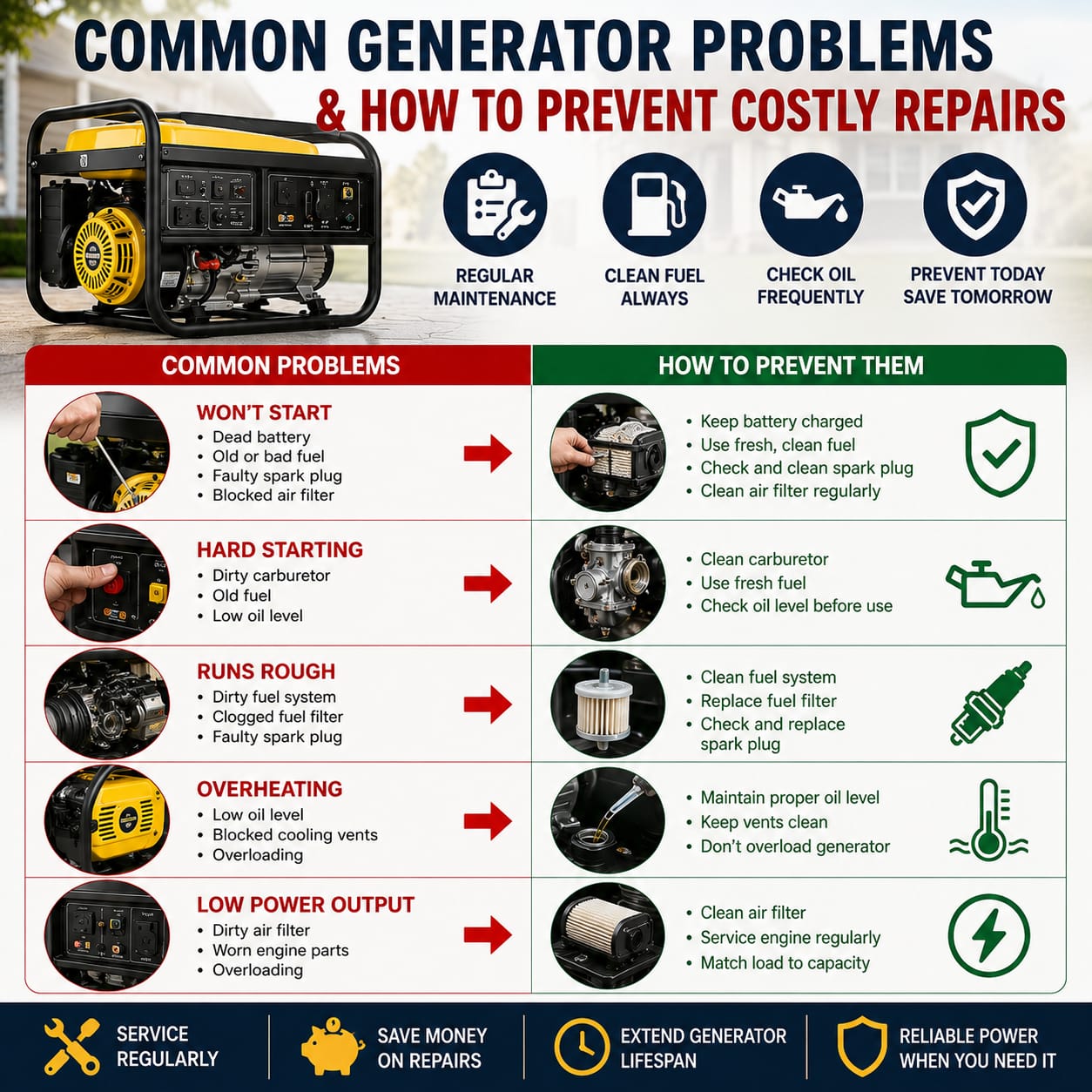
Neglecting Maintenance
Regular servicing helps maintain efficiency and extends generator lifespan.
Generator and Home Safety
Safety should always be a priority.
Important precautions include:
- Install generators outdoors.
- Ensure proper ventilation.
- Use quality extension cables.
- Avoid overloading circuits.
- Follow manufacturer guidelines.
Furthermore, professional installation helps reduce risks and improve performance.
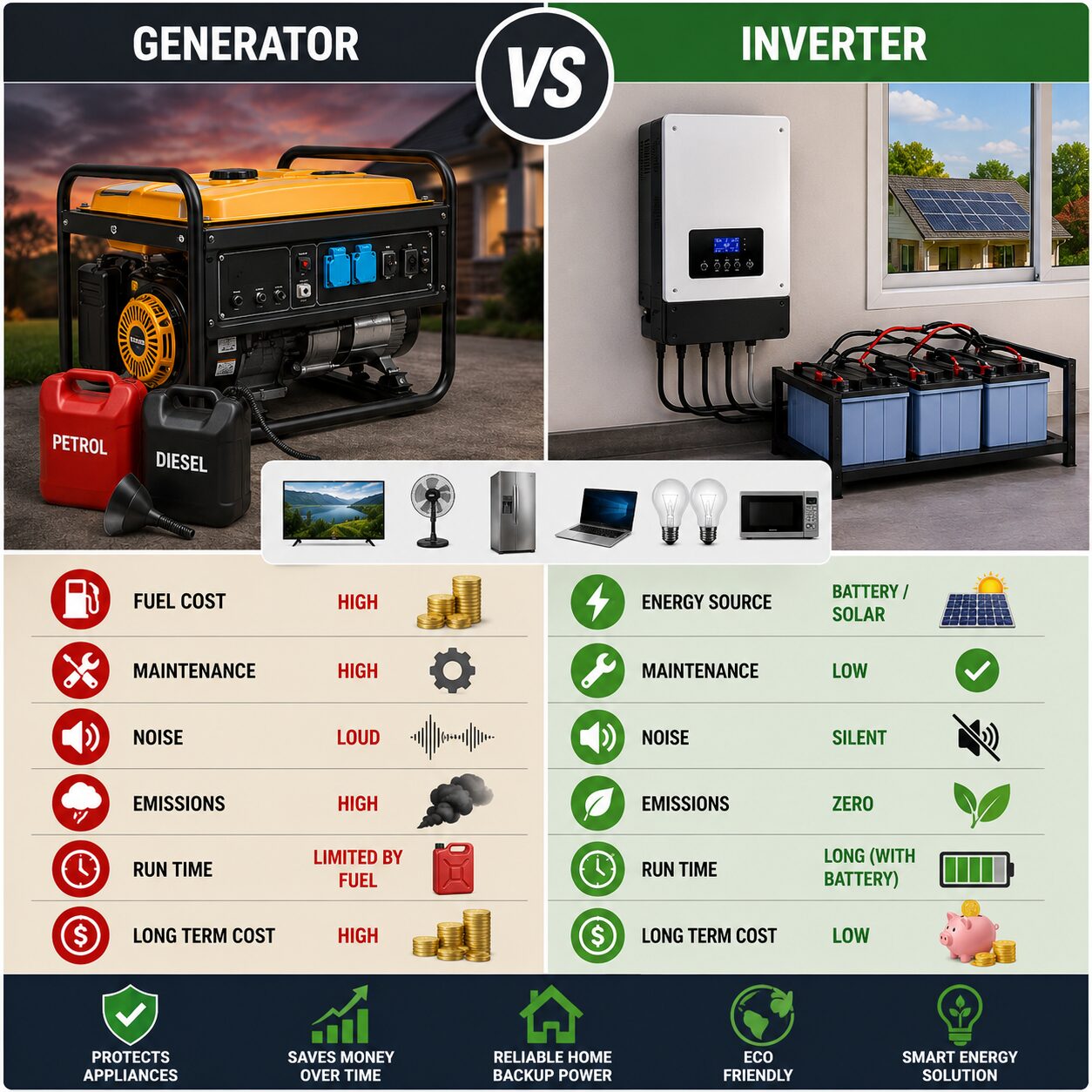
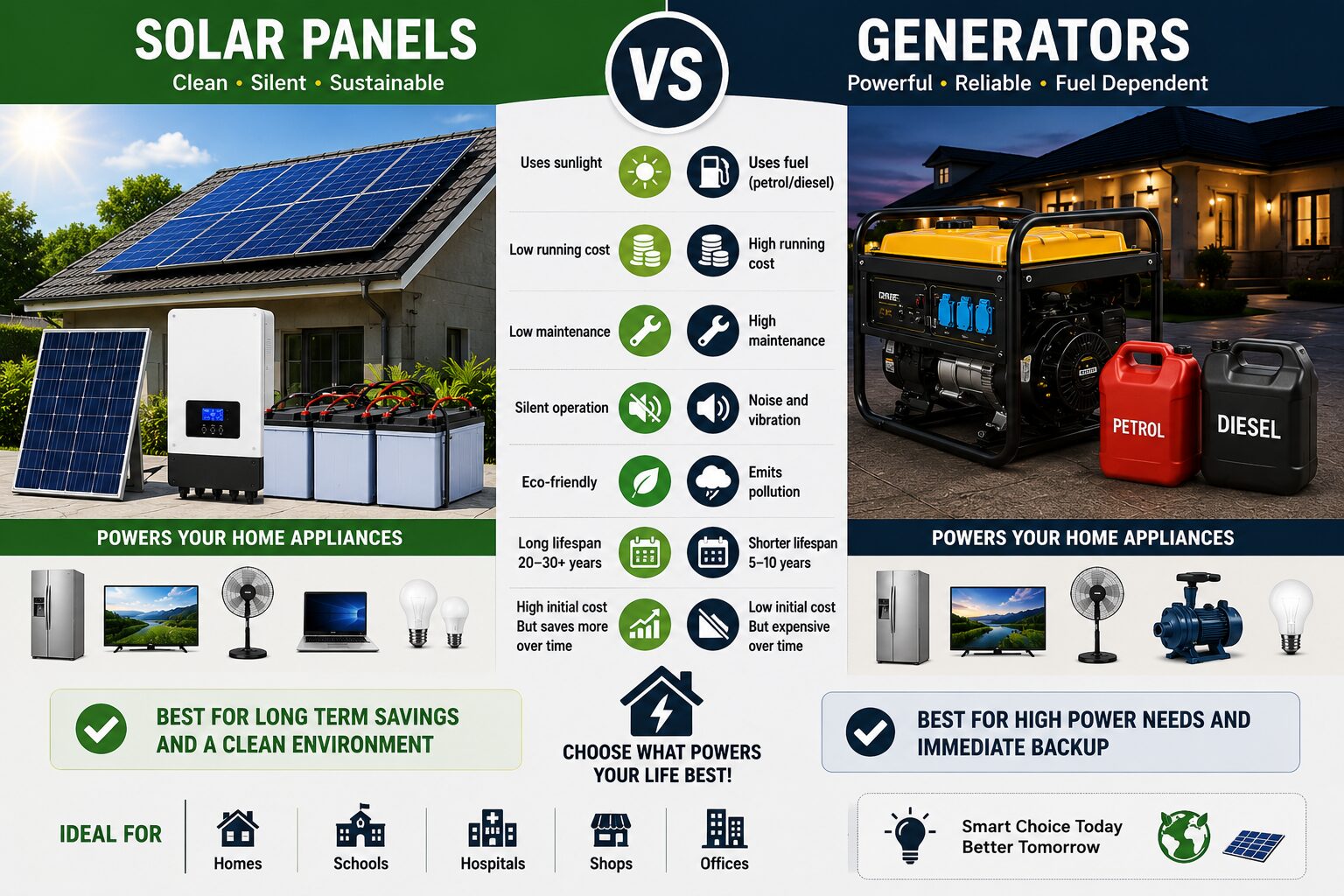
How Generators Compare to Inverters
Many homeowners also compare generators with inverter systems.
Generators offer:
- Higher power output
- Continuous operation with fuel
Meanwhile, inverters provide:
- Silent operation
- Lower running costs
- Cleaner energy
Therefore, some households choose a combination of both systems for maximum flexibility.
Conclusion
Understanding How to Choose the Right Generator Size for Your Home is essential for ensuring reliable backup power while avoiding unnecessary expenses. By calculating appliance wattage, accounting for startup loads, adding a safety margin, and considering future energy needs, homeowners can select the ideal generator capacity. Moreover, choosing the correct size improves efficiency, reduces fuel consumption, and extends equipment lifespan. With careful planning, a properly sized generator can provide dependable power and peace of mind during outages.


 Get it on
  Download on the