







Clean drinking water depends not only on having a good purification system but also on keeping its filters in proper condition. How Often Should You Replace a Water Purifier Filter is an important question for every household because filters gradually collect impurities and can become less effective. Therefore, following a suitable replacement schedule helps your purifier continue treating water properly.
The exact replacement period is not the same for every purifier. It depends on the type of filter, quality of incoming water, daily water consumption, purifier technology, and manufacturer’s recommendations. Consequently, homeowners should look beyond a fixed number of months when planning filter replacement.
How Often Should You Replace a Water Purifier Filter?
In general, many household water purifier filters may need replacement every 6 to 12 months, although some filters can last longer or require replacement sooner.
However, this is only a general guide.
For example, a sediment filter used with heavily contaminated borehole water may become clogged faster than one treating relatively clean municipal water. Similarly, a carbon filter can require more frequent replacement in a home with high daily water consumption.
Therefore, always check the recommended replacement interval for your specific purifier and filter.
Why Do Water Purifier Filters Need Replacement?
Water filters work by trapping, absorbing, or treating unwanted substances in water.
Over time, the filtration media can become saturated or clogged. As a result, the filter may not perform as effectively as it did when it was new.
A dirty filter can also:
- Reduce water flow
- Affect water taste
- Produce unpleasant odours
- Increase pressure on the purification system
- Reduce overall purification performance
Consequently, replacing filters is an essential part of water purifier maintenance.
Factors That Affect Filter Replacement Frequency
Several factors determine how long a filter lasts.
1. Water Quality
The quality of your incoming water has a major effect on filter life.
Water containing large amounts of sediment, rust, dirt, or other impurities can cause filters to become clogged quickly.
Therefore, homes using untreated borehole or well water may need more frequent filter changes than homes with relatively clean treated water.
2. Daily Water Consumption
A household that uses a large amount of purified water will generally put more demand on its filters.
For instance, a large family may consume considerably more drinking and cooking water than a person living alone.
As a result, filter replacement may be needed sooner.
3. Filter Type
Different filters have different lifespans.
A sediment filter may require replacement at a different interval from an activated carbon filter or RO membrane.
Therefore, do not assume that every component inside your purifier needs to be changed at the same time.
4. Purifier Technology
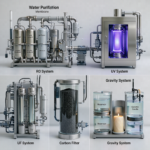
RO, UV, UF, carbon, and multi-stage purification systems have different maintenance requirements.
For example, an RO system may contain several filters and a membrane that require separate replacement schedules.
Meanwhile, a simple gravity purifier may have a different maintenance routine.
5. Manufacturer Recommendations
The manufacturer’s instructions should be your primary reference.
They normally provide guidance based on the specific filter design, purifier model, and expected water usage.
Therefore, keep your purifier manual or product information available for future maintenance.
Typical Replacement Schedule for Different Filters
Although schedules vary by brand and model, the following ranges can serve as a general guide.
| Filter Component | General Replacement Range |
|---|---|
| Sediment filter | Around 3–6 months |
| Activated carbon filter | Around 6–12 months |
| UF membrane | Around 12–24 months |
| RO membrane | Around 1–2 years |
| UV lamp | Around 1 year |
These are approximate ranges rather than universal rules.
For example, a filter exposed to poor-quality water may need replacement much sooner.
Similarly, some premium filters are designed to last longer under suitable conditions.
Signs That Your Water Purifier Filter Needs Replacement
You do not always have to wait until the scheduled replacement date.
Several warning signs can indicate that a filter needs attention.
Reduced Water Flow
If water comes out much more slowly than usual, the filter may be clogged.
However, low water pressure or another system problem can also cause reduced flow.
Therefore, have the purifier checked if the problem continues.
Change in Water Taste
A sudden change in taste can be a sign that a filter is no longer performing properly.
For example, water may develop a chlorine-like or unusual taste.
Consequently, check the filter condition.
Unpleasant Odour
Purified water should not normally have a strong unpleasant smell.
If an unusual odour develops, the filter may need replacement or the system may require cleaning.
Cloudy or Unusual-Looking Water
Changes in water appearance should not be ignored.
Although cloudiness can have several causes, it may indicate that the purification system requires maintenance.
Filter Replacement Indicator
Some modern water purifiers have filter-life indicators.
If your purifier displays a replacement warning, follow the manufacturer’s instructions.
Unusual Noise
Some purifiers may make unusual sounds when filters become blocked or when another component is experiencing difficulty.
Therefore, persistent changes in operating sounds should be investigated.
How Often Should You Replace a Water Purifier Filter in Nigeria?
For Nigerian households, filter replacement frequency can vary significantly.
This is because water sources differ from one location to another.
A household using relatively clean treated water may have a longer filter lifespan. On the other hand, homes using borehole or well water with high sediment, iron, hardness, or other impurities may require more frequent maintenance.
Therefore, Nigerian homeowners should consider testing their water and monitoring filter performance.
If your purifier is connected to untreated borehole water, installing appropriate pre-filtration can also help protect the main purification system.
How to Maintain Your Water Purifier Filters
Replacing filters is important, but proper maintenance also helps.
Clean the Purifier Regularly
Clean external surfaces and water-contact components according to the manufacturer’s instructions.
Keep the Storage Tank Clean
If your purifier has a storage tank, it should be cleaned at appropriate intervals.
Otherwise, contaminants can build up inside the tank even when the filtration system is working properly.
Check Connections
Inspect pipes and fittings for leaks.
A damaged connection can affect the purifier’s performance and create hygiene concerns.
Follow the Correct Replacement Schedule
Do not postpone filter replacement indefinitely.
Even if the water still looks clear, the filter may have reached the end of its useful life.
Use Compatible Replacement Filters
Always choose replacement filters that are suitable for your purifier.
Using incompatible components can affect filtration performance and may damage the system.
Can You Clean and Reuse Water Purifier Filters?
Some filter types may be washable, but not every filter is designed for reuse.
For example, certain sediment filters can sometimes be cleaned according to manufacturer instructions. However, disposable carbon cartridges are generally replaced rather than washed and reused.
Similarly, RO membranes require specialised maintenance and replacement when they reach the end of their service life.
Therefore, never assume that a filter can be reused simply because it looks clean.
What Happens If You Do Not Replace the Filter?
Ignoring filter replacement can create several problems.
Reduced Filtration Performance
An old filter may not work as effectively as a fresh filter.
Poor Water Taste
Water may develop an unpleasant taste or smell.
Lower Water Flow
A clogged filter can restrict water movement through the system.
Increased System Stress
A blocked filter can place additional pressure on pumps and other components.
Hygiene Concerns
A neglected purification system may become a source of contamination rather than a reliable treatment point.
Therefore, filter replacement should be treated as part of routine household maintenance.
Water Purifier Filter Replacement Checklist
Before replacing a filter, check the following:
- Identify the correct filter model.
- Check the manufacturer’s recommended lifespan.
- Turn off the water supply if required.
- Disconnect power where applicable.
- Replace the filter correctly.
- Check for leaks.
- Flush the new filter according to instructions.
- Confirm that water flow is normal.
- Record the replacement date.
If you are unfamiliar with the system, consider getting help from a qualified technician.
Common Mistakes to Avoid
Waiting Until Water Looks Dirty
Water can appear clear even when a filter needs replacement.
Therefore, do not use appearance alone to determine filter condition.
Ignoring Manufacturer Instructions
Generic replacement schedules may not match your purifier.
Always check the instructions for your specific model.
Buying the Cheapest Replacement Filter
Poor-quality or incompatible filters can affect purification performance.
Instead, choose suitable replacement components from reputable suppliers.
Forgetting the RO Membrane
Some homeowners replace basic filters but forget about the RO membrane.
However, the membrane is an important part of an RO purification system and also has a service life.
Conclusion
So, How Often Should You Replace a Water Purifier Filter? For many household systems, replacement can be required every few months to a year, while components such as RO membranes and UF membranes may last considerably longer. However, the correct schedule depends on your purifier model, filter type, water quality, and daily usage.
Therefore, follow the manufacturer’s recommendations, monitor changes in water flow, taste, and odour, and replace filters when necessary. Most importantly, choose compatible replacement filters and maintain the entire purification system regularly.


 Get it on
  Download on the