






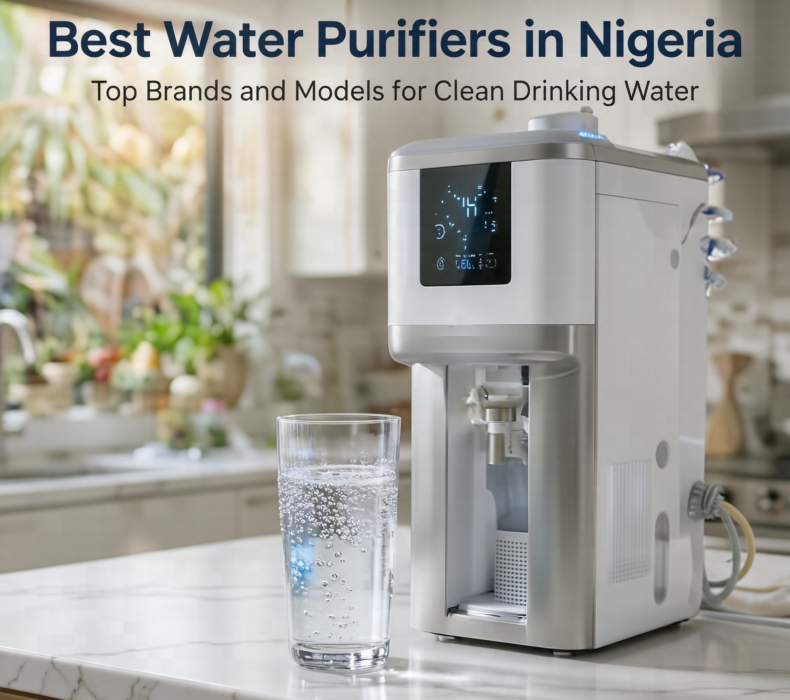
Clean drinking water is essential for every home and office. However, water quality can differ greatly depending on the source, whether it comes from a borehole, well, public supply, or stored tank. Therefore, choosing the Best Water Purifiers in Nigeria: Top Brands and Models for Clean Drinking Water can help households find a system that matches their water quality and daily needs.
The right water purifier can improve taste, reduce unpleasant odours, remove sediment, and provide additional protection against selected contaminants, depending on the technology used. However, there is no single purifier that is perfect for every water source. For this reason, testing your water and understanding the type of purification technology you need are important steps before buying.
Why You Need a Water Purifier in Nigeria
Many Nigerian households depend on different water sources. For example, some homes use borehole water, while others rely on tank storage, wells, or municipal supplies.
As a result, water quality can change from one location to another. Some water may contain visible particles, unpleasant odours, excess dissolved minerals, or microbiological contamination.
A suitable water purifier can help improve water quality. However, the correct system depends on the problem you are trying to solve.
For instance:
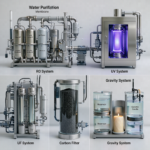
- Reverse osmosis systems are often used for high levels of dissolved solids
- UV systems focus on microbial disinfection
- UF systems can filter particles and some microorganisms
- Activated carbon filters can improve taste and reduce certain odours
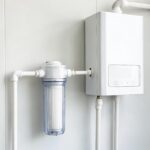
- Sediment filters remove visible particles and dirt
- Gravity purifiers can be useful where electricity is unavailable
Therefore, understanding your water source is the first step toward choosing the right purifier.
Best Water Purifiers in Nigeria: Top Brands and Models for Clean Drinking Water
The Nigerian market includes different types of water purification systems. Some are designed for countertop use, while others are installed under the kitchen sink or connected directly to a water supply.
Among the options commonly available are Kent models, reverse osmosis systems, UV purifiers, gravity-based purifiers, and multi-stage filtration units.
Kent Water Purifiers
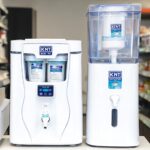
Kent is one of the recognised names in water purification technology. Several Kent models are available through Nigerian water treatment suppliers, including RO, UV, UF, and storage water purifiers.
Water Doctor Nigeria lists Kent Ultra UV, Kent Pride Mineral RO, Kent Grand Plus Mineral RO, Kent Gold Plus, Kent Gold Optima, Kent Gold Cool, Kent Excel Plus, and Kent Crystal UF among its available point-of-use purification solutions.
The Kent Grand Plus RO+UV+UF is often considered for homes that require several stages of water treatment. It combines sediment filtration, carbon filtration, reverse osmosis, UV treatment, UF filtration, and additional water treatment components. Therefore, it may be suitable for challenging water conditions where a basic filter may not be enough.
Multi-Stage Reverse Osmosis Water Purifiers
Multi-stage RO systems are another popular choice for households using borehole water or water with high levels of dissolved substances.
A typical system may include:
- Sediment filtration
- Activated carbon filtration
- RO membrane technology
- Post-carbon filtration
- Optional mineral or polishing stages
Furthermore, some systems are installed under the sink, making them convenient for homeowners who want to keep their kitchen countertop clear.
A five-stage drinking water purifier can offer several levels of treatment in one system. However, the exact performance depends on the quality of the incoming water, water pressure, filter condition, and the specific system configuration.
UV Water Purifiers and Sterilisers
UV water purification systems use ultraviolet light as part of the treatment process. Unlike some filtration systems, UV treatment focuses on reducing or inactivating microorganisms rather than removing dissolved salts.
Therefore, UV technology is often combined with other filtration stages.
A UV system may be useful when:
- The main concern is microbiological water quality
- The incoming water is already relatively clear
- Dissolved solids are not the major problem
- A household wants an additional disinfection stage
However, cloudy or highly turbid water may require pre-filtration before UV treatment for better performance.
Gravity-Based Water Purifiers
Gravity water purifiers do not depend entirely on electricity. Instead, they use gravity to move water through the filtration media.
Consequently, they can be useful for homes with unstable electricity supply.
A gravity purifier may include ceramic filters, activated carbon, mineral media, or other filtration layers. They are often suitable for households that need a simple and electricity-free purification option.
However, the purification speed may be slower than that of pressurised systems.
CWAY Water Solutions in Nigeria
CWAY Nigeria is a major name in Nigeria’s drinking-water and water dispenser market, with operations in several parts of the country. The company states that its Nigerian drinking-water business focuses on producing and selling safe, quality drinking water and related products.
CWAY may be particularly relevant for consumers looking at treated drinking water, dispenser-based hydration, and related water solutions. However, a water dispenser is not automatically the same as a household purification system.
Therefore, buyers should understand whether they need:
- A dispenser for packaged or refill water
- A point-of-use water purifier
- A whole-house filtration system
- A combination of filtration and purification technologies
Choosing the correct category will help you spend money more effectively.
LG Water Purification Technology
LG Water Purifier Guide explains several technologies found in the brand’s water purification range, including True RO filtration, UV treatment, mineral enhancement, stainless steel storage tanks, and RO recovery technology.
However, product availability and specific models can vary by market. Therefore, Nigerian buyers should confirm local availability, compatible replacement filters, and after-sales support before purchasing a particular LG model.
Types of Water Purifiers to Consider
Understanding purification technology makes it easier to choose the right product.
Reverse Osmosis Water Purifiers
Reverse osmosis, commonly called RO, uses a membrane to reduce many dissolved substances from water.
RO systems may be particularly useful for:
- High-TDS water
- Borehole water with excessive dissolved solids
- Water with specific mineral or chemical concerns
However, an RO system should be selected based on water testing rather than assumptions. The system also produces a reject stream, so water recovery should be considered before installation.
Ultraviolet Water Purifiers
UV purifiers use ultraviolet light for microbial treatment.
They can be useful when the water is already relatively clear but requires an additional microbiological treatment stage.
Nevertheless, UV treatment does not replace every other type of filtration.
Ultrafiltration Water Purifiers
Ultrafiltration, or UF, uses a fine membrane to filter particles and some microorganisms.
However, UF does not remove dissolved salts and may not be suitable for every water quality problem.
Activated Carbon Filters
Activated carbon is often used to improve taste and reduce unpleasant odours. It can also help reduce chlorine and selected organic compounds.
Consequently, carbon filters are commonly included as part of multi-stage purification systems.
Sediment Filters
Sediment filters remove visible dirt, rust, sand, and other particles from water.
They are often used as the first stage in a water treatment system because they protect later filters from becoming blocked quickly.
Gravity Water Purifiers
Gravity-based models can be useful for homes without stable electricity.
However, their effectiveness depends on the filter media, maintenance, and the type of contamination present in the water.
Best Water Purifier for Borehole Water in Nigeria
Borehole water quality can vary significantly. Therefore, a water purifier that works well in one area may not be the right choice in another.
Before buying a purifier for borehole water, consider testing for:
- Total dissolved solids
- Microbiological contamination
- Turbidity
- Iron or other specific minerals
- pH
- Other locally relevant contaminants
If the water has high dissolved solids, an RO-based system may be considered. However, if the main problem is sediment, a sediment filtration system may be more appropriate.
In other cases, a combination of sediment filtration, activated carbon, RO, UV, or other treatment technologies may be needed.
Therefore, water testing is more reliable than choosing a purifier based only on brand reputation.
How to Choose the Best Water Purifier for Your Home
Test Your Water First
This is one of the most important steps. A water test can help identify the main problem.
For example, if your water has a high TDS level, you may need a different system from a household dealing mainly with sediment or microbial contamination.
Consider Your Family Size
A larger household may require a purifier with higher storage or production capacity.
However, capacity should also match daily consumption.
Check Electricity Requirements
Some RO systems require electricity, especially where a pump is used.
Therefore, buyers should consider the reliability of their power supply and whether the purifier can operate with their backup power system.
Consider Water Pressure
Some purification systems require a minimum water pressure. Consequently, low-pressure homes may need an additional booster pump.
Ask About Replacement Filters
A purifier is not a one-time purchase. Filters and other components need replacement according to the manufacturer’s instructions and water quality.
Therefore, always check:
- Filter replacement cost
- Availability of cartridges
- Availability of technicians
- Warranty coverage
- Maintenance requirements
Top Features to Look for in a Water Purifier
When comparing the Best Water Purifiers in Nigeria: Top Brands and Models for Clean Drinking Water, look beyond the advertised brand name.
Multi-Stage Filtration
Several treatment stages can address different water quality issues.
For example, a system may combine sediment filtration, activated carbon, and RO.
Adequate Storage Capacity
A storage tank can provide a reserve of treated water. However, larger storage is not always necessary for every household.
Water Recovery
RO systems can differ in how much water they recover and how much becomes reject water.
Therefore, water efficiency is an important feature to compare.
Mineral Enhancement
Some systems include mineral or taste-enhancement stages. However, the exact function and benefit depend on the system design.
UV Protection
Certain models use UV technology to provide an additional microbiological treatment stage.
Food-Grade and Durable Materials
The quality of tanks, pipes, fittings, and storage materials can affect long-term use.
Easy Maintenance
Choose a system that can be serviced without unnecessary difficulty. In addition, replacement parts should be reasonably accessible.
Common Water Purifier Problems and How to Avoid Them
Even the best system can perform poorly if it is not maintained.
Slow Water Flow
Slow water flow can occur when sediment or carbon filters become blocked.
Therefore, replace filters according to the recommended maintenance schedule.
Bad Taste or Odour
A sudden change in taste or smell may indicate that a filter requires replacement.
However, the water source itself may also have changed.
Water Leakage
Leaks can develop around fittings, tanks, and connections.
Consequently, have the system inspected if you notice dripping water.
Reduced Purification Performance
Old filters and membranes can affect performance.
Therefore, routine maintenance is essential.
How Much Do Water Purifiers Cost in Nigeria?
Water purifier prices in Nigeria can vary greatly depending on the technology, capacity, number of treatment stages, and installation requirements.
As a general guide:
- Basic gravity purifiers may cost less than advanced systems
- Multi-stage countertop models may cost more
- UV systems have different price levels depending on capacity
- RO systems are generally more expensive because of their technology and components
- Whole-house filtration systems can cost significantly more because of their larger capacity and installation requirements
For example, recent Nigerian retail listings have shown a five-stage drinking water purifier at around ₦100,000, while a Kent Grand Plus RO+UV+UF system has been listed at a substantially higher price. Prices should always be confirmed with the current supplier because they can change with exchange rates and product availability.
Why Regular Filter Replacement Matters
A water purifier needs regular maintenance to continue working properly.
Over time:
- Sediment filters can become clogged
- Carbon filters can lose effectiveness
- RO membranes can become less efficient
- UV lamps can require replacement
- Storage tanks and internal parts may need cleaning
Therefore, the long-term cost of ownership should be considered before purchasing.
A cheaper purifier with expensive or unavailable replacement filters may cost more in the long run.
Conclusion
Choosing the Best Water Purifiers in Nigeria: Top Brands and Models for Clean Drinking Water depends on your water source and the type of treatment required. Kent systems offer different RO, UV, UF, and storage options, while multi-stage RO systems can provide comprehensive treatment for certain water conditions. UV systems, gravity purifiers, and sediment filters can also be useful for specific needs.


 Get it on
  Download on the