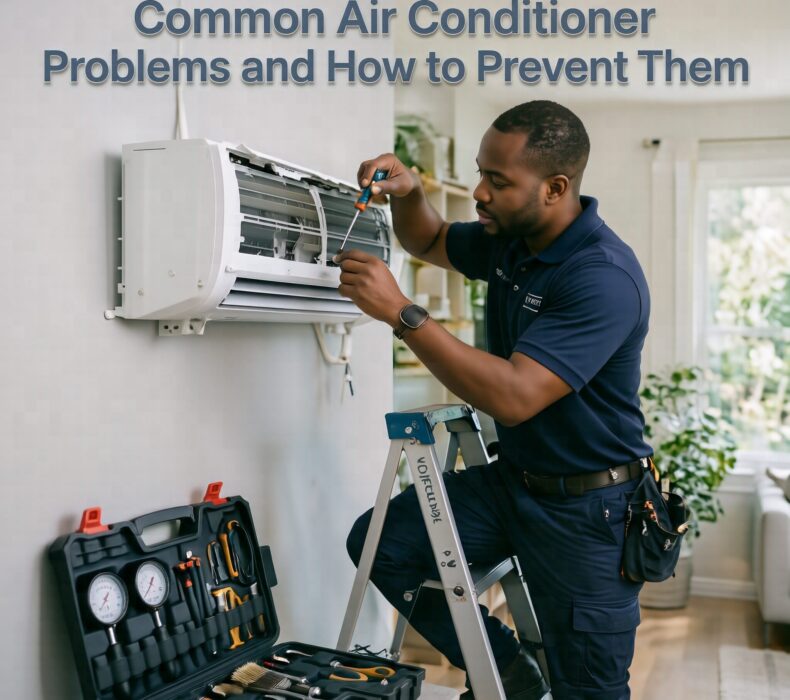
Air conditioners are designed to provide reliable cooling and comfort, especially during Nigeria’s hot weather. However, like every household appliance, they can develop faults if they are not properly maintained. Understanding Common Air Conditioner Problems and How to Prevent Them can help homeowners and business owners avoid expensive repairs, improve energy efficiency, and keep their cooling systems running smoothly. Fortunately, many air conditioner problems can be prevented through regular maintenance and proper usage.
Why Air Conditioners Develop Problems
An air conditioner works continuously to remove heat, circulate cool air, and regulate indoor temperatures. Over time, dust, moisture, electrical issues, and normal wear can affect its performance.
Some of the most common causes include:
Dirty air filters
Lack of regular servicing
Power fluctuations
Refrigerant leaks
Poor installation
Blocked drainage systems
Worn-out components
Fortunately, routine maintenance can prevent many of these issues.
Air filters trap dust, pollen, and other airborne particles. However, when they become clogged, airflow is restricted.
Signs of Dirty Filters
Weak airflow
Poor cooling performance
Higher electricity bills
Increased indoor dust
Frozen evaporator coils
How to Prevent It
Clean filters every two to four weeks.
Replace damaged filters when necessary.
Schedule regular servicing.
As a result, your air conditioner will cool more efficiently while using less electricity.
Refrigerant Leaks
Refrigerant is essential for cooling.
If the system develops a leak, cooling performance drops significantly.
Warning Signs
Warm air from the vents
Longer cooling time
Ice forming on indoor coils
Hissing sounds
Rising electricity consumption
Prevention Tips
Have refrigerant levels checked during servicing.
Repair leaks immediately.
Use qualified technicians for maintenance.
Ignoring refrigerant leaks can eventually damage the compressor.
Blocked Drainage Pipes
Air conditioners naturally remove moisture from indoor air.
This water flows through a drainage pipe.
Over time, dirt, algae, and debris can block the drain.
Symptoms
Water leaking indoors
Damp walls
Unpleasant odours
Overflowing drain pan
Prevention
Clean drainage lines regularly.
Inspect drain pipes during servicing.
Remove debris before blockages develop.
Keeping drainage systems clear prevents water damage inside your home.
Faulty Thermostat
The thermostat controls your air conditioner’s temperature settings.
If it stops working correctly, cooling performance becomes inconsistent.
Signs
Incorrect room temperature
Air conditioner cycles too frequently
Unit fails to start
Uneven cooling
Prevention
Install the thermostat away from direct sunlight.
Replace weak batteries if applicable.
Have faulty thermostats inspected promptly.
A properly functioning thermostat improves comfort and energy efficiency.
Frozen Evaporator Coils
Frozen indoor coils are another common issue.
This usually occurs because of restricted airflow or refrigerant problems.
Symptoms
Ice on indoor units
Reduced airflow
Warm indoor temperatures
Water leakage after melting
Prevention
Keep filters clean.
Maintain proper refrigerant levels.
Avoid blocking air vents.
Regular maintenance helps prevent frozen coils and costly repairs.
Compressor Problems
The compressor is the heart of every air conditioner.
Without it, the system cannot cool your room.
Common Causes
Voltage fluctuations
Dirty condenser coils
Refrigerant problems
Overheating
Lack of maintenance
Prevention
Install a voltage stabilizer.
Clean the outdoor unit regularly.
Service the air conditioner at recommended intervals.
Protecting the compressor significantly extends the life of your air conditioner.
Electrical Problems
Power fluctuations are common in many areas and can affect air conditioners.
Electrical faults may involve damaged wiring, blown capacitors, or faulty relays.
Warning Signs
Unit refuses to start
Burning smell
Frequent circuit breaker trips
Flickering display
Prevention
Use a quality surge protector.
Install a voltage stabilizer.
Hire certified technicians for repairs.
Never attempt electrical repairs without professional assistance.
Dirty Condenser Coils
The outdoor condenser releases heat from your home.
When dust and dirt accumulate, cooling efficiency decreases.
Symptoms
Higher electricity bills
Longer cooling cycles
Poor cooling performance
Overheating compressor
Prevention
Clean the outdoor unit regularly.
Remove leaves and debris around the condenser.
Keep adequate airflow around the unit.
A clean condenser improves efficiency and lowers operating costs.
Unusual Noises
Modern air conditioners operate quietly.
Therefore, unusual sounds often indicate developing problems.
Common Noises
Grinding
Buzzing
Clicking
Rattling
Hissing
Prevention
Tighten loose components.
Schedule inspections when noises begin.
Replace worn parts promptly.
Ignoring strange noises may lead to more serious damage.
Bad Odours
Air conditioners should circulate fresh, clean air.
If unpleasant smells develop, they usually indicate maintenance issues.
Possible Causes
Dirty filters
Mould growth
Blocked drainage
Bacteria inside the unit
Prevention
Clean filters frequently.
Service the evaporator coils.
Keep drainage systems clean.
Routine cleaning improves both air quality and system performance.
Poor Cooling Performance
Sometimes an air conditioner runs continuously but fails to cool the room properly.
Possible causes include:
Dirty filters
Refrigerant leaks
Incorrect thermostat settings
Dirty condenser coils
Undersized air conditioner
Regular inspections help identify these issues before they worsen.
Tips to Prevent Air Conditioner Problems
Following a few simple maintenance practices can greatly improve your air conditioner’s performance.
Clean filters every few weeks.
Service the unit at least twice a year.
Keep outdoor units free from dust and debris.
Use a voltage stabilizer.
Keep windows and doors closed while cooling.
Replace worn components promptly.
Purchase genuine replacement parts.
These preventive measures reduce repair costs and improve efficiency.
When Should You Call a Professional?
Although homeowners can perform basic cleaning, some issues require professional attention.
Contact a qualified technician if you notice:
Refrigerant leaks
Electrical faults
Water leaking inside the room
Persistent unusual noises
Compressor failure
Weak cooling despite clean filters
Prompt repairs often prevent more expensive damage.
Benefits of Regular Air Conditioner Maintenance
Routine servicing offers many advantages.
These include:
Better cooling performance
Lower electricity bills
Improved indoor air quality
Longer equipment lifespan
Reduced repair costs
More reliable operation
Additionally, regular maintenance helps your air conditioner perform efficiently throughout Nigeria’s hottest months.
Conclusion
Understanding Common Air Conditioner Problems and How to Prevent Them allows homeowners and businesses to enjoy reliable cooling while avoiding unnecessary repair expenses. Most air conditioner issues begin as small maintenance problems that become more serious when ignored. By cleaning filters regularly, servicing the system on schedule, protecting it from power fluctuations, and addressing faults early, you can extend the lifespan of your air conditioner and maintain excellent cooling performance.









 Get it on
  Download on the