






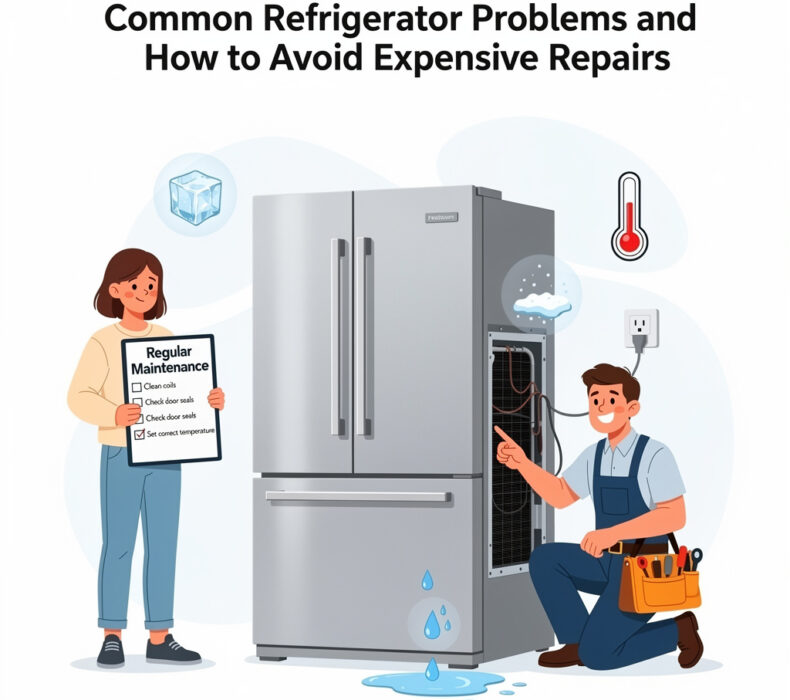
Understanding Common Refrigerator Problems and How to Avoid Expensive Repairs can save homeowners significant time, money, and frustration. Refrigerators are among the most important appliances in any home, operating continuously to keep food fresh and safe. However, like any appliance, they can develop issues over time. Fortunately, many common refrigerator problems can be prevented through proper maintenance and early intervention.
Why Refrigerator Maintenance Matters
Regular maintenance helps your refrigerator operate efficiently and reduces the risk of unexpected breakdowns. Moreover, a well-maintained refrigerator consumes less energy and lasts longer.
Some benefits of routine maintenance include:
- Lower electricity bills
- Better cooling performance
- Longer appliance lifespan
- Reduced repair costs
- Improved food preservation
Therefore, taking preventive measures today can help avoid costly repairs in the future.
Common Refrigerator Problems and Their Causes
1. Refrigerator Not Cooling Properly
One of the most common refrigerator issues is insufficient cooling.
Possible Causes:
- Dirty condenser coils
- Faulty thermostat
- Blocked air vents
- Damaged door seals
- Overloaded refrigerator
How to Prevent It
Clean condenser coils regularly and ensure air vents remain unobstructed. Additionally, avoid overfilling the refrigerator, as this can restrict airflow.
As a result, the cooling system can function more effectively.
2. Excessive Frost Build-Up
Frost accumulation can reduce freezer efficiency and storage space.
Possible Causes:
- Frequent door opening
- Damaged door gasket
- Faulty defrost system
- Warm air entering the freezer
How to Prevent It
Always close the freezer door properly and inspect door seals for damage. Furthermore, minimize unnecessary door openings to maintain stable temperatures.
Consequently, frost formation will be significantly reduced.
3. Water Leaking from the Refrigerator
Water leaks can damage flooring and create safety hazards.
Possible Causes:
- Blocked drain tube
- Cracked water line
- Faulty drain pan
- Excess condensation
How to Prevent It
Inspect water lines regularly and clean the drain tube when necessary. Additionally, address small leaks immediately before they become larger problems.
Therefore, you can avoid costly repairs and water damage.
4. Refrigerator Making Unusual Noises
While refrigerators naturally produce some noise, excessive sounds may indicate a problem.
Possible Causes:
- Dirty condenser fan
- Faulty evaporator fan
- Loose components
- Compressor issues
How to Prevent It
Clean the fan areas regularly and schedule professional inspections if unusual noises persist.
Moreover, addressing strange sounds early can prevent major component failures.
5. Refrigerator Running Constantly
A refrigerator that never seems to stop running may consume excessive electricity.
Possible Causes:
- Dirty condenser coils
- Poor door sealing
- High room temperature
- Faulty thermostat
How to Prevent It
Clean condenser coils every few months and ensure door seals remain airtight.
As a result, the refrigerator can cycle normally and use less energy.
6. Bad Odors Inside the Refrigerator
Unpleasant smells can affect food quality and indicate poor hygiene.
Possible Causes:
- Spoiled food
- Spilled liquids
- Blocked drainage system
- Infrequent cleaning
How to Prevent It
Regularly remove expired food and clean interior surfaces using mild cleaning solutions.
Furthermore, placing baking soda inside the refrigerator can help absorb odors.
7. Ice Maker Not Working
Many modern refrigerators include built-in ice makers that occasionally experience problems.
Possible Causes:
- Blocked water supply
- Frozen water line
- Faulty ice maker mechanism
How to Prevent It
Check water supply connections periodically and follow manufacturer maintenance recommendations.
Consequently, the ice maker can continue functioning efficiently.
Essential Refrigerator Maintenance Tips
To avoid expensive repairs, follow these simple maintenance practices:
Clean Condenser Coils
Dust and debris reduce cooling efficiency. Therefore, clean the coils at least twice per year.
Check Door Seals
Damaged gaskets allow cold air to escape. As a result, the refrigerator works harder and consumes more electricity.
Avoid Overloading
Overcrowding restricts airflow and reduces cooling performance.
Maintain Proper Temperature Settings
Recommended temperatures are:
- Refrigerator: 3°C to 5°C
- Freezer: -18°C
These settings help preserve food while maximizing efficiency.
Schedule Regular Inspections
Professional servicing can identify minor issues before they become major repairs.
Moreover, routine inspections often extend appliance lifespan.
Signs You Need Professional Repair
Contact a qualified technician if you notice:
- Persistent cooling issues
- Frequent cycling
- Burning smells
- Excessive noise
- Water leaks that continue after cleaning
- Electrical problems
Ignoring these warning signs may lead to more expensive repairs later.
Benefits of Preventive Maintenance
Preventive maintenance offers several advantages:
- Lower repair costs
- Improved energy efficiency
- Better food preservation
- Longer refrigerator lifespan
- Reduced risk of unexpected breakdowns
Consequently, routine care is one of the smartest investments homeowners can make.
Conclusion
Learning about Common Refrigerator Problems and How to Avoid Expensive Repairs can help protect your appliance and your budget. By cleaning condenser coils, checking door seals, monitoring temperatures, and addressing issues early, you can prevent many common refrigerator problems. Ultimately, consistent maintenance ensures reliable performance, lower energy costs, and years of dependable food storage.





 Get it on
  Download on the