





Choosing the Best Water Dispensers for offices: Capacity, Features and Prices is important for creating a convenient and comfortable workplace. Employees, clients, and visitors need easy access to clean drinking water throughout the day. Therefore, the right water dispenser can improve convenience while supporting hydration in a busy office environment.
However, office water dispensers come in different sizes, designs, capacities, and price ranges. Some are designed for small teams, while others can handle frequent use in larger workplaces. In addition, modern models may provide hot, cold, and room-temperature water. Consequently, understanding the available options can help businesses choose a suitable dispenser without overspending.
Why Every Office Needs a Water Dispenser
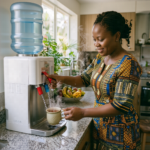
A water dispenser provides a dedicated and convenient source of drinking water in the workplace. Instead of employees repeatedly buying bottled water or waiting for water to cool in a refrigerator, they can quickly fill a cup or bottle when needed.
Moreover, a dispenser can provide cold water during hot weather and hot water for tea, coffee, and other beverages. As a result, one appliance can support several daily office needs.
A well-placed water dispenser can also be useful in reception areas, meeting rooms, staff kitchens, waiting areas, and shared workspaces.
Best Water Dispensers for Offices: Capacity, Features and Prices
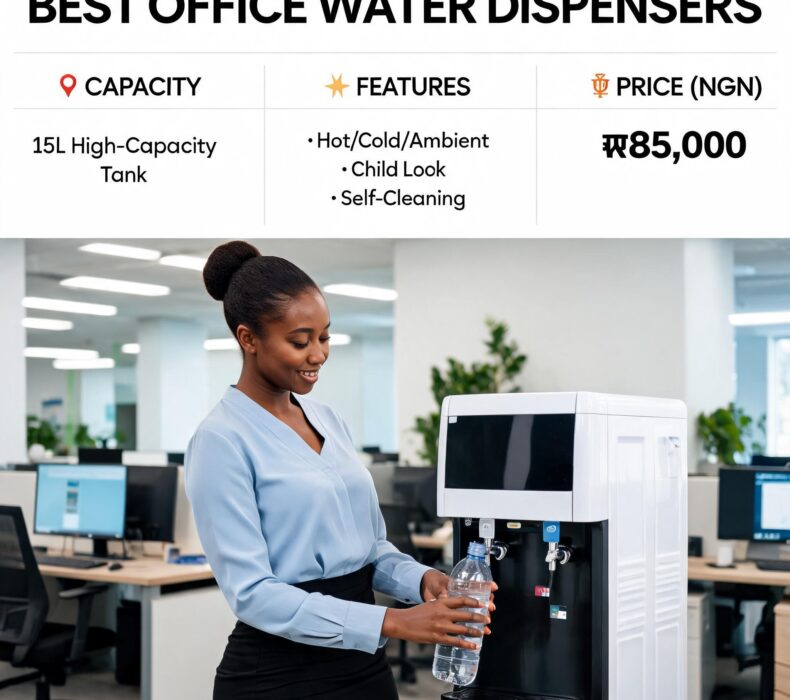
When choosing the Best Water Dispensers for offices: Capacity, Features and Prices, capacity should be one of the first factors to consider. A dispenser that works perfectly for a five-person office may struggle to meet the needs of a much larger team.
Similarly, the features you need will affect the price. Therefore, it is important to balance capacity, functionality, and your available budget.
Small Office Water Dispensers
Small offices with approximately 2 to 10 employees can often use a standard water dispenser with a moderate cooling and heating capacity.
A basic top-loading dispenser may be sufficient when water consumption is relatively low. However, if employees frequently drink chilled water or make hot beverages, a model with stronger heating and cooling performance may be more practical.
Suitable features include:
- Hot and cold water functions
- Room-temperature water option
- Removable drip tray
- Child safety lock
- Compact design
- Moderate water capacity
Medium Office Water Dispensers
Offices with approximately 10 to 30 employees usually require a dispenser that can handle more frequent use.
In this case, consider a model with faster cooling recovery and a larger internal capacity. Additionally, a bottom-loading design can make replacing heavy water bottles easier for office staff.
Suitable features include:
- High cooling performance
- Hot and cold water
- Larger internal tanks
- Bottom-loading bottle compartment
- Safety lock
- Durable dispensing taps
- Energy-saving operation
Large Office Water Dispensers
Large offices with many employees may need a high-capacity or bottleless water dispenser.
Bottleless systems can be particularly useful because they connect directly to a suitable water supply. As a result, businesses may not need to replace large bottles as frequently.
However, installation requirements should be considered before choosing this type of system.
Suitable features include:
- High-capacity dispensing
- Multiple dispensing points
- Built-in filtration
- Strong cooling performance
- High hot-water capacity
- Bottleless water connection
- Easy maintenance
Important Features to Consider
The best office water dispenser should meet the needs of employees while remaining easy to maintain.
Hot and Cold Water Options
A hot-and-cold dispenser is one of the most versatile choices for an office.
Cold water provides quick refreshment, particularly during warm weather. Meanwhile, hot water can be used to prepare tea, coffee, cocoa, and other hot drinks.
Therefore, a multifunction model may reduce the need for a separate appliance.
Room-Temperature Water
Some employees may prefer water at room temperature. Fortunately, three-temperature models can provide this option without heating or cooling the water.
This feature can also give employees greater choice.
High Water Capacity
Capacity matters in busy offices.
A low-capacity dispenser may struggle when many employees use it within a short period. Therefore, check both the internal water capacity and the cooling or heating recovery rate.
A model should be able to provide water efficiently during busy periods.
Fast Cooling Performance
Cold water can be in high demand, especially in warm office environments.
Consequently, choose a dispenser with cooling performance that matches the number of expected users.
A larger workplace should generally avoid models designed only for light domestic use.
Hot Water Safety Lock
Offices may have visitors, children, or other people who are unfamiliar with the dispenser.
Therefore, a safety lock for the hot-water tap is an important feature. It can help reduce the risk of accidental contact with hot water.
Bottom-Loading Design
Bottom-loading water dispensers can make bottle replacement easier.
Instead of lifting a heavy bottle above the appliance, staff can place the bottle inside a lower compartment. As a result, the dispenser can be more convenient for regular office use.
Bottleless Design
Bottleless dispensers connect directly to a suitable water source.
This can reduce dependence on large water bottles. However, installation, filtration, maintenance, and water-source quality should be carefully considered.
For larger offices, a bottleless system may offer greater convenience.
Built-In Water Filtration
Some office dispensers include water filtration.
Depending on the system, filters may improve water taste and reduce certain unwanted substances. However, filter performance differs between models.
Therefore, businesses should check the type of filtration system, replacement schedule, and long-term filter costs before purchasing.
Water Dispenser Price Ranges for Offices
Office water dispenser prices vary based on size, features, brand, and design.
Basic models are generally more affordable. Meanwhile, models with advanced filtration, bottom loading, high-capacity cooling, or bottleless systems can cost significantly more.
A general price guide may look like this:
Basic Office Water Dispensers
Basic models may be suitable for small offices with limited water consumption.
They usually offer simple dispensing functions and may have fewer advanced features.
Expected price category: Lower-priced options.
Standard Hot and Cold Dispensers
These models offer greater flexibility by providing hot and cold water.
They are often suitable for small and medium-sized offices.
Expected price category: Mid-range options.
Bottom-Loading Water Dispensers
Bottom-loading models generally cost more because of their convenient bottle compartment and pumping system.
However, the additional convenience may be valuable in busy workplaces.
Expected price category: Mid-range to premium options.
Bottleless and Filtered Systems
These models can have higher upfront costs because of their plumbing and filtration requirements.
Nevertheless, they may provide long-term convenience for offices with high water consumption.
Expected price category: Premium options.
Actual prices can vary significantly based on the brand, model, retailer, exchange rates, available features, and market conditions. Therefore, always compare the exact model specifications before making a purchase.
How Much Water Capacity Does Your Office Need?
The right capacity depends on the number of people using the dispenser and how often they use it.
A small office may only need a standard-capacity dispenser. On the other hand, a larger workplace may need a unit with faster cooling and heating recovery.
Instead of focusing only on tank size, also consider how quickly the appliance can prepare additional cold or hot water after frequent use.
For example, a large team may empty a small supply of chilled water quickly. Consequently, strong cooling recovery can be just as important as a large tank.
Top-Loading vs Bottom-Loading Water Dispensers for Offices
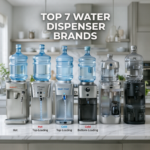
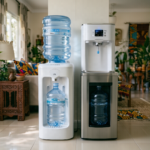
Top-loading models are often practical and affordable. In addition, staff can easily see when the water bottle is running low.
However, replacing a large bottle requires lifting it above the appliance.
Bottom-loading dispensers hide the bottle inside the lower section. As a result, they provide a cleaner appearance and make bottle replacement easier.
For a busy office, a bottom-loading model may be more convenient. Nevertheless, a top-loading dispenser can still be a good choice for smaller offices with lower water consumption.
Maintenance Tips for Office Water Dispensers
Regular maintenance is important because many people may use the same dispenser every day.
First, clean the dispensing area regularly. Next, empty and wash the drip tray to prevent standing water from accumulating.
The water bottle should also be replaced carefully, and the surrounding area should be kept clean.
If the dispenser uses a filtration system, replace the filters according to the manufacturer’s recommended schedule.
Furthermore, avoid blocking the appliance’s ventilation areas. Good airflow can help the cooling system work efficiently.
For offices with heavy daily usage, establishing a simple cleaning routine can help keep the appliance hygienic and reliable.
Conclusion
The Best Water Dispensers for offices: Capacity, Features and Prices should provide a balance of convenience, reliability, and value. Small offices may benefit from simple hot-and-cold dispensers, while larger workplaces may require high-capacity or bottleless models.Before buying, consider the number of employees, expected water consumption, required features, available space, and long-term operating costs.
Ultimately, the right water dispenser can make hydration easier for employees and visitors while supporting a more comfortable and functional workplace.


 Get it on
  Download on the