





Water dispensers have become useful appliances in many modern households because they make drinking water easier to access throughout the day. Understanding the functions of a water dispenser in a Nigerian home can help families choose the right model and get more value from it. From providing chilled water during hot weather to supplying hot water for beverages, a dispenser can perform several practical tasks.
Furthermore, water dispensers are available in different designs and sizes. Some provide only cold or room-temperature water, while others offer hot, cold, and filtered water. Therefore, choosing the right model depends on your household’s water needs, available space, electricity supply, and budget.
What Is a Water Dispenser?
A water dispenser is an appliance designed to provide drinking water conveniently. Depending on the model, it may use a refillable water bottle, a direct water connection, or an integrated filtration system.
Most household models have a dispensing tap or button that allows users to fill cups and bottles quickly. In addition, advanced models can provide different water temperatures and other useful functions.
Because the appliance is used frequently, its design should make dispensing simple, safe, and hygienic.
Functions of a Water Dispenser in a Nigerian Home
Understanding the functions of a water dispenser in a Nigerian home goes beyond simply knowing that it provides drinking water. Modern dispensers can perform several tasks that make everyday household activities easier.
1. Provides Easy Access to Drinking Water
The primary function of a water dispenser is to provide convenient access to drinking water.
Instead of opening a refrigerator or lifting large water containers repeatedly, family members can simply place a cup beneath the dispenser and fill it.
Consequently, everyone in the household can access drinking water quickly throughout the day.
2. Provides Chilled Water
Nigeria’s warm climate makes chilled drinking water particularly appealing, especially during hot afternoons.
A water dispenser with a cooling function can provide cold water without requiring you to store every bottle in the refrigerator.
Moreover, this feature can be useful when several people in the household need drinking water at the same time.
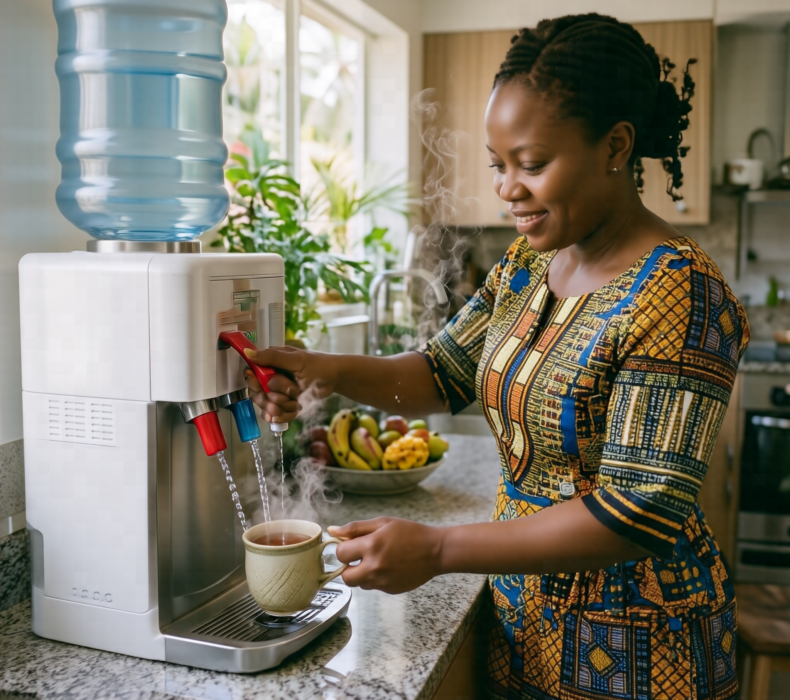
3. Supplies Hot Water
Many modern water dispensers provide hot water as well as cold water.
This function can make everyday tasks easier because hot water can be used for tea, coffee, cocoa, instant noodles, and other quick preparations.
Therefore, a household can reduce the need to boil small amounts of water repeatedly using a kettle or stove.
4. Offers Room-Temperature Water
Not everyone prefers hot or chilled water. Fortunately, some dispensers also provide room-temperature water.
This option is useful for people who prefer water without additional heating or cooling. Additionally, it can reduce unnecessary use of the heating or cooling function.
5. Supports Water Filtration
Some water dispensers include built-in filtration systems.
Depending on the technology used, filters can help improve the taste, smell, and quality of water by reducing certain unwanted substances.
However, filtration performance differs between products. Therefore, homeowners should check exactly what a filter is designed to remove rather than assuming every dispenser provides complete water purification.
6. Reduces the Need to Lift Heavy Water Bottles
Large water bottles can be difficult to lift, particularly when they are full.
Bottom-loading dispensers solve this problem by placing the water bottle inside a lower compartment. As a result, users can replace bottles without lifting them onto the top of the appliance.
This can be particularly convenient for households where different family members handle water replacement.
7. Makes Water Storage More Convenient
A water dispenser can act as a convenient point for storing and dispensing drinking water.
Instead of keeping multiple opened bottles around the kitchen, a suitable dispenser can provide a dedicated location for drinking water.
Furthermore, some models have larger reservoirs that can serve several people before the water container needs replacement.
8. Helps Reduce Refrigerator Use for Drinking Water
Families that regularly chill drinking water may use considerable refrigerator space.
A water dispenser with a cooling function provides another option. Therefore, the refrigerator can have more room for food, fruits, beverages, and other items.
This can be especially useful in households with limited refrigerator space.
9. Provides Quick Water for Beverages
The hot-water function can save time when preparing everyday drinks.
For example, you can quickly prepare tea or coffee without waiting for a kettle or stove to heat water. Similarly, hot water can be useful when preparing some instant foods.
Consequently, the dispenser can become a practical part of a morning or evening routine.
10. Supports Office and Home Productivity
A water dispenser is not only useful in the kitchen. It can also be placed in a home office, dining area, reception space, or living room.
Having drinking water nearby can make it easier to stay hydrated while working or studying.
Additionally, a dispenser can reduce interruptions because users do not need to repeatedly walk to the kitchen for water.
Why Water Dispensers Are Useful in Nigerian Homes
The Nigerian climate, household routines, and electricity considerations make the choice of water dispenser particularly important.
During hot periods, cold water can provide quick refreshment. Meanwhile, hot-water functions can make beverages easier to prepare.
Furthermore, households that use generators, inverters, or solar power systems may want to consider the appliance’s electricity requirements before purchasing.
A lower-power model may be more suitable for a home that relies heavily on backup electricity. Therefore, always check the manufacturer’s power rating before connecting a dispenser to an alternative power source.
Types of Water Dispensers for Nigerian Homes
Different dispenser designs serve different household requirements.
Top-Loading Dispensers
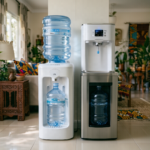
These models have the water bottle positioned above the dispenser. They are generally straightforward to operate and are available in various price ranges.
However, replacing a full bottle requires lifting it onto the appliance.
Bottom-Loading Dispensers
Bottom-loading models keep the water bottle inside the lower section of the appliance.
As a result, bottle replacement is easier and the overall appearance can be more streamlined.
Hot and Cold Dispensers
These models provide both chilled and hot water.
They are particularly useful for families that want one appliance to handle different water needs throughout the day.
Bottleless Dispensers
Bottleless models connect directly to a suitable water supply.
They can eliminate the need to repeatedly purchase and replace large water bottles. However, installation and filtration requirements should be considered.
Filtered Water Dispensers
These models incorporate filtration technology into the dispensing system.
They can be useful for households that want additional filtration before drinking water. Nevertheless, filter replacement and maintenance should be included in the ownership budget.
Conclusion
The functions of a water dispenser in a Nigerian home extend far beyond simply providing drinking water. Depending on the model, a dispenser can provide chilled, hot, or room-temperature water, support filtration, reduce refrigerator usage, simplify beverage preparation, and make water access more convenient.
However, the best dispenser depends on your household’s specific needs. Consider your family size, water consumption, available space, electricity supply, maintenance requirements, and desired features before making a purchase.



 Get it on
  Download on the