






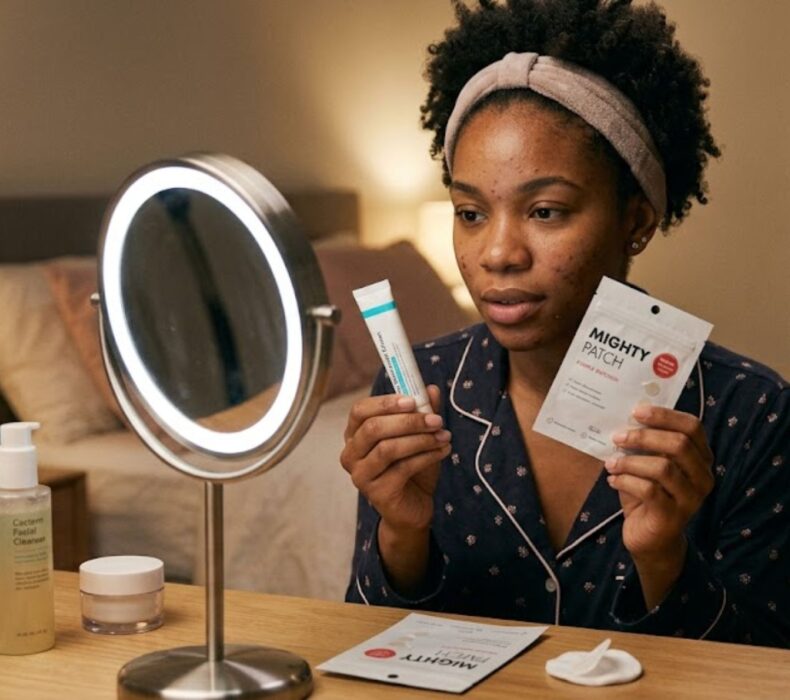
Acne breakouts can appear at the worst possible time. Whether it is a single painful pimple before an important event or recurring spots caused by oily and acne-prone skin, finding the right treatment can make a big difference. Two popular options are pimple patches and spot treatments.
But which one should you choose?
The answer depends on the type of pimple you have, the ingredients in the product, your skin type, and what you want the treatment to achieve. While pimple patches provide a physical covering over individual blemishes, spot treatments deliver active ingredients directly to the affected area.
In this guide, we compare pimple patch vs spot treatment, explain how each works, discuss their benefits and limitations, and help you decide which acne treatment may be better for your skincare routine.
What Is a Pimple Patch?
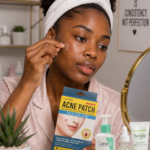
A pimple patch is a small adhesive patch designed to be placed directly over an individual pimple. Many traditional patches are made with hydrocolloid, a material commonly used in wound dressings because it can absorb fluid from a moist lesion.
Pimple patches are particularly popular because they are easy to use and can help prevent you from touching, squeezing, or picking a blemish.
Some modern pimple patches contain additional skincare ingredients, such as salicylic acid, tea tree oil, or other acne-focused ingredients. These are sometimes called medicated pimple patches.
How Does a Pimple Patch Work?
A basic hydrocolloid patch works primarily as a protective barrier.
Once applied to a suitable blemish, the patch can:
- Cover and protect the pimple.
- Absorb fluid from a superficial, open or whitehead-type blemish.
- Reduce the temptation to squeeze or pick the spot.
- Help protect the area from dirt and repeated touching.
- Create a covered environment that can support the skin’s natural healing process.
Pimple patches are generally most useful for surface-level pimples, particularly whiteheads or blemishes that have come to a head.
They may be less useful for deep, painful pimples that have not reached the surface.
What Is a Spot Treatment?
A spot treatment is an acne product designed to be applied directly to individual blemishes rather than over the entire face.
Spot treatments commonly contain active ingredients that target processes involved in acne. Depending on the formulation, these may include salicylic acid, benzoyl peroxide, sulfur, azelaic acid, or other acne-focused ingredients.
The goal is to deliver the active ingredient directly to the affected area.
How Does Spot Treatment Work?
Different active ingredients work in different ways.
Salicylic acid is a beta hydroxy acid that helps exfoliate inside pores and can be useful for clogged pores and certain types of acne.
Benzoyl peroxide has antibacterial activity against Cutibacterium acnes and can be useful for inflammatory acne.
Sulfur can help reduce excess oil and has keratolytic and antimicrobial properties.
Because these ingredients work differently, choosing a spot treatment should depend on the type of acne you experience and how your skin tolerates particular ingredients.
Pimple Patch vs Spot Treatment: The Main Difference
The biggest difference between the two is how they approach a pimple.
A pimple patch primarily provides a physical covering and, depending on the product, may absorb fluid and protect the blemish from picking.
A spot treatment primarily uses active skincare ingredients to target acne-related processes.
| Feature | Pimple Patch | Spot Treatment |
|---|---|---|
| Main purpose | Protect and cover a blemish | Deliver acne-fighting ingredients |
| Application | Applied directly over the pimple | Applied directly to the affected area |
| Best suited to | Surface-level pimples | Various types of acne depending on ingredients |
| Helps prevent picking | Yes | No |
| Can contain active ingredients | Some products do | Usually |
| Convenient during the day | Often | Usually |
| Suitable for deep pimples | Limited effectiveness | May be more appropriate depending on ingredients |
| Works as a physical barrier | Yes | No |
Pimple Patch vs Spot Treatment for Whiteheads
If you have a small whitehead that has come to the surface, a hydrocolloid pimple patch can be a convenient option.
The patch can cover the blemish and discourage touching it. It may also absorb fluid from the spot.
For someone who frequently squeezes whiteheads, using a pimple patch can be particularly helpful because it creates a physical barrier between your fingers and the blemish.
A spot treatment containing an appropriate acne-fighting ingredient may also be useful, especially when the goal is to address clogged pores or inflammation.
Pimple Patch vs Spot Treatment for Cystic Acne
Deep, painful, under-the-skin pimples are different from superficial whiteheads.
A standard hydrocolloid pimple patch may not do much for a deep cyst because there may be little or no surface fluid for the patch to absorb.
A suitable acne treatment may be more appropriate, although severe, painful, persistent, or recurring acne may require professional medical advice.
It is also important not to squeeze deep pimples because doing so can increase inflammation and potentially contribute to scarring.
Which Is Better for Acne-Prone Skin?
Neither option is automatically better for everyone.
If your main problem is surface-level pimples and picking, pimple patches may be especially useful.
If you regularly experience clogged pores, inflammatory breakouts, or recurring acne, an appropriate spot treatment may provide a more targeted approach.
Some people may also use both products as part of their skincare routine, but they should not necessarily be layered on top of each other.
For example, you might use a suitable acne treatment as directed and use a pimple patch at another point in your routine when appropriate.
Benefits of Using Pimple Patches
Pimple patches have several advantages.
1. They Help Protect Pimples
A patch covers the blemish, reducing exposure to repeated touching and friction.
2. They Can Discourage Picking
Picking at acne can irritate the skin and may increase the risk of discoloration and scarring. A patch provides a simple physical reminder to leave the blemish alone.
3. They Are Easy to Use
Most patches require little preparation. Cleanse and dry the skin, then apply the patch according to the manufacturer’s instructions.
4. They Can Be Convenient
Many patches are small and discreet, making them practical for people who want targeted acne care.
5. Some Contain Acne-Focused Ingredients
Medicated patches may contain ingredients such as salicylic acid. However, always check the label because formulations vary considerably between products.
Benefits of Spot Treatments
Spot treatments also offer several advantages.
1. Targeted Application
You can apply the product directly to individual blemishes instead of applying an acne-active product across your entire face.
2. Different Active Ingredients Address Different Needs
Depending on the formulation, a spot treatment can target clogged pores, inflammation, excess oil, or acne-associated bacteria.
3. Useful for More Than One Type of Breakout
Unlike basic hydrocolloid patches, some spot treatments may be appropriate for different types of acne, depending on their active ingredients.
4. Easy to Add to a Skincare Routine
A spot treatment can be incorporated into a simple routine alongside cleanser, moisturizer, and sunscreen.
Can You Use a Pimple Patch and Spot Treatment Together?
Sometimes, but using them correctly is important.
Applying a spot treatment underneath a hydrocolloid patch may interfere with how well the patch adheres to the skin. Some active ingredients may also increase irritation when trapped under an occlusive patch.
A safer approach is to follow the instructions for the specific products you are using.
For example, you could use a spot treatment as directed and use a pimple patch separately when appropriate. If a product specifically says it can be used underneath a patch, follow its instructions.
Avoid combining multiple strong acne treatments on the same area simply because you want faster results. More active ingredients do not necessarily mean faster healing and may increase dryness or irritation.
How to Choose Between a Pimple Patch and Spot Treatment
When deciding between a pimple patch vs spot treatment, consider these factors.
Choose a Pimple Patch If:
- You have a superficial whitehead.
- You tend to pick or squeeze pimples.
- You want to protect a blemish from touching.
- You prefer a simple, targeted product.
- You want a physical barrier over a spot.
Consider a Spot Treatment If:
- You have recurring acne.
- You experience clogged pores.
- Your blemishes are inflamed.
- You want an active acne-fighting ingredient.
- You need treatment targeted to a particular type of breakout.
The right choice ultimately depends on your acne and the formulation of the product.
How to Use a Pimple Patch Correctly
For the best experience with a pimple patch, start with clean, dry skin.
- Gently cleanse your face.
- Pat your skin completely dry.
- Avoid applying moisturizer, facial oil, or serum directly underneath the patch unless the product instructions say otherwise.
- Place the patch directly over the blemish.
- Leave it on for the recommended period.
- Remove it gently and replace it if necessary.
Do not use a patch as a substitute for a complete skincare routine.
Your broader routine should still focus on gentle cleansing, appropriate moisturization, sun protection, and acne management.
How to Use a Spot Treatment Correctly
Start by cleansing your skin with a gentle cleanser.
After cleansing, apply a small amount of the spot treatment to the affected area according to the product’s directions.
Avoid applying excessive amounts. Using more product does not necessarily make acne disappear faster and can cause unnecessary dryness or irritation.
If the product contains a strong active ingredient, consider introducing it gradually, particularly if you have sensitive skin.
During the daytime, sunscreen is especially important because acne treatments can sometimes make the skin more sensitive or irritated.
Common Mistakes to Avoid
Using Too Many Acne Products
Combining several exfoliating acids, acne treatments, scrubs, and other strong products can irritate your skin.
Picking or Squeezing Pimples
Even when a pimple looks ready to pop, squeezing can worsen inflammation and increase the risk of marks or scars.
Applying Too Much Spot Treatment
More product does not always mean better results. Follow the manufacturer’s instructions.
Ignoring Moisturizer
People with acne-prone skin sometimes avoid moisturizer because they are worried about oiliness. However, maintaining the skin barrier is an important part of a balanced skincare routine. Choose a moisturizer that suits your skin type and is labeled non-comedogenic when appropriate.
Forgetting Sunscreen
Acne-related inflammation and some acne treatments can make post-inflammatory dark marks more noticeable. Daily broad-spectrum sunscreen can help protect the skin from UV exposure.
Pimple Patch vs Spot Treatment: Which One Should You Choose?
So, pimple patch or spot treatment—which is better?
There is no single answer for everyone.
A pimple patch is often the more convenient choice for a surface-level pimple when your priority is protecting the blemish, reducing touching, and absorbing fluid from a suitable spot.
A spot treatment may be the better option when you want to target acne with a specific active ingredient, particularly for recurring or inflammatory breakouts.
For many acne-prone skincare routines, the two products can serve different purposes rather than competing directly.
Think of a pimple patch as a protective targeted covering, while a spot treatment is primarily an active treatment applied directly to acne.
Final Verdict
The debate between pimple patch vs spot treatment does not have to end with choosing only one.
If you frequently develop whiteheads or find yourself picking at pimples, a hydrocolloid pimple patch can be a useful addition to your skincare routine. If you experience recurring acne, clogged pores, or inflammatory breakouts, a properly selected spot treatment may be more appropriate.
The most important factor is understanding your acne and choosing products that your skin can tolerate.
For persistent, severe, painful, widespread, or scarring acne, consider speaking with a dermatologist or other qualified healthcare professional rather than relying solely on over-the-counter spot products.
Ultimately, good acne care is not just about treating individual pimples. A consistent skincare routine, gentle cleansing, suitable moisturization, sun protection, and avoiding unnecessary picking can all contribute to healthier-looking skin.



 Get it on
  Download on the