






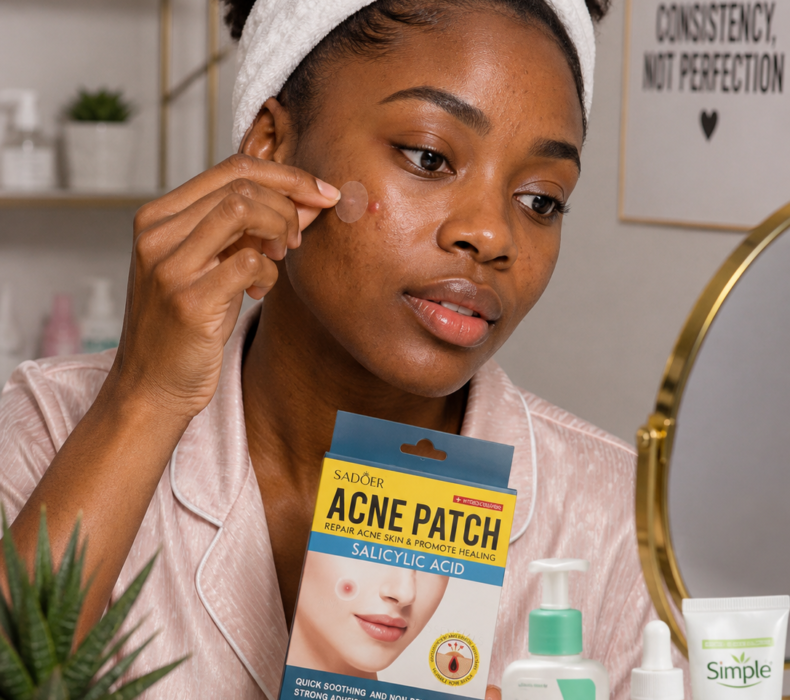
If you frequently wake up with an unexpected pimple before an important event, you are not alone. Acne breakouts can appear at the most inconvenient times, which explains why pimple patches have become increasingly popular among skincare lovers.
These small adhesive patches are designed to cover individual pimples while helping protect them from touching, picking and environmental irritation. Some are made with hydrocolloid, while others contain acne-fighting ingredients such as salicylic acid.
But with so many options available, how do you know which is the best pimple patch in Nigeria?
This guide explains how pimple patches work, the different types available, what ingredients to look for, which pimples they work best on and how to use them correctly. We will also highlight popular acne-patch options worth considering when shopping in Nigeria.
What Is a Pimple Patch?
A pimple patch is a small adhesive skincare patch designed to be placed directly over an individual acne spot. Most traditional pimple patches are made with hydrocolloid, a material also used in wound dressings.
When applied to a suitable pimple, hydrocolloid can absorb fluid from the blemish while creating a protective barrier over the area. This can help prevent you from touching or squeezing the spot.
The American Academy of Dermatology notes that a hydrocolloid acne patch can be used to protect a pimple and support healing, particularly when the blemish has reached the skin’s surface.
Pimple patches are therefore best viewed as a spot-treatment and protection tool, rather than a complete acne treatment.
How Do Pimple Patches Work?
The effectiveness of an acne patch depends largely on its ingredients and the type of pimple being treated.
1. Hydrocolloid absorbs fluid
Hydrocolloid patches work particularly well on pimples that have come to the surface and contain fluid or pus. The material absorbs moisture from the blemish and forms a gel-like substance.
This is why some patches appear white or swollen after several hours of use.
2. They create a protective barrier
One of the biggest advantages of pimple patches is that they cover the affected area.
Instead of repeatedly touching, scratching or squeezing a pimple, you have a physical barrier between your fingers and the blemish.
This matters because picking and squeezing acne can increase inflammation and the risk of post-inflammatory hyperpigmentation and scarring. This can be particularly noticeable on darker skin tones.
3. Some contain acne-fighting ingredients
Not every pimple patch is simply hydrocolloid. Some formulations contain ingredients such as:
- Salicylic acid
- Tea tree oil
- Niacinamide
- Centella asiatica
- Microneedles or dissolving microstructures
- Other soothing ingredients
These ingredients can give certain patches additional benefits, although stronger ingredients may not be suitable for every skin type.
Best Pimple Patch in Nigeria: What Should You Look For?
When choosing the best pimple patch in Nigeria, do not focus only on the packaging or popularity of the brand.
Consider the following factors.
Hydrocolloid material
For a simple, beginner-friendly option, look for a patch containing hydrocolloid.
Hydrocolloid patches are particularly useful for surface-level pimples because they can absorb fluid and protect the area while it heals.
Strong adhesive
A good pimple patch should stay attached to the skin for several hours.
If it easily falls off while you sleep, sweat or move around, it may not provide enough protection.
Different patch sizes
A package containing different sizes can be useful because pimples are not all the same size.
Small patches are convenient for individual spots, while larger patches can cover bigger blemishes.
Thin and transparent design
If you want to wear a patch during the day, choose a thin or transparent option that blends into the skin.
For overnight use, appearance may matter less than absorption and adhesion.
Skin-friendly ingredients
If you have sensitive skin, avoid choosing an acne patch simply because it contains many active ingredients.
Sometimes a basic hydrocolloid patch is preferable to a heavily formulated product.
Top Pimple Patch Options to Consider in Nigeria
The availability and prices of skincare products can vary between Nigerian retailers, so always check the product packaging and seller before purchasing.
1. COSRX Acne Pimple Master Patch
COSRX Acne Pimple Master Patch is one of the most recognizable hydrocolloid acne patches and is particularly popular among people who follow Korean skincare routines.
The patches come in different sizes, allowing you to select one that fits the blemish.
Best for: Surface-level pimples and overnight use.
Why consider it: It is simple, convenient and suitable for people who want a straightforward hydrocolloid patch without an unnecessarily complicated routine.
2. Hero Cosmetics Mighty Patch Original
Mighty Patch Original is another well-known hydrocolloid acne patch.
Its primary purpose is to cover the blemish, absorb fluid and discourage picking. Its relatively discreet design also makes it suitable for people who want to wear a patch during the day.
Best for: Whiteheads and surface pimples.
Why consider it: The straightforward hydrocolloid design makes it easy to incorporate into an acne-care routine.
3. Starface Hydro-Stars
Starface Hydro-Stars are recognizable because of their distinctive star-shaped design.
Beyond appearance, they use hydrocolloid technology to cover and protect individual blemishes.
Best for: People who want a fun, visible pimple patch.
Why consider it: The design makes acne treatment feel less clinical and can serve as a reminder not to touch or squeeze the blemish.
4. Salicylic Acid Pimple Patches
Salicylic acid pimple patches are another option for acne-prone skin.
Salicylic acid is a beta hydroxy acid commonly used in acne skincare because it helps exfoliate inside pores. The American Academy of Dermatology lists salicylic acid among topical acne-treatment ingredients.
Best for: Certain inflamed or clogged surface blemishes.
Why consider it: You get the physical protection of a patch together with an acne-focused ingredient.
However, salicylic acid can be drying or irritating for some people, so introduce these products carefully.
5. Microneedle or Microdart Pimple Patches
Microdart patches are designed differently from conventional hydrocolloid patches. They contain tiny structures intended to deliver ingredients closer to the surface of the skin.
They are marketed for blemishes that may not have the same fluid-filled appearance as a typical whitehead.
Best for: People looking for more advanced spot-treatment technology.
Why consider it: They may contain targeted ingredients such as salicylic acid or other acne-focused compounds.
However, they can be more expensive than conventional hydrocolloid patches.
Which Pimple Patches Actually Work?
The answer depends on the type of pimple you have.
Pimple patches are generally most useful for surface-level pimples, particularly those containing fluid.
They are much less effective for deep, painful acne.
The American Academy of Dermatology explains that deep nodules and cysts develop deeper beneath the skin and generally require more appropriate acne treatment than a simple patch.
A pimple patch can therefore be useful for:
- Whiteheads
- Surface-level pimples
- Pimples that have opened
- Spots you are tempted to pick
- Individual inflamed blemishes
They are less suitable as the primary treatment for:
- Deep cystic acne
- Large painful nodules
- Widespread acne
- Blackheads
- Persistent acne
Pimple Patch vs Acne Cream: Which Is Better?
Pimple patches and acne creams serve different purposes.
A pimple patch provides localized protection. It can cover one blemish, absorb fluid and prevent picking.
An acne treatment such as benzoyl peroxide, salicylic acid, adapalene or azelaic acid can address different aspects of acne depending on the formulation and the individual’s skin.
The American Academy of Dermatology recommends acne treatments containing ingredients such as benzoyl peroxide, retinoids, azelaic acid and salicylic acid for appropriate forms of acne.
For someone with occasional pimples, a pimple patch may be a useful addition to a skincare routine. Someone with persistent or moderate-to-severe acne may need a more comprehensive treatment plan.
How to Use a Pimple Patch Correctly
Using an acne patch correctly is important if you want the best results.
Step 1: Clean your face
Start with a gentle facial cleanser.
Remove makeup, sunscreen, oil and dirt from the area.
Step 2: Dry the skin
Make sure the area is completely dry before applying the patch.
Moisturizer, facial oil and wet skin can interfere with adhesion.
Step 3: Apply the patch
Choose a patch that completely covers the pimple.
Press it gently onto the skin for several seconds to improve adhesion.
Step 4: Leave it on
Follow the instructions provided by the manufacturer.
Many hydrocolloid patches are designed for several hours or overnight use.
Step 5: Remove gently
Wash your hands before removing the patch.
Peel it away carefully rather than aggressively pulling at the skin.
Step 6: Continue your normal skincare routine
After removing the patch, gently cleanse the area and continue with appropriate skincare.
Do not immediately squeeze the pimple simply because the patch has been removed.
Can You Use Pimple Patches Overnight?
Yes. Many hydrocolloid pimple patches are specifically designed for overnight use.
Applying one before bed can be convenient because it gives the patch several hours of contact with the blemish.
Overnight use can also help stop unconscious touching or picking.
However, always follow the specific instructions on the product packaging rather than assuming every patch should remain on the skin for the same amount of time.
Can Pimple Patches Remove Acne Scars?
No.
A pimple patch is primarily designed to manage an individual active blemish. It does not directly remove established acne scars.
This distinction is important because many people confuse active acne, post-inflammatory hyperpigmentation and acne scars.
A dark mark left after a pimple may gradually fade, while a true depressed or raised acne scar is a different type of skin change.
Preventing unnecessary picking is one reason pimple patches can be helpful. Picking acne can increase the likelihood of discoloration and scarring.
Are Pimple Patches Good for Dark Skin?
Yes, people with dark skin can use pimple patches.
In fact, preventing picking can be especially valuable because inflammation and trauma from squeezing acne can contribute to post-inflammatory hyperpigmentation.
Look for gentle patches that fit your skin comfortably and avoid products that cause excessive irritation.
If you notice burning, severe redness, swelling or persistent irritation, discontinue use.
Pimple Patches in Nigeria: What Should You Pay Attention To?
Nigeria’s warm and humid climate can make skincare challenging, especially for people with oily or acne-prone skin.
When buying a pimple patch, consider:
Storage: Keep the product according to the manufacturer’s instructions and protect it from excessive heat and moisture.
Authenticity: Purchase from reputable skincare stores, pharmacies or trusted retailers. Counterfeit skincare products can have questionable ingredients or manufacturing standards.
Skin type: If your skin is sensitive, a basic hydrocolloid patch may be a better starting point than a patch containing several active ingredients.
Price: More expensive does not automatically mean more effective. The right patch depends on the type of blemish and the formulation.
Packaging: Check the seal, expiry date, manufacturer information and product instructions before using it.
Common Mistakes to Avoid When Using Pimple Patches
Applying a patch over dirty skin
Oil, makeup and skincare products can interfere with adhesion.
Always apply the patch to clean, dry skin.
Using a patch on every type of acne
Pimple patches are not a universal acne cure.
They are most useful for surface blemishes and are not a substitute for proper treatment of severe acne.
Picking the pimple before applying the patch
Do not squeeze a pimple simply to make it suitable for a patch.
Picking can worsen inflammation and increase the risk of discoloration and scarring.
Applying moisturizer underneath
Moisturizers, oils and serums can prevent the adhesive from sticking properly.
Apply the patch directly to clean, dry skin unless the product specifically instructs otherwise.
Expecting overnight perfection
A pimple patch may make a blemish look smaller or less irritated, but it is not a guaranteed overnight cure.
Consistent acne management is more important if breakouts are frequent.
Frequently Asked Questions About Pimple Patches
What is the best pimple patch in Nigeria?
The best pimple patch in Nigeria depends on your skin and the type of acne you are treating. Hydrocolloid options such as COSRX Acne Pimple Master Patch and Hero Cosmetics Mighty Patch Original are popular choices for surface-level pimples.
Do pimple patches really work?
Yes, pimple patches can be useful for certain surface-level pimples. Hydrocolloid patches can absorb fluid and protect the blemish from touching and picking. They are not designed to cure every form of acne.
How long should I leave a pimple patch on?
Follow the instructions on the product packaging. Many are designed to remain on the skin for several hours or overnight.
Can I use a pimple patch every day?
A pimple patch can generally be used repeatedly on individual blemishes when used according to the manufacturer’s instructions. However, stop if the skin becomes irritated.
Do pimple patches work on cystic acne?
They generally do not work well as a standalone treatment for deep cystic or nodular acne. Deep, painful pimples may require professional acne treatment.
Should I pop a pimple before using a patch?
No. Avoid deliberately squeezing or popping pimples before applying a patch. Picking can increase inflammation, discoloration and scarring.
Final Verdict: Are Pimple Patches Worth Buying in Nigeria?
Pimple patches can be a useful addition to an acne-prone skincare routine, particularly when you have an occasional surface-level pimple that you are tempted to touch.
The best pimple patch in Nigeria is not necessarily the most expensive or most popular option. Instead, look for a product that matches your particular needs.
For beginners, a simple hydrocolloid acne patch is a practical place to start. If you want additional acne-focused ingredients, you can consider patches containing salicylic acid or other active ingredients, provided your skin tolerates them.
Most importantly, remember that pimple patches are spot-management products, not complete acne treatments. If you regularly experience deep, painful, widespread or scarring acne, speak with a dermatologist rather than relying solely on patches.
For Nigerian skincare shoppers, buying from a trusted retailer and checking product authenticity, ingredients and expiry dates can also help you make a safer choice.
When used correctly, a good pimple patch can be a simple, convenient way to protect an annoying breakout while supporting the skin’s natural healing process.






 Get it on
  Download on the