Pimple patches have become a popular addition to modern skincare routines because they offer a simple way to protect individual spots while supporting a cleaner-looking complexion. Whether you are dealing with an occasional breakout or frequently experience pimples, knowing how to use pimple patchescorrectly can make a significant difference in how effective and comfortable they are.
These small adhesive patches are designed to cover individual blemishes and create a protective barrier over the affected area. Many traditional patches use hydrocolloid, a material that can absorb fluid from certain surface-level pimples while protecting the spot from touching, squeezing and environmental irritants. Other acne patches contain ingredients such as salicylic acid or tea tree oil, depending on the formulation.
However, pimple patches are not a universal treatment for every type of acne. They generally work best on individual pimples that have come to a head or are close to the skin’s surface. Deep, painful acne beneath the skin may require a different approach.
This guide explains exactly how to use pimple patches, how to prepare your skin, how long to wear them and common mistakes to avoid.
What Are Pimple Patches?
Pimple patches are small adhesive skincare patches placed directly over individual pimples. Most basic versions are made with hydrocolloid, a material commonly used in wound-care dressings.
When placed over a suitable blemish, a hydrocolloid patch can absorb some of the fluid from the spot and form a protective covering. This can help keep the area shielded from picking, rubbing and accidental touching.
Some modern acne patches are also formulated with active skincare ingredients. Depending on the product, these may include salicylic acid, niacinamide, tea tree oil or other ingredients intended to support acne-prone skin.
It is important to read the product instructions because different pimple patches can have different ingredients, recommended wear times and intended uses.
How to Use Pimple Patches Correctly
Getting the best results starts with applying the patch properly. Follow these steps as part of your skincare routine.
1. Cleanse Your Face First
Start with a gentle facial cleanser to remove oil, sweat, makeup, sunscreen and other impurities from your skin.
Avoid aggressively scrubbing the pimple. Scrubbing can irritate an already inflamed area and may make the blemish look more noticeable.
After cleansing, rinse thoroughly and gently pat your face dry with a clean towel.
2. Make Sure the Skin Is Completely Dry
This step is easy to overlook but is particularly important.
Pimple patches generally adhere better to clean, dry skin. Avoid applying moisturizer, facial oil, serum or other skincare products directly underneath the patch.
If the skin is damp or oily, the adhesive may not stick properly and the patch could lift during use.
3. Choose the Right Size
Select a patch that completely covers the pimple with a small amount of surrounding skin.
A patch that is too small may not adequately cover the affected area, while an unnecessarily large patch may be more noticeable.
Many products come in different sizes, making it easier to choose one that matches the size of the blemish.
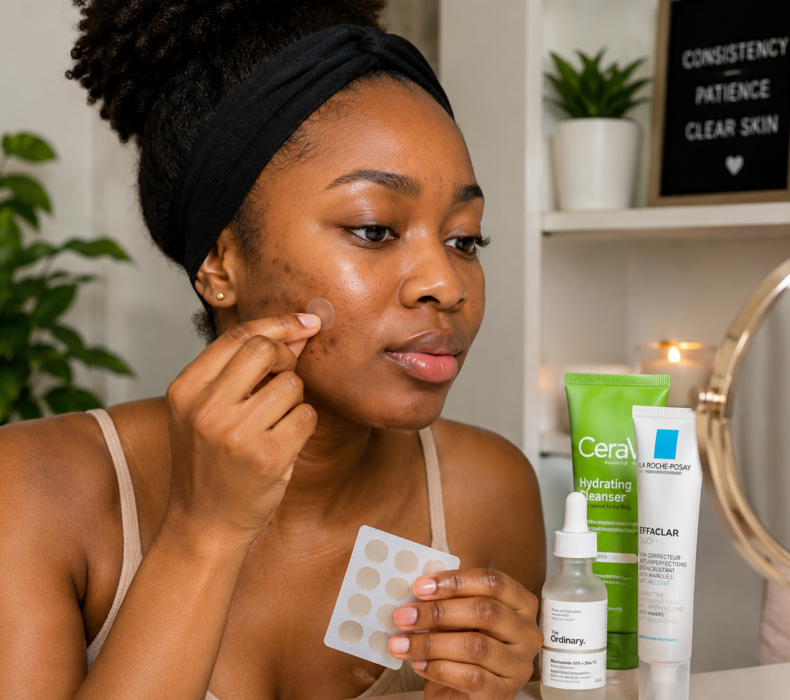
4. Apply the Pimple Patch
Carefully remove the patch from its packaging without touching the adhesive surface excessively.
Place it directly over the pimple and gently press it onto the surrounding skin.
Hold it in place for a few seconds to encourage good adhesion.
Once applied, try not to repeatedly touch or reposition it.
5. Leave It on According to the Instructions
How long you should wear a pimple patch depends on the specific product.
Many hydrocolloid patches can be worn for several hours or overnight. Some may become white or cloudy when they have absorbed fluid from a surface-level blemish.
Do not assume that leaving a patch on for significantly longer will automatically produce better results. Always follow the manufacturer’s recommended wear time.
6. Remove the Patch Gently
When it is time to remove the patch, slowly peel it away from the skin.
Avoid ripping it off quickly, especially if your skin is sensitive.
After removing it, gently cleanse the area if necessary and continue with the rest of your skincare routine.
If the pimple still needs protection, you may use a fresh patch according to the product instructions.
When Is the Best Time to Apply a Pimple Patch?
One of the easiest ways to incorporate pimple patches into your routine is to use them after cleansing and before applying products over the affected area.
For many people, nighttime is convenient because the patch can remain undisturbed while they sleep. Overnight use can also reduce the temptation to touch or squeeze a blemish.
However, some pimple patches are designed to be discreet enough for daytime use. If you choose a daytime patch, make sure it is compatible with your skincare and makeup routine.
Always follow the directions supplied with the particular product.
Which Pimples Do Pimple Patches Work Best On?
Pimple patches are generally most useful for individual surface-level pimples, particularly blemishes that contain visible fluid or have developed a whitehead.
They can also be useful when you want to protect a spot from touching or picking.
However, they may be less effective for deep, hard or painful pimples located beneath the skin. These types of blemishes often do not have fluid close enough to the surface for a traditional hydrocolloid patch to absorb.
Pimple patches should therefore be viewed as a targeted skincare tool rather than a complete acne treatment.
Can You Use Pimple Patches on Blackheads?
Traditional hydrocolloid pimple patches are not specifically designed to remove blackheads.
Blackheads are clogged pores containing oxidized oil and dead skin cells. Since they do not usually contain the type of surface fluid that hydrocolloid patches absorb, a standard patch may have limited benefits.
If blackheads are your primary concern, a skincare routine designed for clogged pores may be more appropriate. Ingredients such as salicylic acid can help exfoliate inside pores, although products should be introduced carefully to avoid unnecessary irritation.
Can You Put Skincare Products Under a Pimple Patch?
Generally, it is best to apply a standard hydrocolloid patch directly to clean, completely dry skin.
Putting moisturizer, facial oil or multiple serums underneath the patch can interfere with adhesion.
If you are using a medicated acne patch, check its instructions because some products are specifically formulated to deliver active ingredients to the blemish.
A simple rule is: cleanse, dry, patch, then continue the rest of your skincare routine around the patch.
Common Mistakes to Avoid When Using Pimple Patches
Applying the Patch to Dirty Skin
Putting a patch over makeup, sweat or excess oil can prevent proper adhesion and reduce its usefulness.
Applying It Over Moisturizer
Heavy creams and oils can make it difficult for the adhesive to stay attached.
Picking the Pimple Before Applying the Patch
Avoid squeezing or aggressively popping the blemish before applying a patch. Picking can damage the skin and increase the risk of irritation, discoloration and scarring.
If you have already opened the pimple, follow the patch manufacturer’s directions carefully because not every patch is intended for use on broken or irritated skin.
Leaving the Patch on Too Long
Longer wear does not necessarily mean better results. Follow the recommended wear time on the packaging.
Using One Patch Repeatedly
Pimple patches are generally intended for single use. Replace a used patch with a fresh one rather than attempting to reuse it.
Expecting a Patch to Treat All Acne
Pimple patches target individual blemishes. They do not necessarily address the underlying causes of widespread acne.
If you regularly experience numerous pimples, blackheads, cysts or painful breakouts, consider speaking with a dermatologist or qualified healthcare professional about appropriate acne treatment.
Pimple Patches vs. Popping Pimples
One of the biggest advantages of a pimple patch is that it can act as a physical reminder not to touch a blemish.
Popping or squeezing pimples may temporarily change their appearance, but it can also irritate the surrounding skin. Repeated picking may increase the risk of post-inflammatory marks and scarring.
Instead of repeatedly touching a breakout, cleansing the skin gently and covering a suitable surface-level pimple with a patch can provide a more hands-off approach.
For people who frequently pick at their skin, the physical barrier can be particularly useful.
How to Get Better-Looking Results From Pimple Patches
Using a patch correctly is only one part of maintaining clearer-looking skin. Combine targeted pimple patches with a consistent skincare routine.
Start with a gentle cleanser, followed by suitable treatments for your skin type. Use a moisturizer to support the skin barrier and apply sunscreen during the day.
Avoid introducing several new acne products at the same time. Using too many strong active ingredients can cause dryness and irritation, which may make your skin appear worse.
Consistency is generally more useful than constantly changing products.
It is also important to remember that acne can have multiple contributing factors, including hormones, genetics, skincare products and other individual factors. A pimple patch can help manage an individual spot, but it may not prevent future breakouts.
Are Pimple Patches Suitable for Sensitive Skin?
Many people can use pimple patches without problems, but sensitive skin may react to adhesives or active ingredients contained in some acne patches.
If your skin is sensitive, examine the ingredient list and product directions before use. If you notice significant redness, burning, swelling or persistent irritation, remove the patch and discontinue use.
You can also consider testing a product on a small area first, particularly when trying a new skincare product.
How Long Does It Take for Pimple Patches to Work?
The visible effect of a pimple patch varies depending on the type of blemish, the patch formulation and your individual skin.
Hydrocolloid patches can sometimes make a surface-level pimple look flatter, cleaner or less noticeable after several hours or overnight. However, this does not mean the underlying acne has been permanently treated.
For faster-looking results, focus on correct application rather than continuously replacing patches or using several products at once.
If acne persists, becomes painful or frequently leaves scars or dark marks, professional advice may be more appropriate than relying solely on pimple patches.
Final Thoughts on How to Use Pimple Patches
Learninghow to use pimple patches correctly can make them a useful addition to a simple acne-prone skincare routine. The basic process is straightforward: cleanse your skin, dry it completely, place the patch directly over a suitable blemish, leave it on for the recommended time and gently remove it when finished.
For the best-looking results, avoid squeezing pimples, applying oily products underneath the patch or expecting a single patch to solve persistent acne.
Pimple patches are most useful as a targeted tool for individual surface-level blemishes. When combined with gentle cleansing, appropriate moisturizing, sun protection and a consistent skincare routine, they can help you manage the appearance of occasional breakouts while protecting the affected area from unnecessary touching.
Remember that everyone’s skin is different. If you have persistent, severe or painful acne, consult a dermatologist or healthcare professional for personalized treatment advice.











 Get it on
  Download on the