Skincare can feel overwhelming, especially when you’re trying to combine multiple active ingredients into one routine. With products like hyaluronic acid serum, vitamin C, retinol, and niacinamide becoming skincare essentials, many people wonder about the correct order of application and whether these ingredients can be used together.
The good news is that these ingredients can complement one another when layered properly. Understanding how to layer hyaluronic acid serum with other active ingredients helps maximize their benefits while minimizing irritation. Whether your goal is brighter skin, fewer wrinkles, improved hydration, or reduced acne, the right layering technique can significantly improve your skincare results.
In this comprehensive guide, we’ll explain how each ingredient works, the correct application order, common mistakes to avoid, and the best routines for morning and evening skincare.
What Is Hyaluronic Acid Serum?
Hyaluronic acid is one of the most popular skincare ingredients because of its incredible ability to attract and retain moisture.
Despite its name, hyaluronic acid is not an exfoliating acid. Instead, it is a naturally occurring sugar molecule found in the skin that binds water and helps maintain hydration.
A quality hyaluronic acid serum can:
Deeply hydrate the skin
Reduce dryness
Improve skin elasticity
Smooth fine lines caused by dehydration
Support the skin barrier
Make skin appear plump and healthy
One gram of hyaluronic acid can hold up to 1,000 times its weight in water, making it one of the most effective moisturizing ingredients available.
Why Proper Layering Matters
Using skincare products in the correct order ensures each ingredient penetrates effectively.
Applying products incorrectly may:
Reduce product effectiveness
Cause irritation
Lead to pilling
Waste expensive skincare products
The general skincare rule is simple:
Apply products from the thinnest consistency to the thickest consistency.
Water-based serums should be applied before heavier creams and oils.
Understanding Each Active Ingredient
Hyaluronic Acid
Primary Benefit:
Hydration
Best Used:
Morning and night
Suitable For:
All skin types
Vitamin C
Vitamin C is a powerful antioxidant that protects the skin against environmental damage.
Benefits include:
Brightens dull skin
Reduces pigmentation
Evens skin tone
Stimulates collagen production
Protects against free radicals
Best used in the morning.
Retinol
Retinol is a vitamin A derivative widely recommended for anti-aging.
Benefits include:
Reduces wrinkles
Improves skin texture
Fades acne scars
Treats acne
Boosts collagen production
Best used at night.
Niacinamide
Niacinamide is a form of Vitamin B3 known for strengthening the skin barrier.
Benefits include:
Controls excess oil
Reduces enlarged pores
Improves redness
Brightens skin
Strengthens the skin barrier
Reduces inflammation
Suitable for both morning and evening routines.
How to Layer Hyaluronic Acid Serum with Vitamin C
One of the best skincare combinations is hyaluronic acid and vitamin C.
Vitamin C protects and brightens the skin, while hyaluronic acid locks in hydration.
Morning Routine
Cleanser
Vitamin C Serum
Hyaluronic Acid Serum
Moisturizer
Sunscreen (SPF 30 or higher)
Why This Order Works
Vitamin C should go first because it is the active treatment ingredient.
Hyaluronic acid follows to replenish moisture and reduce the dryness that vitamin C may occasionally cause.
Benefits of Combining Vitamin C and Hyaluronic Acid
When layered properly, you may notice:
Brighter complexion
Improved hydration
Reduced fine lines
More even skin tone
Healthier skin barrier
This combination is suitable for nearly all skin types.
How to Layer Hyaluronic Acid Serum with Niacinamide
Niacinamide and hyaluronic acid work exceptionally well together.
Neither ingredient conflicts with the other.
Correct Order
Cleanser
Niacinamide Serum
Hyaluronic Acid Serum
Moisturizer
Sunscreen (morning)
Why They Work Together
Niacinamide strengthens the skin barrier.
Hyaluronic acid fills the skin with moisture.
Together they:
Calm irritated skin
Reduce oiliness
Improve hydration
Minimize pores
Strengthen skin barrier
People with acne-prone skin often benefit greatly from this pairing.
How to Layer Hyaluronic Acid Serum with Retinol
Retinol can sometimes cause dryness and irritation.
This is where hyaluronic acid becomes especially valuable.
Evening Routine
Gentle cleanser
Retinol
Hyaluronic Acid Serum
Moisturizer
Some dermatologists recommend applying hyaluronic acid before retinol if your skin is particularly sensitive. This “buffering” method may reduce irritation, though it can also slightly reduce retinol penetration. If your skin tolerates retinol well, applying retinol first followed by hyaluronic acid is a common approach.
Benefits of Combining Retinol with Hyaluronic Acid
The combination can:
Reduce peeling
Improve hydration
Reduce irritation
Smooth wrinkles
Improve elasticity
Enhance overall skin comfort
Can You Use All Three Together?
Yes.
Many skincare enthusiasts successfully use Vitamin C, Niacinamide, Hyaluronic Acid, and Retinol in the same overall routine by separating morning and evening applications.
Morning
Cleanser
Vitamin C
Niacinamide
Hyaluronic Acid
Moisturizer
Sunscreen
Evening
Cleanser
Retinol
Hyaluronic Acid
Moisturizer
Some people also use niacinamide after retinol if tolerated, but keeping the routine simple is often better for beginners.
Best Routine for Beginners
If you’re new to skincare, avoid introducing every active ingredient at once.
Week 1
Cleanser
Hyaluronic Acid
Moisturizer
Week 2
Add Vitamin C in the morning.
Week 3
Add Niacinamide.
Week 4
Introduce Retinol only twice weekly.
Slow introduction helps your skin adjust without unnecessary irritation.
Common Layering Mistakes to Avoid
Applying on Dry Skin
Hyaluronic acid works best on slightly damp skin.
Always apply it after cleansing while your skin is still lightly moist.
Using Too Much Product
A few drops are enough.
Using excessive amounts won’t improve results.
Skipping Sunscreen
Vitamin C and especially retinol routines require daily sunscreen.
Without sunscreen, UV damage can undo your skincare progress.
Mixing Too Many New Products
Introduce one active ingredient at a time.
This makes it easier to identify any product causing irritation.
Applying Products Too Quickly
Allow each serum to absorb for approximately 30–60 seconds before applying the next product.
How Often Should You Use These Ingredients?
Hyaluronic Acid
Daily
Morning and evening.
Vitamin C
Daily
Preferably every morning.
Niacinamide
Daily
Morning and night.
Retinol
Start with:
Twice weekly
Gradually increase to:
Three to five nights weekly
Eventually:
Nightly if your skin tolerates it well.
Which Skin Types Benefit Most?
Dry Skin
Focus on:
Hyaluronic Acid
Niacinamide
Oily Skin
Best combination:
Niacinamide
Hyaluronic Acid
Mature Skin
Ideal routine:
Vitamin C
Retinol
Hyaluronic Acid
Acne-Prone Skin
Excellent ingredients:
Niacinamide
Retinol
Hyaluronic Acid
Sensitive Skin
Begin with:
Hyaluronic Acid
Niacinamide
Introduce retinol gradually.
Tips for Maximum Results
To get the best results when you layer hyaluronic acid serum, follow these practical tips:
Use a gentle cleanser that doesn’t strip your skin.
Apply hyaluronic acid to slightly damp skin to lock in moisture.
Allow each product to absorb before applying the next.
Use only a few drops of each serum—more isn’t always better.
Finish with a moisturizer to seal in hydration.
Wear a broad-spectrum sunscreen every morning, especially when using vitamin C or retinol.
Be patient. Visible improvements in skin texture and tone often take several weeks of consistent use.
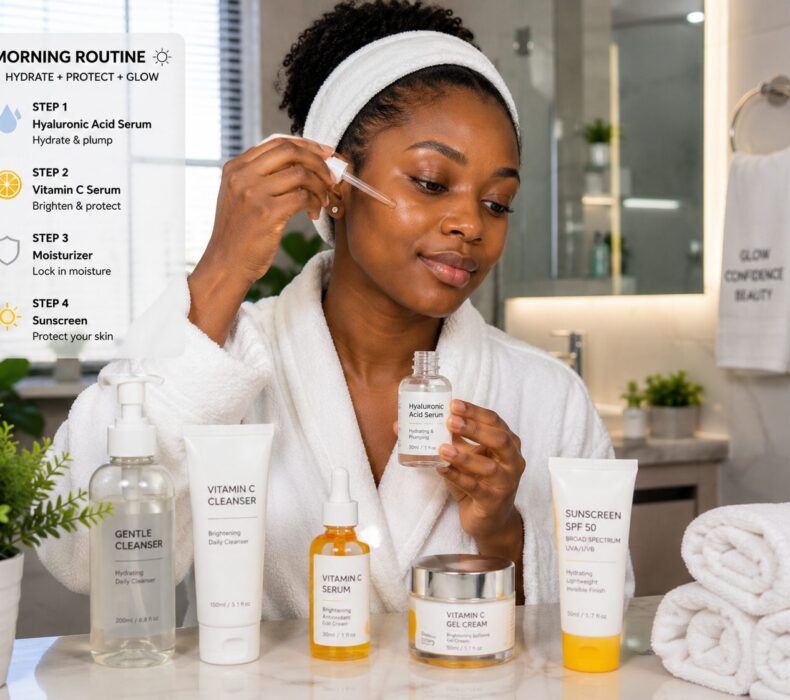
Recommended Morning Routine
Gentle Cleanser
Vitamin C Serum
Niacinamide Serum
Hyaluronic Acid Serum
Moisturizer
Sunscreen (SPF 30–50)
Recommended Evening Routine
Gentle Cleanser
Retinol
Hyaluronic Acid Serum
Moisturizer
If your skin is sensitive, you may use the “sandwich method” by applying moisturizer before and after retinol to reduce irritation.
Final Thoughts
Learning how to layer hyaluronic acid serum with vitamin C, retinol, and niacinamide is one of the best ways to build an effective skincare routine. Each ingredient offers unique benefits: vitamin C brightens and protects, niacinamide strengthens the skin barrier and balances oil, retinol targets signs of aging and acne, while hyaluronic acid delivers lasting hydration that supports healthy-looking skin.
The key to success is using the products in the correct order, introducing active ingredients gradually, and maintaining consistency. Pair your routine with a broad-spectrum sunscreen every morning and a nourishing moisturizer to support your skin barrier. Over time, you’ll be rewarded with smoother, healthier, more radiant skin.
Whether you’re just starting your skincare journey or refining an existing routine, mastering how to layer hyaluronic acid serum will help you get the most from every product you use and achieve long-term skincare results.















 Get it on
  Download on the