If you are building a skincare routine, you have probably heard about niacinamide and retinol. Both ingredients are among the most recommended by dermatologists because of their ability to improve skin texture, reduce acne, minimize fine lines, fade dark spots, and create a healthier complexion.
The simple answer is yes. In fact, niacinamide and retinol complement each other exceptionally well. When used correctly, niacinamide can reduce the irritation commonly associated with retinol while enhancing your overall skincare results.
This comprehensive guide explains everything you need to know about combining niacinamide with retinol, including the benefits, the correct application order, who should use them, common mistakes to avoid, and frequently asked questions.
What Is Niacinamide?
Niacinamide, also known as Vitamin B3, is a water-soluble vitamin that offers numerous skin benefits without causing significant irritation.
It is suitable for nearly every skin type, including:
Oily skin
Dry skin
Combination skin
Sensitive skin
Acne-prone skin
Mature skin
Benefits of Niacinamide
Regular use of niacinamide can help:
Reduce enlarged pores
Control excess oil production
Strengthen the skin barrier
Fade acne scars
Brighten dull skin
Reduce redness and inflammation
Improve uneven skin tone
Minimize hyperpigmentation
Increase skin hydration
Support healthy collagen production
Because it is gentle, niacinamide is often recommended for beginners who want healthier-looking skin without irritation.
What Is Retinol?
Retinol is a derivative of Vitamin A and is considered one of the most effective anti-aging skincare ingredients available.
It works by accelerating skin cell turnover, encouraging collagen production, and improving skin renewal.
Benefits of Retinol
Retinol is well known for helping with:
Fine lines
Wrinkles
Acne
Uneven skin texture
Dark spots
Sun damage
Large pores
Rough skin
Loss of firmness
Unlike niacinamide, retinol may initially cause side effects such as:
Dryness
Peeling
Redness
Skin irritation
Temporary purging
Fortunately, combining retinol with niacinamide can significantly reduce many of these issues.
Can You Mix Niacinamide with Retinol?
Yes.
Niacinamide and retinol are considered one of the best skincare ingredient combinations.
Instead of competing with one another, they work together to improve skin health.
Retinol speeds up skin renewal, while niacinamide strengthens the skin barrier and replenishes moisture.
This combination helps you enjoy the powerful anti-aging and acne-fighting effects of retinol with much less irritation.
Many modern skincare products even combine both ingredients in a single formula.
Why Niacinamide and Retinol Work So Well Together
1. Niacinamide Reduces Retinol Irritation
One of the biggest reasons people stop using retinol is irritation.
Niacinamide helps by:
Reducing redness
Calming inflammation
Repairing the skin barrier
Improving moisture retention
This makes retinol much easier to tolerate.
2. Better Anti-Aging Results
Retinol stimulates collagen production.
Niacinamide improves skin elasticity and supports the skin barrier.
Together they can:
Smooth wrinkles
Improve firmness
Brighten dull skin
Enhance skin texture
3. Improved Acne Control
Both ingredients help acne in different ways.
Retinol:
Prevents clogged pores
Speeds up skin renewal
Niacinamide:
Controls excess oil
Reduces inflammation
Calms active breakouts
Together they provide a more comprehensive acne treatment.
4. Brighter Complexion
Dark spots often remain after acne heals.
Retinol accelerates the shedding of pigmented skin cells.
Niacinamide reduces excess melanin transfer.
This combination helps fade:
Post-inflammatory hyperpigmentation
Sun spots
Melasma (with professional guidance)
Uneven skin tone
5. Stronger Skin Barrier
Healthy skin begins with a healthy skin barrier.
Niacinamide increases the production of ceramides, helping the skin retain moisture and resist environmental damage.
A stronger barrier also allows your skin to better tolerate retinol over time.
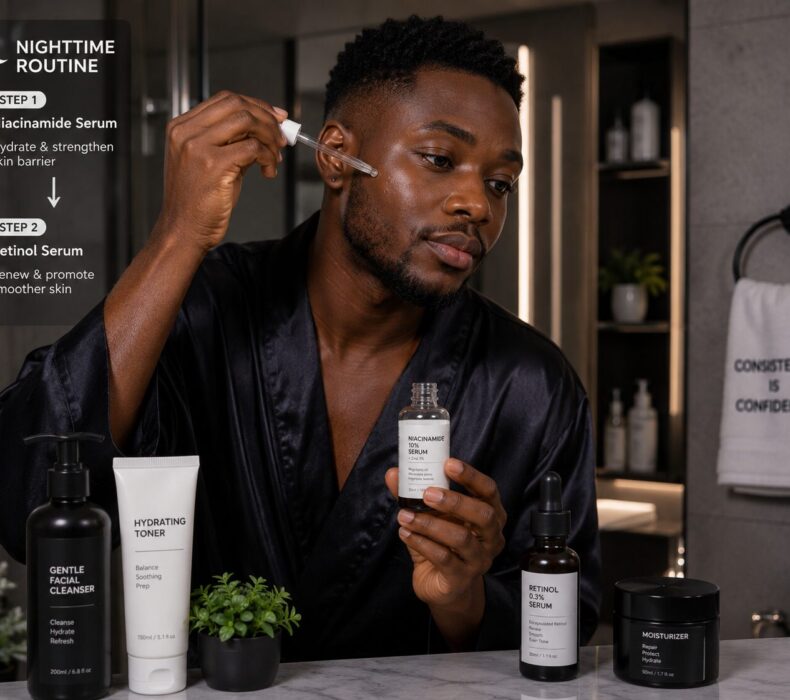
Which Should You Apply First?
Generally:
Cleanser
Toner (optional)
Niacinamide serum
Retinol serum or cream
Moisturizer
Niacinamide serums are usually lightweight and water-based, making them suitable to apply before retinol.
However, if your products have different textures, always apply from the thinnest to the thickest consistency.
Can You Use Them at the Same Time?
Yes.
Many skincare experts recommend applying niacinamide followed immediately by retinol during your nighttime skincare routine.
If your skin is sensitive, you may also use:
Niacinamide in the morning
Retinol only at night
Both approaches are effective.
Morning vs Night Routine
Morning
Gentle cleanser
Niacinamide serum
Moisturizer
Broad-spectrum sunscreen SPF 30 or higher
Niacinamide works well during the day because it strengthens the skin barrier and helps protect against environmental stress.
Evening
Cleanser
Niacinamide
Retinol
Moisturizer
Retinol is best used at night because sunlight can reduce its effectiveness and increase skin sensitivity.
How Often Should You Use Them?
If you’re new to retinol:
Week 1–2:
Retinol twice weekly
Niacinamide daily
Week 3–4:
Retinol three times weekly
Niacinamide daily
After one month:
Increase retinol gradually if your skin tolerates it.
Avoid rushing into daily retinol use, as overuse can damage the skin barrier.
Who Should Use Niacinamide and Retinol Together?
This combination is suitable for people with:
Acne-Prone Skin
Helps reduce pimples, clogged pores, and post-acne marks.
Oily Skin
Niacinamide controls oil production while retinol keeps pores clear.
Aging Skin
Excellent for reducing wrinkles, improving firmness, and increasing collagen production.
Hyperpigmentation
Can help fade:
Acne scars
Age spots
Sun damage
Uneven skin tone
Combination Skin
Balances oily areas while hydrating dry areas.
Who Should Be Careful?
Although most people tolerate this combination well, proceed carefully if you have:
Extremely sensitive skin
Active eczema
Rosacea flare-ups
Severe skin irritation
Consult a dermatologist if you have persistent skin conditions before introducing retinol into your routine.
Common Mistakes to Avoid
Using Too Much Retinol
A pea-sized amount is enough for your entire face.
Using more will not produce faster results.
Skipping Moisturizer
Retinol can dry out the skin.
Always apply a moisturizer afterward to lock in hydration.
Forgetting Sunscreen
Retinol increases sun sensitivity.
Daily sunscreen is essential to prevent sunburn and protect your results.
Starting Too Fast
Begin slowly and increase frequency over several weeks.
Mixing Too Many Active Ingredients
Avoid combining retinol with strong exfoliating acids (such as AHAs or BHAs) in the same routine unless your skin is already accustomed to them or advised by a dermatologist, as this can increase irritation.
How Long Before You See Results?
Results vary depending on your skin concerns.
Typical timeline:
2–4 weeks: Improved hydration and smoother texture
6–8 weeks: Reduced oiliness and fewer breakouts
8–12 weeks: Brighter complexion and fading dark spots
3–6 months: Reduced fine lines and improved skin firmness
Consistency is more important than using high concentrations too quickly.
Choosing the Right Products
When shopping for niacinamide and retinol products, look for:
Niacinamide
5–10% concentration for most skin types
Fragrance-free formulas if you have sensitive skin
Products with added hydrating ingredients like hyaluronic acid or ceramides
Retinol
0.1–0.3% for beginners
0.5% for intermediate users
1% only if your skin has built tolerance
Always purchase skincare products from reputable retailers to ensure authenticity and quality.
Frequently Asked Questions
Can beginners use niacinamide and retinol together?
Yes. Niacinamide is beginner-friendly and can make retinol easier to tolerate by reducing irritation.
Does niacinamide make retinol less effective?
No. Niacinamide does not reduce retinol’s effectiveness. Instead, it supports the skin barrier, helping you continue using retinol consistently.
Can I use vitamin C with niacinamide and retinol?
Yes, but many people prefer using vitamin C in the morning and retinol at night to reduce the chance of irritation and simplify their routine.
Can I use niacinamide every day?
Absolutely. Niacinamide is generally safe for daily use, even twice a day for most skin types.
Can I use retinol every night?
Once your skin has adjusted, many people can use retinol nightly. Beginners should start slowly and increase frequency gradually.
Final Thoughts
So, can you mix niacinamide with retinol?Absolutely. This combination is one of the most effective and dermatologist-recommended pairings in modern skincare. While retinol targets fine lines, acne, uneven texture, and pigmentation, niacinamide supports the skin barrier, calms irritation, controls excess oil, and boosts hydration.
When introduced gradually and paired with a good moisturizer and daily sunscreen, niacinamide and retinol can help you achieve smoother, brighter, and healthier-looking skin over time. Remember that skincare is a long-term commitment—consistent use, patience, and choosing products suited to your skin type will deliver the best results. Whether your goal is reducing breakouts, fading dark spots, or preventing signs of aging, incorporating niacinamide with retinol into your routine can be a smart step toward healthier, more radiant skin.















 Get it on
  Download on the