As electricity costs continue to rise and power outages remain a challenge, many homeowners are looking for ways to reduce energy consumption. One of the most effective solutions is investing in Energy-Efficient Home Appliances. These appliances consume less electricity while delivering excellent performance, making them ideal for homes that rely on generators, inverters, or solar power systems. As a result, homeowners can enjoy lower energy bills, longer backup power duration, and reduced strain on their power systems.
Why Energy Efficiency Matters
Every appliance connected to your power system contributes to the total electrical load.
When appliances consume excessive electricity:
Generator fuel usage increases.
Inverter batteries discharge faster.
Solar systems require larger capacity.
Electricity bills become higher.
Therefore, choosing efficient appliances can significantly improve energy management.
Benefits of Energy-Efficient Home Appliances
Lower Generator Fuel Costs
Generators consume more fuel when powering high-energy appliances.
However, Energy-Efficient Home Appliances reduce overall power demand.
Consequently:
Fuel lasts longer.
Operating expenses decrease.
Generator runtime is reduced.
Longer Inverter Backup Time
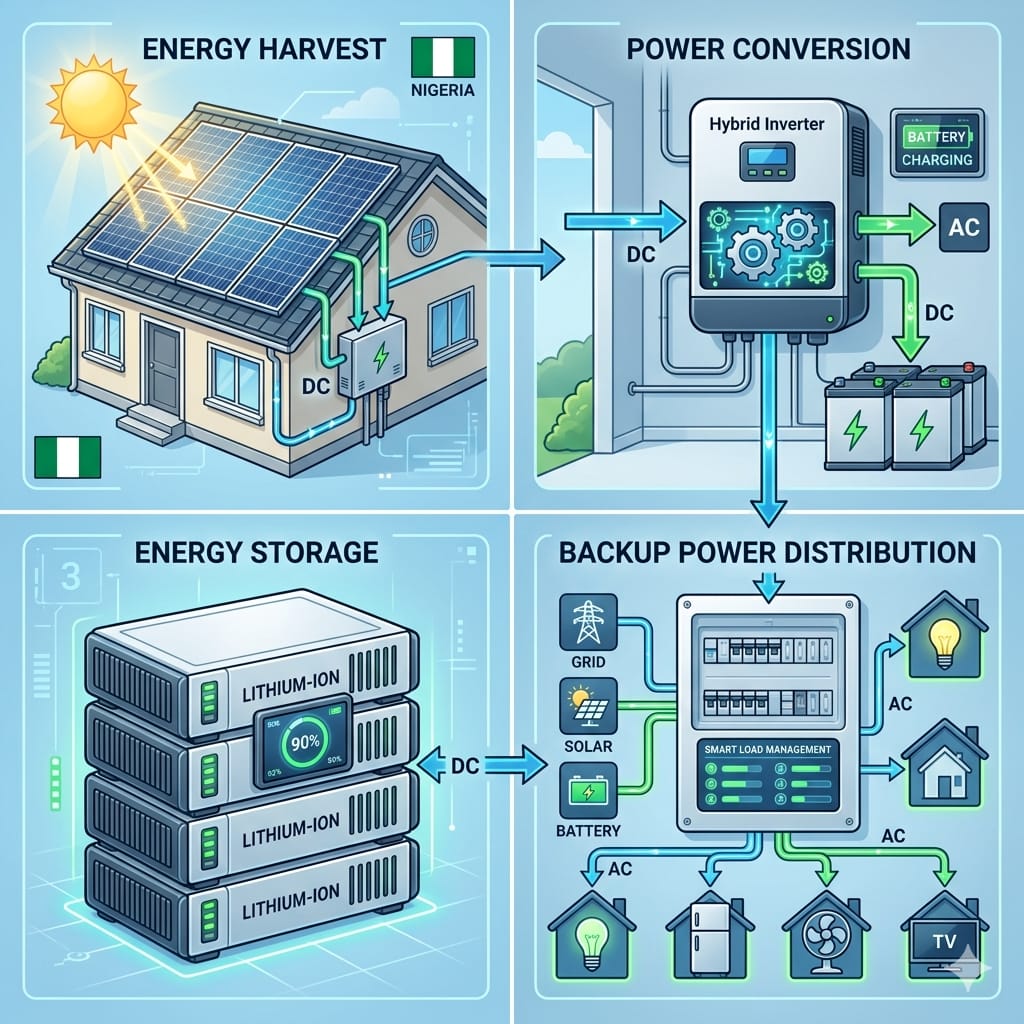
Inverter systems rely on stored battery energy.
When appliances use less electricity:
Batteries last longer.
Backup duration increases.
Charging frequency decreases.
As a result, homeowners enjoy more reliable power during outages.
Reduced Electricity Bills
Efficient appliances consume less power from the grid.
Therefore, monthly electricity expenses can be significantly reduced.
Improved Solar System Performance
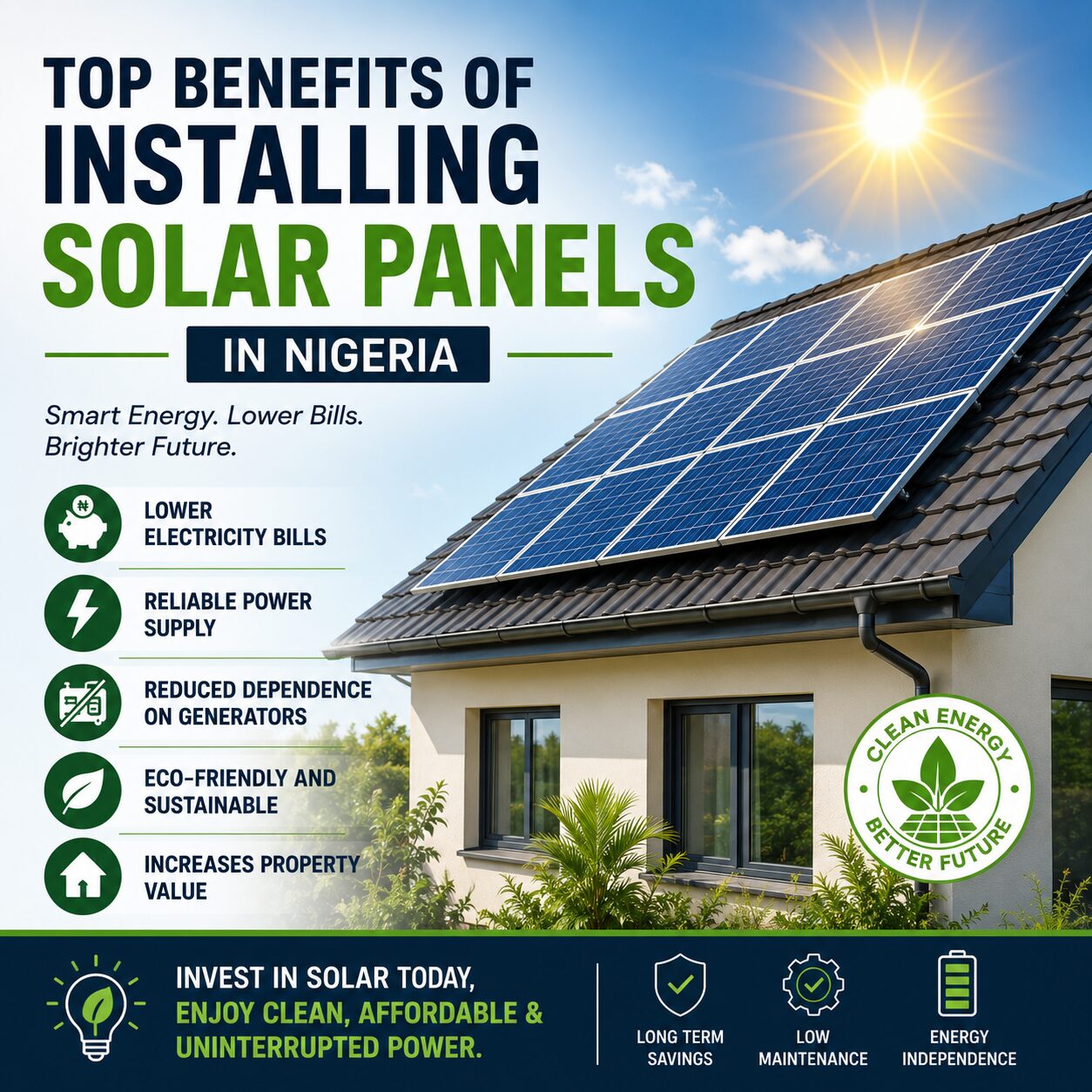
Solar installations benefit greatly from efficient energy usage.
Consequently, homeowners may require fewer solar panels and smaller battery banks.
1. LED Light Bulbs
Lighting is one of the easiest areas to improve energy efficiency.
Why Choose LED Bulbs?
Compared to traditional bulbs, LED lights:
Use up to 80% less electricity
Produce less heat
Last much longer
Require less maintenance
Therefore, replacing old bulbs with LEDs can dramatically reduce household power consumption.
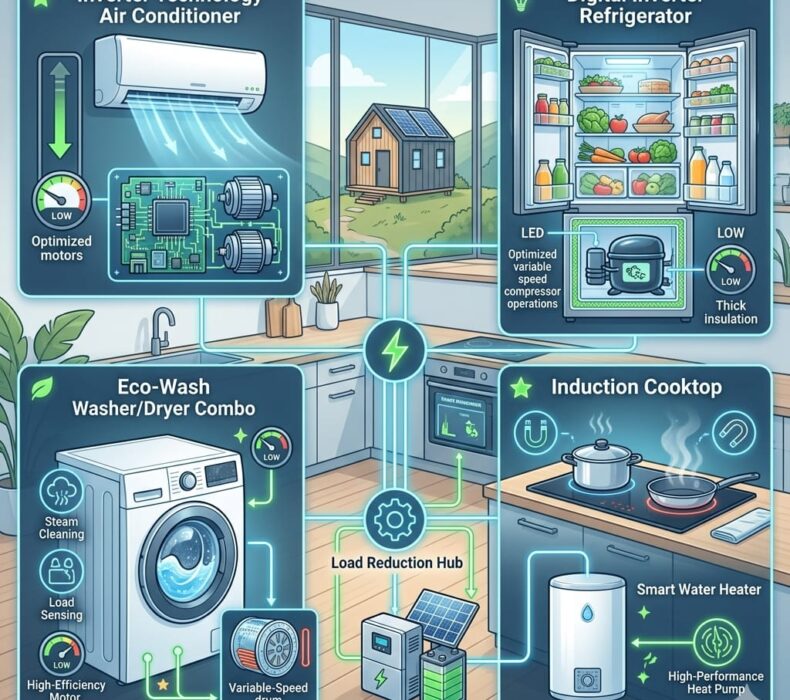
2. Energy-Efficient Refrigerators
Refrigerators operate continuously throughout the day.
As a result, they significantly affect energy usage.
Benefits
Modern energy-efficient refrigerators offer:
Lower power consumption
Improved cooling technology
Better insulation
Reduced operating costs
Furthermore, inverter-compatible refrigerators work exceptionally well with backup power systems.
3. LED Smart TVs
Televisions are essential in many homes, but older models often consume more electricity.
Advantages of Modern LED TVs
Lower energy consumption
Better picture quality
Reduced heat generation
Improved durability
Consequently, they place less demand on generators and inverter batteries.
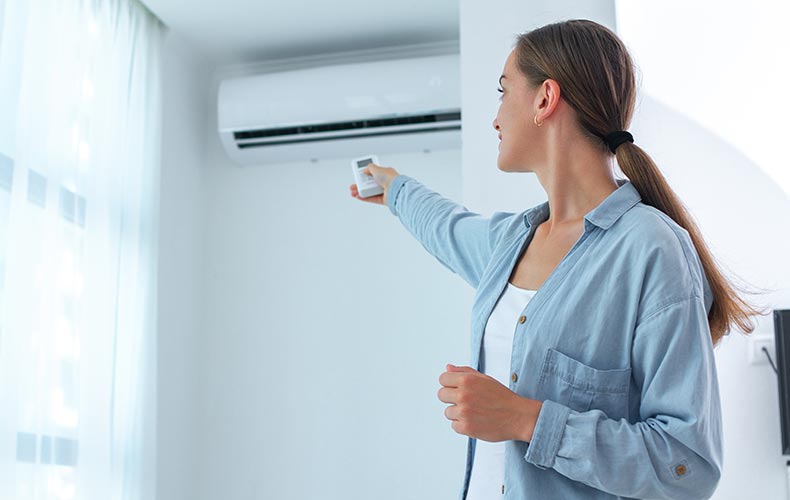
4. Inverter Air Conditioners
Air conditioners are among the highest energy-consuming appliances.
However, inverter AC technology improves efficiency significantly.
Key Benefits
Variable-speed compressors
Lower electricity consumption
Faster cooling
Reduced energy waste
Although initial costs may be higher, long-term savings are substantial.
5. Energy-Saving Fans
Fans remain one of the most popular cooling solutions in Nigeria.
Modern energy-efficient fans provide:
Lower power usage
Quiet operation
Better airflow
Longer lifespan
Therefore, they are excellent alternatives to excessive air conditioner use.
6. Energy-Efficient Washing Machines
Laundry appliances can consume significant electricity if used frequently.
Features to Look For
Eco wash modes
Efficient motors
Water-saving technology
Reduced cycle times
Consequently, these features lower both electricity and water consumption.
7. Laptops Instead of Desktop Computers
Many people work from home and require computing devices.
Compared to desktop systems:
Laptops consume less electricity
Battery backup is built-in
Heat production is lower
As a result, they are ideal for inverter-powered homes.
8. Efficient Water Dispensers
Water dispensers operate continuously in many households.
Choosing energy-saving models helps:
Reduce electricity usage
Lower operating costs
Improve inverter runtime
Furthermore, modern dispensers often include smart temperature controls.
9. Smart Power Strips
Many devices consume electricity even when not actively used.
This is known as standby power consumption.
Smart power strips help by:
Automatically cutting unused power
Preventing energy waste
Reducing electricity costs
Therefore, they provide a simple way to improve efficiency.
10. Energy-Efficient Kitchen Appliances
Kitchen appliances can place significant demand on generators and inverters.
Examples include:
Microwave ovens
Blenders
Electric kettles
Rice cookers
When purchasing these appliances, look for energy-saving certifications and efficient operating modes.
How Energy-Efficient Appliances Reduce Generator Load
Generators perform best when loads are properly managed.
By using efficient appliances:
Fuel consumption decreases
Engine stress is reduced
Maintenance costs become lower
Generator lifespan increases
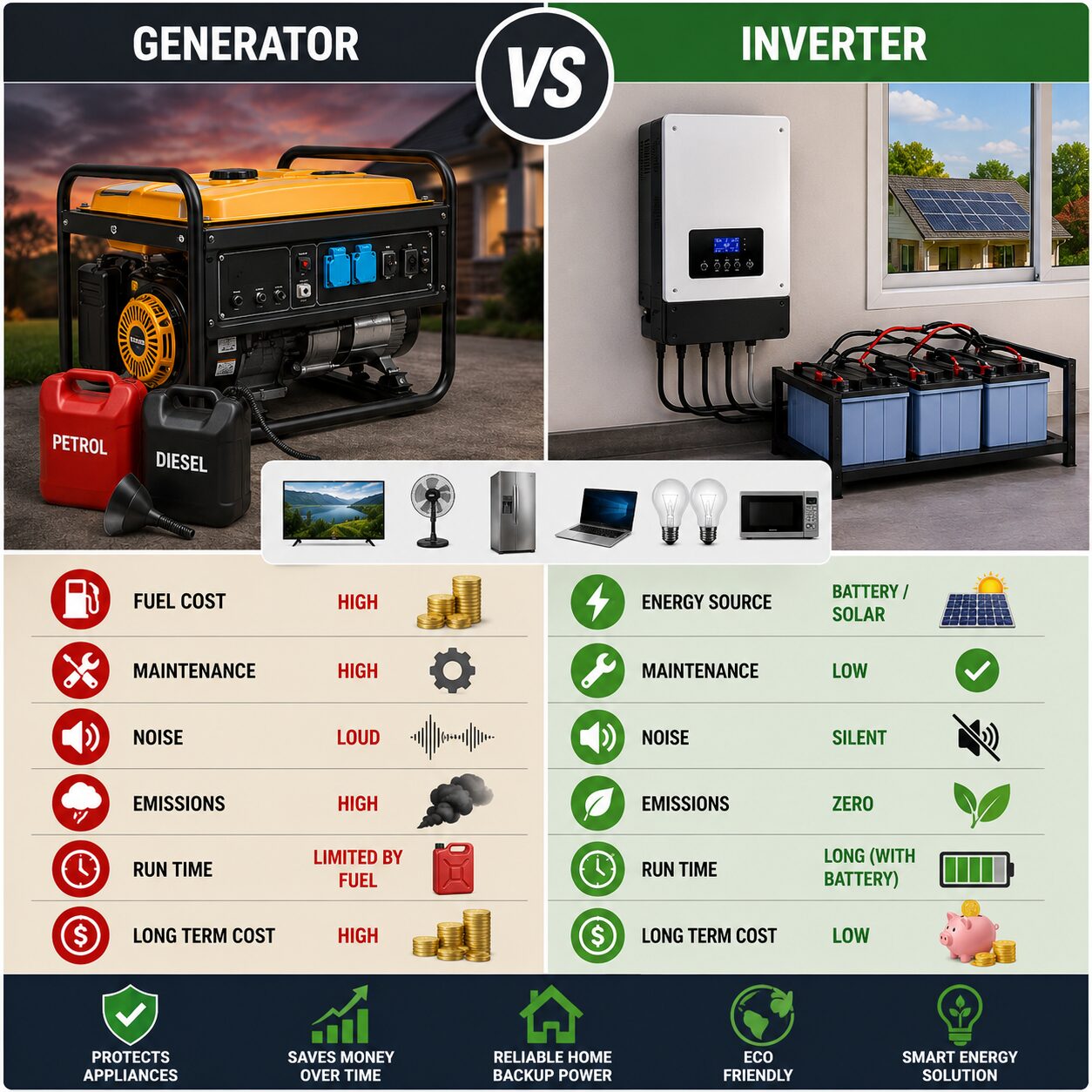
Consequently, generator owners save money over time.
How Energy-Efficient Appliances Improve Inverter Performance
Inverter systems have limited battery capacity.
Efficient appliances help by:
Extending backup duration
Reducing battery discharge rates
Lowering charging requirements
Improving battery lifespan
Therefore, inverter users enjoy better overall system performance.
Conclusion
Investing inEnergy-Efficient Home Appliances is one of the smartest ways to reduce generator fuel costs, extend inverter backup time, and lower electricity expenses. From LED lighting and efficient refrigerators to inverter air conditioners and smart power strips, these appliances help homeowners maximize the value of their backup power systems. Moreover, energy-efficient devices support sustainable living while improving overall household comfort. By choosing the right appliances, you can enjoy reliable power, reduced operating costs, and long-term savings for years to come.








 Get it on
  Download on the