






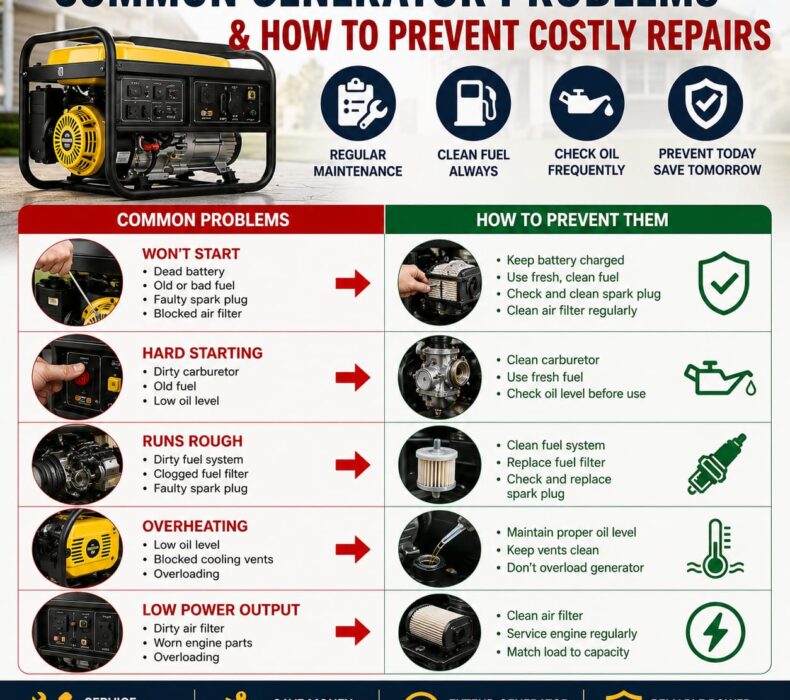
Generators play a vital role in providing backup electricity during power outages. However, like any mechanical equipment, they can develop faults over time if not properly maintained. Understanding Common Generator Problems and how to prevent them can help homeowners and businesses avoid expensive repairs, unexpected breakdowns, and prolonged power interruptions. Fortunately, most generator issues can be prevented through regular maintenance and proper operation.
Why Generator Maintenance Is Important
Regular maintenance helps keep generators running efficiently and safely.
Some key benefits include:
- Improved reliability
- Reduced repair costs
- Better fuel efficiency
- Longer equipment lifespan
- Consistent power supply
Furthermore, preventive maintenance often costs far less than major repairs.
1. Generator Fails to Start
One of the most common issues generator owners experience is startup failure.
Possible Causes
- Dead battery
- Low fuel levels
- Dirty spark plugs
- Faulty starter motor
- Clogged fuel lines
Prevention Tips
To avoid startup problems:
- Check battery condition regularly.
- Keep the fuel tank adequately filled.
- Inspect spark plugs periodically.
- Run the generator occasionally, even when not in use.
As a result, the generator remains ready for emergencies.
2. Battery Failure
Generator batteries naturally weaken over time.
Common Causes
- Long periods of inactivity
- Corroded terminals
- Overcharging
- Aging batteries
Prevention Tips
To maintain battery health:
- Clean battery terminals regularly.
- Test battery voltage monthly.
- Replace aging batteries promptly.
- Keep charging systems functioning properly.
Consequently, battery-related failures become less likely.
3. Fuel System Problems
Fuel contamination is among the most frequent Common Generator Problems.
Causes
- Old fuel
- Water contamination
- Dirty fuel filters
- Fuel line blockages
Prevention Tips
Consider the following practices:
- Use fresh fuel whenever possible.
- Replace fuel filters regularly.
- Store fuel properly.
- Inspect fuel lines for leaks.
Furthermore, routine fuel system maintenance improves engine performance.
4. Overheating Issues
Generators generate heat during operation. However, excessive heat can damage critical components.
Causes
- Low coolant levels
- Blocked ventilation
- Dirty air filters
- Overloading
Prevention Tips
To prevent overheating:
- Monitor coolant levels.
- Clean ventilation openings.
- Replace air filters when necessary.
- Avoid exceeding generator capacity.
Therefore, proper cooling helps protect the engine.
5. Oil Leaks
Oil leaks can lead to severe engine damage if ignored.
Causes
- Worn seals
- Loose fittings
- Damaged gaskets
- Excessive engine wear
Prevention Tips
Regularly:
- Inspect for visible leaks.
- Tighten loose connections.
- Replace worn seals promptly.
- Monitor oil levels frequently.
As a result, lubrication remains effective and engine wear is reduced.
6. Low Power Output
Sometimes generators run but fail to provide sufficient electricity.
Possible Causes
- Overloaded circuits
- Faulty alternator
- Poor maintenance
- Damaged electrical components
Prevention Tips
To maintain optimal power output:
- Follow manufacturer load recommendations.
- Schedule routine inspections.
- Repair damaged electrical components quickly.
Moreover, balanced loading improves generator efficiency.
7. Excessive Fuel Consumption
High fuel usage increases operating costs significantly.
Causes
- Dirty air filters
- Poor engine tuning
- Overloading
- Inadequate maintenance
Prevention Tips
To improve fuel efficiency:
- Service the engine regularly.
- Replace clogged filters.
- Operate within recommended load limits.
- Use quality fuel.
Consequently, fuel expenses can be reduced substantially.
8. Unusual Noises and Vibrations
Strange noises often indicate underlying mechanical problems.
Causes
- Loose components
- Worn bearings
- Engine misalignment
- Damaged mounts
Prevention Tips
Inspect your generator regularly for:
- Loose bolts
- Excessive vibration
- Unusual sounds
Additionally, addressing small issues early prevents major failures.
9. Electrical Faults
Electrical problems can affect generator performance and safety.
Common Causes
- Damaged wiring
- Faulty breakers
- Loose connections
- Moisture exposure
Prevention Tips
To reduce electrical risks:
- Inspect wiring routinely.
- Keep the generator dry.
- Replace damaged cables immediately.
- Test circuit breakers periodically.
As a result, electrical reliability improves.
10. Carbon Build-Up
Carbon deposits can accumulate inside the engine over time.
Causes
- Infrequent use
- Poor-quality fuel
- Incomplete combustion
Prevention Tips
To minimize carbon build-up:
- Run the generator regularly.
- Use quality fuel.
- Follow recommended service schedules.
Therefore, engine performance remains efficient.
Signs Your Generator Needs Immediate Attention
Recognizing warning signs early can prevent expensive repairs.
Watch for:
- Difficulty starting
- Smoke emissions
- Fuel leaks
- Excessive noise
- Reduced power output
- Frequent shutdowns
- Overheating
If any of these symptoms occur, professional inspection may be necessary.
Best Maintenance Practices
The best way to avoid Common Generator Problems is through preventive maintenance.
Weekly Checks
- Inspect fuel levels
- Check battery condition
- Look for visible leaks
Monthly Checks
- Run the generator under load
- Clean air filters
- Test electrical connections
Annual Service
- Replace oil and filters
- Inspect cooling systems
- Check alternator performance
- Perform comprehensive diagnostics
Furthermore, maintaining service records helps track equipment health.
Generator Safety Tips
In addition to maintenance, proper safety practices are essential.
Always:
- Operate generators outdoors
- Ensure adequate ventilation
- Keep flammable materials away
- Follow manufacturer instructions
- Use quality extension cables
Consequently, both equipment and occupants remain protected.
Benefits of Preventive Maintenance
Regular maintenance offers several advantages:
- Lower repair costs
- Better reliability
- Improved fuel efficiency
- Longer generator lifespan
- Reduced downtime
Therefore, preventive care is one of the smartest investments generator owners can make.
Conclusion
Understanding Common Generator Problems allows homeowners and businesses to take proactive steps toward preventing costly repairs and unexpected breakdowns. From battery failures and fuel contamination to overheating and electrical faults, most generator issues can be minimized through routine inspections and proper maintenance. Moreover, following a consistent service schedule improves reliability, reduces operating costs, and extends the lifespan of your backup power system. With proper care, your generator can continue providing dependable electricity whenever you need it most.



 Get it on
  Download on the