A family swimming pool can provide years of enjoyment and quality time together. However, owning a pool also comes with significant safety responsibilities. Having the right family pool safety equipment can help prevent accidents, reduce risks, and provide immediate assistance during emergencies. Whether your pool is used by children, teenagers, adults, or elderly family members, investing in proper safety equipment is one of the smartest decisions any pool owner can make.
At Cleaneat, we believe that a safe pool is just as important as a clean pool. While proper maintenance keeps water healthy, safety equipment helps protect the people using it. Every family pool should be equipped with tools and protective systems designed to prevent accidents before they happen.
Why Pool Safety Equipment Matters
Swimming pools can be enjoyable spaces, but they also present potential risks. Many pool-related accidents occur unexpectedly and often within seconds. Children may wander into the pool area unsupervised, swimmers can experience cramps or fatigue, and slippery surroundings may lead to falls.
Safety equipment acts as an additional layer of protection when supervision alone is not enough. It helps pool owners respond quickly during emergencies while reducing the likelihood of accidents occurring in the first place.
Rather than waiting for a dangerous situation to arise, families should prepare in advance by ensuring essential safety devices are always available and in good working condition.
Pool Safety Starts with Prevention
The best approach to pool safety is preventing accidents before they happen. This means creating multiple barriers between potential hazards and pool users.
A well-protected pool environment combines:
Active supervision
Safe pool rules
Proper maintenance
Emergency preparedness
Appropriate safety equipment
When these elements work together, the overall risk level decreases significantly.
Essential Safety Equipment Every Family Pool Needs
Not all safety equipment serves the same purpose. Some devices help prevent accidents, while others assist during emergencies. Every pool owner should understand the role each item plays in maintaining a safer swimming environment.
Pool Safety Fence
A safety fence is often considered the first line of defense.
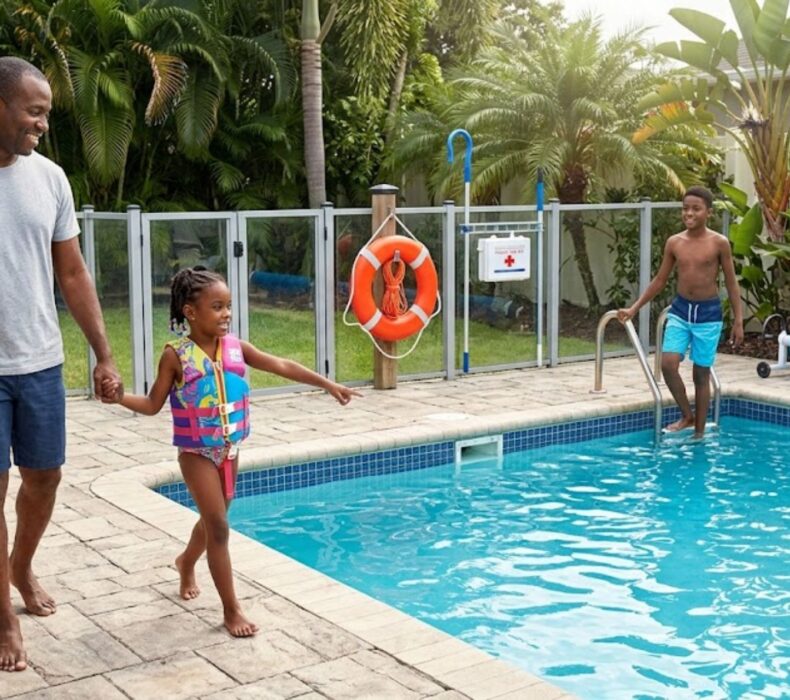
Pool fences create a physical barrier that prevents young children from entering the pool area without supervision. A properly installed fence should surround the pool completely and include a self-closing, self-latching gate.
Many pool safety experts consider fencing one of the most effective methods for reducing accidental drownings involving children.
Pool Safety Cover
Safety covers do more than keep debris out of the water.
A high-quality safety cover creates a protective barrier over the pool when it is not in use. Unlike ordinary pool covers, safety covers are designed to support weight and reduce the risk of accidental entry.
They also provide additional security during periods when the pool remains unused.
Life Ring or Rescue Ring
Every family pool should have a life ring positioned nearby.
This simple piece of equipment can be thrown to a swimmer experiencing difficulty in the water, providing flotation until help arrives.
The rescue ring should remain visible and easily accessible at all times.
Rescue Pole
A rescue pole allows someone on the pool deck to assist a swimmer without entering the water.
These poles are especially useful during emergencies because they help rescuers maintain a safe distance while providing support.
They are affordable, easy to store, and highly effective when needed.
H3: Must-Have Family Pool Safety Equipment for Every Home
Selecting the right family pool safety equipment involves preparing for both prevention and emergency response.
Pool owners should create a comprehensive safety setup rather than relying on a single device. The most effective pool safety systems combine physical barriers, emergency tools, and warning systems.
The goal is to establish multiple layers of protection that work together to reduce risk.
Pool Alarms
Pool alarms provide an extra level of security by alerting homeowners when unauthorized access occurs.
Some alarms activate when gates are opened, while others detect movement or disturbances in the water.
These systems can provide valuable warning time, particularly for families with young children.
First Aid Kit
Every pool area should have a well-stocked first aid kit.
Minor cuts, scrapes, insect bites, and other injuries can occur around pools. Having immediate access to first aid supplies allows prompt treatment before professional medical assistance becomes necessary.
The kit should be checked regularly and restocked as needed.
Emergency Telephone Access
In an emergency, every second matters.
Pool owners should ensure that a charged phone or reliable communication device is readily available near the pool area.
Quick access to emergency services can make a critical difference during serious incidents.
Why Proper Flotation Devices Are Important
Flotation devices can help improve safety, particularly for inexperienced swimmers.
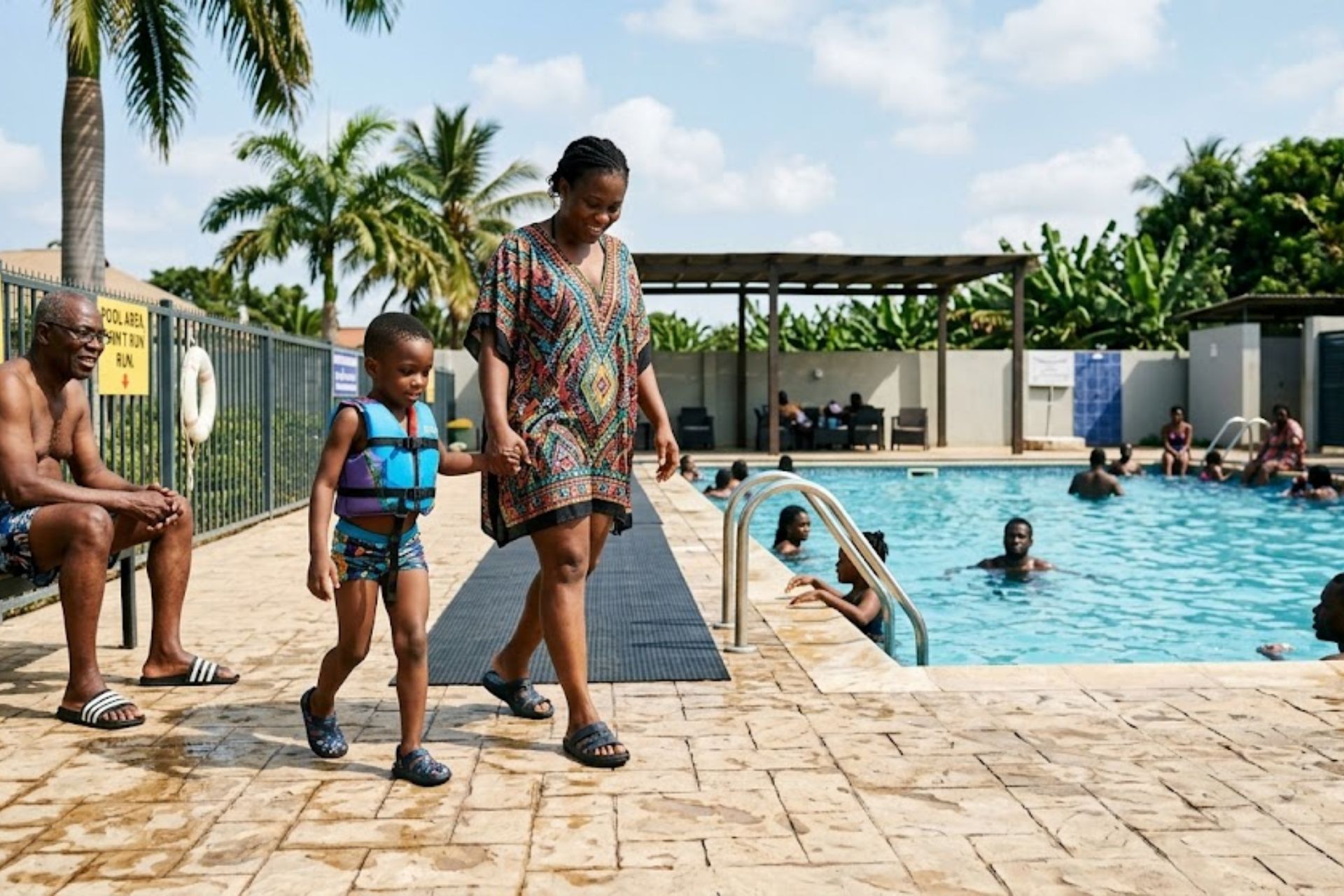
Parents should choose flotation equipment that is appropriate for the user’s age, size, and swimming ability.
Examples include:
Approved life jackets
Swim vests
Learning flotation aids
However, flotation devices should never replace active adult supervision.
Their purpose is to provide additional support, not complete protection.
H4: Family Pool Safety Equipment for Children
Children require special consideration because they face the highest risk around residential pools. Effective family pool safety equipment should therefore include child-focused protection measures.
Some of the most valuable child safety tools include:
Child-proof pool gates
Door alarms
Pool alarms
Approved life jackets
Safety fences
Non-slip poolside surfaces
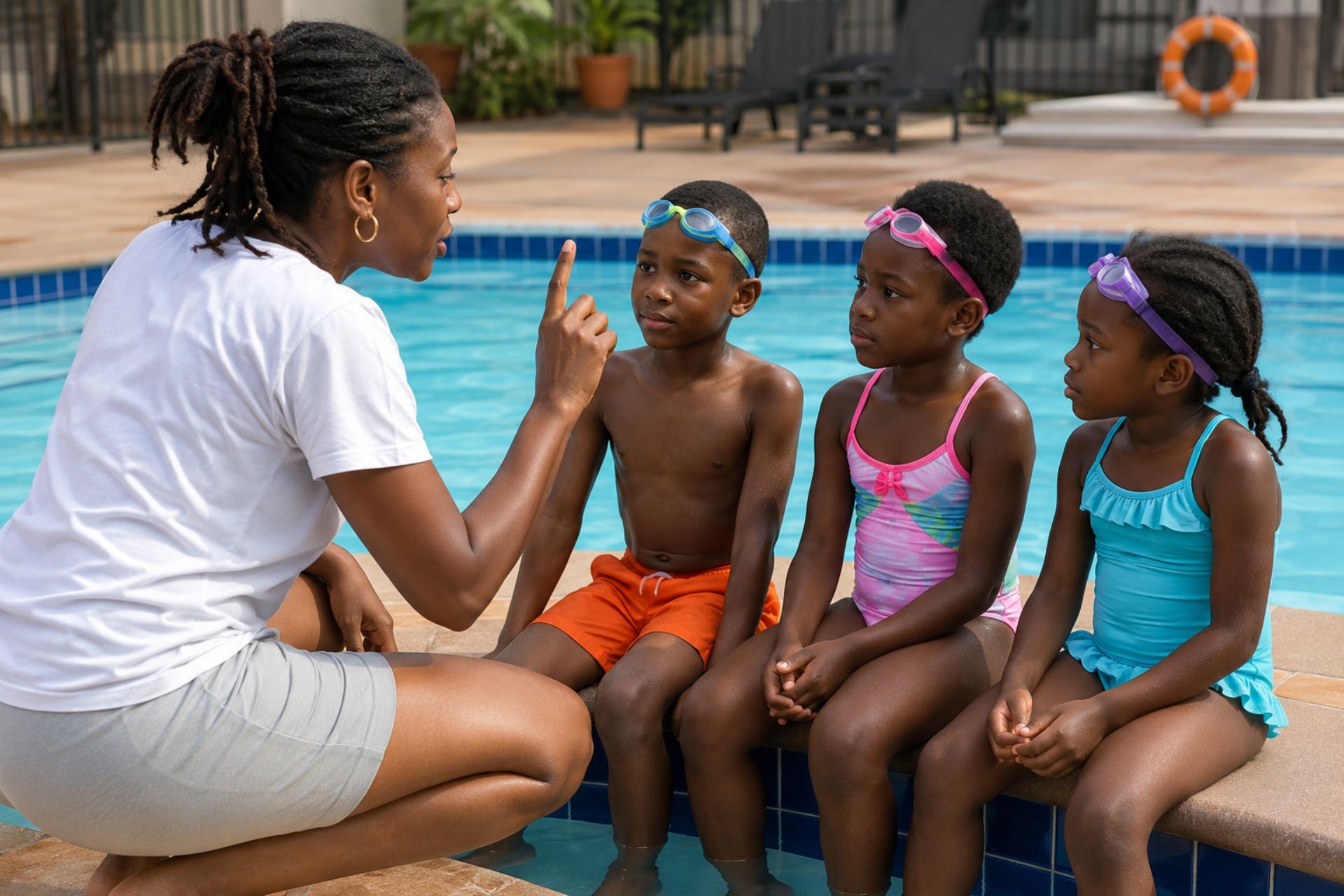
Parents should also establish clear safety rules and consistently enforce them.
Equipment works best when combined with responsible supervision and education.
Importance of Non-Slip Poolside Features
Many pool injuries occur outside the water.
Wet surfaces can become slippery and increase the likelihood of falls. Non-slip materials help improve traction and reduce accident risks.
Examples include:
Textured pool decking
Anti-slip mats
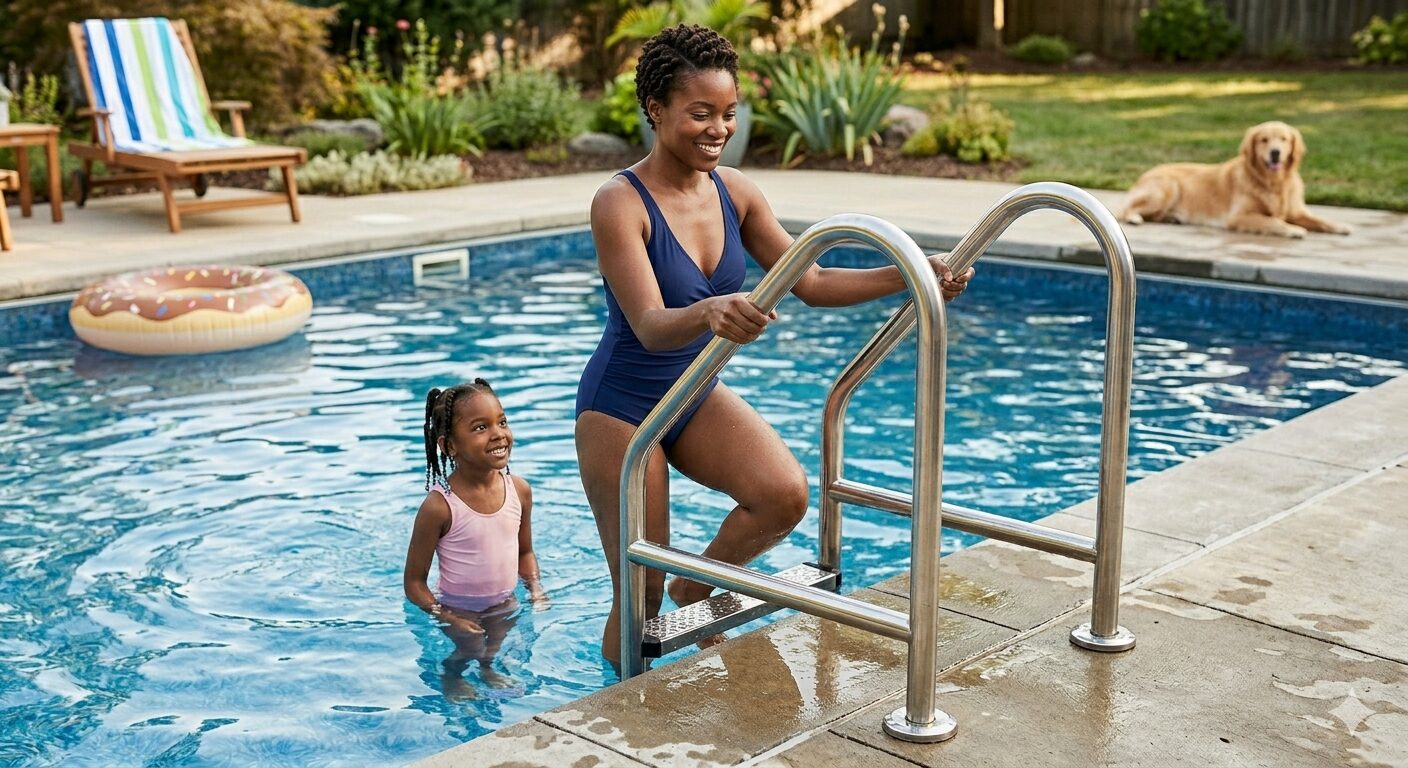
Non-slip stair treads
Slip-resistant walkways
These features are particularly important for children, elderly individuals, and guests who may be unfamiliar with the pool environment.
Emergency Preparedness Beyond Equipment
Owning safety equipment is only part of the solution.
Family members should know how to respond during emergencies. Pool owners are encouraged to learn basic first aid and CPR techniques. These skills can provide critical assistance before professional responders arrive.
Emergency action plans should also be discussed with family members so everyone understands what to do if an accident occurs.
Preparedness often makes the difference between a minor incident and a serious emergency.
Maintaining Pool Safety Equipment
Safety equipment must be inspected regularly to ensure reliability.
Pool owners should routinely:
Check rescue devices for damage
Test alarms and warning systems
Inspect fences and gates
Replace expired first aid supplies
Verify that emergency equipment remains accessible
Neglected safety equipment may fail when it is needed most.
Routine inspections help ensure everything functions properly.
Common Pool Safety Mistakes Families Make
Even safety-conscious homeowners sometimes overlook important precautions.
Common mistakes include:
Assuming supervision alone is enough
Leaving pool gates unlocked
Storing rescue equipment out of reach
Ignoring damaged safety devices
Relying solely on inflatable toys for flotation
Recognizing these mistakes can help families improve their overall safety strategy.
How Cleaneat Supports Safer Pool Environments
At Cleaneat, we understand that pool safety involves more than water maintenance. Safe swimming environments require proper upkeep, risk awareness, and preventive planning.
Our pool maintenance services help property owners maintain cleaner, safer pool environments by supporting proper facility care and helping identify conditions that could contribute to accidents.
A well-maintained pool area complements safety equipment and helps create a more secure experience for everyone.
Conclusion
Owning a swimming pool brings enjoyment and valuable family experiences, but it also requires a commitment to safety. Investing in essential family pool safety equipment provides important protection against accidents and emergencies.
From safety fences and rescue poles to alarms and first aid kits, each piece of equipment contributes to a safer swimming environment. When combined with supervision, education, and routine maintenance, these tools help families enjoy their pools with greater confidence and peace of mind.
At Cleaneat, we encourage every pool owner to view safety equipment as a necessary investment in the well-being of their loved ones. The right preparation today can help prevent accidents tomorrow.






 Get it on
  Download on the