




Swimming pools provide children with excitement, relaxation, exercise, and unforgettable family memories. However, pools can also become dangerous when safety practices are ignored. Teaching children swimming safety rules early helps reduce accidents and allows children to enjoy swimming more responsibly.
At Cleaneat, we believe pool safety starts with awareness, supervision, and consistent education. Children are naturally curious and energetic around water, which makes it extremely important for parents to establish clear pool safety habits before any swimming activity begins.
Rather than relying only on lifeguards or swimming aids, parents should actively teach children how to behave safely around pools at all times.
Why Pool Safety Education Matters for Children
Children often see pools as places for fun without fully understanding the risks involved. Even shallow water can become dangerous when children panic, lose balance, or attempt unsafe activities.
Many pool accidents happen quietly and unexpectedly within seconds. This is why early safety education is one of the most effective ways to protect children around water environments.
When children repeatedly learn and practice pool safety habits, those behaviors gradually become natural responses instead of forced instructions.
Teaching Children to Respect Water
One of the first lessons every parent should teach is that pools are not playgrounds where reckless behavior is acceptable.
Children need to understand that water requires caution and responsibility. Running near pools, pushing others into water, rough play, and diving carelessly should never be treated as harmless fun.
Parents who consistently reinforce calm and respectful behavior around pools help children develop stronger awareness of their surroundings.
Never Swim Without Adult Supervision
No child should ever swim alone, regardless of their age or swimming ability.
Even children who know how to swim can become tired, frightened, or trapped unexpectedly. Constant adult supervision remains one of the most important safety measures in any swimming environment.
Parents should avoid distractions such as phone calls, social media, or long conversations while supervising children near pools. Active attention saves lives.
Establishing Pool Rules Before Swimming Begins
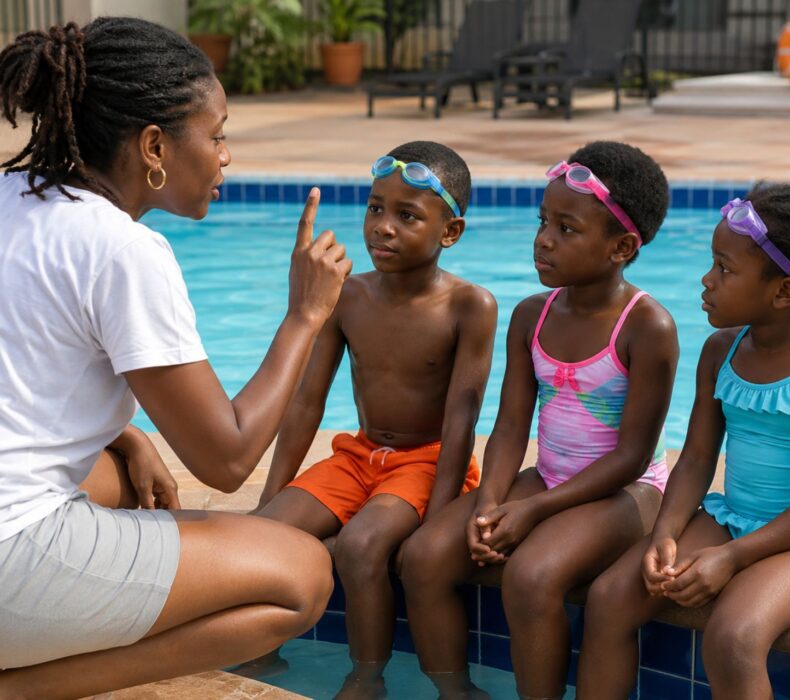
Children respond better to safety expectations when rules are explained clearly beforehand.
Before entering the pool area, parents should remind children about expected behavior, restricted areas, and emergency instructions. Repeating these rules regularly helps reinforce safer habits.
Some essential rules include:
- No running near the pool
- No diving in shallow water
- No pushing or rough play
- Always ask permission before entering water
- Stay within approved swimming zones
- Listen immediately to adults or lifeguards
Simple and consistent instructions are easier for children to remember.
Important Children Swimming Safety Rules Every Family Should Follow
Teaching children swimming safety rules should become part of every family’s regular swimming routine. Safety habits work best when they are practiced consistently rather than discussed only during emergencies.
Children learn quickly through repetition, observation, and parental example. Parents who demonstrate safe pool behavior themselves often encourage children to follow the same habits naturally.
Pool safety education should focus on prevention rather than reacting after accidents occur.
The Importance of Swimming Lessons
Swimming lessons help children become more comfortable and confident in water. However, swimming skills should never replace supervision.
Professional swimming lessons teach children how to float, breathe properly, move safely through water, and respond calmly if they struggle.
Parents should choose instructors who emphasize both swimming ability and water safety awareness.
Teaching Children Safe Pool Entry and Exit
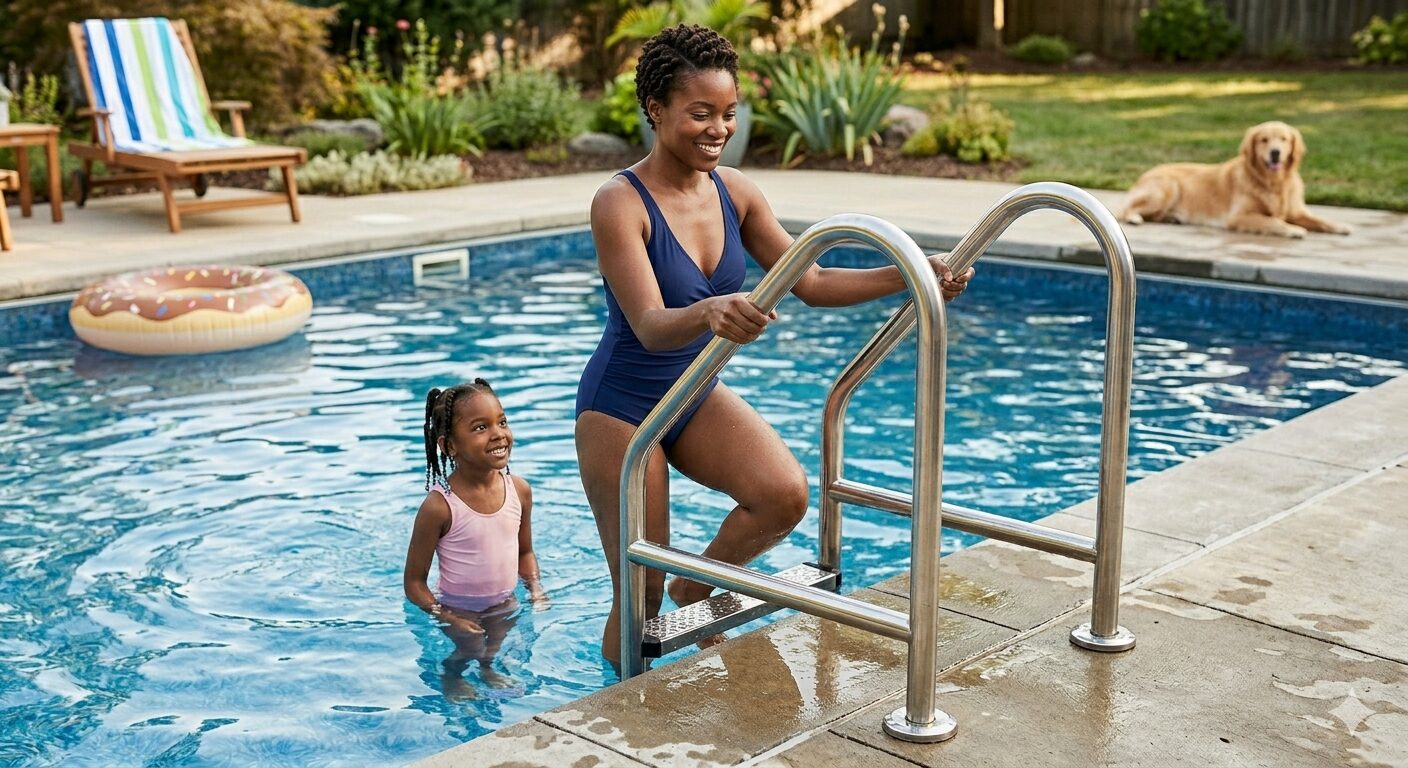
Children should learn how to enter and leave pools carefully instead of jumping in carelessly.
Using ladders, holding rails, and avoiding slippery surfaces help reduce falls and injuries. Parents should also show children where pool depths change so they avoid entering unsafe areas unexpectedly.
Safe entry habits are especially important for younger children who may struggle with balance around wet surfaces.
Emergency Awareness for Children
Children should know basic emergency actions without becoming fearful of swimming.
Parents can calmly teach children to:
- Call for help loudly if someone is struggling
- Locate lifeguards or adults quickly
- Avoid attempting dangerous rescues alone
- Exit the pool carefully during emergencies
These simple lessons improve awareness while helping children stay calm in stressful situations.
How Children Swimming Safety Rules Prevent Accidents
Following children swimming safety rules significantly reduces common pool accidents such as slipping, unsafe diving, collisions, and panic situations.
Safety rules create structure around swimming activities and help children understand personal responsibility. When children repeatedly follow safe routines, risky behavior becomes less likely.
Accident prevention depends heavily on preparation, supervision, and consistent reinforcement from adults.
Creating a Safe Pool Environment at Home
Families with private pools should take additional safety precautions to protect children.
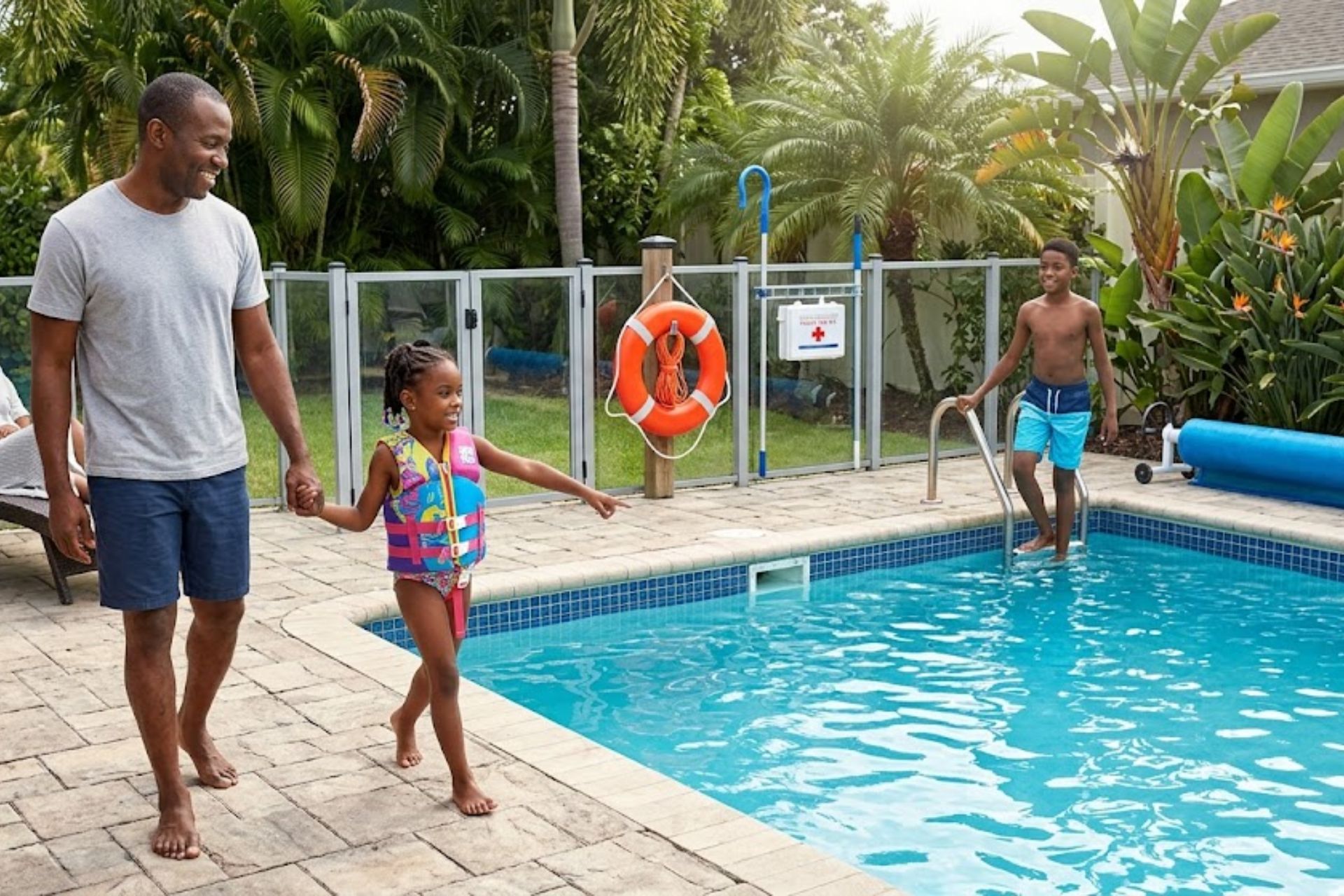
Important home pool safety measures include:
- Installing pool fences and gates
- Using anti-slip poolside materials
- Keeping rescue equipment nearby
- Covering pools properly after use
- Removing unattended toys from water
- Maintaining clean and visible pool water
These measures reduce the chances of unsupervised access and hidden hazards.
Teaching by Example
Children pay close attention to adult behavior. Parents who ignore safety practices often unintentionally encourage children to do the same.
Adults should model responsible pool behavior by walking carefully, following pool rules, and respecting safety instructions. Positive examples help children understand that safety applies to everyone, not just kids.
Consistency between words and actions strengthens learning.
Helping Children Build Confidence Safely
Fear and overconfidence can both create dangerous situations around water.
Some children become anxious near pools, while others become too comfortable and take unnecessary risks. Parents should encourage gradual confidence-building through guided practice and supervised swimming activities.
Children should learn to enjoy swimming while understanding their personal limits.
The Role of Hygiene in Pool Safety
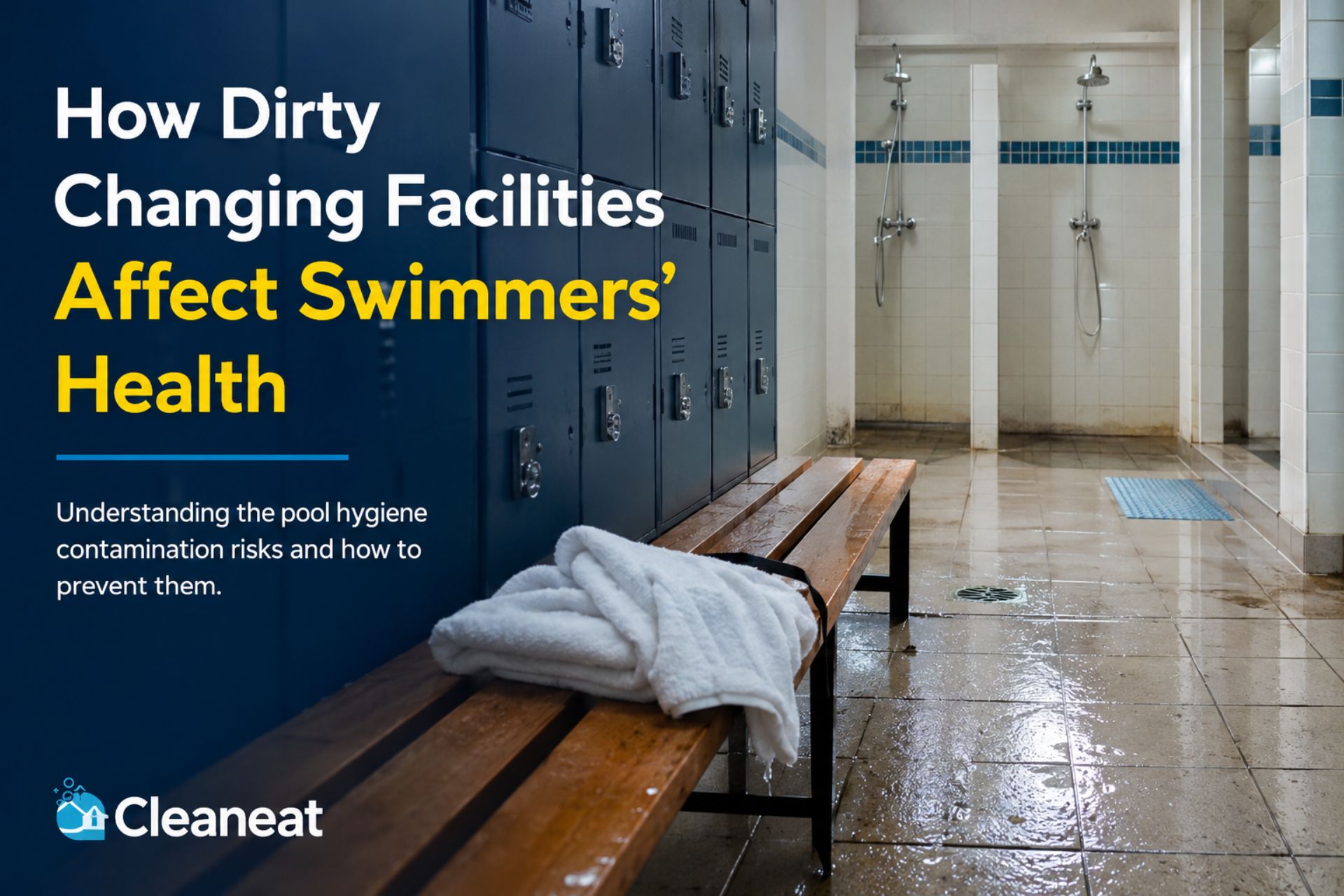
Pool safety is not limited to drowning prevention alone. Cleanliness also contributes to safer swimming environments.
Children should learn simple hygiene habits such as showering before swimming, avoiding swallowing pool water, and reporting dirty or unsafe conditions to adults.
At Cleaneat, we understand that maintaining clean pool surroundings supports healthier and safer recreational experiences for families.
Why Parents Should Stay Consistent With Safety Rules
One of the biggest mistakes parents make is enforcing safety rules inconsistently.
Children may become confused if dangerous behavior is ignored sometimes but corrected at other times. Consistency helps children understand that pool safety is always important, regardless of location or circumstance.
Over time, repeated reinforcement helps safety habits become automatic.
Conclusion
Swimming pools can be wonderful spaces for recreation, learning, and family bonding when proper precautions are taken. Teaching children safe habits early helps reduce unnecessary risks and encourages more responsible swimming behavior.
By consistently applying children swimming safety rules, parents can create safer experiences that allow children to enjoy water activities with greater confidence and awareness.
At Cleaneat, we believe every child deserves a safe and hygienic swimming environment where fun and safety work together. Through proper education, supervision, and responsible pool practices, families can build healthier and more secure swimming experiences for everyone.



 Get it on
  Download on the