





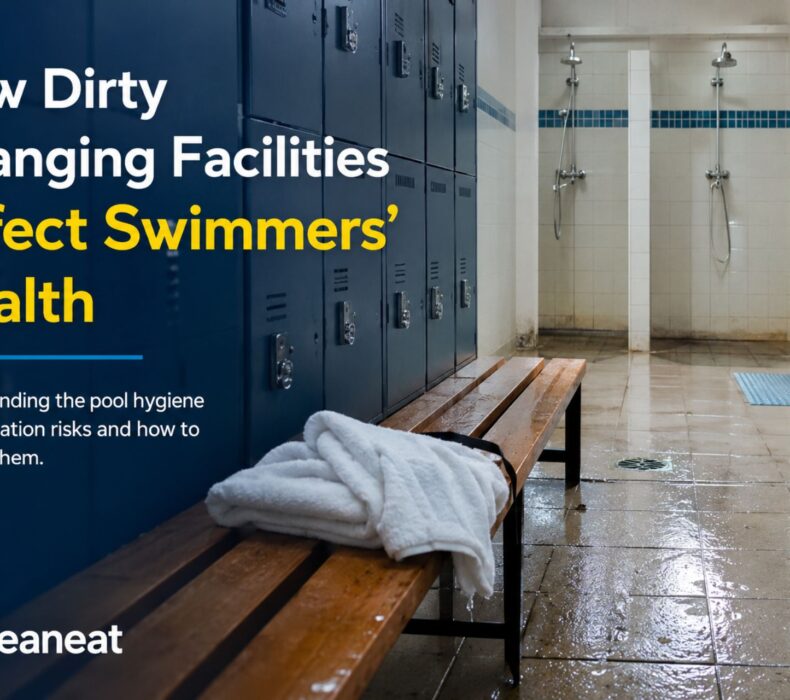
Many swimmers overlook one important factor that greatly affects their safety and wellbeing, the cleanliness of changing facilities. Poorly maintained changing rooms can expose users to dangerous bacteria, viruses, fungi, and unpleasant odors. Understanding the pool hygiene contamination risks associated with dirty facilities is essential for protecting swimmers and maintaining a healthy environment.
At Cleaneat, we understand the importance of maintaining hygienic swimming pool environments. Clean changing facilities are not only necessary for comfort but also critical for public health and customer satisfaction.
Why Swimming Pool Changing Facilities Matter
Changing rooms are high-traffic areas used by dozens or even hundreds of people daily. These spaces include lockers, benches, floors, showers, toilets, sinks, and dressing areas that are constantly exposed to moisture and human contact.
Because these areas remain damp for long periods, they become perfect breeding grounds for harmful microorganisms. When proper cleaning routines are ignored, contamination spreads quickly from one user to another.
Many swimmers focus only on the cleanliness of the pool water while ignoring the condition of the changing facilities. Unfortunately, dirty changing rooms can be just as harmful as contaminated pool water.
Common Germs Found in Dirty Changing Facilities
Swimming pool changing rooms can harbor several harmful organisms that threaten swimmers’ health.
Bacteria
Bacteria thrive in wet environments, especially on damp floors, shower drains, benches, and locker handles. Common bacteria found in poorly maintained facilities may cause skin infections, stomach illnesses, and respiratory irritation.
Fungi
Fungal infections are among the most common health problems linked to dirty changing rooms. Athlete’s foot and ringworm spread easily through contaminated wet floors and shared surfaces.
Viruses
Viruses can survive on surfaces such as lockers, door handles, and faucets. Without proper sanitation, users can easily contract infections through skin contact.
Mold and Mildew
Excess moisture encourages mold growth in ceilings, corners, and poorly ventilated areas. Mold exposure can trigger allergies, breathing difficulties, and unpleasant odors.
Pool Hygiene Contamination Risks in Changing Facilities
The biggest concern surrounding dirty pool changing rooms is the wide range of pool hygiene contamination risks they create. These risks affect both swimmers and facility owners.
Increased Spread of Skin Infections
Dirty changing areas increase direct exposure to bacteria and fungi. Swimmers who walk barefoot on contaminated surfaces are more likely to develop infections such as athlete’s foot, fungal rashes, and skin irritation.
Children are particularly vulnerable because their immune systems are still developing, making them more sensitive to contaminated environments.
Respiratory Problems from Poor Air Quality
Poor ventilation combined with excess moisture creates stale air and mold growth. Swimmers exposed to these conditions may experience coughing, sneezing, sinus irritation, or breathing discomfort.
Individuals with asthma or allergies may suffer even more severe reactions in unhygienic facilities.
Cross-Contamination Between Users
When locker rooms are not regularly disinfected, germs spread quickly from one person to another. Shared benches, handles, faucets, and lockers become contamination points that increase infection risks.
Cross-contamination becomes even worse in crowded public swimming facilities with heavy daily usage.
Bad Odours and Uncomfortable Experiences
Dirty changing rooms often develop unpleasant smells caused by bacteria, mold, sweat, and standing water. Strong odours create discomfort and discourage visitors from using the facility.
A poorly maintained changing room damages the reputation of any swimming facility and can reduce customer trust.
The Role of Moisture in Germ Growth
Moisture is one of the biggest contributors to contamination in swimming pool changing facilities. Wet floors, humid air, and water splashes create ideal conditions for microorganisms to multiply rapidly.
Without proper drainage and ventilation, germs survive longer and spread faster. This is why routine drying, ventilation, and sanitation are necessary for every changing area.
Facilities that ignore moisture control often face recurring hygiene issues regardless of how attractive the space may appear.
How Poor Cleaning Practices Increase Pool Hygiene Contamination Risks
Many facility owners underestimate how quickly contamination spreads when cleaning procedures are inconsistent. Poor maintenance habits significantly increase pool hygiene contamination risks in changing areas.
Infrequent Surface Disinfection
Surfaces touched frequently throughout the day require repeated sanitization. Cleaning only once daily is usually insufficient for busy swimming facilities.
Using Incorrect Cleaning Products
Some cleaning products remove visible dirt but fail to eliminate harmful microorganisms. Professional-grade disinfectants are necessary for effective sanitation.
Ignoring Hidden Areas
Corners, drains, locker interiors, and under benches are often neglected during routine cleaning. These hidden spaces accumulate bacteria and mold over time.
Poor Waste Management
Overflowing trash bins and dirty laundry areas contribute to contamination and unpleasant odors. Waste should be removed regularly to maintain cleanliness.
Health Conditions Linked to Dirty Changing Rooms
Unhygienic changing facilities can contribute to several health problems that affect swimmers of all ages.
Athlete’s Foot
This fungal infection spreads easily through wet communal floors and shower areas. Symptoms include itching, peeling skin, and discomfort.
Ringworm
Ringworm is highly contagious and can spread through contaminated surfaces, towels, or benches.
Skin Irritation
Exposure to bacteria, harsh chemicals, and mold may cause redness, itching, or rashes.
Respiratory Irritation
Poor indoor air quality caused by mold and dampness can affect breathing and worsen allergies.
Gastrointestinal Illnesses
Improper hygiene may allow harmful bacteria to spread through contaminated hands and surfaces.
Why Professional Cleaning Services Matter
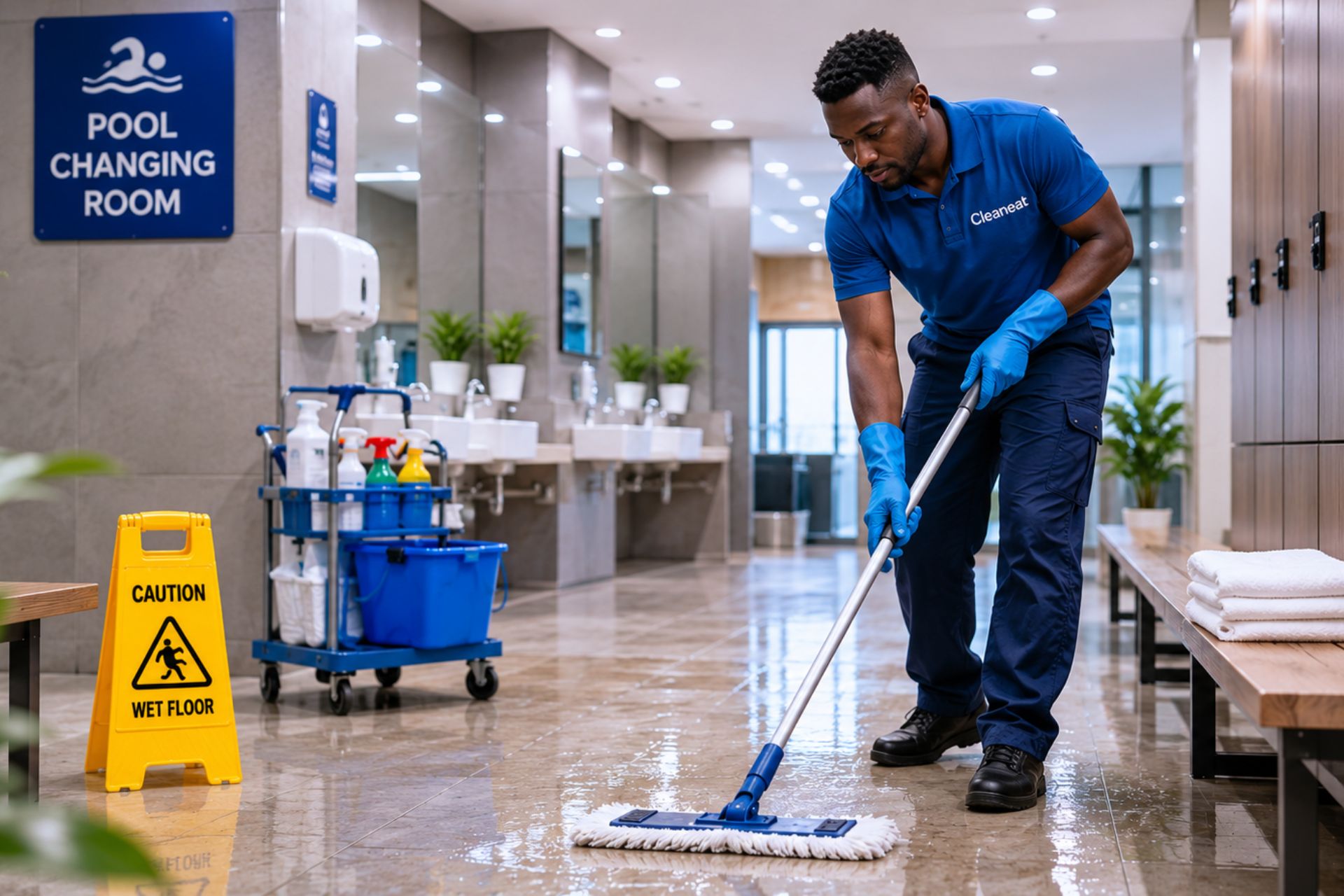
Professional cleaning companies play an essential role in maintaining safe swimming environments. At Cleaneat, we use industry-approved cleaning techniques and high-quality disinfectants to reduce contamination risks effectively.
Professional cleaners understand which areas require special attention and how to maintain hygiene standards consistently.
Benefits of professional swimming pool changing facility cleaning include:
- Thorough disinfection of high-contact surfaces
- Removal of mold and mildew
- Improved air quality
- Odor control
- Reduced infection risks
- Better customer satisfaction
- Compliance with hygiene regulations
Best Practices for Maintaining Hygienic Changing Facilities
Maintaining clean changing facilities requires consistency and attention to detail.
Regular Cleaning Schedules
Facilities should follow strict daily cleaning schedules with additional disinfection during peak hours.
Proper Ventilation
Good airflow reduces humidity and prevents mold growth.
Non-Slip and Easy-to-Clean Surfaces
Using hygienic flooring materials helps simplify maintenance and improve safety.
Availability of Hygiene Supplies
Hand soap, sanitizers, paper towels, and waste bins should always be available.
Routine Deep Cleaning
Deep cleaning should be performed regularly to eliminate hidden contamination.
How Cleaneat Helps Swimming Facilities Maintain Hygiene
At Cleaneat, we specialize in professional cleaning solutions for swimming pool environments across Nigeria. Our team understands the unique sanitation challenges associated with changing facilities and high-moisture areas.
We use effective cleaning systems designed to minimize contamination risks while creating safer and more welcoming environments for swimmers.
Our services focus on:
- Comprehensive disinfection
- Deep cleaning of changing rooms
- Mold prevention
- Odor elimination
- Surface sanitation
- Hygiene maintenance plans
Whether you manage a hotel pool, gym, recreational center, or public swimming facility, Cleaneat delivers reliable cleaning solutions tailored to your needs.
Conclusion
Dirty swimming pool changing facilities pose serious health risks that many people underestimate. From fungal infections and bacteria spread to respiratory irritation and unpleasant odors, poor hygiene can negatively affect swimmers’ safety and comfort.
Understanding the dangers of pool hygiene contamination risks is essential for maintaining healthy swimming environments. Facility owners must prioritize proper sanitation, ventilation, and routine maintenance to protect users and preserve their reputation.
At Cleaneat, we remain committed to helping swimming facilities maintain the highest hygiene standards through professional cleaning and sanitation services. A clean changing room is not just about appearance, it is a crucial step toward safeguarding public health and creating a better swimming experience for everyone.






 Get it on
  Download on the