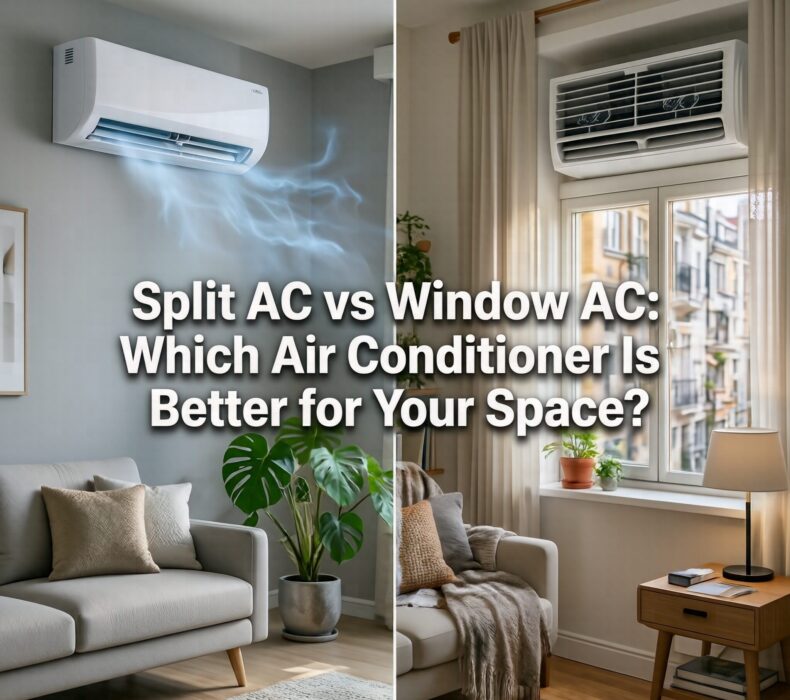
Choosing the right air conditioner can greatly improve your comfort while reducing energy costs. If you are comparing Split AC vs Window AC: Which Air Conditioner Is Better for Your Space?, understanding the differences between these two popular cooling systems is essential. Although both are designed to cool indoor spaces effectively, they differ in installation, performance, energy efficiency, noise levels, maintenance, and overall cost. Therefore, selecting the right option depends on your room size, budget, and cooling needs.
What Is a Split Air Conditioner?
A split air conditioner consists of two separate units. The indoor unit is mounted inside the room, while the outdoor unit contains the compressor and condenser.
Both units are connected through insulated pipes that circulate refrigerant.
Because the compressor is located outside, split air conditioners operate quietly and provide powerful cooling.
What Is a Window Air Conditioner?
A window air conditioner combines all components into a single unit.
The system is installed through a window or a specially prepared wall opening, with one side facing indoors and the other outdoors.
Since every component is housed in one unit, installation is generally quicker and more affordable.
Meanwhile, window air conditioners also cool effectively but are generally better suited for smaller rooms.
Therefore, if you need to cool a large living room or office, a split AC is often the better option.
Energy Efficiency
Energy consumption directly affects monthly electricity bills.
Most modern split air conditioners feature inverter technology, allowing the compressor to adjust its speed based on cooling demand.
As a result, they consume significantly less electricity over time.
Window air conditioners, particularly older models, usually operate with fixed-speed compressors, which consume more power during operation.
However, newer energy-efficient window AC models are becoming increasingly available.
Installation Process
Installation requirements differ considerably.
Split Air Conditioner Installation
Split AC installation involves:
Mounting the indoor unit
Installing the outdoor compressor
Connecting refrigerant pipes
Electrical wiring
Professional testing
Consequently, installation takes longer and should always be performed by trained technicians.
Window Air Conditioner Installation
Window AC installation is simpler.
Typically, it involves:
Securing the unit in a window or wall opening
Connecting the power supply
Sealing installation gaps
As a result, installation costs are usually much lower.
Appearance and Interior Design
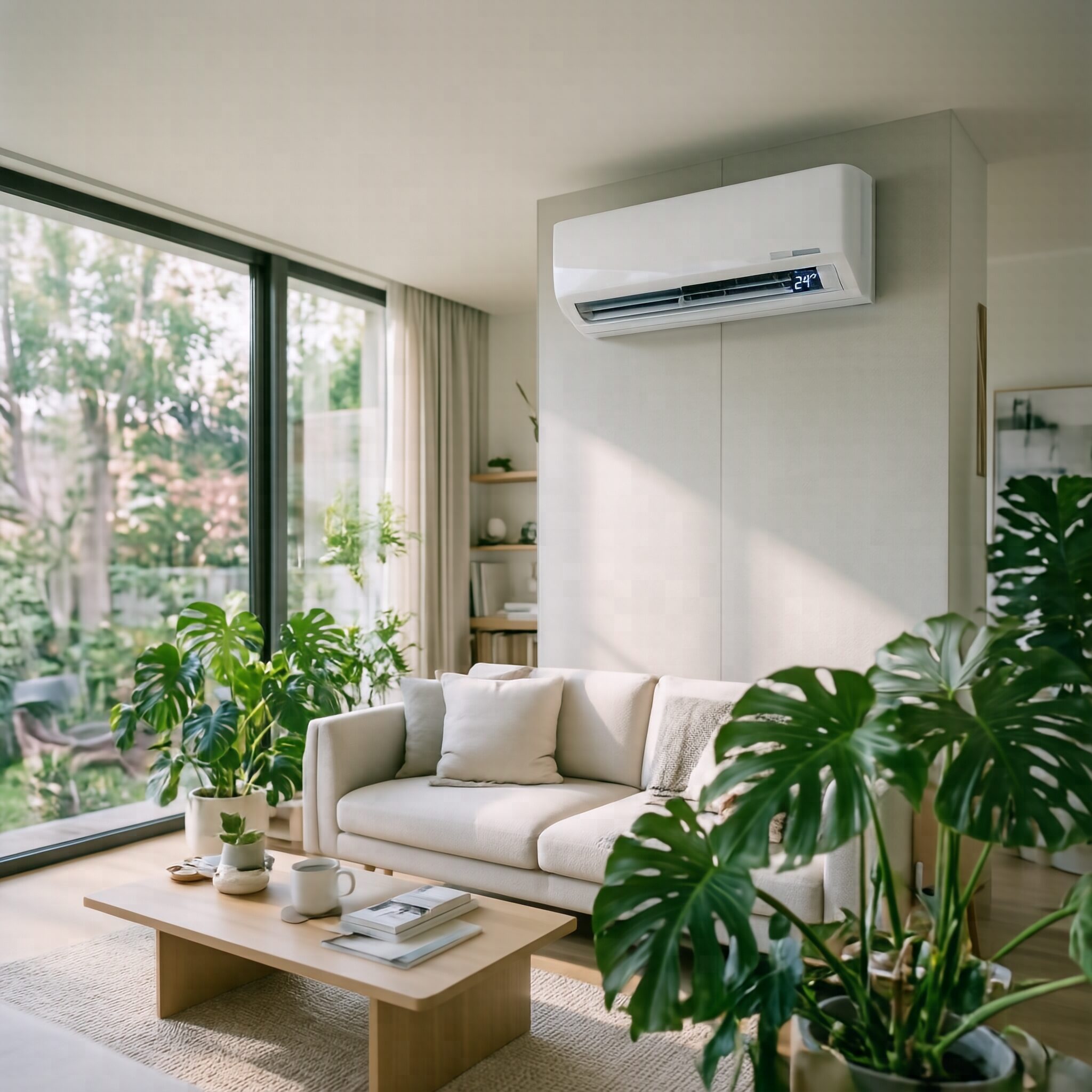
Many homeowners prefer split air conditioners because they blend beautifully into modern interiors.
Their sleek indoor units occupy little wall space and create a clean appearance.
On the other hand, window air conditioners are more noticeable because the entire unit extends through the wall or window.
Therefore, if aesthetics matter to you, split AC systems usually offer a more elegant solution.
Noise Levels
Noise is another important factor.
Split air conditioners are much quieter because the compressor remains outside the building.
This makes them ideal for:
Bedrooms
Home offices
Libraries
Hotels
Study rooms
Window air conditioners, however, produce more noise since the compressor operates inside the same unit installed in the room.
Although many newer models are quieter than older versions, they generally cannot match the silence of split systems.
Maintenance
Routine maintenance keeps both systems operating efficiently.
Split AC maintenance includes:
Cleaning indoor filters
Servicing the outdoor unit
Checking refrigerant levels
Inspecting electrical connections
Window AC maintenance usually involves:
Cleaning filters
Removing dust from condenser coils
Inspecting drainage systems
Fortunately, both systems are relatively easy to maintain when serviced regularly.
Cost Comparison
Purchase price is often one of the deciding factors.
Generally:
Split Air Conditioners
Advantages:
Better efficiency
Premium appearance
Quieter operation
Advanced features
Disadvantage:
Higher purchase price
Higher installation cost
Window Air Conditioners
Advantages:
Lower purchase cost
Affordable installation
Simple maintenance
Disadvantage:
Higher operating noise
Less attractive appearance
Limited cooling capacity
Therefore, buyers should consider both the initial cost and long-term operating expenses.
Space Requirements
The amount of available space also affects your decision.
Split air conditioners require:
Indoor wall space
Outdoor installation area
Proper pipe routing
Window air conditioners require:
A suitable window
Wall opening if necessary
Adequate outdoor ventilation
If your building lacks suitable window space, installing a split AC may be the better choice.
Which One Is Better for Small Rooms?
For bedrooms, small offices, and studio apartments, both options perform well.
However:
Choose a window AC if:
You have a limited budget.
The room is relatively small.
Easy installation is important.
Choose a split AC if:
You want quieter operation.
Energy efficiency matters.
You prefer modern aesthetics.
Which One Is Better for Large Rooms?
Large living rooms, offices, conference rooms, and commercial spaces generally benefit more from split air conditioners.
Their higher cooling capacity allows them to cool larger spaces more efficiently while maintaining consistent temperatures.
Therefore, split AC systems are usually recommended for larger environments.
Performance During Nigerian Weather
Nigeria experiences prolonged periods of high temperatures.
Split air conditioners perform exceptionally well during extended daily operation because many models use inverter technology that reduces electricity consumption.
Additionally, they work efficiently with home inverter systems and solar backup solutions.
Window air conditioners also perform well but may consume more electricity during prolonged use.
Conclusion
When comparing Split AC vs Window AC: Which Air Conditioner Is Better for Your Space?, there is no one-size-fits-all answer. Split air conditioners offer quieter operation, better energy efficiency, superior cooling performance, and a modern appearance, making them an excellent long-term investment for most homes.
On the other hand, window air conditioners remain a practical option for smaller rooms, limited budgets, and simple installations. By considering your room size, energy usage, budget, and installation requirements, you can confidently choose the air conditioner that best meets your needs and keeps your home comfortable throughout Nigeria’s hot seasons.












 Get it on
  Download on the