






- Adaobi
- July 9, 2026
- No Comments
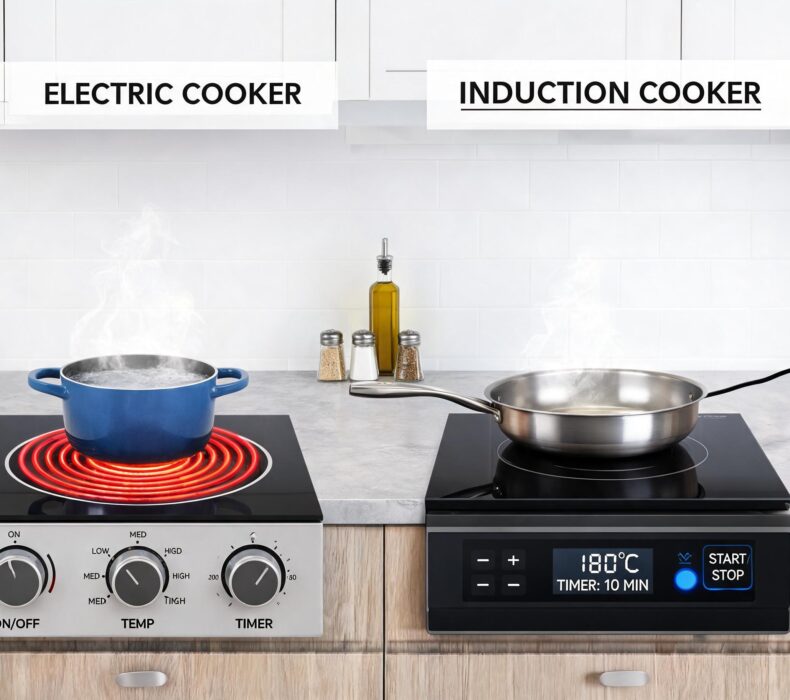
Choosing between an Electric Cooker vs Induction Cooker can be challenging, especially with so many modern cooking appliances available today. Both options offer convenience, energy efficiency, and reliable performance, but they work differently and suit different cooking needs. Moreover, understanding their features, advantages, and limitations will help you select the best appliance for your kitchen, lifestyle, and budget. Whether you are furnishing a new apartment, upgrading your kitchen, or replacing an old cooker, this guide will help you make an informed decision.
What Is an Electric Cooker?
An electric cooker is a kitchen appliance that uses electric heating elements to generate heat for cooking. Depending on the model, it may feature solid hot plates, ceramic glass surfaces, or electric coil burners.
Electric cookers are widely used because they are simple to operate and compatible with most types of cookware.
Some common features include:
- Adjustable temperature controls
- Multiple cooking zones
- Durable cooking surfaces
- Easy-to-clean designs
- Consistent heat distribution
As a result, electric cookers are suitable for everyday home cooking.
What Is an Induction Cooker?
An induction cooker uses electromagnetic technology to heat cookware directly instead of heating the cooking surface first. Consequently, cooking is faster, safer, and more energy-efficient.
However, induction cookers require cookware made from magnetic materials such as cast iron or magnetic stainless steel.
Popular features include:
- Fast heating
- Precise temperature control
- Touch controls
- Automatic pan detection
- Energy-saving operation
- Safety lock functions
Therefore, induction cookers have become increasingly popular in modern kitchens.
Electric Cooker vs Induction Cooker: Key Differences
Although both appliances use electricity, they operate differently.
Cooking Speed
Induction cookers heat cookware almost instantly.
Therefore, they boil water and cook meals much faster than traditional electric cookers.
Electric cookers, on the other hand, require time for the heating element to warm up before transferring heat to the pot.
Winner: Induction Cooker
Energy Efficiency
Induction technology transfers most of its energy directly into the cookware.
As a result, very little heat is wasted.
Electric cookers lose more heat because the heating element warms the cooking surface first.
Winner: Induction Cooker
Safety
Safety is an important consideration for every kitchen.
Induction cookers only heat compatible cookware while the cooking surface remains relatively cool.
Additionally, many models automatically switch off when cookware is removed.
Electric cookers retain heat for a longer period after cooking.
Therefore, accidental burns are more likely.
Winner: Induction Cooker
Cookware Compatibility
Electric cookers work with almost every type of cookware, including:
- Aluminum
- Stainless steel
- Ceramic
- Glass
- Cast iron
Induction cookers require magnetic cookware.
If your existing pots are not induction-compatible, you may need to purchase new ones.
Winner: Electric Cooker
Ease of Cleaning
Induction cookers have smooth glass surfaces that are easy to wipe clean because spilled food rarely burns onto the surface.
Similarly, ceramic electric cookers are also easy to clean.
However, traditional coil electric cookers may require more effort.
Winner: Induction Cooker
Temperature Control
Induction cookers provide very precise temperature adjustments.
Consequently, they are excellent for delicate cooking tasks like simmering sauces or melting chocolate.
Electric cookers usually respond more slowly when temperature settings are changed.
Winner: Induction Cooker
Purchase Cost
Electric cookers are generally more affordable than induction cookers.
Additionally, they do not require special cookware.
Therefore, they often have a lower overall cost for first-time buyers.
Winner: Electric Cooker
Advantages of an Electric Cooker
Electric cookers remain a popular choice for many households because they offer several practical benefits.
Advantages include:
- Affordable pricing
- Compatible with most cookware
- Reliable performance
- Simple operation
- Widely available
- Suitable for everyday cooking
Furthermore, maintenance is straightforward, making them ideal for many families.
Advantages of an Induction Cooker
Induction cookers continue to grow in popularity because of their advanced technology.
Their key benefits include:
- Faster cooking times
- Excellent energy efficiency
- Improved safety
- Precise temperature control
- Modern appearance
- Lower heat loss
- Easy cleaning
As a result, they are perfect for busy households that value speed and convenience.
Disadvantages of an Electric Cooker
While electric cookers offer many benefits, they also have a few drawbacks.
These include:
- Slower heating
- Higher energy consumption
- Hot cooking surfaces after use
- Longer cooking times
Nevertheless, they remain a dependable choice for many kitchens.
Disadvantages of an Induction Cooker
Despite their impressive performance, induction cookers are not suitable for everyone.
Some limitations include:
- Higher purchase price
- Requires induction-compatible cookware
- Glass surfaces require careful handling
- Repairs may be more expensive
Therefore, buyers should consider both the initial cost and long-term benefits.
Which Cooker Is Best for Small Kitchens?
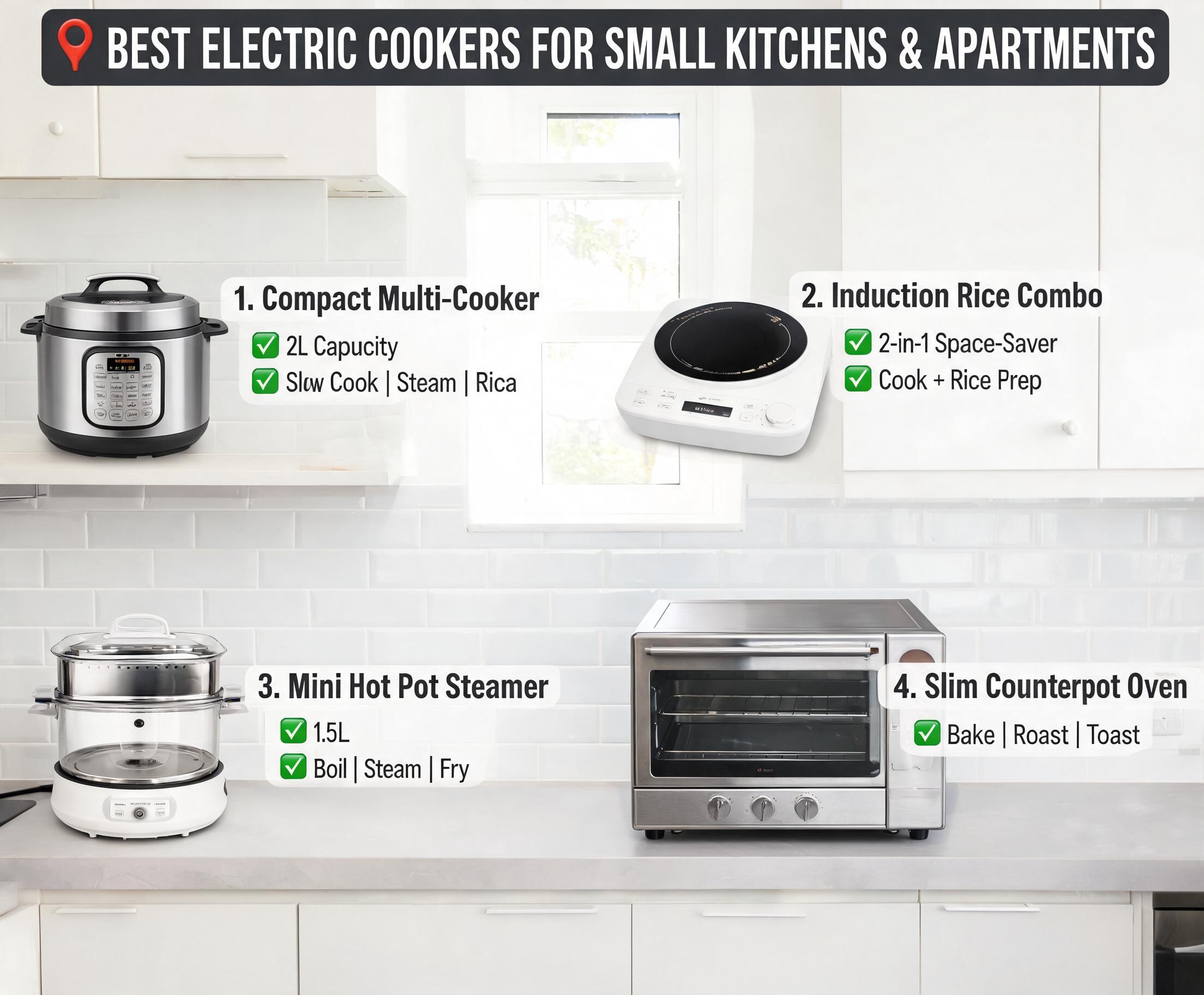
If you have limited kitchen space, both appliances offer compact options.
However, induction cookers usually have slimmer designs and generate less excess heat.
Consequently, they are an excellent choice for apartments, hostels, and small kitchens.
Which Cooker Saves More Electricity?
Induction cookers are generally more energy-efficient because they transfer heat directly into the cookware.
As a result, cooking is faster while consuming less electricity.
Although electric cookers are also efficient, they typically use more energy due to heat loss.
Therefore, induction cookers are usually the better option for reducing electricity costs.
Conclusion
When comparing Electric Cooker vs Induction Cooker, the best choice depends on your cooking habits, kitchen setup, and budget. Electric cookers are affordable, versatile, and compatible with nearly all cookware, making them an excellent option for many households. On the other hand, induction cookers deliver faster cooking, greater energy efficiency, enhanced safety, and precise temperature control, making them ideal for modern kitchens.






 Get it on
  Download on the