The skincare industry has evolved tremendously over the past decade, introducing countless ingredients that promise healthier, smoother, and younger-looking skin. Among the most talked-about ingredients today are peptide serum and ceramide serum. Both have earned a reputation for improving skin health, but they work in completely different ways.
If you’ve ever wondered whether you should buy a peptide serum or a ceramide serum, you’re not alone. Many skincare enthusiasts in Nigeria and around the world struggle to understand the difference between these two popular products.
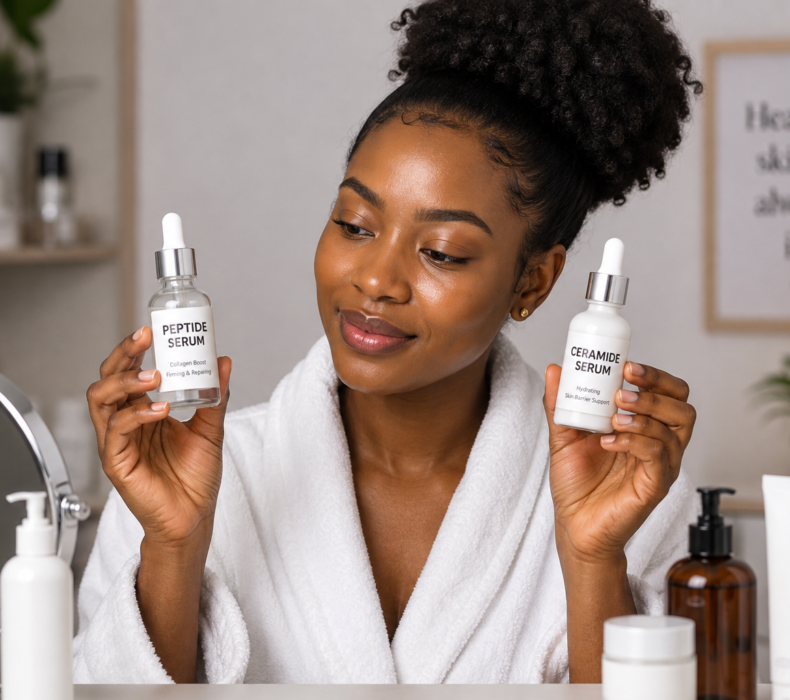
In this comprehensive guide, we’ll explain everything you need to know aboutPeptide Serum vs Ceramide Serum, including how they work, their benefits, who should use them, and whether they can be used together.
What is a Peptide Serum?
A peptide serum is a skincare product formulated with peptides—short chains of amino acids that act as building blocks of proteins such as collagen, elastin, and keratin.
Collagen and elastin are responsible for keeping the skin firm, youthful, and elastic. As we age, our natural collagen production slows down, leading to wrinkles, sagging skin, and fine lines.
Peptides help send signals to the skin, encouraging it to produce more collagen and repair itself naturally.
Benefits of Peptide Serum
Boosts Collagen Production
One of the biggest advantages of peptide serum is its ability to stimulate collagen synthesis, making skin appear firmer and younger.
Reduces Fine Lines and Wrinkles
Regular use can visibly reduce signs of aging by improving skin elasticity.
Improves Skin Texture
Peptides help smooth rough patches and uneven skin, leaving the complexion softer.
Speeds Skin Repair
Peptides support the skin’s natural healing process, making them excellent for damaged or stressed skin.
Hydrates the Skin
Many peptide serums contain additional moisturizing ingredients like hyaluronic acid to improve hydration.
What is a Ceramide Serum?
A ceramide serum contains ceramides, which are naturally occurring lipids (fats) found in the outer layer of the skin.
Ceramides make up nearly 50% of the skin barrier. Their primary job is to keep moisture inside the skin while preventing irritants and pollutants from entering.
Unfortunately, aging, harsh cleansers, pollution, and excessive sun exposure reduce the skin’s natural ceramide levels.
A ceramide serum helps replenish these essential lipids, restoring the skin barrier.
Benefits of Ceramide Serum
Repairs the Skin Barrier
Ceramides strengthen the skin’s protective layer.
Prevents Moisture Loss
The skin stays hydrated longer because ceramides lock in water.
Soothes Sensitive Skin
Ceramide serum is ideal for irritated, inflamed, or eczema-prone skin.
Reduces Dryness
People with flaky or dehydrated skin often notice significant improvement after consistent use.
Protects Against Environmental Damage
A healthy skin barrier provides better protection against pollution, harsh weather, and bacteria.
Peptide Serum vs Ceramide Serum: The Main Differences
Although both products improve skin health, they serve different purposes.
Feature
Peptide Serum
Ceramide Serum
Main Function
Boosts collagen production
Repairs skin barrier
Best For
Anti-aging
Dry and damaged skin
Targets
Wrinkles, sagging, fine lines
Dryness, irritation, sensitivity
Skin Type
Mature, normal, combination
Dry, sensitive, eczema-prone
Primary Benefit
Firmer skin
Stronger moisture barrier
Key Ingredient
Peptides
Ceramides
How Peptide Serum Works
Peptides communicate directly with skin cells.
When your skin detects peptides, it interprets them as signals that collagen has been damaged. In response, it begins producing more collagen and elastin.
Over time, this results in:
Firmer skin
Fewer wrinkles
Better elasticity
Improved skin texture
Younger-looking complexion
How Ceramide Serum Works
Ceramides function differently.
Instead of stimulating collagen, they fill the tiny gaps between skin cells.
Think of your skin barrier like a brick wall.
Skin cells are the bricks.
Ceramides are the cement holding everything together.
When ceramides are depleted, the “cement” weakens, allowing moisture to escape and irritants to enter. Applying a ceramide serum restores this protective layer.
Which Skin Types Benefit Most?
Peptide Serum is Best For
Aging skin
Mature skin
Fine lines
Wrinkles
Loss of firmness
Uneven texture
Ceramide Serum is Best For
Dry skin
Sensitive skin
Dehydrated skin
Compromised skin barrier
Eczema-prone skin
Redness and irritation
Can You Use Peptide Serum and Ceramide Serum Together?
Absolutely.
In fact, many dermatologists recommend combining both because they complement each other perfectly.
Peptides work on repairing and rebuilding the skin from within, while ceramides strengthen the outer protective barrier.
Using both provides comprehensive skincare benefits.
A simple routine could be:
Morning
Gentle cleanser
Peptide serum
Ceramide serum
Moisturizer
Sunscreen
Evening
Cleanser
Peptide serum
Ceramide serum
Night moisturizer
Which Serum is Better for Anti-Aging?
If anti-aging is your primary concern, peptide serum is the better option.
It helps:
Stimulate collagen
Improve elasticity
Smooth wrinkles
Firm loose skin
While ceramides contribute to healthier-looking skin by improving hydration, they do not directly stimulate collagen production.
Which Serum is Better for Dry Skin?
Ceramide serum is the clear winner for dry skin.
It restores the skin barrier, preventing water loss and keeping skin moisturized throughout the day.
People suffering from:
flaky skin
itchy skin
tight skin
dehydrated skin
often see dramatic improvements with ceramide-based products.
Which Serum is Better for Sensitive Skin?
Sensitive skin generally responds better to ceramide serum.
Ceramides help calm inflammation while reducing irritation caused by:
weather
over-exfoliation
harsh cleansers
active skincare ingredients
Can Oily Skin Use These Serums?
Yes.
Modern peptide and ceramide serums are lightweight and non-greasy.
People with oily skin should choose:
oil-free formulas
fragrance-free products
non-comedogenic serums
These formulations hydrate without clogging pores.
Peptide Serum vs Ceramide Serum for Acne-Prone Skin
Acne-prone skin can benefit from both ingredients.
Peptides help reduce post-acne marks by supporting skin repair and collagen production.
Ceramides repair the skin barrier, which often becomes damaged after using acne treatments such as benzoyl peroxide or retinoids.
Together, they promote healthier skin without worsening breakouts.
Are There Any Side Effects?
Both ingredients are considered among the safest in skincare.
Possible side effects include:
mild irritation
redness (rare)
allergic reactions (very uncommon)
To minimize risk:
perform a patch test
introduce one new product at a time
follow product instructions
How to Choose Between Peptide Serum and Ceramide Serum
Choose a Peptide Serum if you want:
fewer wrinkles
firmer skin
collagen support
anti-aging benefits
smoother skin texture
Choose a Ceramide Serum if you want:
intense hydration
barrier repair
relief from dryness
reduced sensitivity
healthier skin overall
Ingredients That Pair Well with Peptides
Peptide serum works exceptionally well with:
Hyaluronic Acid
Niacinamide
Ceramides
Vitamin E
Glycerin
Avoid combining peptides with highly acidic products in the same routine if the product directions advise against it, as this may reduce effectiveness in some formulations.
Ingredients That Pair Well with Ceramides
Ceramide serum pairs beautifully with:
Hyaluronic Acid
Peptides
Niacinamide
Squalane
Panthenol
These combinations provide deep hydration while reinforcing the skin barrier.
Common Myths About Peptide Serum and Ceramide Serum
Myth 1: They Do the Same Thing
False. Peptides promote collagen production, while ceramides repair and protect the skin barrier.
Myth 2: Only Older People Need Peptide Serum
Not true. Adults in their 20s and 30s can use peptides as a preventive anti-aging measure.
Myth 3: Ceramides Make Oily Skin Greasy
False. Lightweight ceramide serums are suitable for oily and combination skin types.
Myth 4: You Must Choose One
Wrong. Using both together often delivers better overall skin health than using either alone.
Frequently Asked Questions
Is peptide serum better than ceramide serum?
Neither is universally better. Peptide serum excels at reducing signs of aging, while ceramide serum is best for restoring hydration and strengthening the skin barrier. Your choice depends on your skin’s needs.
Can I use peptide serum every day?
Yes. Most peptide serums are gentle enough for twice-daily use unless the manufacturer recommends otherwise.
Can ceramide serum clog pores?
Most ceramide serums are formulated to be non-comedogenic and are unlikely to clog pores when used as directed.
Which serum should beginners use?
Beginners with dry or sensitive skin often benefit from starting with a ceramide serum. Those focused on preventing or reducing fine lines may prefer a peptide serum.
Can I layer peptide and ceramide serums?
Yes. Apply the lighter serum first if the textures differ, then follow with the other serum and finish with a moisturizer and sunscreen during the day.
Final Thoughts
When comparingPeptide Serum vs Ceramide Serum, it’s clear that both ingredients play unique and valuable roles in a healthy skincare routine. A peptide serum is the go-to choice for boosting collagen, improving firmness, and reducing wrinkles, making it ideal for those concerned about aging skin. On the other hand, a ceramide serum excels at restoring the skin barrier, locking in moisture, and soothing dryness or sensitivity.
Rather than viewing them as competitors, think of them as complementary skincare essentials. If your goal is radiant, resilient, and youthful-looking skin, incorporating both into your routine can provide the best of both worlds. By selecting high-quality serums suited to your skin type and using them consistently, you can achieve healthier, smoother, and more balanced skin over time.














 Get it on
  Download on the