Knowing How to Clean and Maintain Your Air Humidifier for Long-Lasting Performance is essential if you want your appliance to work efficiently and provide clean, healthy moisture. Over time, mineral deposits, bacteria, mold, and dust can build up inside a humidifier, especially if it is not cleaned regularly. Fortunately, proper maintenance is simple and only takes a few minutes. By following the right cleaning routine, you can improve your humidifier’s performance, extend its lifespan, and enjoy fresher indoor air throughout the year.
Why Cleaning Your Air Humidifier Is Important
An air humidifier works by adding moisture to indoor air, making your home more comfortable during dry conditions. However, because it stores water, it can become a breeding ground for bacteria, mold, and mineral buildup if neglected.
Regular cleaning helps you:
Maintain healthy indoor air
Prevent mold and bacteria growth
Improve humidifier efficiency
Extend the lifespan of the appliance
Reduce unpleasant odors
Prevent mineral buildup
Ensure consistent mist output
Therefore, cleaning should be part of your regular home maintenance routine.
How Often Should You Clean Your Air Humidifier?
The cleaning frequency depends on how often you use your humidifier.
Here is a simple maintenance schedule:
Empty the water tank after each use.
Rinse the tank daily if the humidifier is used every day.
Perform a deep cleaning at least once a week.
Replace filters according to the manufacturer’s recommendations.
Inspect the humidifier monthly for signs of wear or damage.
Following this schedule helps keep your humidifier in excellent condition.
How to Clean and Maintain Your Air Humidifier for Long-Lasting Performance
Understanding How to Clean and Maintain Your Air Humidifier for Long-Lasting Performance involves following a few straightforward steps.
Step 1: Unplug the Humidifier
Before cleaning, always disconnect the humidifier from the power source.
This simple step protects both you and the appliance during maintenance.
Step 2: Empty the Water Tank
Pour out any remaining water from the tank.
Avoid leaving standing water inside the humidifier because it encourages bacterial growth.
Afterward, rinse the tank with clean water.
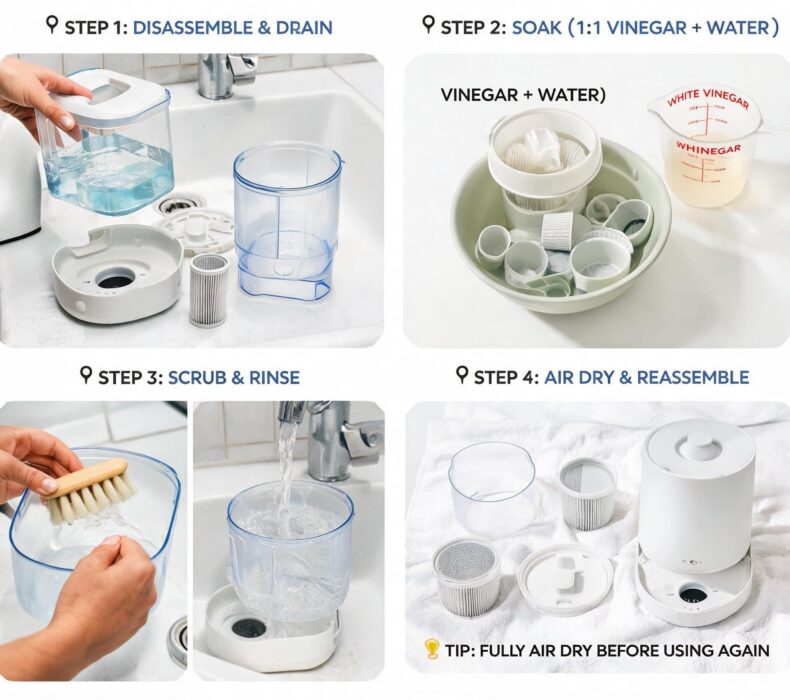
Step 3: Disassemble the Humidifier
Remove all detachable parts according to the manufacturer’s instructions.
These may include:
Water tank
Mist nozzle
Water tray
Filter
Water reservoir
Cleaning each component separately ensures better results.
Step 4: Remove Mineral Deposits
Hard water can leave mineral deposits inside the humidifier over time.
To remove them:
Fill the tank with equal parts white vinegar and water.
Allow the solution to sit for about 20 to 30 minutes.
Gently scrub the interior with a soft brush or sponge.
Rinse thoroughly with clean water.
This method helps dissolve stubborn mineral buildup naturally.
Step 5: Disinfect the Water Tank
After removing mineral deposits, disinfect the tank to reduce bacteria and mold.
A simple solution of water and a small amount of household bleach can be used if recommended by the manufacturer. Let it sit briefly, then rinse several times with clean water until no bleach odor remains.
Always check your humidifier’s manual before using any disinfectant, as some manufacturers recommend alternative cleaning methods.
Step 6: Clean the Exterior
Dust can accumulate on the outside of your humidifier.
Wipe the exterior with a soft, damp cloth.
Additionally, clean the control panel carefully without allowing water to enter electrical components.
Step 7: Dry Every Part Completely
Allow all components to air dry completely before reassembling the humidifier.
This reduces the chance of mold developing inside the appliance.
Choosing the Right Water
The type of water you use affects how clean your humidifier remains.
Distilled Water
Distilled water contains very few minerals.
As a result, it reduces white dust and mineral deposits inside the humidifier.
Filtered Water
Filtered water is another good option because it contains fewer impurities than untreated tap water.
Tap Water
Although many humidifiers can use tap water, hard water may increase mineral buildup and require more frequent cleaning.
Therefore, distilled or filtered water is often the better choice when available.
Replacing the Filter
Some humidifiers include replaceable filters.
These filters help remove impurities before moisture enters the air.
To maintain good performance:
Check the filter regularly.
Replace it according to the manufacturer’s schedule.
Replace it sooner if it appears dirty or damaged.
A clean filter improves both efficiency and indoor air quality.
Common Maintenance Mistakes to Avoid
Many users unknowingly reduce their humidifier’s lifespan by making simple mistakes.
Avoid the following:
Leaving Water in the Tank
Standing water encourages bacteria and mold growth.
Instead, empty the tank after each use.
Ignoring Weekly Cleaning
Even if your humidifier appears clean, invisible bacteria and mineral deposits can still accumulate.
Regular deep cleaning is essential.
Using Harsh Cleaning Products
Strong chemicals may damage internal components.
Instead, use manufacturer-approved cleaning methods.
Forgetting to Replace Filters
Dirty filters reduce airflow and humidifier performance.
Therefore, replacing filters on time is important.
Storing the Humidifier While Wet
Before storing the humidifier for an extended period, ensure every part is completely dry.
This helps prevent mold during storage.
Tips for Long-Lasting Performance
Keeping your humidifier in excellent condition does not require much effort.
Simply follow these best practices:
Use clean water.
Clean the tank regularly.
Replace filters when necessary.
Store the humidifier in a dry location.
Inspect the appliance periodically.
Follow the manufacturer’s maintenance instructions.
By doing so, you can enjoy reliable performance for many years.
Signs Your Humidifier Needs Cleaning
Sometimes your humidifier will show clear signs that maintenance is overdue.
Watch for:
Reduced mist output
White mineral deposits
Unpleasant odors
Visible mold
Cloudy water
Increased operating noise
Cleaning the appliance promptly restores its efficiency and helps maintain healthier indoor air.
Conclusion
Understanding How to Clean and Maintain Your Air Humidifier for Long-Lasting Performanceis one of the best ways to protect your investment and maintain a healthier home. Routine cleaning helps prevent mineral buildup, bacteria, and mold while ensuring your humidifier continues to produce clean, comfortable moisture.
By using clean water, following a consistent maintenance schedule, replacing filters when needed, and storing the appliance properly, you can extend its lifespan and enjoy reliable performance for years. A few minutes of regular care will keep your humidifier operating efficiently, providing a fresher and more comfortable indoor environment every day.












 Get it on
  Download on the