






- Adaobi
- May 22, 2026
- No Comments
Understanding How an Inverter Works
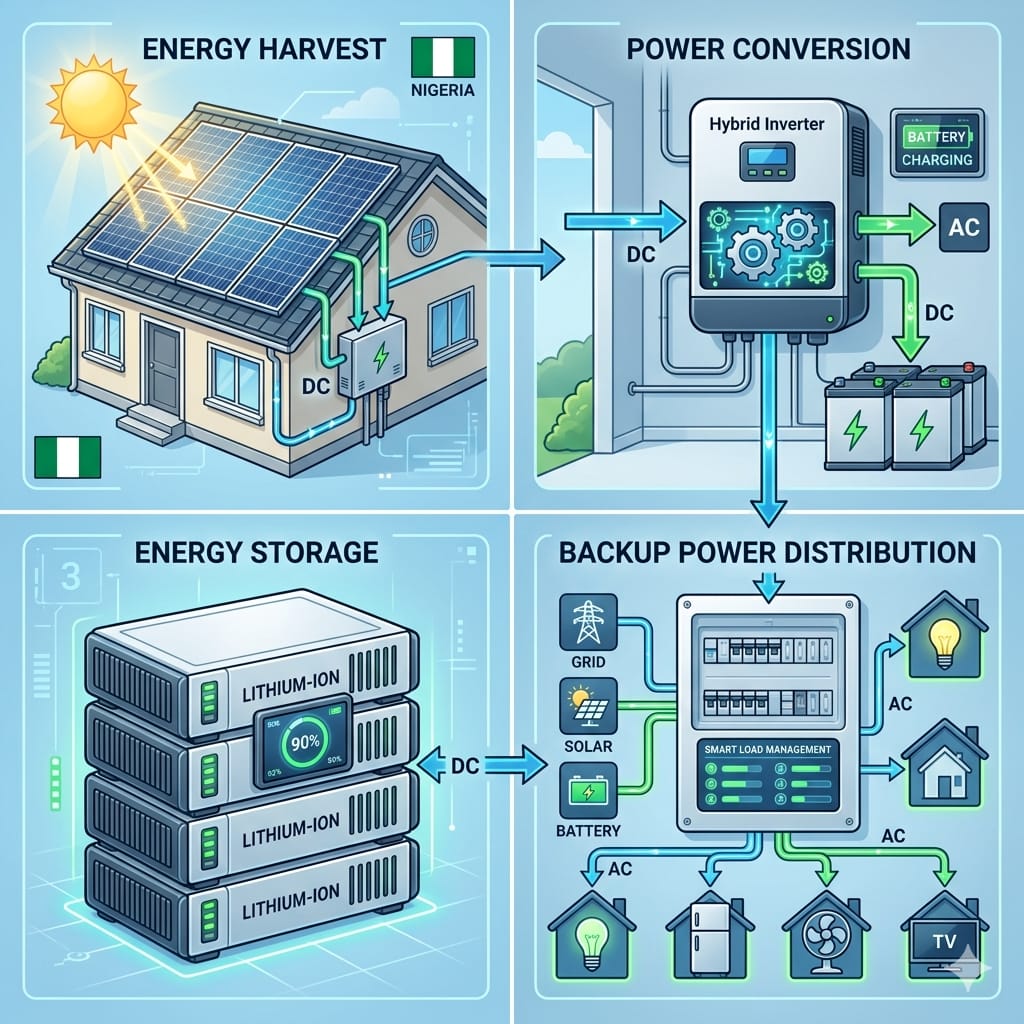
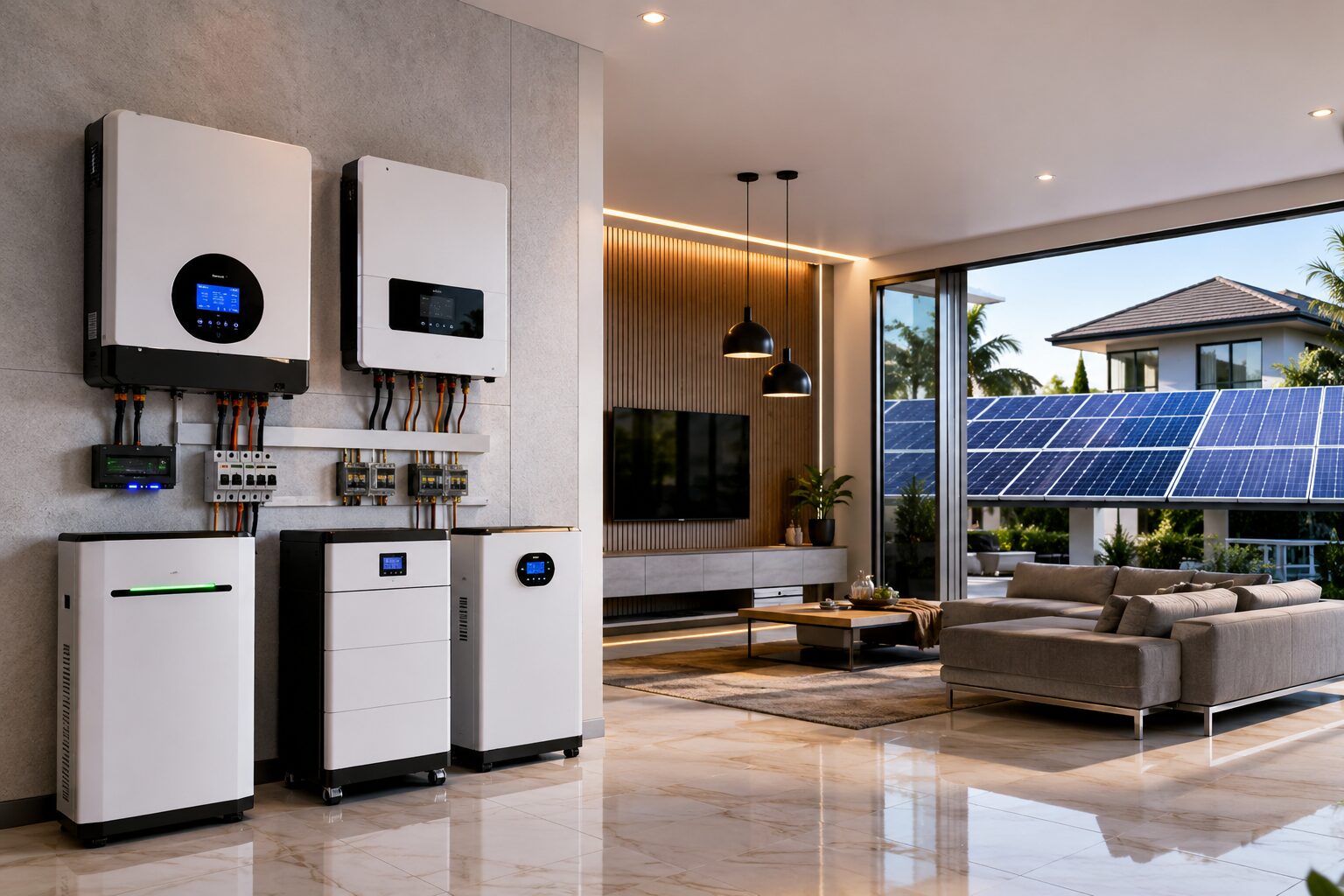
An inverter is a power backup system that stores electricity in batteries and converts it into usable household current during blackouts. Unlike generators, inverters do not rely on fuel to produce electricity directly.
When public electricity is available, the inverter charges its batteries automatically. Once power goes out, the stored energy supplies electricity to selected appliances and devices.
Many modern inverter systems also work with solar panels, making them even more energy-efficient and environmentally friendly.
Why Fuel Costs Continue to Rise in Nigeria
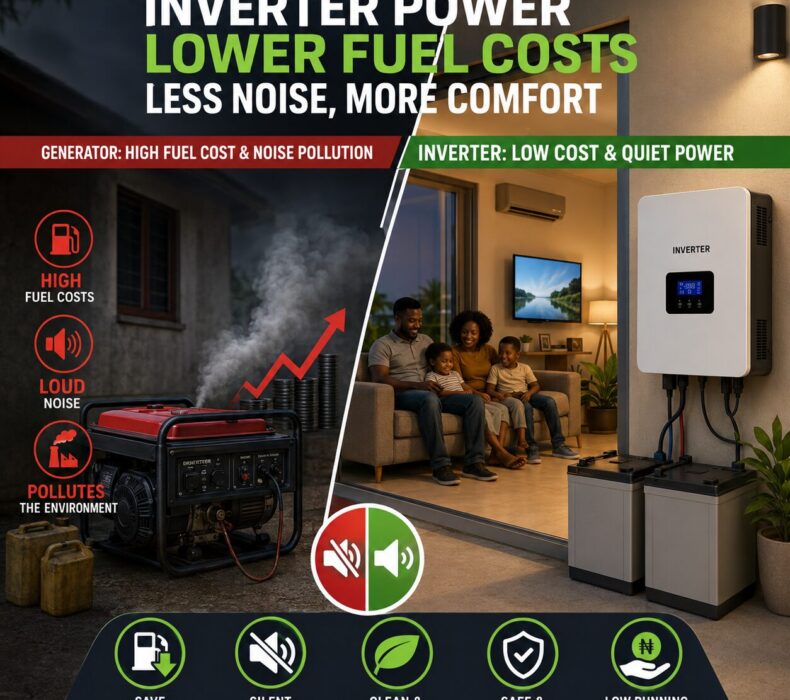
Fuel prices have increased steadily over the years. Consequently, generator owners now spend more money keeping their homes powered.
Several factors contribute to rising fuel expenses:
- Increased petrol and diesel prices
- Frequent electricity outages
- High generator maintenance costs
- Growing dependence on backup power systems
- Transportation and supply challenges
For many families, running a generator daily has become financially stressful. Therefore, homeowners are now searching for affordable alternatives that can reduce long-term energy expenses.
How Inverters Reduce Fuel Costs
1. Less Dependence on Generators
One major advantage of an inverter is reduced generator usage. Instead of turning on a generator during every blackout, homeowners can rely on stored battery power for several hours.
This immediately lowers fuel consumption. Consequently, families buy petrol or diesel less frequently.
For households experiencing multiple daily outages, the savings can become substantial within a few months.
2. Lower Daily Energy Expenses
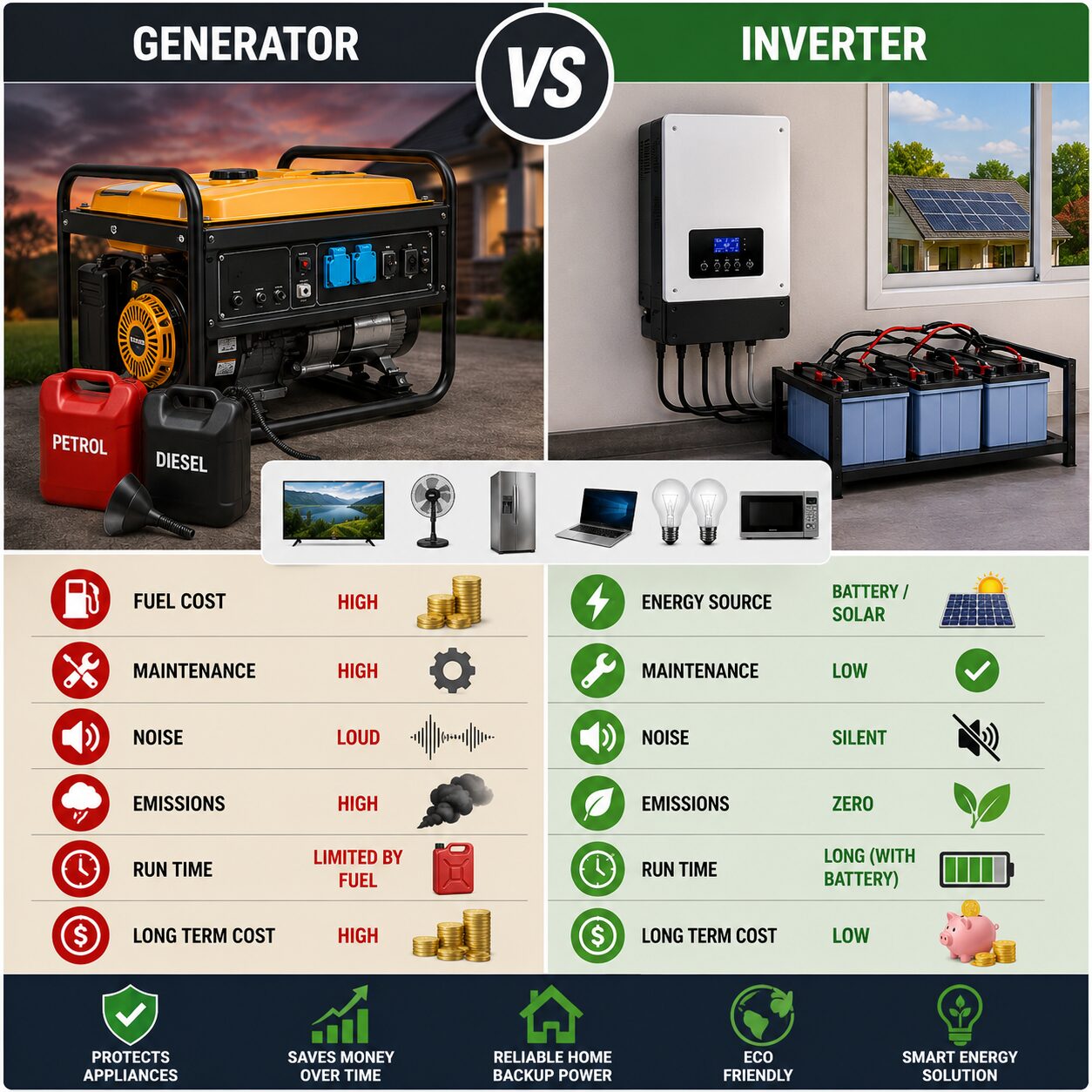
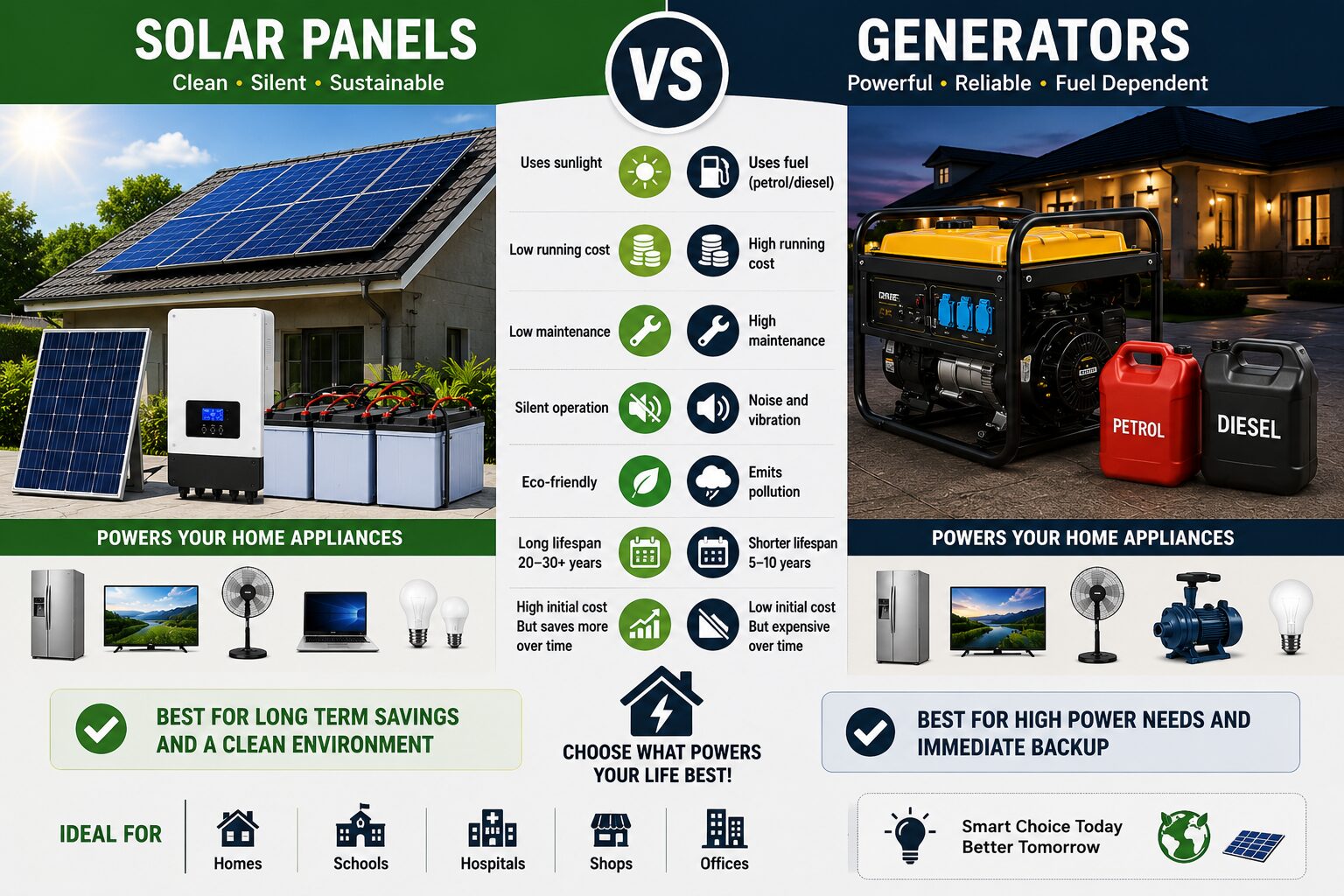
Generators consume fuel continuously while operating. Even small generators can use large amounts of petrol over time.
However, inverters consume stored electricity more efficiently. They only supply the energy required by connected appliances.
As a result, households spend less money on energy production every day.
3. Reduced Generator Running Time
Many Nigerian homes use generators for long hours because they lack alternative backup systems. Unfortunately, longer generator usage means higher fuel costs.
An inverter changes this completely. Families can reserve generators only for heavy appliances or extended outages.
For example, an inverter can power:
- Fans
- Televisions
- Lighting systems
- Internet routers
- Laptops
- Charging devices
Meanwhile, the generator only operates when absolutely necessary. Therefore, fuel usage drops significantly.
4. Solar Integration Provides Additional Savings
Modern inverter systems often support solar energy integration. Solar panels charge inverter batteries using sunlight instead of public electricity or fuel.
This setup helps homeowners reduce generator dependence even further.
Nigeria receives abundant sunlight throughout the year. Consequently, solar-powered inverters can deliver long-term savings for households seeking affordable energy solutions.
5. Lower Maintenance Costs
Generators require regular servicing, oil changes, and mechanical repairs. These maintenance costs increase alongside fuel expenses.
Inverters, on the other hand, have fewer moving parts and require less maintenance.
Because of this, homeowners save money not only on fuel but also on repair and servicing costs.
How Inverters Reduce Noise Pollution
1. Silent Operation Improves Comfort
One of the biggest complaints about generators is noise. Loud generator sounds often disturb sleep, conversations, relaxation, and work activities.
In contrast, inverter systems operate quietly. Most people barely notice when the inverter switches on during a blackout.
This silent operation creates a calmer and more peaceful home environment.
2. Better Sleep Quality
Noise pollution affects sleep quality significantly. Constant generator noise can make it difficult for children and adults to rest properly.
With an inverter system, homes remain quiet even during power outages. Consequently, families enjoy better sleep and improved comfort at night.
This benefit becomes especially valuable in densely populated neighborhoods.
3. Reduced Environmental Noise in Communities
In many Nigerian communities, multiple generators run simultaneously during blackouts. The combined noise can become overwhelming.
When more households adopt inverter systems, overall community noise reduces noticeably.
Therefore, inverter adoption contributes to quieter and healthier neighborhoods.
4. Improved Productivity at Home
Noise can reduce concentration and productivity, especially for people working remotely or studying online.
A noisy generator running nearby may interrupt virtual meetings, online classes, or focused work sessions.
Fortunately, inverters provide electricity without distracting sounds. As a result, homeowners can work, study, and communicate more effectively.
5. Better Experience for Children and Elderly Residents
Children and elderly individuals are often more sensitive to loud sounds. Constant generator noise may cause discomfort or stress.
A quieter home environment improves relaxation and overall well-being for every family member.
For this reason, many homeowners now prefer inverter systems over traditional generators.
Additional Benefits of Using an Inverter
Protects Appliances
Inverters provide stable electricity that helps protect electronics from sudden voltage fluctuations. This reduces the risk of appliance damage.
Eco-Friendly Energy Solution
Unlike generators, inverters do not produce harmful smoke or fumes during operation. Therefore, they support cleaner indoor and outdoor environments.
Convenient Automatic Switching
Modern inverter systems switch automatically when public electricity fails. Homeowners do not need to start generators manually.
This convenience saves time and reduces stress.
Tips for Choosing the Right Inverter
Before purchasing an inverter system, homeowners should consider the following factors:
Battery Capacity
Choose batteries that can support your household power needs effectively.
Power Load Requirements
Calculate the appliances you want to power during outages before selecting an inverter size.
Solar Compatibility
If possible, choose a system that supports future solar panel integration.
Professional Installation
Proper installation improves efficiency, safety, and long-term performance.
Conclusion
Inverters have become an essential energy solution for modern homes. They help families reduce fuel costs, minimize generator dependence, and enjoy quieter living environments.
As fuel prices continue to rise and electricity challenges persist, inverter systems provide a smarter and more cost-effective alternative. Additionally, their silent operation improves comfort, productivity, and overall quality of life.


 Get it on
  Download on the