





- Adaobi
- May 21, 2026
- No Comments
Understanding How Generators Work
A generator produces electricity by converting fuel energy into electrical power. Most generators in Nigeria run on petrol or diesel.
When public electricity fails:
- The generator engine starts
- Fuel powers the engine
- Electricity is generated for connected appliances
Generators are available in different sizes ranging from small portable units to heavy-duty industrial systems.
Understanding How Inverters Work
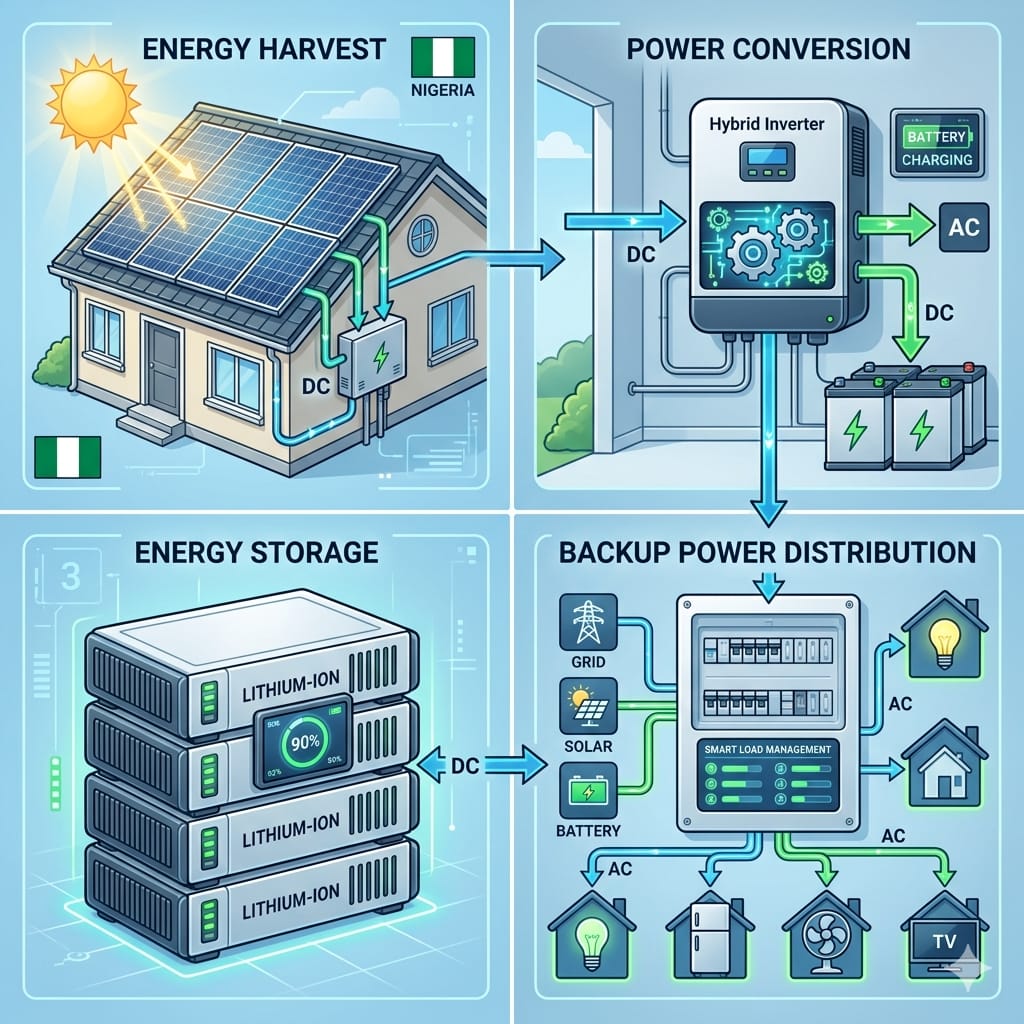
An inverter system operates differently from a generator. Instead of producing electricity directly from fuel, it converts stored battery power into usable household electricity.
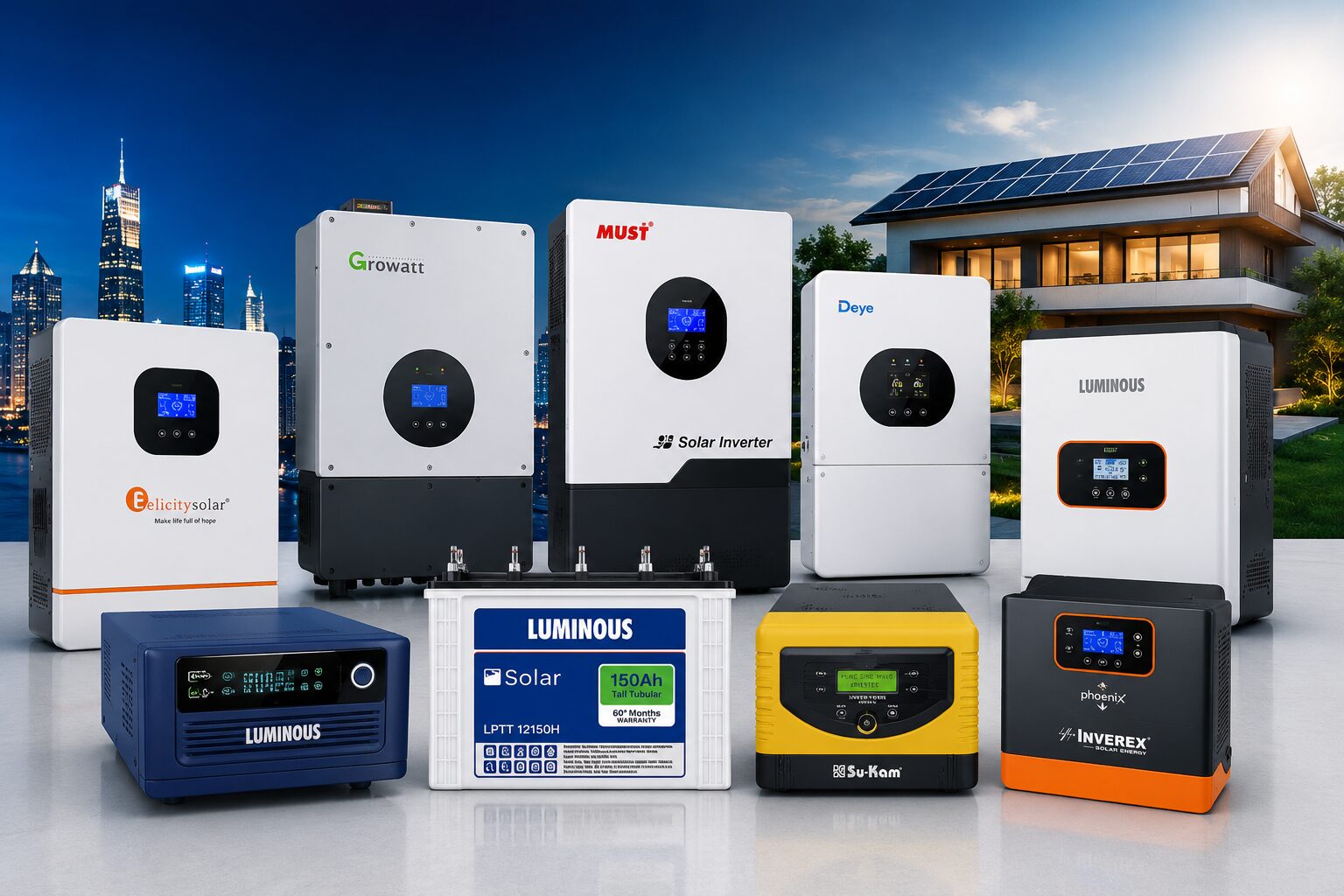
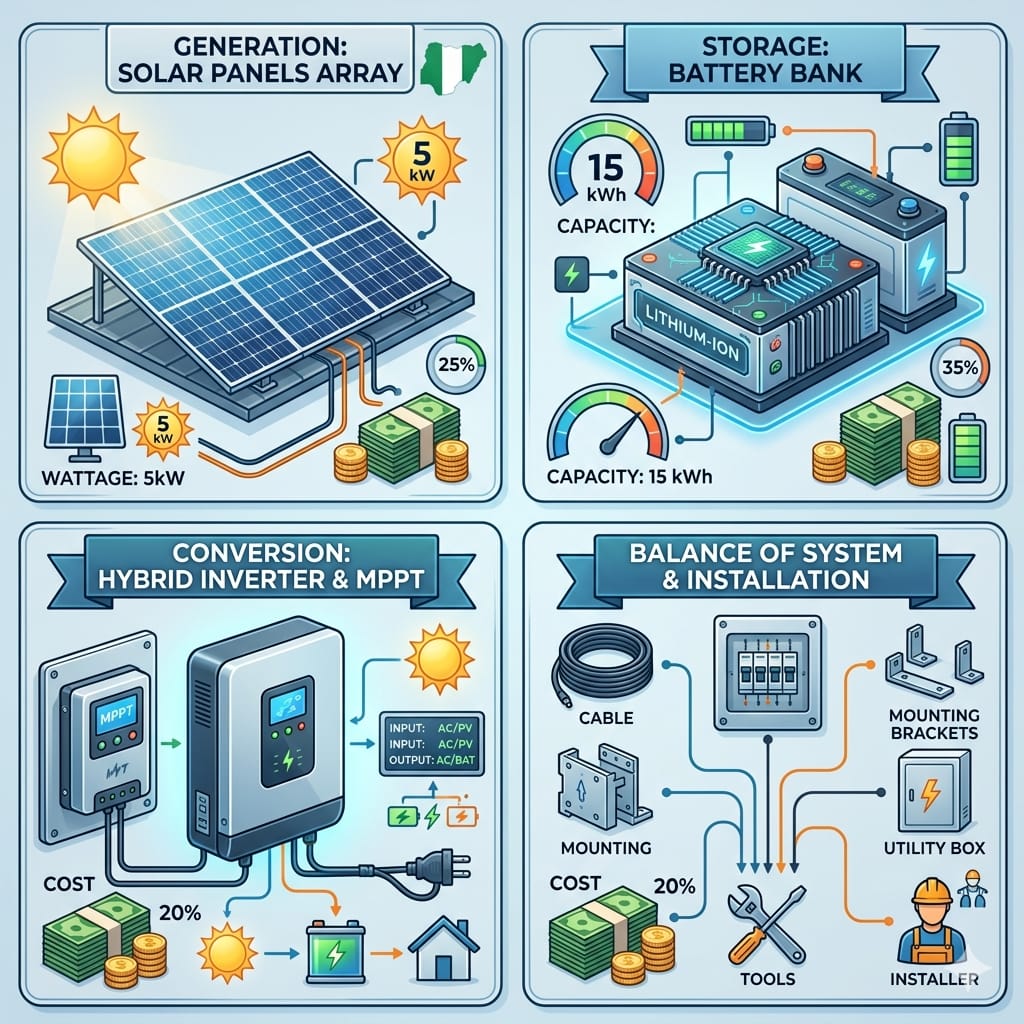
An inverter setup usually includes:
- An inverter unit
- Batteries
- Charging system
- Optional solar panels
When electricity is available, the inverter charges the batteries. During outages, the system automatically switches to battery power.
Noise Levels: Which Option Is Quieter?
One major difference between generators and inverters is noise production.
Generator Noise
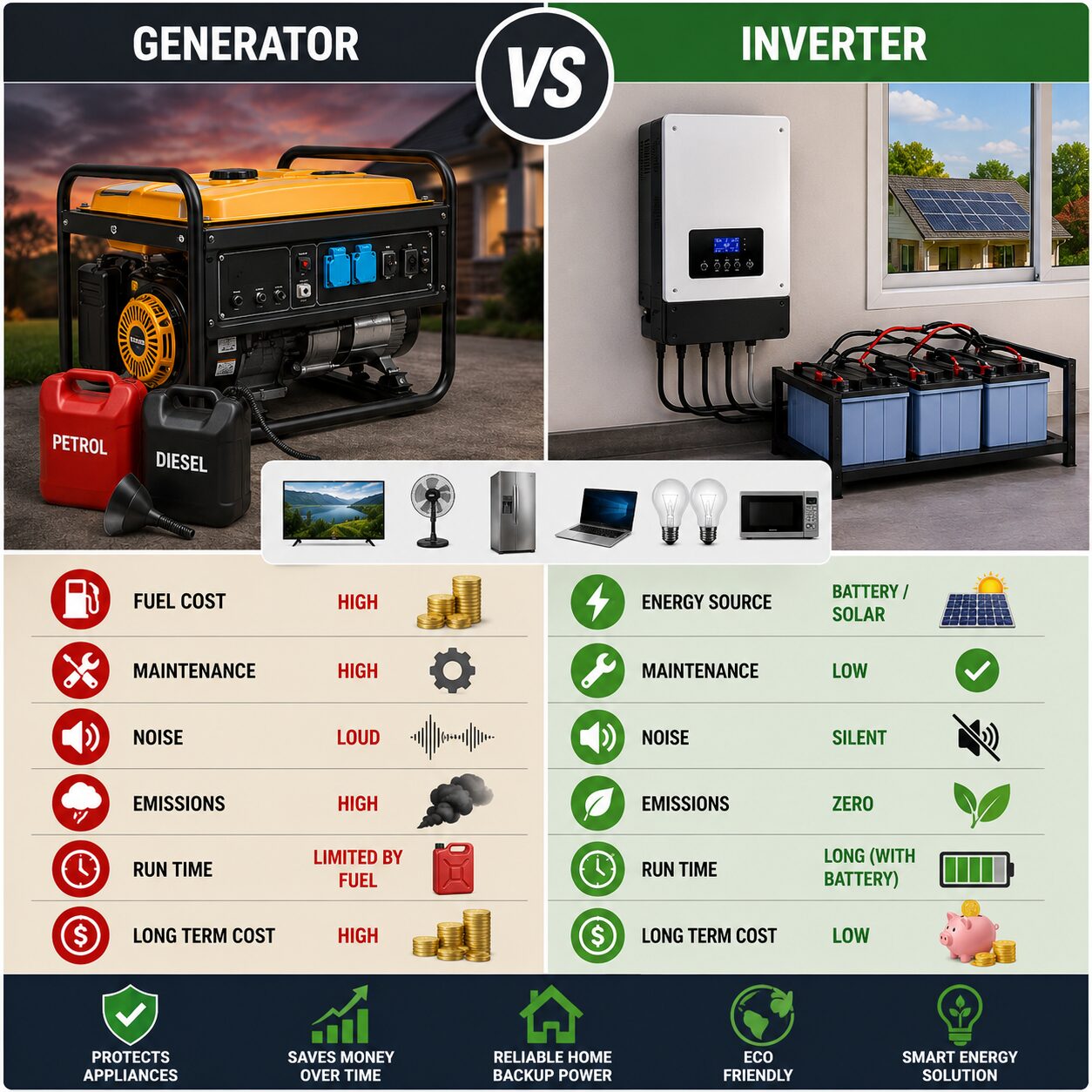
Generators can be extremely noisy, especially larger models. The engine produces constant sound and vibration during operation.
Common generator issues include:
- Loud engine noise
- Disturbance during nighttime
- Air pollution
- Neighborhood discomfort
Although soundproof generators exist, they are usually more expensive.
Inverter Noise
Inverters operate silently because they do not use fuel engines.
This quiet operation makes them ideal for:
- Homes
- Offices
- Bedrooms
- Study environments
- Hospitals
Therefore, if silent power supply matters to you, an inverter is the better choice.
Generator Fuel Costs
Generators require continuous fuel supply during operation. With rising fuel prices in Nigeria, running costs can become very expensive over time.
Additional generator expenses include:
- Engine oil
- Spark plug replacement
- Servicing
- Fuel storage
As a result, long-term generator ownership can be costly.
Inverter Operating Costs
Inverters do not require petrol or diesel for daily operation. Instead, they depend on stored battery energy.
This significantly reduces:
- Daily operating expenses
- Fuel spending
- Maintenance costs
Furthermore, solar-compatible inverter systems can reduce electricity expenses even more.
Consequently, inverters are generally cheaper to operate long-term.
Power Capacity Comparison
Power requirements play a major role when choosing between generators and inverters.
Generator Power Capacity
Generators can power:
- Air conditioners
- Deep freezers
- Heavy machinery
- Water pumps
- Large office equipment
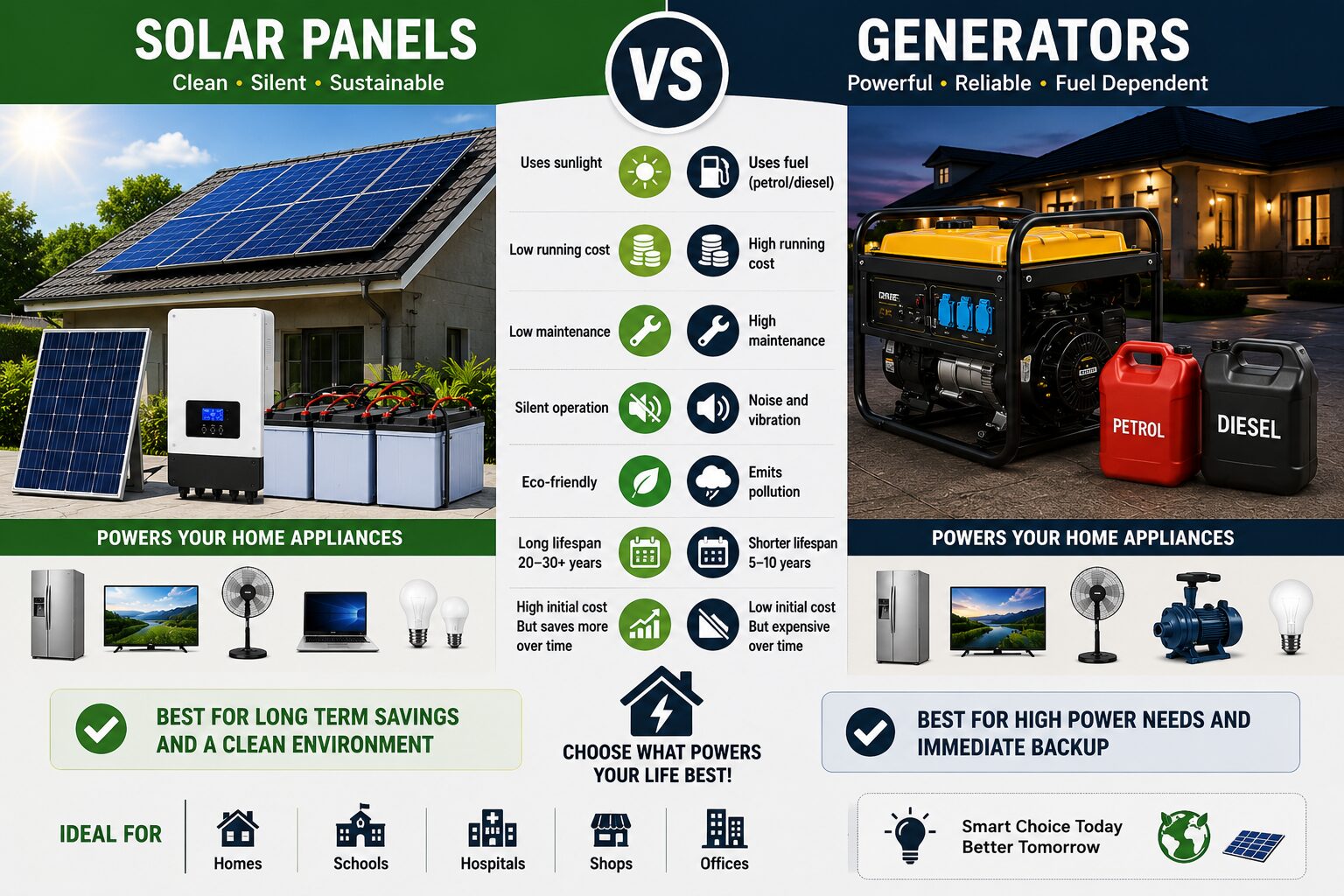
High-capacity generators are suitable for businesses and homes with heavy electricity demands.
Inverter Power Capacity
Inverters are excellent for:
- Lights
- Fans
- Televisions
- Refrigerators
- Laptops
- Internet routers
However, smaller inverter systems may struggle with heavy appliances unless large batteries and powerful inverters are installed.
Maintenance Requirements
Every backup power system requires maintenance, but the level of maintenance differs significantly.
Generator Maintenance
Generators need regular servicing to remain efficient.
Typical maintenance includes:
- Oil changes
- Fuel management
- Filter replacement
- Engine repairs
- Cleaning spark plugs
Without proper maintenance, generators may fail unexpectedly.
Inverter Maintenance
Inverters require far less maintenance.
Basic maintenance tasks include:
- Cleaning battery terminals
- Checking battery water levels
- Monitoring wiring connections
Because there are fewer moving parts, inverter systems often experience fewer mechanical problems.
Environmental Impact
Environmental concerns are becoming increasingly important worldwide.
Generator Environmental Effects
Generators produce:
- Smoke emissions
- Carbon monoxide
- Fuel fumes
- Noise pollution
These emissions can negatively affect both health and the environment.
Inverter Environmental Benefits
Inverters are cleaner and more environmentally friendly.
Additionally:
- Solar integration reduces carbon emissions
- No fuel combustion occurs
- Indoor air remains cleaner
Therefore, inverter systems support greener energy solutions.
Appliance Protection and Power Stability
Sensitive appliances require stable electricity for safe operation.
Generator Power Stability
Some generators produce unstable voltage fluctuations, especially cheaper models.
This may damage:
- Computers
- Televisions
- Refrigerators
- Networking devices
Voltage instability can shorten appliance lifespan significantly.
Inverter Power Stability
Pure sine wave inverters provide stable electricity similar to public power supply.
Benefits include:
- Better voltage regulation
- Appliance protection
- Smooth device performance
- Reduced electrical damage
Consequently, inverters are often safer for electronics.
Convenience and User Experience
Ease of use matters greatly during emergencies and blackouts.
Generator Convenience
Many generators require:
- Manual startup
- Fuel refilling
- Outdoor placement
- Frequent monitoring
During heavy rainfall, operating a generator can become inconvenient.
Inverter Convenience
Most inverter systems switch automatically when electricity fails.
Advantages include:
- Instant power transition
- No manual effort
- Indoor installation
- Quiet performance
Therefore, inverters provide greater convenience for everyday residential use.
Backup Duration Comparison
Backup duration depends on fuel supply or battery capacity.
Generator Runtime
Generators can operate continuously as long as fuel is available.
This makes them useful during:
- Long blackouts
- Industrial operations
- Large commercial activities
However, fuel shortages may become problematic.
Inverter Runtime
Inverter backup duration depends on:
- Battery size
- Appliance load
- Charging efficiency
Larger batteries provide longer operation periods.
Additionally, solar charging can extend backup duration significantly.
Safety Considerations
Safety should never be ignored when choosing backup power systems.
Generator Safety Risks
Generators can present several dangers:
- Carbon monoxide poisoning
- Fire hazards
- Fuel explosions
- Burns from hot surfaces
Improper indoor generator usage is especially dangerous.
Inverter Safety Benefits
Inverters are generally safer because they:
- Produce no harmful fumes
- Operate quietly
- Generate less heat
- Require no fuel storage indoors
Nevertheless, proper installation remains essential for safe operation.
Which Option Is Better for Nigerian Homes?
The answer depends on your specific needs.
Choose a Generator If:
- You need heavy-duty power
- Your budget is limited initially
- You operate large equipment
- Long uninterrupted runtime is necessary
Choose an Inverter If:
- Quiet operation matters
- You want lower running costs
- Appliance protection is important
- Convenience is a priority
- You prefer environmentally friendly energy
Final Thoughts
Both generators and inverters offer valuable backup power solutions in Nigeria. However, the better option depends largely on your electricity needs, lifestyle, budget, and long-term expectations.


 Get it on
  Download on the