






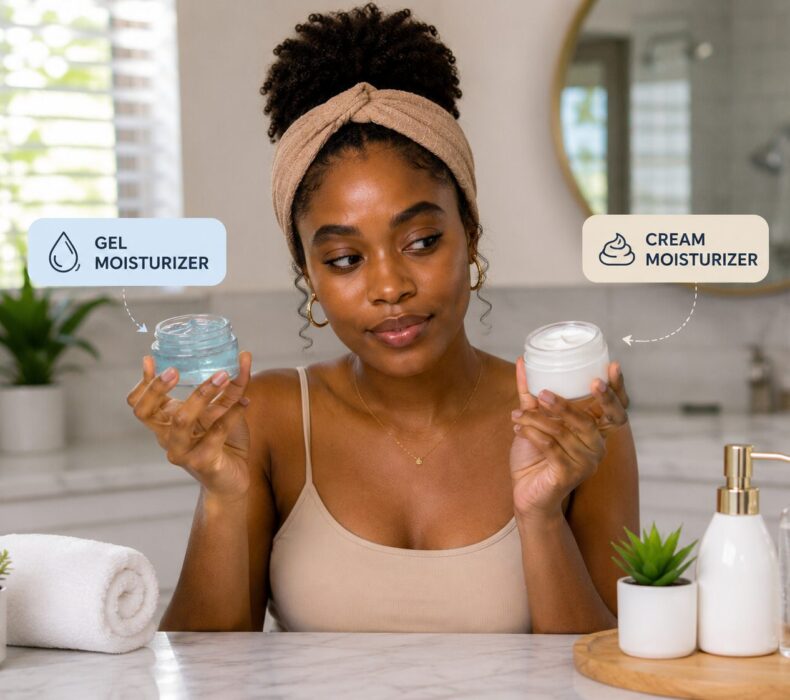
Nigeria’s hot, humid, and sometimes dusty climate makes choosing the right moisturizer more important than many people realize. While cleansing and sunscreen often get the spotlight, your moisturizer plays a major role in maintaining healthy, glowing skin. But one question continues to dominate skincare discussions: Should you choose a gel moisturizer or a cream moisturizer in Nigeria?
The answer isn’t as simple as choosing the lighter or thicker product. It depends on your skin type, where you live, the season, and your skincare goals. For example, someone living in humid Lagos may need a different moisturizer from someone living in the dry Harmattan climate of Kano.
In this guide, we’ll compare gel moisturizers vs cream moisturizers, explain how they work, discuss their pros and cons, and help you determine which one is best for Nigerian weather.
Understanding Moisturizers
Before comparing the two, it’s important to understand what a moisturizer does.
A moisturizer helps to:
- Prevent water loss from the skin
- Keep the skin hydrated
- Strengthen the skin barrier
- Reduce dryness and irritation
- Improve skin texture
- Protect against environmental damage
Many people assume oily skin doesn’t need moisturizing, but this is a myth. Every skin type—including oily and acne-prone skin—needs proper hydration.
The difference lies in choosing the right formula.
What Is a Gel Moisturizer?
A gel moisturizer is a lightweight, water-based moisturizer that absorbs quickly into the skin.
It usually contains:
- Hyaluronic Acid
- Aloe Vera
- Glycerin
- Niacinamide
- Panthenol
- Green Tea Extract
Unlike heavy creams, gel moisturizers leave little to no greasy residue.
Benefits of Gel Moisturizers
Lightweight Feel
Perfect for people who dislike heavy skincare products.
Fast Absorption
Most gel moisturizers disappear into the skin within seconds.
Oil-Free Hydration
Provides moisture without clogging pores.
Cooling Effect
Ideal during Nigeria’s hot afternoons.
Suitable Under Makeup
Works well beneath foundation without causing cakiness.
What Is a Cream Moisturizer?
A cream moisturizer is thicker and richer than a gel moisturizer.
Creams contain higher amounts of:
- Shea Butter
- Ceramides
- Squalane
- Cocoa Butter
- Plant Oils
- Fatty Acids
These ingredients help seal moisture into the skin for long-lasting hydration.
Benefits of Cream Moisturizers
Deep Moisturization
Ideal for very dry skin.
Repairs Skin Barrier
Excellent for damaged or sensitive skin.
Long-Lasting Hydration
Keeps skin moisturized for many hours.
Reduces Flaking
Especially useful during Harmattan.
Anti-Aging Support
Helps reduce the appearance of fine lines caused by dehydration.
Gel Moisturizer vs Cream Moisturizer: Key Differences
| Feature | Gel Moisturizer | Cream Moisturizer |
|---|---|---|
| Texture | Lightweight | Thick and rich |
| Base | Water-based | Oil and water-based |
| Absorption | Very fast | Slower |
| Finish | Matte or natural | Dewy |
| Best for | Oily skin | Dry skin |
| Climate | Hot and humid | Cold and dry |
| Pore-clogging Risk | Low | Slightly higher depending on ingredients |
| Hydration Duration | Moderate | Long-lasting |
Understanding Nigerian Weather
Nigeria experiences different weather conditions throughout the year.
These include:
- Hot sunny season
- Rainy season
- Humid coastal weather
- Harmattan season
- Dry northern climate
Because of these varying conditions, your moisturizer should change accordingly.
Gel Moisturizers During Hot Nigerian Weather
Cities like:
- Lagos
- Port Harcourt
- Warri
- Calabar
experience high humidity almost year-round.
In humid weather, the skin naturally produces more oil.
Using a heavy cream may:
- Feel sticky
- Cause sweating
- Block pores
- Trigger acne
A gel moisturizer is usually the better option because it hydrates without adding excess oil.
Cream Moisturizers During Harmattan
Harmattan brings:
- Dry air
- Dust
- Low humidity
- Skin cracking
- Chapped lips
During this season, many Nigerians notice:
- Ashy skin
- Tightness
- Rough texture
- Peeling
Cream moisturizers create a protective barrier that locks in moisture, making them ideal during Harmattan.
Which Moisturizer Is Better for Oily Skin?
If you have oily skin, gel moisturizers are usually the better choice.
Reasons include:
- Oil-free formulas
- Lightweight hydration
- Reduced shine
- Lower acne risk
- Doesn’t clog pores
Look for ingredients like:
- Hyaluronic Acid
- Niacinamide
- Green Tea
- Centella Asiatica
Avoid creams containing excessive mineral oil if you have acne-prone skin.
Which Moisturizer Is Better for Dry Skin?
Dry skin benefits more from cream moisturizers because they contain ingredients that prevent moisture loss.
Look for creams containing:
- Ceramides
- Shea Butter
- Glycerin
- Squalane
- Cocoa Butter
These help restore the skin barrier and reduce roughness.
Best Choice for Combination Skin
Combination skin has:
- Oily T-zone
- Dry cheeks
You have several options:
Option 1
Use a gel moisturizer all over your face.
Option 2
Use:
- Gel on oily areas
- Cream on dry areas
This approach is called multi-moisturizing.
Which Is Better for Acne-Prone Skin?
Acne-prone skin generally responds better to gel moisturizers because they are:
- Non-comedogenic
- Lightweight
- Oil-free
- Breathable
Look for products labeled:
- Non-comedogenic
- Oil-free
- Fragrance-free
Avoid very heavy creams unless recommended by a dermatologist.
Which Moisturizer Lasts Longer?
Cream moisturizers generally provide longer-lasting hydration.
Gel moisturizers may require reapplication if:
- You spend long hours outdoors
- You’re exposed to air conditioning
- Your skin is very dry
Can You Use Both?
Absolutely.
Many skincare professionals recommend using:
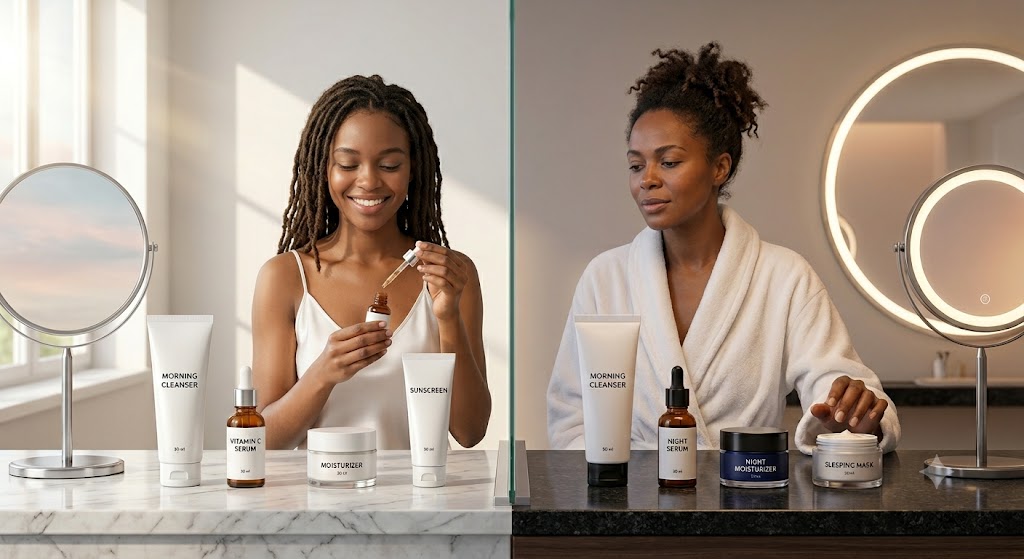
Morning
Gel moisturizer
Reason:
- Lightweight
- Comfortable in heat
- Works well with sunscreen
Night
Cream moisturizer
Reason:
- Repairs skin overnight
- Prevents water loss
- Deep hydration
This combination gives your skin the best of both worlds.
Ingredients to Look For
Best Ingredients in Gel Moisturizers
- Hyaluronic Acid
- Aloe Vera
- Niacinamide
- Panthenol
- Green Tea
- Cucumber Extract
Best Ingredients in Cream Moisturizers
- Ceramides
- Shea Butter
- Squalane
- Glycerin
- Cocoa Butter
- Vitamin E
Ingredients to Avoid
Regardless of the type, avoid products containing:
- High amounts of alcohol
- Excess fragrance if you have sensitive skin
- Harsh essential oils if easily irritated
- Comedogenic oils if acne-prone
Common Mistakes Nigerians Make
Skipping Moisturizer Because of Oily Skin
This often causes the skin to produce even more oil.
Using Heavy Cream During Peak Heat
This can lead to:
- Excess sweating
- Greasy appearance
- Breakouts
Not Changing Moisturizers Seasonally
Your skincare routine should adapt to weather changes.
Applying Too Much Product
More moisturizer doesn’t mean better hydration.
Use a moderate amount.
How to Apply Moisturizer Correctly
Follow these simple steps:
- Wash your face with a suitable cleanser.
- Apply toner (optional).
- Use serums if needed.
- Apply moisturizer while your skin is slightly damp.
- Finish with sunscreen during the day.
Applying moisturizer to damp skin helps lock in hydration more effectively.
Which Skin Types Should Choose Gel Moisturizers?
Gel moisturizers are ideal for:
- Oily skin
- Acne-prone skin
- Combination skin
- Teenagers
- People living in humid areas
- Those who wear makeup daily
Which Skin Types Should Choose Cream Moisturizers?
Cream moisturizers are better for:
- Dry skin
- Mature skin
- Sensitive skin
- Harmattan weather
- Air-conditioned environments
- People with eczema-prone skin (using suitable formulations)
Can Men Use Gel or Cream Moisturizers?
Yes. Moisturizers are not gender-specific. Men should choose a product based on their skin type rather than marketing labels. Gel moisturizers are often preferred for oily skin and humid climates, while cream moisturizers are beneficial for dry or rough skin, especially after shaving if the formula is fragrance-free and soothing.
Expert Recommendation for Nigerian Weather
For most Nigerians, there isn’t a single moisturizer that works best all year.
A practical approach is to:
- Use a gel moisturizer during hot, humid months and for oily or acne-prone skin.
- Switch to a cream moisturizer during Harmattan or whenever your skin feels dry, tight, or flaky.
- If you have combination skin, consider using a gel in the daytime and a cream at night.
Adapting your moisturizer to the weather and your skin’s changing needs is more effective than relying on one product throughout the year.
Final Verdict
So, gel moisturizer vs cream moisturizer—which is better for Nigerian weather?
The answer depends on your skin type and the season.
Choose a gel moisturizer if you:
- Have oily, combination, or acne-prone skin.
- Live in hot and humid regions such as Lagos, Port Harcourt, or Calabar.
- Prefer a lightweight, non-greasy finish.
Choose a cream moisturizer if you:
- Have dry or mature skin.
- Experience dryness during Harmattan.
- Need long-lasting hydration and skin barrier support.
Ultimately, the best moisturizer is one that keeps your skin hydrated, comfortable, and healthy without causing irritation or breakouts. By selecting the right formula for Nigeria’s unique climate, you can maintain soft, radiant skin all year round.



 Get it on
  Download on the