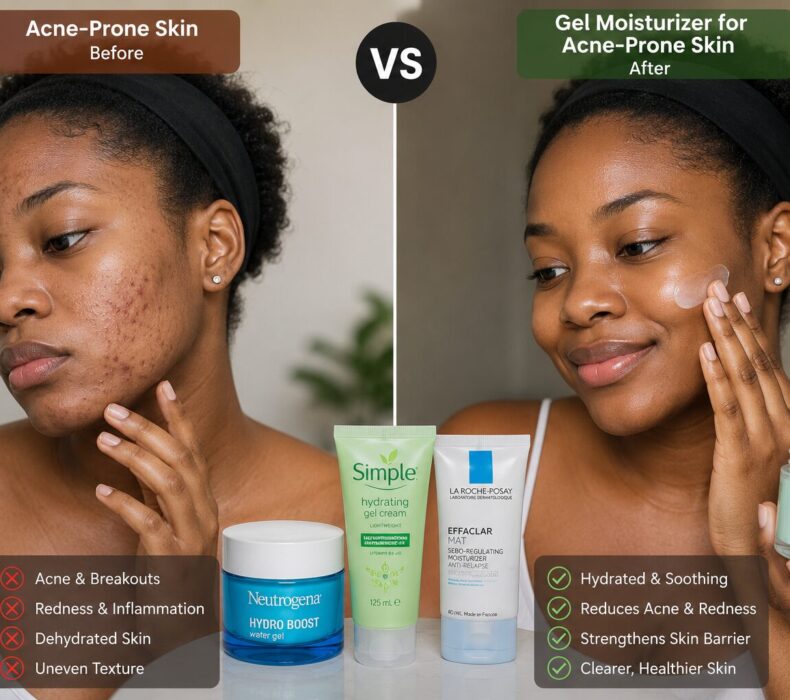
Acne is one of the most common skin concerns affecting teenagers and adults alike. In Nigeria, factors such as hot weather, humidity, excessive sweating, pollution, and the use of unsuitable skincare products can make acne even more challenging to manage. Many people with acne believe that moisturizers will make their skin oilier and worsen breakouts. As a result, they skip this important skincare step altogether.
The truth is quite the opposite. Using the right moisturizer—especially a gel moisturizer—can actually help improve acne-prone skin by keeping it hydrated without clogging pores.
If you’ve ever wondered whether gel moisturizers can help with acne, this comprehensive guide explains everything you need to know, including how gel moisturizers work, their benefits, ingredients to look for, ingredients to avoid, and how to choose the best one for your skin.
What Is a Gel Moisturizer?
A gel moisturizer is a lightweight, water-based skincare product designed to hydrate the skin without leaving behind a greasy or heavy feeling.
Unlike thick creams that contain higher amounts of oils and emollients, gel moisturizers rely on water-binding ingredients called humectants to deliver hydration.
They typically have:
A lightweight texture
Fast absorption
Non-greasy finish
Cooling sensation
Minimal pore-clogging ingredients
This makes gel moisturizers especially suitable for:
Oily skin
Combination skin
Acne-prone skin
Humid climates like Nigeria
Can Gel Moisturizers Help with Acne?
Yes.
Gel moisturizers can play an important role in acne management when used alongside a proper skincare routine.
Although they don’t directly kill acne-causing bacteria like benzoyl peroxide or salicylic acid, they create healthier skin conditions that help reduce breakouts over time.
Healthy, hydrated skin functions better than dehydrated skin.
Why Moisturizing Is Important for Acne-Prone Skin
Many acne treatments intentionally dry the skin.
Common ingredients such as:
Salicylic Acid
Benzoyl Peroxide
Retinoids
Adapalene
Tretinoin
remove excess oil and increase skin cell turnover.
Unfortunately, they often leave the skin:
Dry
Tight
Flaky
Irritated
Red
When your skin becomes too dry, it responds by producing even more oil to compensate.
More oil often means:
More clogged pores
More blackheads
More whiteheads
More pimples
A good gel moisturizer helps restore hydration, reducing this cycle.
How Gel Moisturizers Help Acne-Prone Skin
1. They Hydrate Without Adding Extra Oil
One of the biggest advantages of gel moisturizers is that they provide hydration without making your face greasy.
Hydration and oil are not the same thing.
Your skin can be oily yet dehydrated.
Gel moisturizers restore water content while keeping excess shine under control.
2. They Help Repair the Skin Barrier
Your skin has a natural protective barrier.
When damaged by acne treatments or over-cleansing, this barrier becomes weak.
Symptoms include:
Irritation
Burning
Redness
Dryness
Increased sensitivity
Many gel moisturizers contain ingredients that strengthen this barrier, helping the skin recover faster.
3. They Reduce Irritation from Acne Treatments
Prescription acne medications often cause peeling during the first few weeks.
A lightweight gel moisturizer helps reduce:
Flaking
Itching
Tightness
Burning
Redness
This makes acne treatments easier to tolerate.
4. They Prevent Overproduction of Oil
Dry skin often signals the sebaceous glands to produce more oil.
This excess oil can clog pores and trigger more breakouts.
Keeping your skin properly hydrated helps maintain a balanced oil level.
5. They Help Acne Marks Heal Faster
After pimples disappear, many people develop:
Post-inflammatory hyperpigmentation (dark spots)
Red marks
Uneven skin tone
Healthy, hydrated skin heals more efficiently than dry, damaged skin.
Although gel moisturizers don’t remove dark spots overnight, they support faster skin recovery.
6. They Improve Overall Skin Texture
Regular use of a gel moisturizer can make skin feel:
Softer
Smoother
Less rough
More balanced
Healthier
Improved skin texture often makes acne scars and blemishes less noticeable over time.
Best Ingredients in Gel Moisturizers for Acne
Choosing the right ingredients is more important than choosing a popular brand.
Look for products containing the following.
Hyaluronic Acid
One of the best hydrating ingredients available.
Benefits include:
Deep hydration
Lightweight feel
Non-greasy finish
Suitable for all skin types
Glycerin
Glycerin attracts water into the skin and keeps it hydrated.
It helps:
Reduce dryness
Improve softness
Strengthen the skin barrier
Niacinamide
Niacinamide is one of the best ingredients for acne-prone skin.
Benefits include:
Controls oil production
Reduces redness
Minimizes enlarged pores
Improves skin texture
Helps fade acne marks
Aloe Vera
Aloe vera provides soothing hydration.
It can help calm:
Inflamed acne
Redness
Mild irritation
Ceramides
Ceramides restore the skin barrier.
They help lock in moisture and reduce irritation caused by acne medications.
Panthenol (Vitamin B5)
Vitamin B5 helps:
Calm irritation
Repair damaged skin
Improve hydration
Green Tea Extract
Green tea contains antioxidants that may help reduce inflammation associated with acne.
Ingredients to Avoid If You Have Acne
Some moisturizers can worsen acne by clogging pores.
Avoid products containing excessive amounts of:
Heavy mineral oils
Coconut oil (for facial acne in some individuals)
Cocoa butter
Lanolin
Thick waxes
Strong artificial fragrances
Drying alcohols like Alcohol Denat. in high concentrations
Always choose products labeled:
Non-comedogenic
Oil-free
Lightweight
Dermatologist-tested
Is Gel Moisturizer Better Than Cream for Acne?
In many cases, yes.
Here’s a comparison.
Feature
Gel Moisturizer
Cream Moisturizer
Texture
Lightweight
Thick
Absorption
Very fast
Slower
Best for
Oily and acne-prone skin
Dry skin
Finish
Non-greasy
Rich
Risk of clogged pores
Lower
Higher (depending on formula)
However, people with extremely dry acne-prone skin may benefit from richer cream formulations designed specifically for sensitive skin.
How to Use a Gel Moisturizer for Acne
Follow these simple steps.
Morning Routine
Wash your face with a gentle cleanser.
Apply acne treatment if needed.
Apply a gel moisturizer.
Finish with sunscreen (SPF 30 or higher).
Evening Routine
Remove makeup and sunscreen.
Cleanse your face.
Apply treatment products.
Apply gel moisturizer before bed.
Consistency is key. Moisturizing daily helps maintain a healthy skin barrier.
Common Myths About Gel Moisturizers and Acne
Myth 1: Moisturizers Cause Pimples
Not necessarily.
The wrong moisturizer can clog pores, but a non-comedogenic gel moisturizer is unlikely to cause breakouts.
Myth 2: Oily Skin Doesn’t Need Moisturizer
False.
Oily skin still needs hydration.
Skipping moisturizer may actually increase oil production.
Myth 3: Acne Treatments Are Enough
Acne medications work best when paired with a moisturizer that reduces irritation and supports the skin barrier.
Myth 4: Gel Moisturizers Are Only for Teenagers
Adults with acne can also benefit from gel moisturizers, especially those living in warm, humid environments.
Who Should Use a Gel Moisturizer?
Gel moisturizers are ideal for people with:
Oily skin
Combination skin
Acne-prone skin
Sensitive skin
Humid weather exposure
Frequent sweating
They are also an excellent choice for people who dislike heavy creams.
When shopping for a gel moisturizer, check the label for these features:
Oil-free
Non-comedogenic
Fragrance-free (if sensitive)
Lightweight formula
Fast absorbing
Contains hydrating ingredients like hyaluronic acid and glycerin
Includes barrier-supporting ingredients such as ceramides or niacinamide
Avoid choosing products solely because they are popular on social media. Instead, focus on ingredient lists and your skin’s specific needs.
Can Gel Moisturizers Replace Acne Treatments?
No.
Gel moisturizers are supportive skincare products, not acne medications.
For mild acne, a simple routine that includes a gentle cleanser, an acne treatment, a gel moisturizer, and sunscreen may be enough to control breakouts.
For moderate to severe acne, consult a dermatologist, who may recommend prescription treatments alongside an appropriate moisturizer.
Final Thoughts
So, can gel moisturizers help with acne? Absolutely. While they are not a cure for acne, they are an essential part of an effective skincare routine. By providing lightweight hydration, strengthening the skin barrier, reducing irritation from acne treatments, and helping regulate excess oil production, gel moisturizers create an environment where acne-prone skin can heal and function more effectively.
The key is choosing a non-comedogenic, oil-free formula with skin-friendly ingredients such as hyaluronic acid, niacinamide, glycerin, ceramides, and aloe vera. When used consistently alongside a gentle cleanser, sunscreen, and appropriate acne treatments, a quality gel moisturizer can improve your skin’s comfort, texture, and overall appearance while reducing the likelihood of future breakouts.
Whether you’re a teenager dealing with hormonal acne or an adult experiencing occasional blemishes, adding the right gel moisturizer to your daily routine is a simple yet powerful step toward healthier, clearer skin.








 Get it on
  Download on the